Gearjury may earn a commission from eligible purchases made through retailer links.
Best picks
Best Front and Rear Dash Cams in Canada for 2026
The Thinkware U3000 is the strongest all-round choice for drivers prioritizing front-and-rear detail and parking features. Garmin, VIOFO, BlackVue and Kenwood provide compelling alternatives for different installations.
GGearjury editorial team · Updated October 15, 2026· 8 min
Quick answer
Thinkware U3000 2CH is the top pick for premium dual-channel recording and radar-assisted parking surveillance. Choose VIOFO A229 Pro 2CH for high-resolution value, BlackVue DR970X-2CH Plus for connected features, Garmin Dash Cam X310 with Mini 3 for a modular setup, or Kenwood DRV-A610WDP for an included rear camera and memory card.
It can be worthwhile when you want evidence from both directions, especially for rear impacts. The extra camera adds installation work and storage demand.
Does a rear dash cam record while parked?
Only when the system supports parking mode and receives the required power. Confirm whether a hardwire kit, battery pack or other accessory is needed.
Can cold weather damage a dash cam?
Temperature limits vary by model. Compare the published operating range with conditions where the vehicle is parked and use the storage and power accessories specified by the manufacturer.
Where should the rear camera be mounted?
Usually high on the rear glass with the lens inside the swept area where practical. Keep it clear of defroster elements, tint restrictions and moving hatch wiring.
The VIOFO A229 Pro 2CH is our broadest all-round choice for front-and-rear detail. Garmin Mini 3 suits a discreet setup, while Thinkware U3000 targets parking surveillance.
Start with the view you need: front-only for simple evidence, front-and-rear for broader coverage, or parking mode for protection while stopped.
Your privacy
We use cookies and similar technologies. Necessary ones keep the site working. With your permission we also use statistics cookies (Google Analytics and Microsoft Clarity) to understand which guides help readers. You can accept all, reject all or choose. You can change your choice at any time from "Cookie settings" at the bottom of every page. Cookie policy










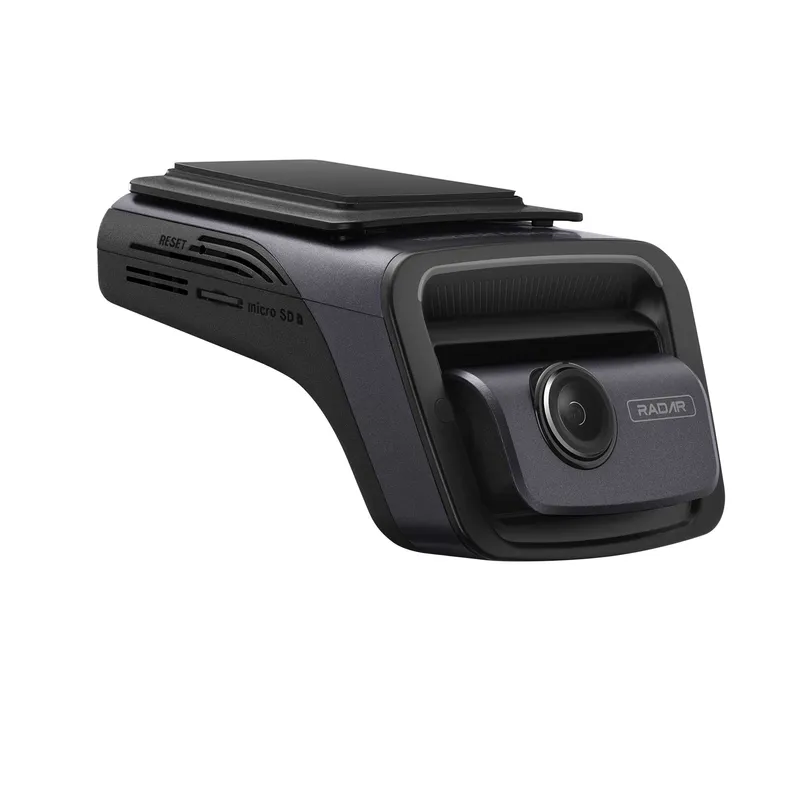 Official manufacturer image
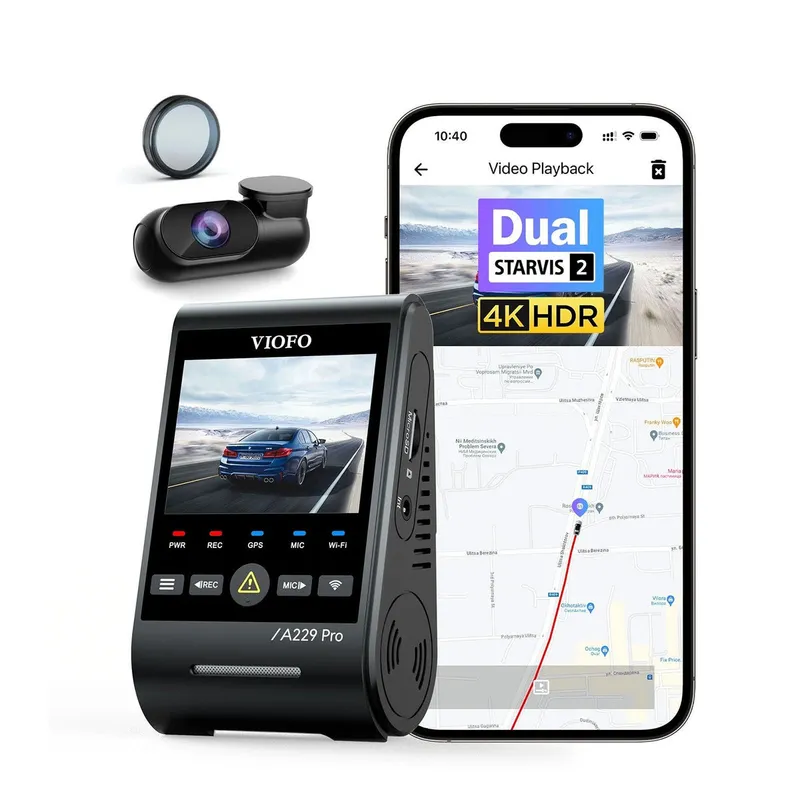 Official manufacturer image