Gearjury may earn a commission when you buy through a retailer link. Our editorial guidance is based on the cited sources.
Guide
Can I Use a Meat Thermometer to Take My Temperature?
No. If you are asking, “Can I use a meat thermometer to take my temperature?”, choose a clinical digital thermometer instead. A food probe is designed for food, not the human body, and may not give a dependable body-temperature reading.
GGearjury editorial team · Updated October 15, 2026· 4 min
01
Can I take my temperature with a food thermometer?
Do not use a food thermometer as a substitute for a clinical thermometer. Meat probes are made to check food during cooking, while body-temperature thermometers are designed for specific measurement sites and should be used according to their instructions.
02
Why a meat thermometer is the wrong tool
Its intended temperature range, probe shape, response behaviour and cleaning instructions may not suit oral, armpit, ear or rectal use. A reading that appears plausible is not enough to show that it is accurate for a clinical decision.
03
How to use a meat thermometer to take your temperature
There is no recommended method. Do not put a kitchen probe in your mouth or use it on another body site. Use a clinical digital thermometer intended for the chosen site, read its instructions and follow current guidance from a health authority.
04
Choose a suitable body thermometer
HealthLink BC recommends a digital thermometer for oral and armpit measurements. The appropriate method depends on the person's age and circumstances, so ask a pharmacist or health-care provider if you are unsure which type to buy or where to measure.
05
Keep kitchen and clinical thermometers separate
Reserve the meat thermometer for food and clean it in warm, soapy water before each food use, as Health Canada advises. Keep the clinical thermometer clearly labelled and clean it according to its own instructions; a thermometer used rectally should not later be used orally.
06
What to do if you feel unwell
Use an appropriate body thermometer if one is available, but consider symptoms and overall condition as well as the number shown. Contact a health-care professional or provincial health advice service if symptoms concern you, and seek urgent help for severe symptoms rather than waiting for another reading.
Common questions
Questions before you buy
How to use a meat thermometer to take your temperature?
There is no recommended way to do this. Use a clinical digital thermometer designed for the body site instead, following its instructions.
Can I take my temperature with a food thermometer?
No. A food thermometer is designed to measure food, and its probe and performance are not intended for taking a person's temperature.
Can I put a meat thermometer under my tongue?
No. A pointed kitchen probe may cause injury, may be contaminated and is not designed to provide an oral body-temperature measurement.
What thermometer should I use to check for a fever?
Use a clinical thermometer intended for the person's age and the selected measurement site. HealthLink BC says a digital thermometer is best for oral and armpit measurements.
What if I already used a meat thermometer on a person?
Do not rely on that reading. Stop using the probe on the body, clean it according to its food-use instructions and repeat the measurement with an appropriate clinical thermometer; seek professional advice if there was an injury or concerning illness.
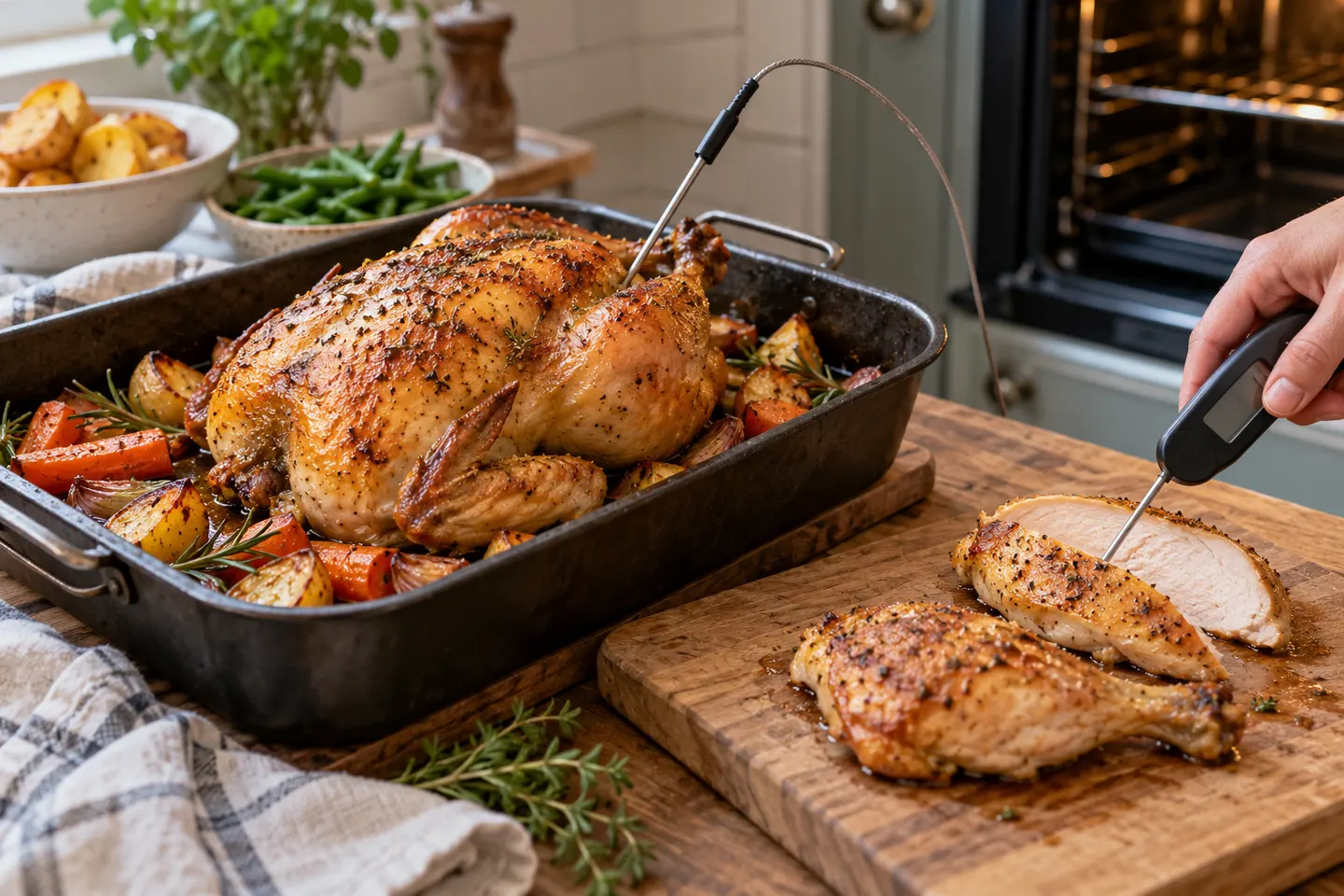
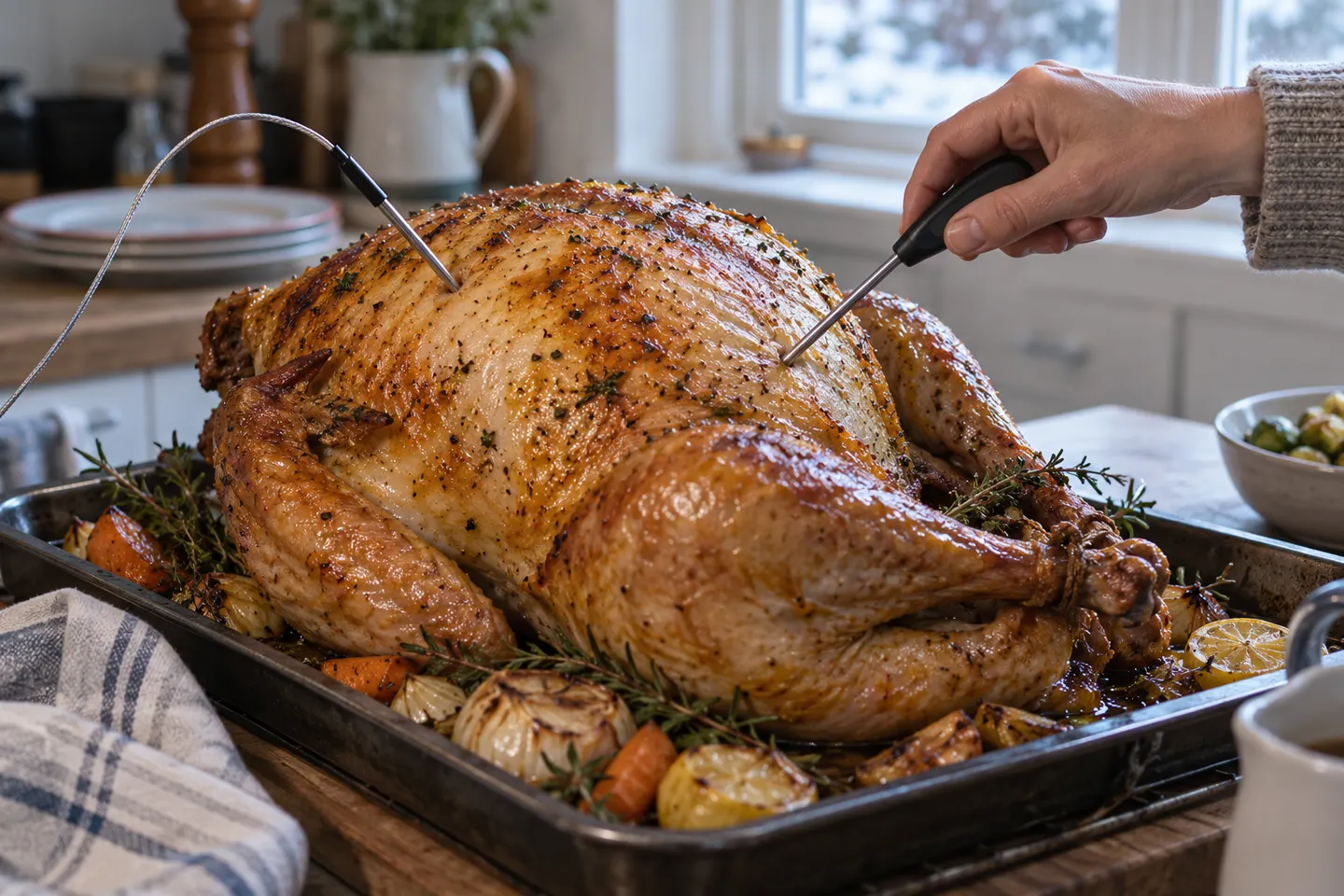
Place the probe in the thickest meat, away from bone, and verify more than one area. Only oven-safe leave-in probes should remain in the bird while it cooks.
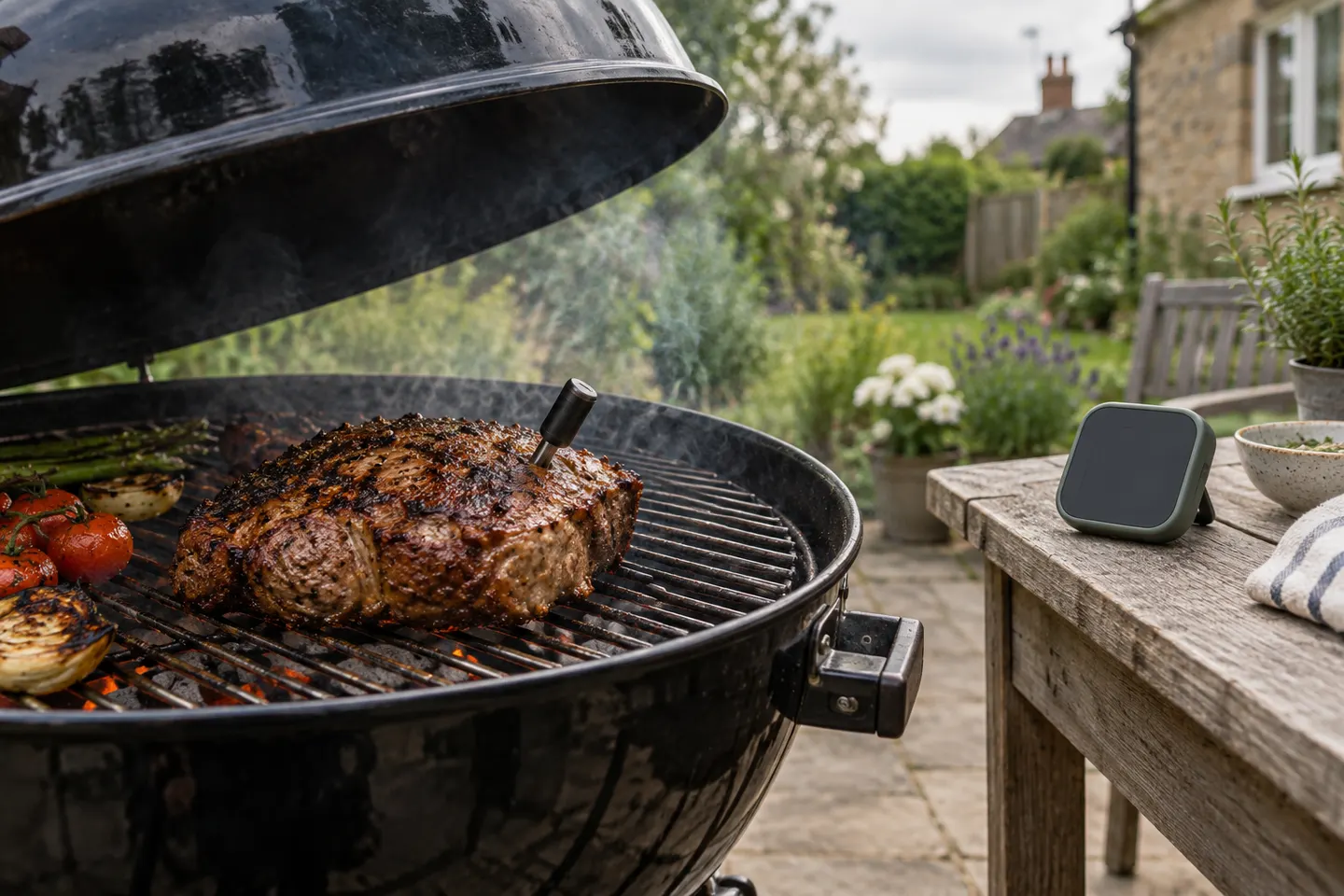
Choose by cooker, probe count and how far you actually move from the grill. Bluetooth is simple nearby; Wi-Fi can extend monitoring across a home network.
A fast digital probe suits spot checks; a leave-in or wireless model is easier for roasts and barbecue. Start with how you cook, then compare speed, range and cleaning.
Your privacy
We use cookies and similar technologies. Necessary ones keep the site working. With your permission we also use statistics cookies (Google Analytics and Microsoft Clarity) to understand which guides help readers. You can accept all, reject all or choose. You can change your choice at any time from "Cookie settings" at the bottom of every page. Cookie policy