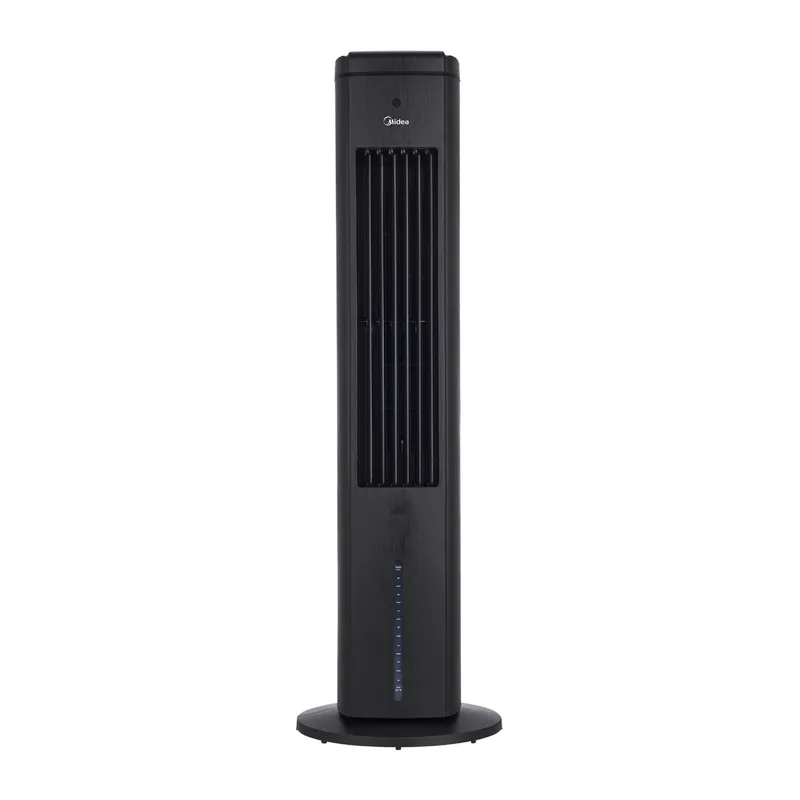
 Official manufacturer image
Dry climate with outdoor-air exchange
Evaporative air cooler (technology comparison)
Check price on Amazon.caSponsored link · no live price shown

 Best picksThe Best Dash Cam Cameras for Different Drivers
 Best picksBest WiFi Extenders in Canada for Different Home Networks
 Best picksBest Meat Thermometers in Canada for 2026
 Best picksBest Winter Gloves for Canadian Conditions (2026)
 Best picksBest Headlamps: Compare Reliable Options for Canada
 Best picksRadar Detector Best Picks for Canadian Drivers (2026)
 Best picksBest Portable Air Coolers to Consider in 2026
 Best picksBest cordless grass trimmers with a battery and charger
 Best picksBest Air Purifier for Bedroom in the Canada: Quiet Models Compared
Gearjury may earn a commission from qualifying retailer links; editorial conclusions are not influenced by commission.
Head to head
Choose an evaporative cooler when conditions are dry and you can ventilate; choose air conditioning when you need refrigeration-based heat removal and humidity control. Neither is universally better.
Official manufacturer image
Dry climate with outdoor-air exchange
Cooling when humidity is high
The verdict
Evaporative cooling uses water and outdoor-air ventilation; the EPA notes its use in dry climates.
A refrigeration-based AC transfers heat and commonly removes moisture rather than adding it.
A portable unit can direct airflow locally, but its effect depends on humidity and ventilation.
| Official manufacturer imageEvaporative air cooler (technology comparison) | Refrigeration-based air conditioner (technology comparison) | |
|---|---|---|
| Cooling process | Water evaporation into a moving airstream | Refrigeration cycle moves heat out |
| Humidity effect | Raises indoor humidity | Usually removes indoor moisture |
| Ventilation | Needs a route for air exchange | Room can remain closed; portable hose models need exhaust |
| Best climate fit | Generally dry conditions | Works across a wider range of humidity conditions |
| Air cooler vs AC portable | No exhaust hose on many designs; adds moisture | Portable AC needs heat exhaust through a window |
| Maintenance | Water reservoir and pads need care | Filters and condensate system need care |
| Check price on Amazon.ca |
Common questions
An evaporative cooler can suit dry, ventilated conditions; AC is usually more appropriate when humidity is high or you need heat removed from a closed room. Compare the climate and room rather than choosing by name.
Both can make occupants feel cooler, but they work differently. Evaporative coolers add water vapour to airflow, while AC uses refrigeration to transfer heat.
It can provide refrigeration-based cooling if installed with the required exhaust hose and window seal. It also uses a different power and maintenance setup, so check the exact model requirements.
A window AC can remove heat from a room without relying on evaporation, making it suitable across more humid conditions. An evaporative cooler may be a simpler option in dry, ventilated spaces.
Keep exploring
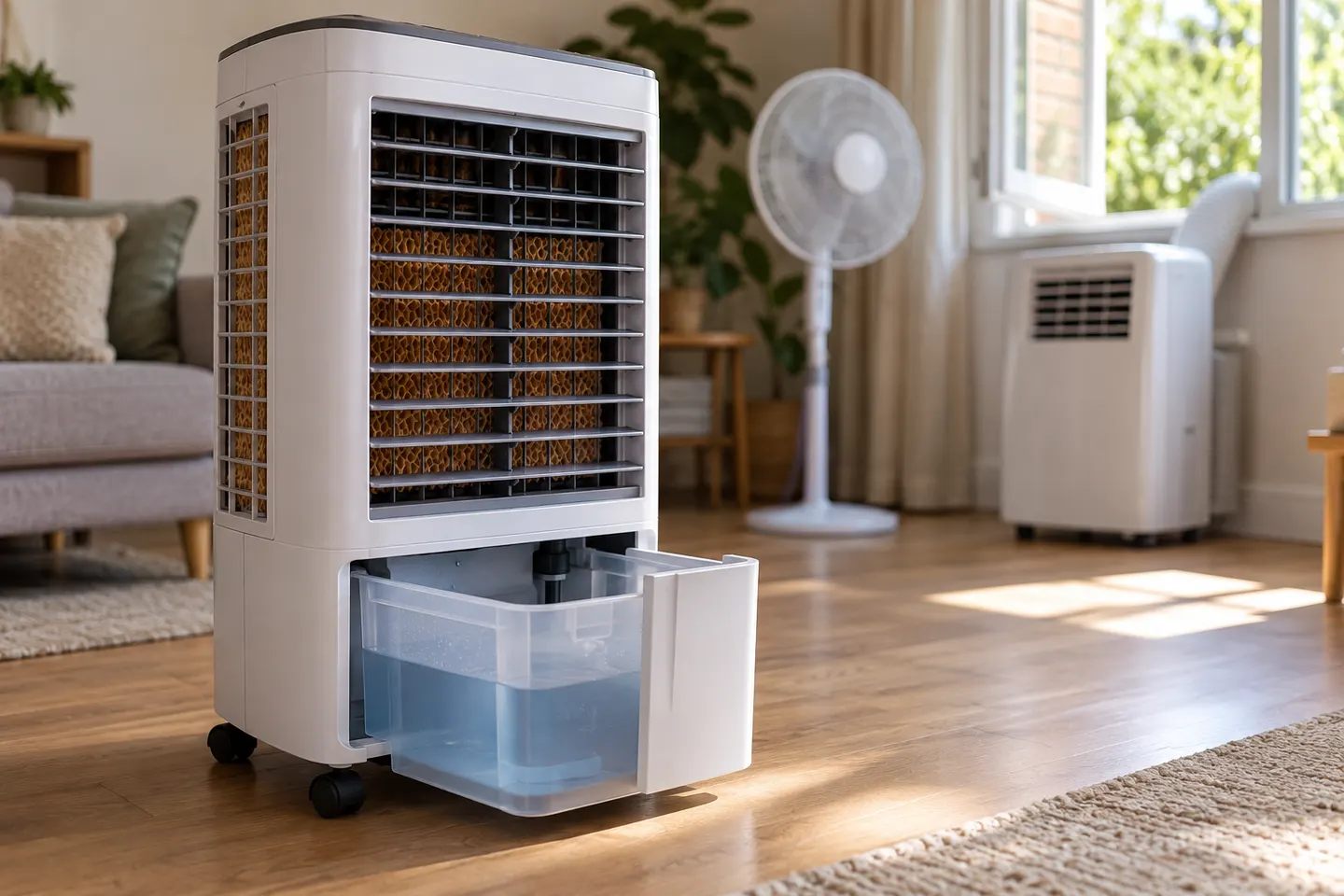
A portable air cooler can mean an evaporative unit or simply a fan marketed for personal cooling. Start by matching the technology to your room and climate.
For a Canadian home, begin with Midea’s locally listed evaporative unit, then consider a personal fan or purifier fan if added moisture is a poor fit.
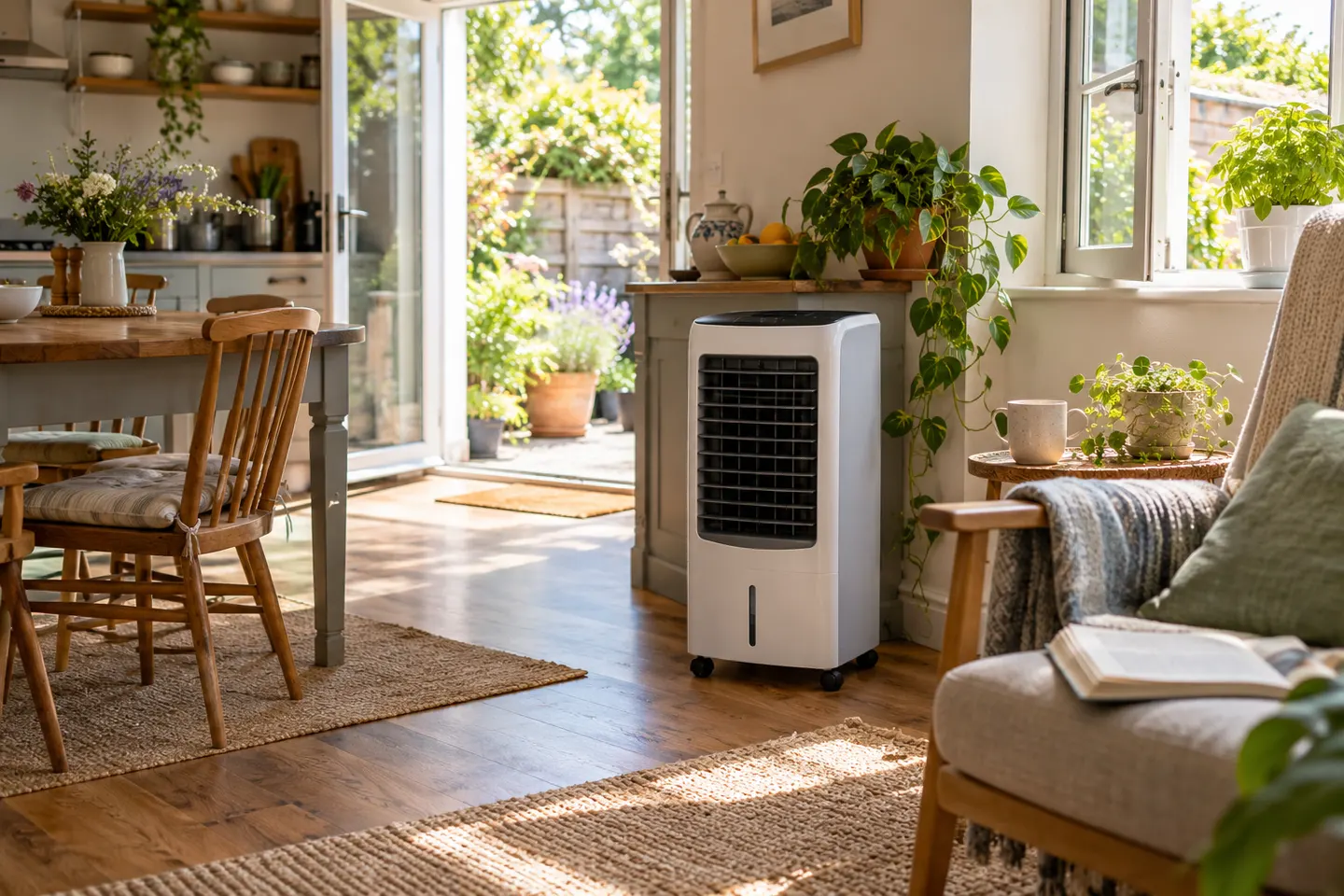
For a dry, ventilated room, an evaporative cooler can add a cooling breeze; in humid weather or a closed room, a fan or air conditioner may fit better. Start with room conditions, then compare portable, personal and larger-room designs.
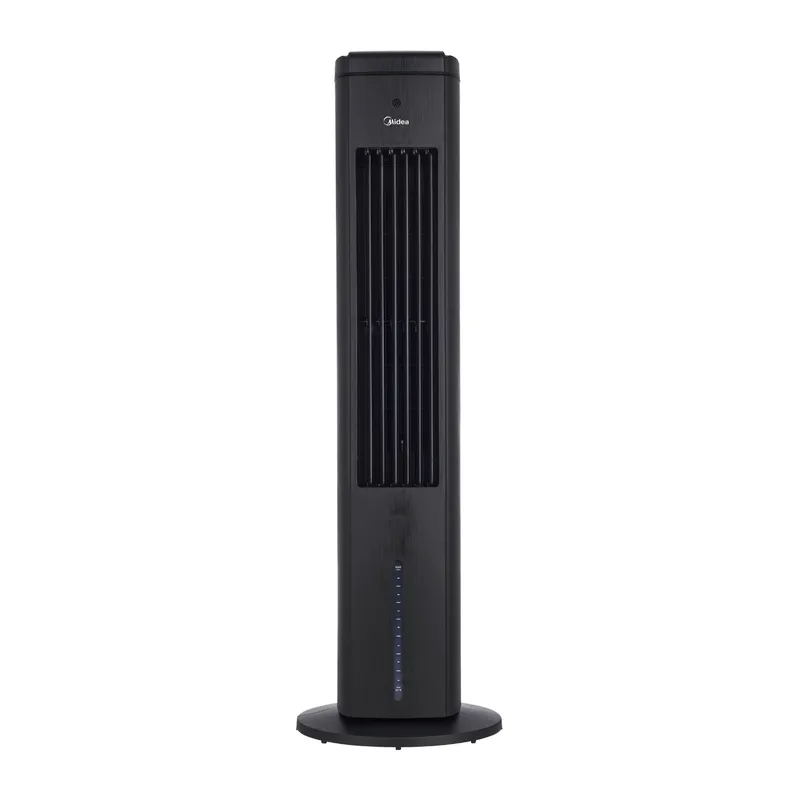
Midea Canada lists a direct-cooling evaporative unit. Its product details make it possible to compare controls and dimensions, while humidity and room ventilation remain key to fit.