 Official manufacturer image
Cooling in a dry climate with fresh air moving through the room
Evaporative air cooler
Check price on Amazon AUSponsored link · no live price shown

 Best picksBest Dash Cam in Australia: Five Models Compared
 Best picksBest Wi-Fi Extenders in Australia for Different Homes
 Best picksThe Best Meat Thermometer for Every Kind of Cook
 Best picksBest Headlamp Torches for Different Uses in 2026
 Best picksBest Portable Air Coolers to Consider in Australia (2026)
 Best picksBest Winter Gloves for Everyday Wear and Outdoor Use
 Best picksBest Cordless String Trimmers for Australian Gardens (2026)
 Best picksBest air purifier for bedroom in Australia: five models compared
Gearjury may earn a commission from qualifying purchases made through retailer links.
Head to head
An evaporative air cooler suits dry conditions and needs airflow through the room. Choose air conditioning when you need more dependable cooling in humid weather or want to keep windows closed.
Official manufacturer image
Cooling in a dry climate with fresh air moving through the room
More reliable cooling when outdoor humidity is high
The verdict
Australian government guidance says evaporative coolers work best where humidity is low and require ventilation for air to leave the home.
Evaporative cooling becomes less effective as humidity rises, according to Queensland Government guidance.
Evaporative coolers need an outlet for air; air conditioning is the more suitable approach when you want doors and windows shut.
| Official manufacturer imageEvaporative air cooler | Air conditioning | |
|---|---|---|
| Cooling principle | Water evaporation cools incoming air | Refrigerated cooling removes heat from indoor air |
| Best climate fit | Hot, dry conditions | More adaptable, including humid conditions |
| Effect of humidity | Adds moisture; cooling weakens as humidity rises | Can cool without adding moisture through evaporation |
| Room ventilation | Some windows or doors need to be open | Keep the cooled space closed |
| Whole-room temperature control | Depends strongly on climate and airflow | Better suited to controlled room cooling |
| Portable AC vs air cooler | No exhaust hose, but needs airflow and water | Portable models typically need an exhaust hose through a window |
| Check price on Amazon AU |
Common questions
An air cooler can be a better fit in dry weather if you can ventilate the room. Air conditioning is generally the better choice for humid conditions or when you need consistent whole-room cooling.
An evaporative cooler passes air over water so evaporation cools it and raises humidity. Air conditioning uses a refrigeration system to cool indoor air and does not depend on evaporation in the room.
It is less effective as humidity increases because the air has less capacity to take up more moisture. Queensland Government guidance also advises checking ventilation if condensation appears.
Usually, yes. The cooler brings air in, so an opening is needed for indoor air to escape. YourHome recommends leaving some windows or doors open while it runs.
For lowering room temperature in humid weather, portable AC is generally the stronger option, provided you can vent its exhaust hose. An air cooler is simpler to position but relies on dry air and ventilation.
Keep exploring
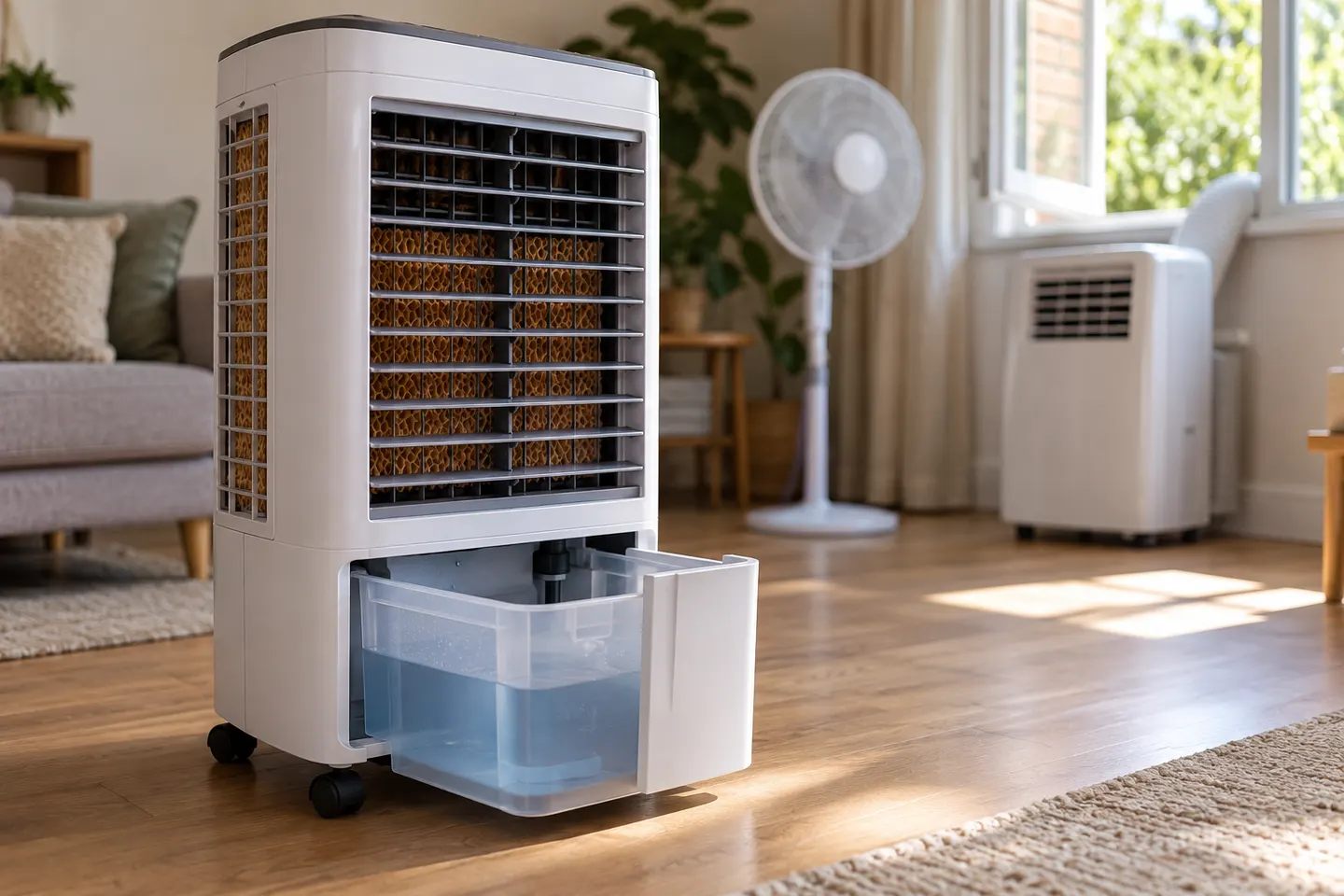
A portable evaporative cooler suits hot, dry air and a ventilated room; a fan-only unit avoids adding moisture. Start with climate, airflow and cleaning needs.
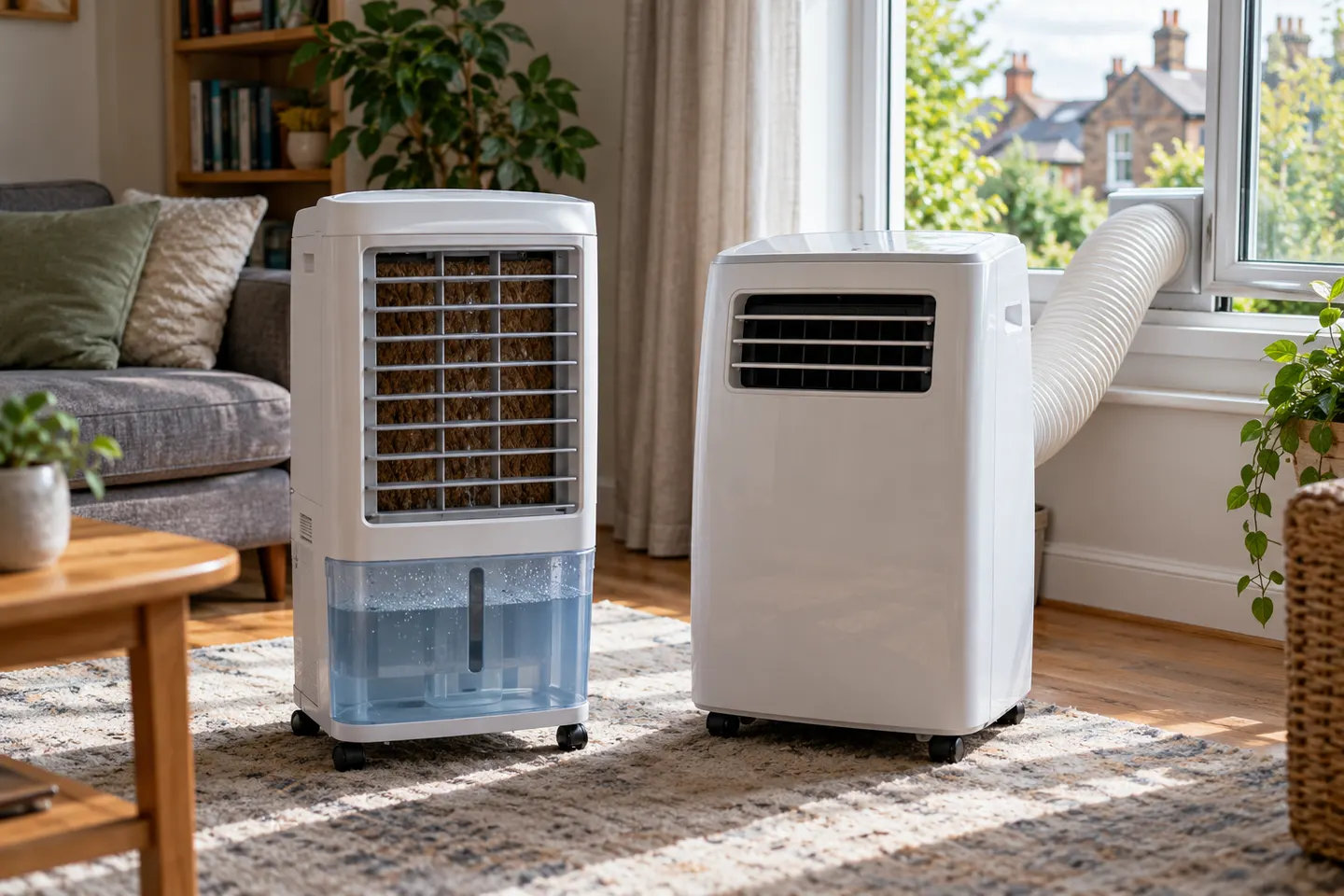
An evaporative cooler uses water and ventilation; a refrigerated air conditioner uses a compressor and can dehumidify. Climate and the result you need decide between them.
Bonaire Crown 10i is a practical shortlist choice for its published room guidance and portable design. Bonaire Duet suits a smaller spot; Dimplex DCEVP6WT adds a purifier function.
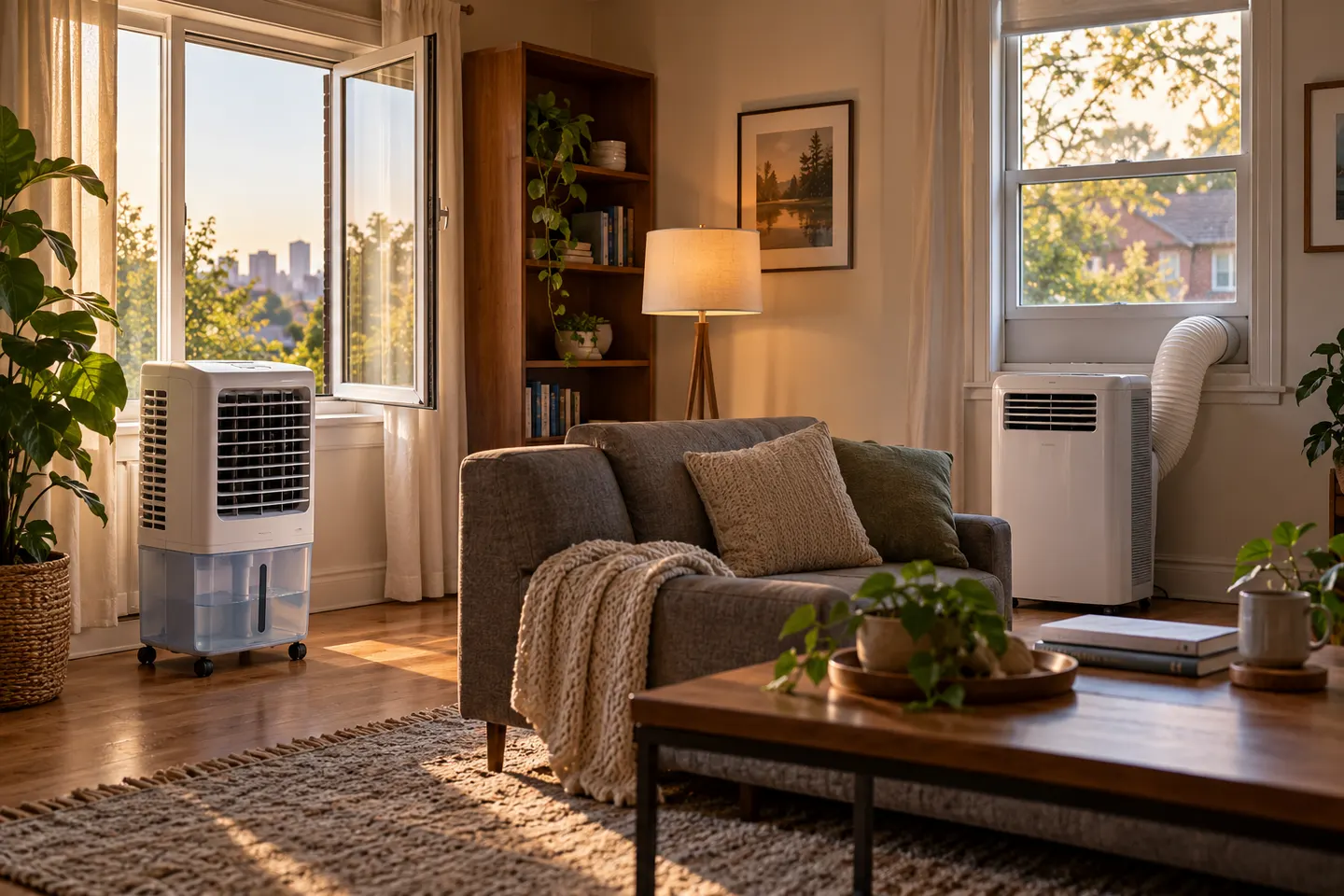
Evaporative air conditioning cools incoming air through water evaporation and needs an exhaust path. Its suitability depends strongly on outdoor humidity and the building layout.