Gearjury may earn a commission from qualifying retailer links. This does not affect our editorial conclusions.
Guide
How Does a Portable Air Cooler Work?
A portable evaporative cooler draws air across a wet pad or filter. Water evaporates, taking heat from the passing air; the resulting breeze is cooler and more humid, so performance depends on ventilation and a relatively dry room.
GGearjury editorial team · Updated October 22, 2026· 5 min
01
How does a portable air cooler work?
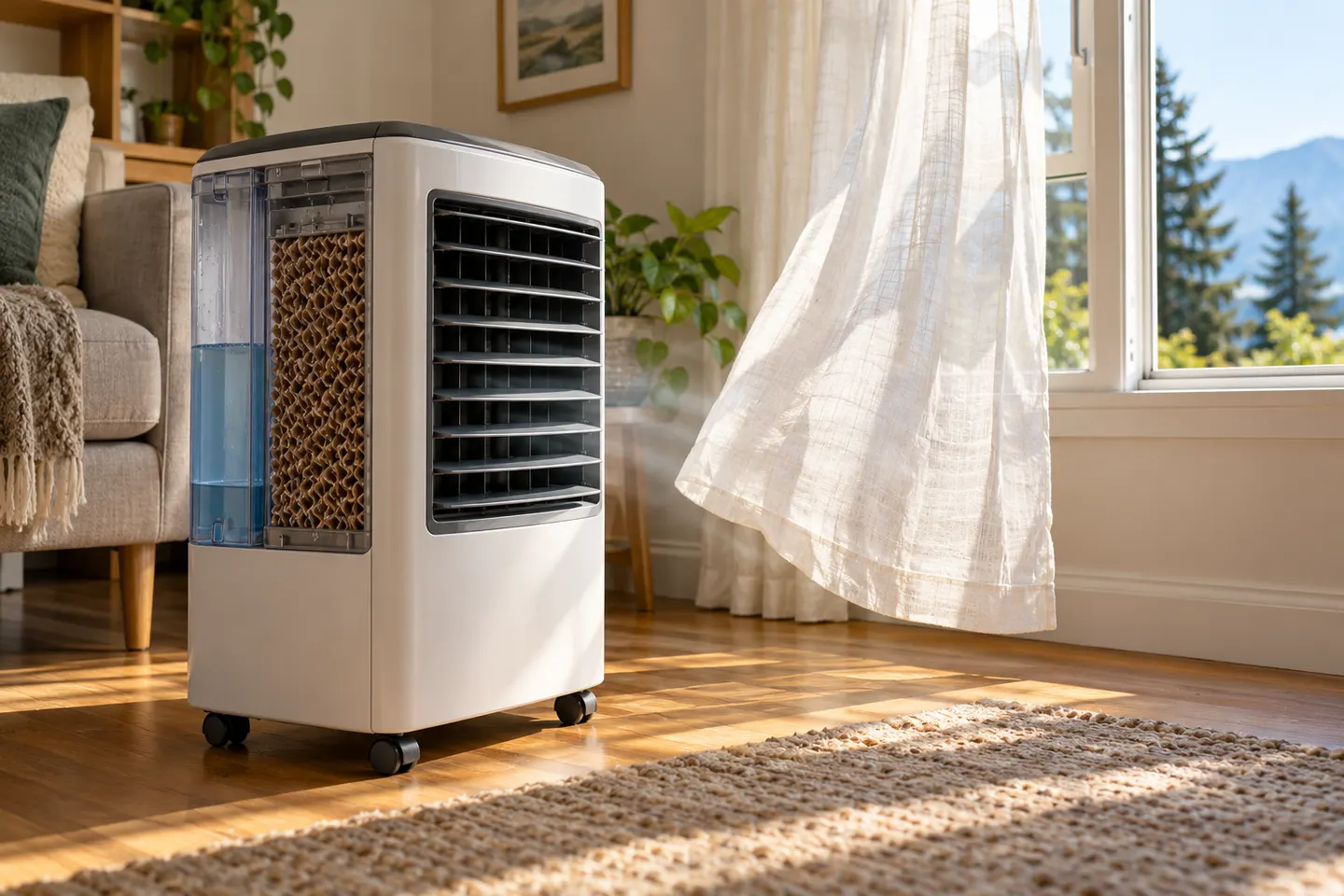
A portable evaporative cooler uses a fan to pull room or outdoor air through a water-wetted medium. Some water evaporates into the airstream, absorbing heat and lowering its dry-bulb temperature. The air leaving the unit contains more moisture, unlike air from a conventional air conditioner, which removes heat through a refrigerant cycle.
02
How does an evaporative air cooler work in a room?
The fan circulates the newly cooled, more humid air toward people in the room. Many direct evaporative systems work best with a path for air to leave, such as an open window or vent; otherwise moisture can build up and the cooling effect can fade. Follow the instructions for the specific portable model.
03
Do evaporative air coolers work in humid climates?
They generally work better when incoming air is dry, because dry air can take up more water. In humid weather, evaporation slows, so the temperature change may be modest while indoor moisture rises. For sustained cooling and dehumidification, compare a compressor-based air conditioner.
04
How to fill an air cooler with water
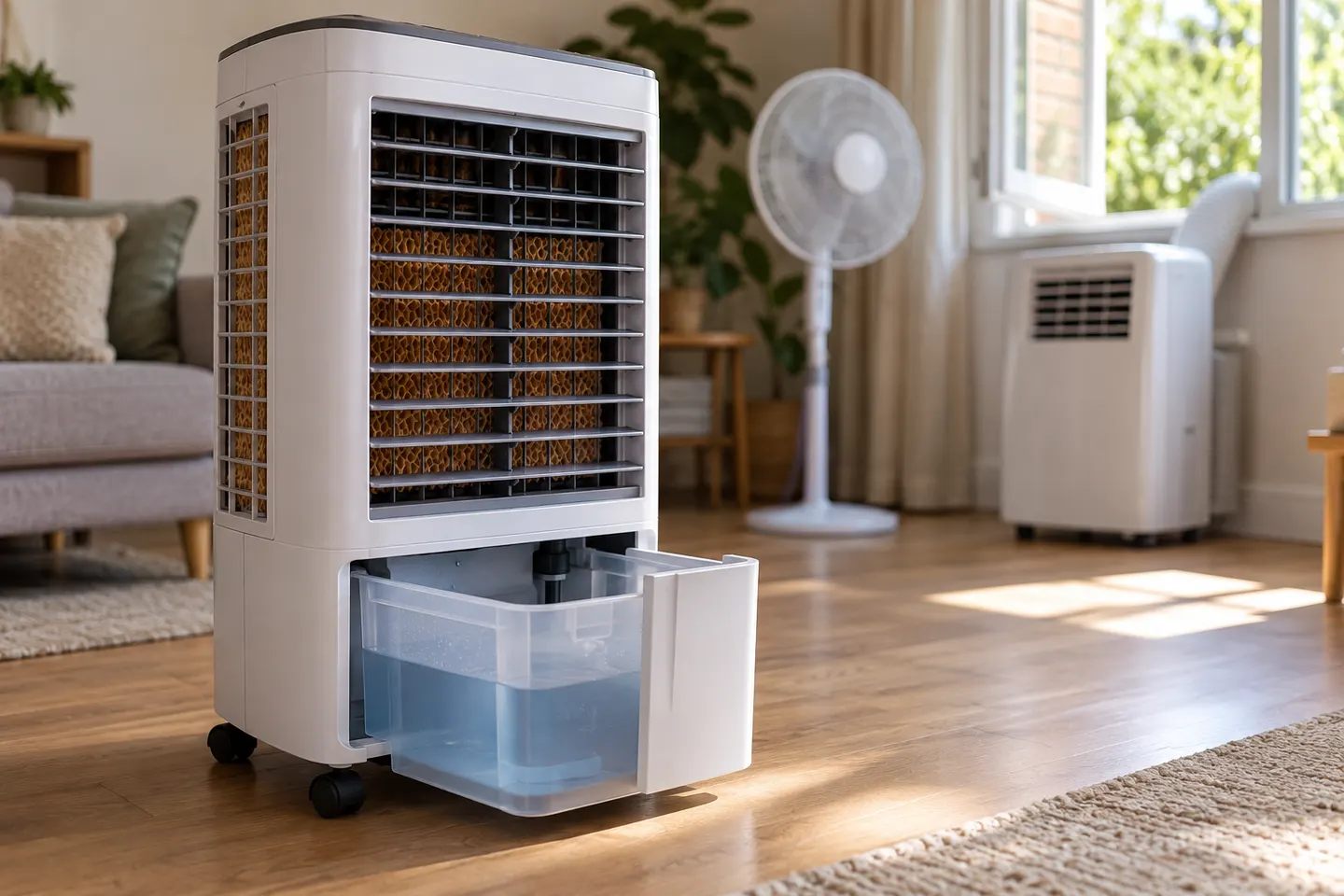
Switch the unit off and follow its manual. Fill only the designated reservoir to the marked limit with the recommended water; never pour water into vents or electrical controls. Add ice only if the manufacturer explicitly permits it.
05
How often should you change the water?
There is no universal interval. Empty and refresh the reservoir as directed by the manual, and sooner if water looks dirty or has been standing unused. Drain and dry the unit before storage when its instructions call for it.
06
How to clean and reduce noise
Unplug the cooler before cleaning. Remove and wash only parts the manual identifies as washable, wipe the tank, and let components dry before reassembly. If noise is bothersome, check that the unit is level, clear dust from approved intake areas, and use a lower fan setting; do not open the motor housing.
Common questions
Questions before you buy
What does an evaporative air cooler do?
It uses water evaporation to cool moving air while adding moisture. It creates a local breeze and is most effective in relatively dry conditions.
How do you reduce humidity from an air cooler?
A direct evaporative cooler adds moisture by design, so it cannot dehumidify the room. Ventilate as the manual recommends, pause water-cooling mode, or use an air conditioner or dehumidifier when moisture needs to be removed.
How long does a portable air cooler last?
Lifespan varies by model, care, water quality and use; there is no dependable universal number. Keep the tank and washable components clean and follow storage and maintenance instructions.
How can you reduce noise from an air cooler?
Place it on a stable, level surface, keep its intake and outlet unobstructed, and try a lower fan speed. Persistent rattling or a new mechanical sound calls for the model’s troubleshooting guide or service support.
Can you make a mini air cooler at home?
DIY water-and-fan projects may create a breeze, but they are not a substitute for a certified appliance and can introduce electrical, leak or mould risks. Choose a purpose-built unit and follow its safety instructions.
How does a portable evaporative air cooler differ from an air conditioner?
An evaporative cooler uses water and increases air moisture. An air conditioner uses a refrigerant cycle to transfer heat outdoors and typically removes moisture from indoor air.
A portable air cooler can mean an evaporative unit or simply a fan marketed for personal cooling. Start by matching the technology to your room and climate.
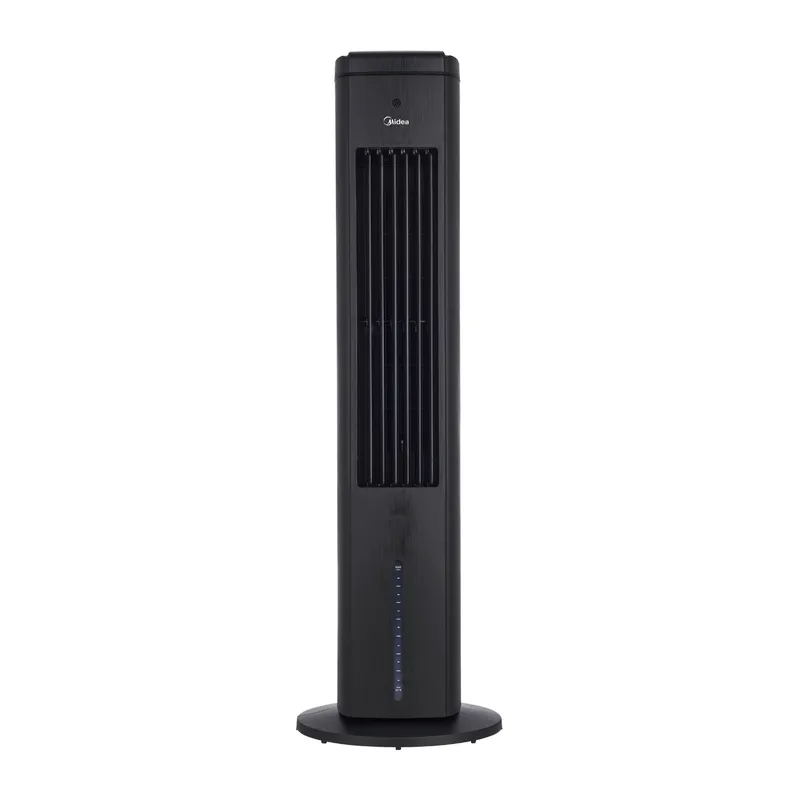
For a Canadian home, begin with Midea’s locally listed evaporative unit, then consider a personal fan or purifier fan if added moisture is a poor fit.
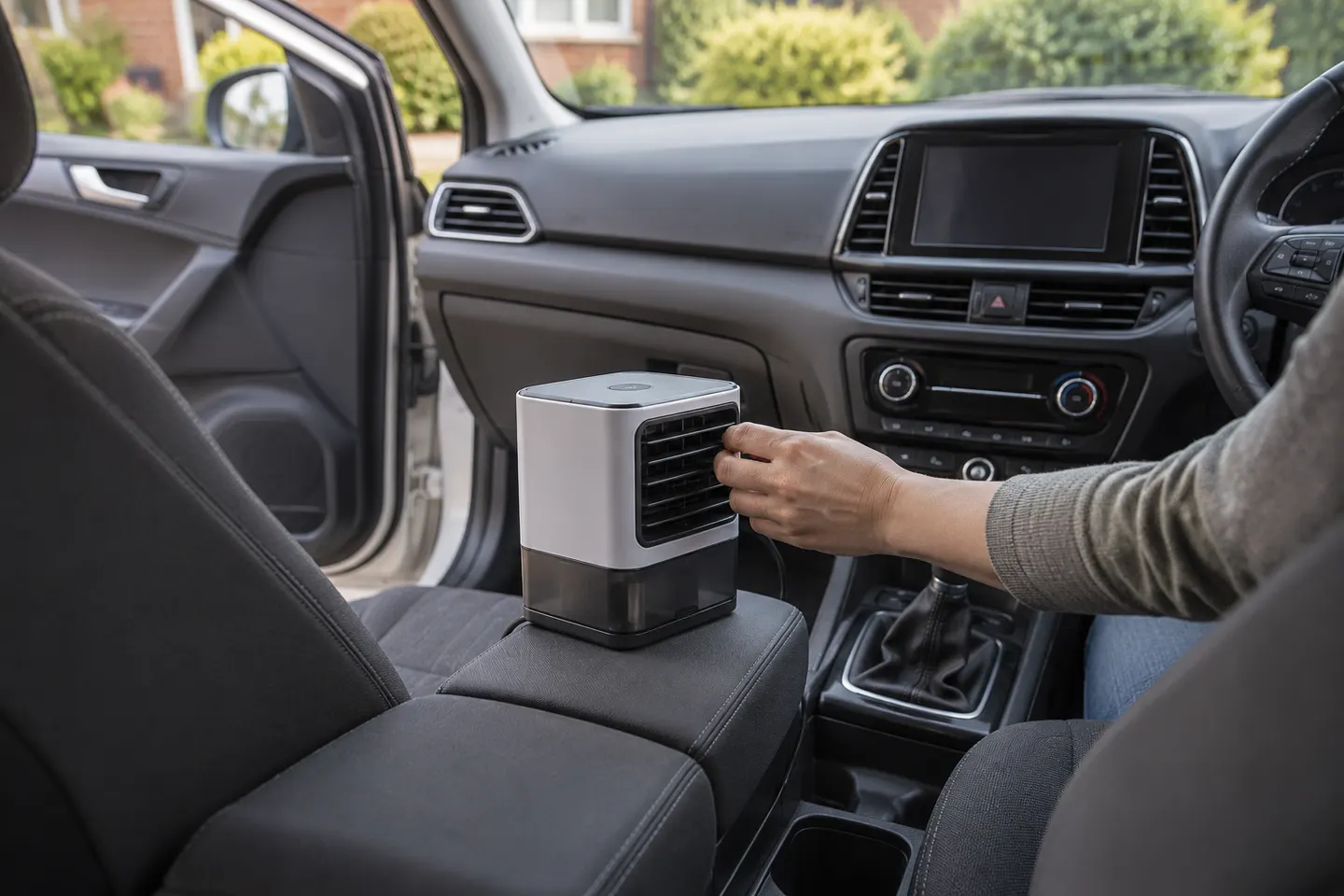
A true evaporative cooler needs water, ventilation and a suitable power source. For most vehicles, a compact fan is easier to use than a household cooler.
Midea Canada lists a direct-cooling evaporative unit. Its product details make it possible to compare controls and dimensions, while humidity and room ventilation remain key to fit.
Your privacy
We use cookies and similar technologies. Necessary ones keep the site working. With your permission we also use statistics cookies (Google Analytics and Microsoft Clarity) to understand which guides help readers. You can accept all, reject all or choose. You can change your choice at any time from "Cookie settings" at the bottom of every page. Cookie policy