Gearjury may earn a commission from qualifying retailer links. Our editorial choices remain independent.
Guide
How Does a Portable Air Cooler Work in the Home?
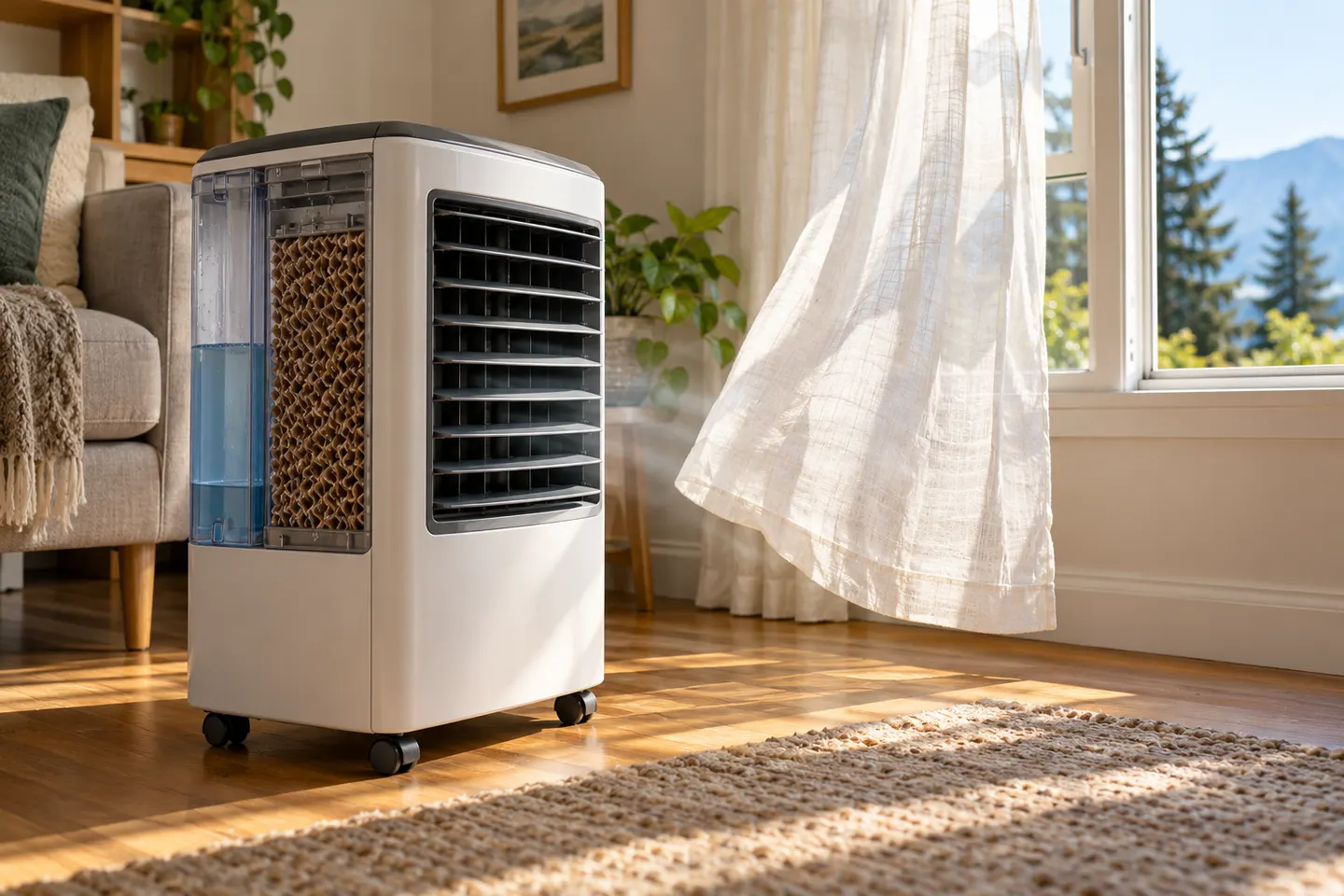
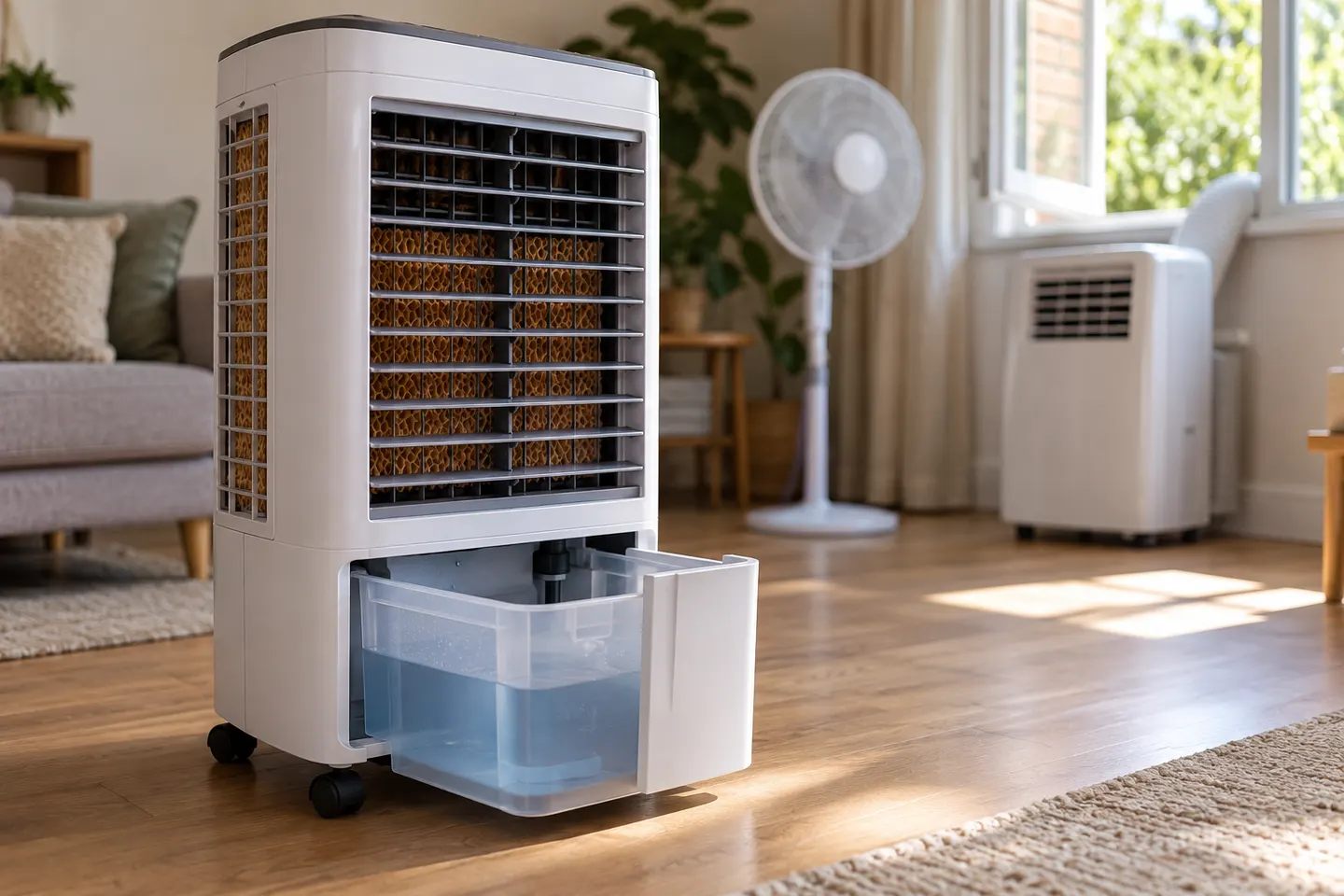
A portable evaporative air cooler draws air across water-wetted media; evaporation takes heat from that airflow and a fan sends it into the room. It adds moisture and works differently from refrigerant air conditioning.
GGearjury editorial team · Updated 22 October 2026· 6 min
01
How does portable air cooler work?
A pump wets a cooling pad or similar surface inside the unit. A fan moves room air across it; as water evaporates, it absorbs heat from that passing air. The outlet feels cooler, while moisture is added to the room.
02
How does an evaporative air cooler work differently from a fan?
A fan mainly moves existing room air across your skin. An evaporative cooler also passes air over water, which can lower the temperature of the outgoing stream while increasing humidity. Neither process removes heat from the room with a compressor.
03
Why does humidity affect air cooler performance?
Evaporation slows when surrounding air already contains more moisture, leaving less capacity for water to evaporate. That can reduce the cooling effect and make the room feel damp; ventilation exchanges humid indoor air.
04
How to make a portable air cooler work effectively
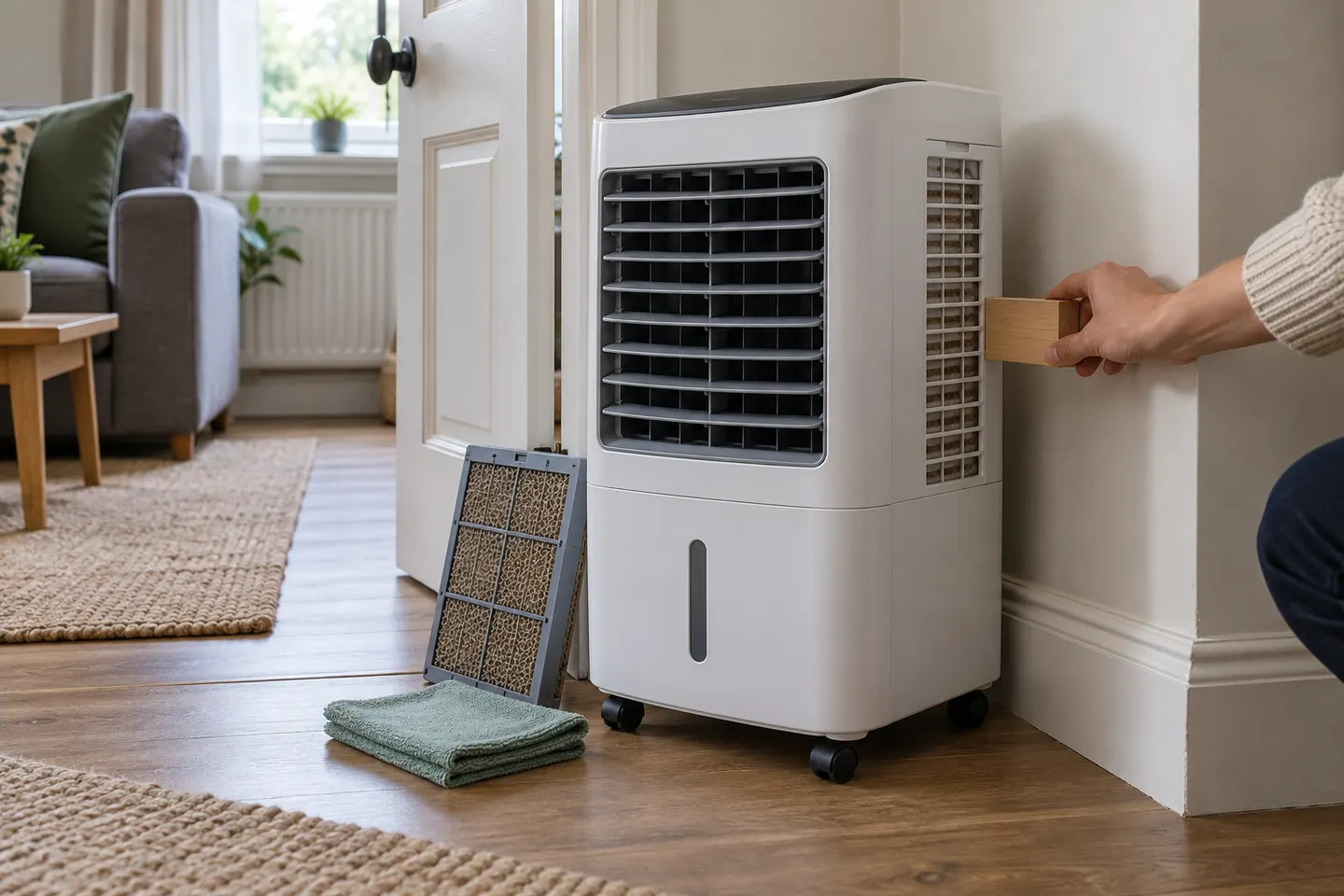
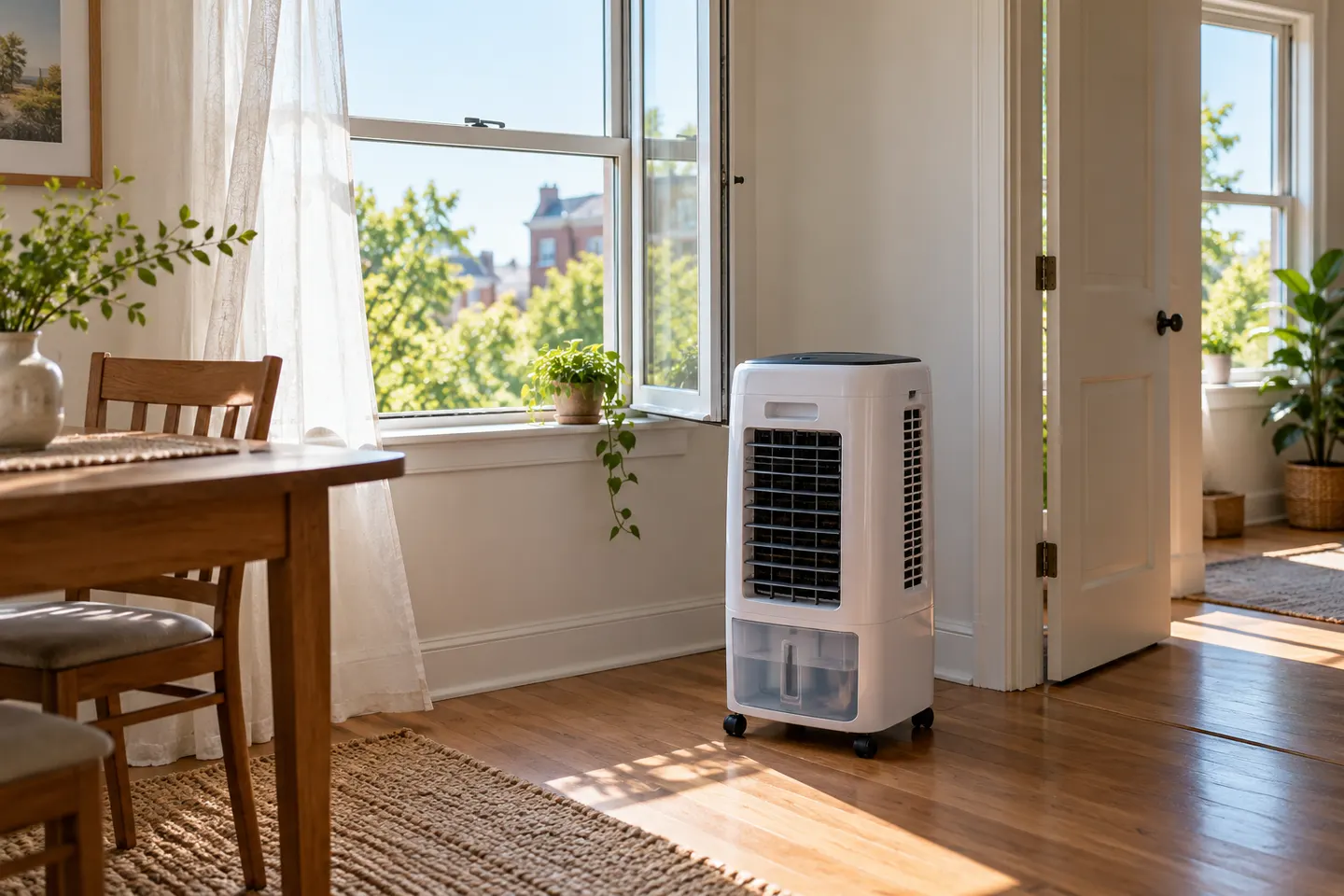
Place it where air can enter and leave freely, direct the outlet towards the occupied area, and use clean water as the manual instructs. Keep the tank and pad clean. If humidity builds, try suitable ventilation. Ice packs are optional only where the maker allows them.
05
Do portable air coolers work in high humidity?
They are generally less effective in high humidity because the air has less capacity to take up extra water. If your room is already muggy, a fan or a properly vented air conditioner may suit you better.
06
When should you choose air conditioning instead?
Choose an air conditioner when you need active heat removal and more controlled room cooling. Portable air conditioners discharge heat outdoors through a hose; evaporative coolers need no such hose because they add moisture rather than exhausting heat.
Common questions
Questions before you buy
How does an air cooler work without a hose?
It cools outgoing airflow through evaporation rather than removing heat from the room. It has no hot-air exhaust duct, but it adds moisture indoors.
How to make a portable air cooler?
Do not improvise an electrical appliance from loose components. To set up a manufactured cooler, follow its manual, and use only compatible ice packs.
Do evaporative coolers work in high humidity?
Their cooling effect is usually weaker because water evaporates less readily into humid air. Added moisture can also make a closed room uncomfortable.
Does an evaporative air cooler lower the room temperature?
It can lower the temperature of the air leaving the unit, but it does not remove room heat like an air conditioner. Any room-wide change depends on conditions, air exchange and the appliance.
Should windows be open when using an air cooler?
Follow the product instructions and monitor comfort. Some air exchange can help carry added moisture away, especially if the space starts to feel humid.
A portable air cooler unit must be practical to live with. Measure its position, plan water access and read the cleaning routine before focusing on extra modes.
If you need cooling without a window hose, an evaporative air cooler is one option. It uses water and airflow, so check ventilation needs and room conditions before buying.
The best portable air cooler is one that suits the room's humidity and ventilation. Compare these real evaporative models only after confirming that this cooling method meets your needs.
A portable air cooler can mean an evaporative unit, a fan or a portable air conditioner in shopping results. Identify the cooling method before choosing a model.
Your privacy
We use cookies and similar technologies. Necessary ones keep the site working. With your permission we also use statistics cookies (Google Analytics and Microsoft Clarity) to understand which guides help readers. You can accept all, reject all or choose. You can change your choice at any time from "Cookie settings" at the bottom of every page. Cookie policy