








 Official manufacturer image
Our picks
Top picks
Official manufacturer image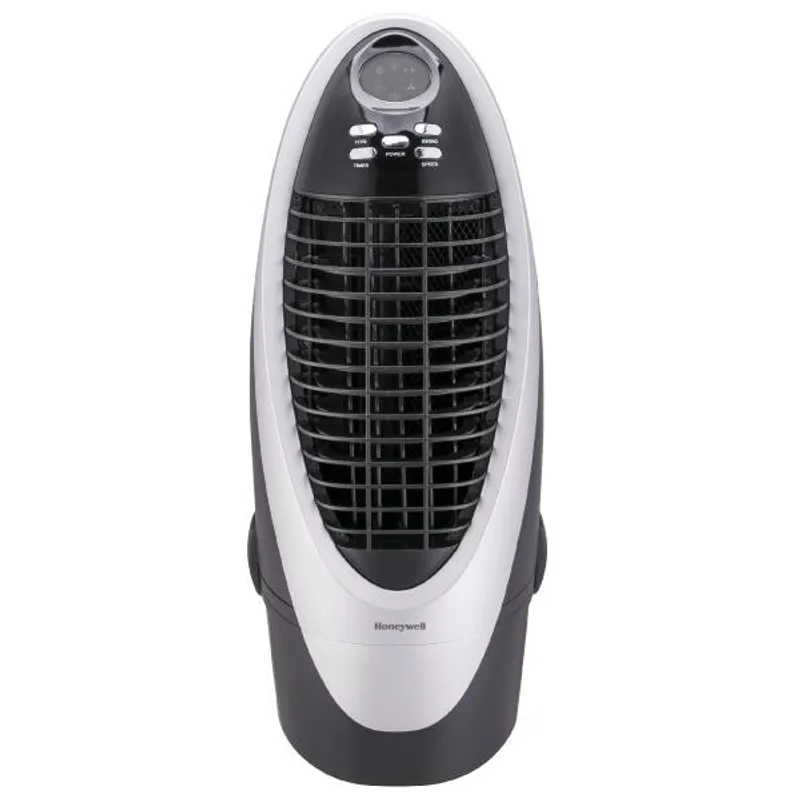 Official manufacturer image
Honeywell CS10XE
Check price on Amazon.ca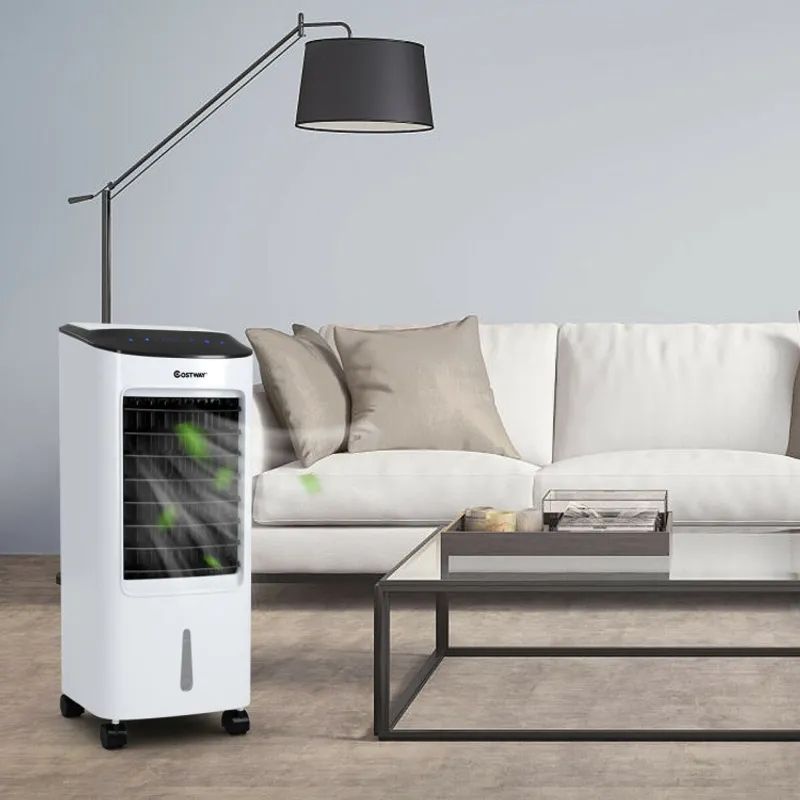 Official manufacturer image
Costway EP23995
Check price on Amazon.caCommon questions
Questions before you buy
What is an evaporative air cooler system?
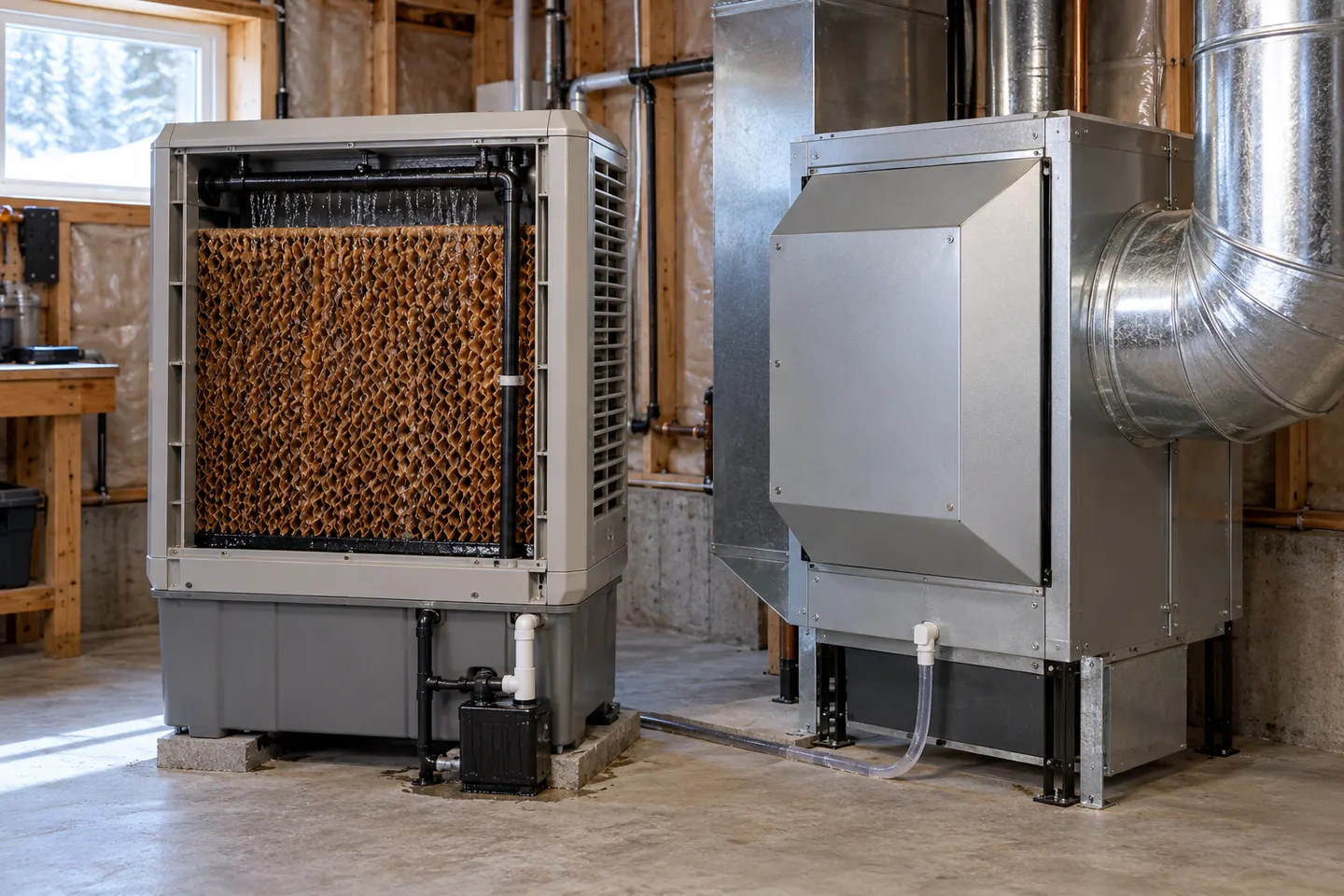
It uses water evaporation to reduce the temperature of moving air. Direct systems humidify the supply air; indirect systems use a heat exchanger to reduce moisture transfer.
Does an air cooler system need an open window?
Direct evaporative systems need a route for air to leave the space, commonly an open window or vent. Follow the installation guidance for the specific design.
Can an evaporative system cool an entire house?
Some installed systems are designed for whole-home airflow, while portable units serve more local areas. Capacity, layout, climate and adequate exhaust ventilation determine suitability.
What is the difference between direct and indirect cooling?
Direct cooling evaporates water into the air being supplied. Indirect cooling transfers heat through a heat exchanger so the supply stream gains less moisture.