
Independent buying guidance · Canada editionHow we work
Gearjury
All categories
All categories
Best picksThe Best Dash Cam Cameras for Different Drivers
Best picksBest WiFi Extenders in Canada for Different Home Networks
Best picksBest Meat Thermometers in Canada for 2026
Best picksBest Winter Gloves for Canadian Conditions (2026)
Best picksBest Headlamps: Compare Reliable Options for Canada
Best picksRadar Detector Best Picks for Canadian Drivers (2026)
Best picksBest Portable Air Coolers to Consider in 2026
Best picksBest cordless grass trimmers with a battery and charger
Best picksBest Air Purifier for Bedroom in the Canada: Quiet Models Compared
CanadaEnglish

Gearjury may earn a commission when you buy through a retailer link. Our editorial guidance is based on the cited sources.

Guide

Can You Use a Meat Thermometer to Check Your Temperature?

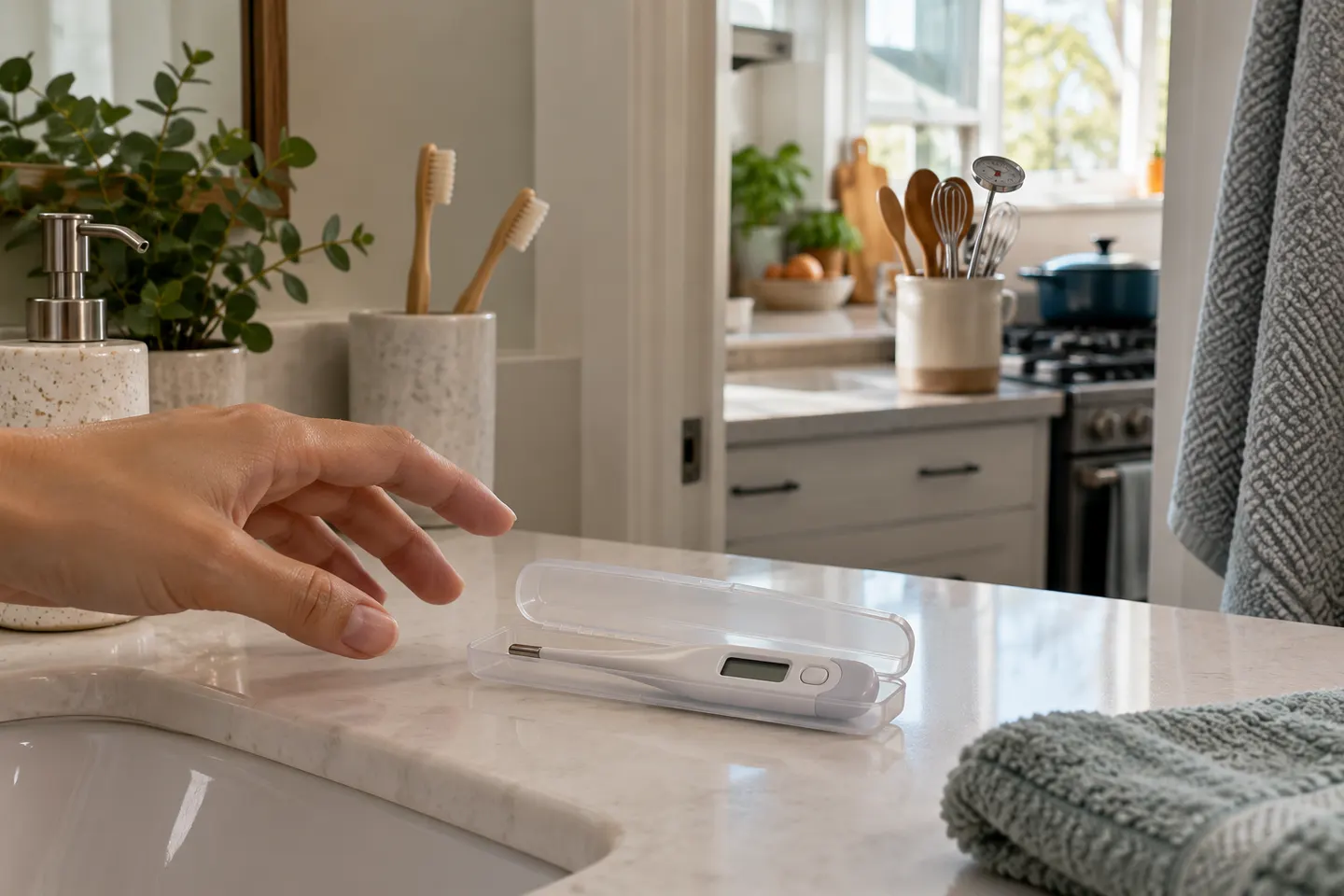
Can you use a meat thermometer to check your temperature? You may get a number, but you should not rely on it: use a digital clinical thermometer designed for the body instead.

Can You Use a Meat Thermometer to Check Your Temperature?
01

Can you use a meat thermometer for body temperature?

Do not use a meat thermometer to diagnose a fever. A kitchen probe is designed and calibrated for food, not for an oral, armpit, ear or rectal reading. Its useful range, precision, probe shape and response at human-body temperatures may differ from those of a clinical device. There is also a cross-contamination risk if the probe has contacted raw food. HealthLink BC recommends a digital thermometer for oral and armpit measurements; follow the clinical thermometer's instructions for the person's age and measurement site.
02

Can you measure water temperature with a meat thermometer?

Usually, provided the temperature falls within the model's stated range and the manufacturer permits liquid use. Immerse only the sensing portion, keep it away from the vessel's sides and bottom, and never submerge the display or cable connection unless the instructions say it is waterproof. Stir the water carefully for a more representative reading and clean the probe after use.

03

Can you use a meat thermometer to check oil temperature?

Only if the thermometer's specified range covers the oil temperature and its instructions allow this use. Clip-on deep-fry or candy thermometers are generally easier to position for continuous monitoring. An instant-read probe may be suitable for a brief check, but it should not touch the pan and must not be left in hot oil unless the manufacturer explicitly describes it as leave-in. Keep hands clear of splashes and never add a wet probe to hot oil.

04

Can you use a meat thermometer for soil temperature?

A probe may produce a rough reading if its range includes the expected soil temperature, but a dedicated soil thermometer is the better tool. Soil can bend a fine kitchen probe, and shallow or inconsistent placement can distort the result. If you use a sturdy food probe temporarily, make a pilot hole, measure at a consistent depth and wash and sanitize the probe before it returns to food use.

05

Can you use a meat thermometer to check refrigerator temperature?

An instant-read meat thermometer is not the best way to monitor refrigerator air. Use a refrigerator or appliance thermometer designed to remain in the compartment and read accurately at cold temperatures. The USDA notes that an appliance thermometer can stay inside continuously; this shows conditions over time rather than one brief probe reading.

06

What thermometer checks the surface temperature of food?

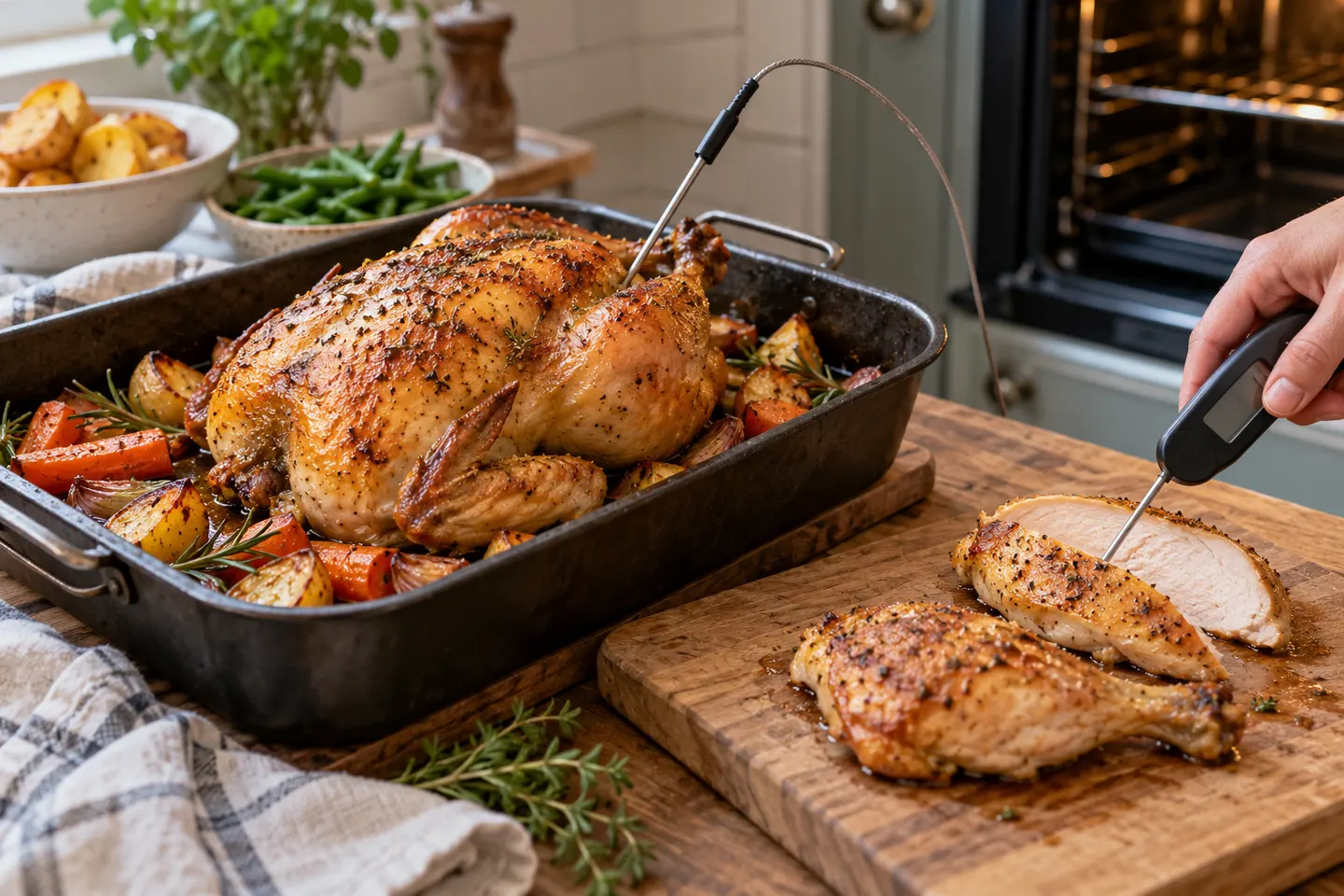
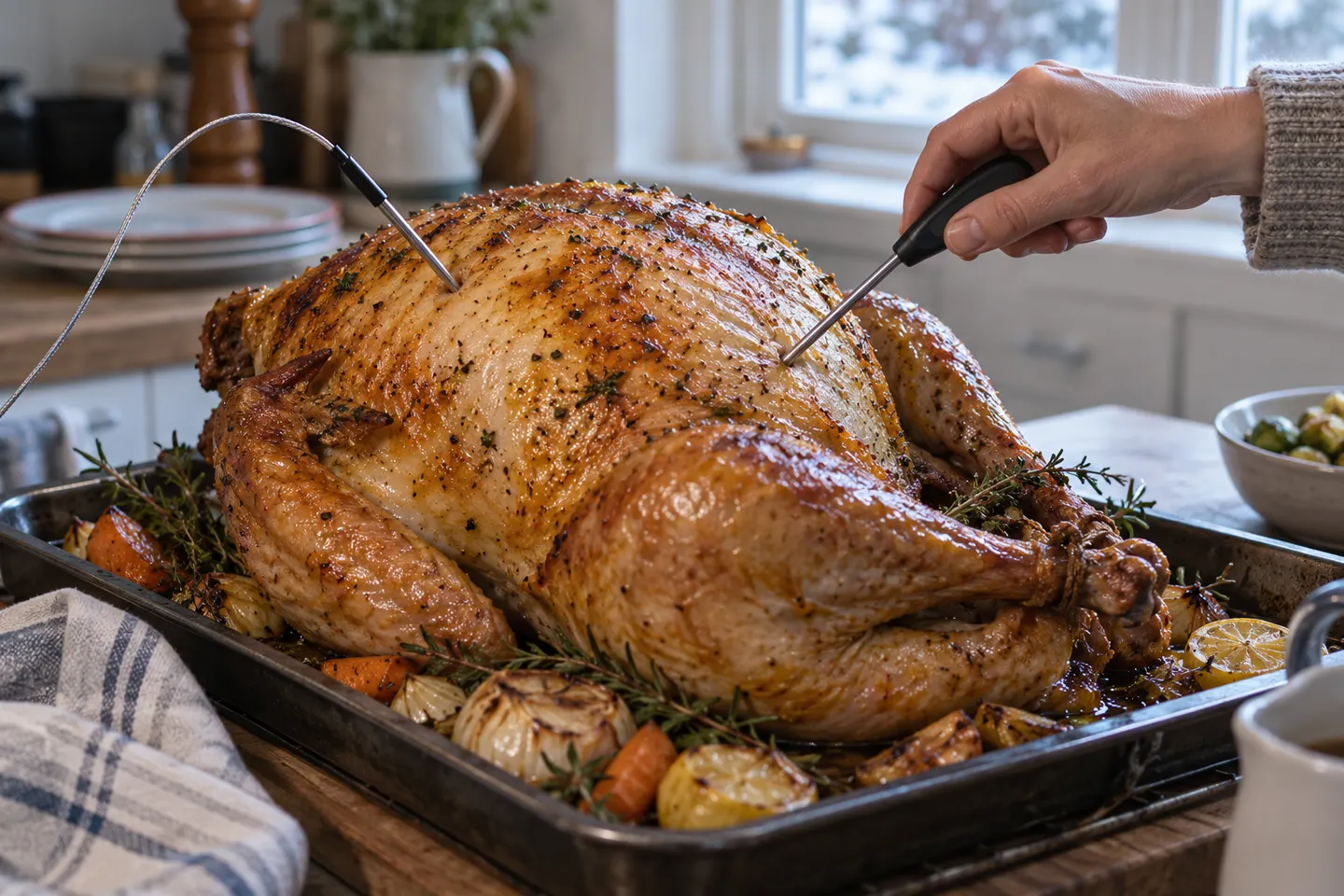
An infrared thermometer measures surface temperature without touching the food. It does not tell you the internal temperature, so it cannot replace a clean probe thermometer when you need to confirm that meat or poultry is safely cooked. For an internal reading, insert a food thermometer into the thickest part and avoid bone, fat and gristle.

07

How we reached this guidance

We compared Canadian public-health guidance for taking body temperature with official food-thermometer and appliance-thermometer guidance. The intended use matters more than whether two devices display the same unit: check the manufacturer's range, immersion limit, cleaning instructions and leave-in rating before using any kitchen thermometer beyond its usual task.

Common questions

Questions before you buy

Can you measure water temperature with a meat thermometer?

Yes, if the water is within the thermometer's stated range and the manufacturer permits liquid use. Keep the probe off the container and do not immerse parts that are not waterproof.

Can you use a meat thermometer for soil temperature?

It may give a rough reading, but a soil thermometer is more suitable and less likely to be damaged. Use consistent depth and thoroughly clean any food probe afterward.

Can you use a meat thermometer to check water temperature?

Often, yes, for a brief measurement within the device's rated range. Follow its immersion limit and keep the sensing area away from the vessel's sides and bottom.

Can you use a meat thermometer to check refrigerator temperature?

A dedicated refrigerator thermometer is the better choice because it is designed for cold air and continuous monitoring. A quick probe reading does not show how the compartment changes over time.

Can you use a meat thermometer to check oil temperature?

Only when its temperature range and instructions cover hot oil. Do not leave an instant-read model in the pan unless it is explicitly rated for continuous use.

Can you use a meat thermometer for body temperature?

No, not for a dependable health decision. Use a clinical digital thermometer designed for the body and follow its instructions for the measurement site.

What thermometer checks the surface temperature of food?

An infrared thermometer checks the surface. Use a probe food thermometer when you need the internal temperature.

Will a food thermometer check my temperature?

It might display a reading, but that does not make it reliable for detecting a fever. A clinical thermometer is designed for human-body measurement.

Can you check your temperature with a food thermometer?

You should not rely on one. Use a clinical thermometer to avoid unsuitable accuracy, probe design and food cross-contamination.

Which type of thermometer checks the surface temperature of food?

A non-contact infrared thermometer measures food-surface temperature. It cannot confirm the temperature at the centre of the food.

Sources and how we chose