How does evaporative cooling work?
A fan draws air through water-wetted pads. Some water evaporates, taking heat from the passing air; the resulting supply air is cooler and more humid. This is the basic operation of a direct evaporative cooler.

 Best picksThe Best Dash Cam Cameras for Different Drivers
 Best picksBest WiFi Extenders in Canada for Different Home Networks
 Best picksBest Meat Thermometers in Canada for 2026
 Best picksBest Winter Gloves for Canadian Conditions (2026)
 Best picksBest Headlamps: Compare Reliable Options for Canada
 Best picksRadar Detector Best Picks for Canadian Drivers (2026)
 Best picksBest Portable Air Coolers to Consider in 2026
 Best picksBest cordless grass trimmers with a battery and charger
 Best picksBest Air Purifier for Bedroom in the Canada: Quiet Models Compared
Gearjury may earn a commission from qualifying retailer links.
Guide
Yes: evaporative air coolers can lower incoming air temperature by evaporating water, especially in dry conditions. They add moisture and need an outlet for air, so they are not a like-for-like air conditioner replacement.
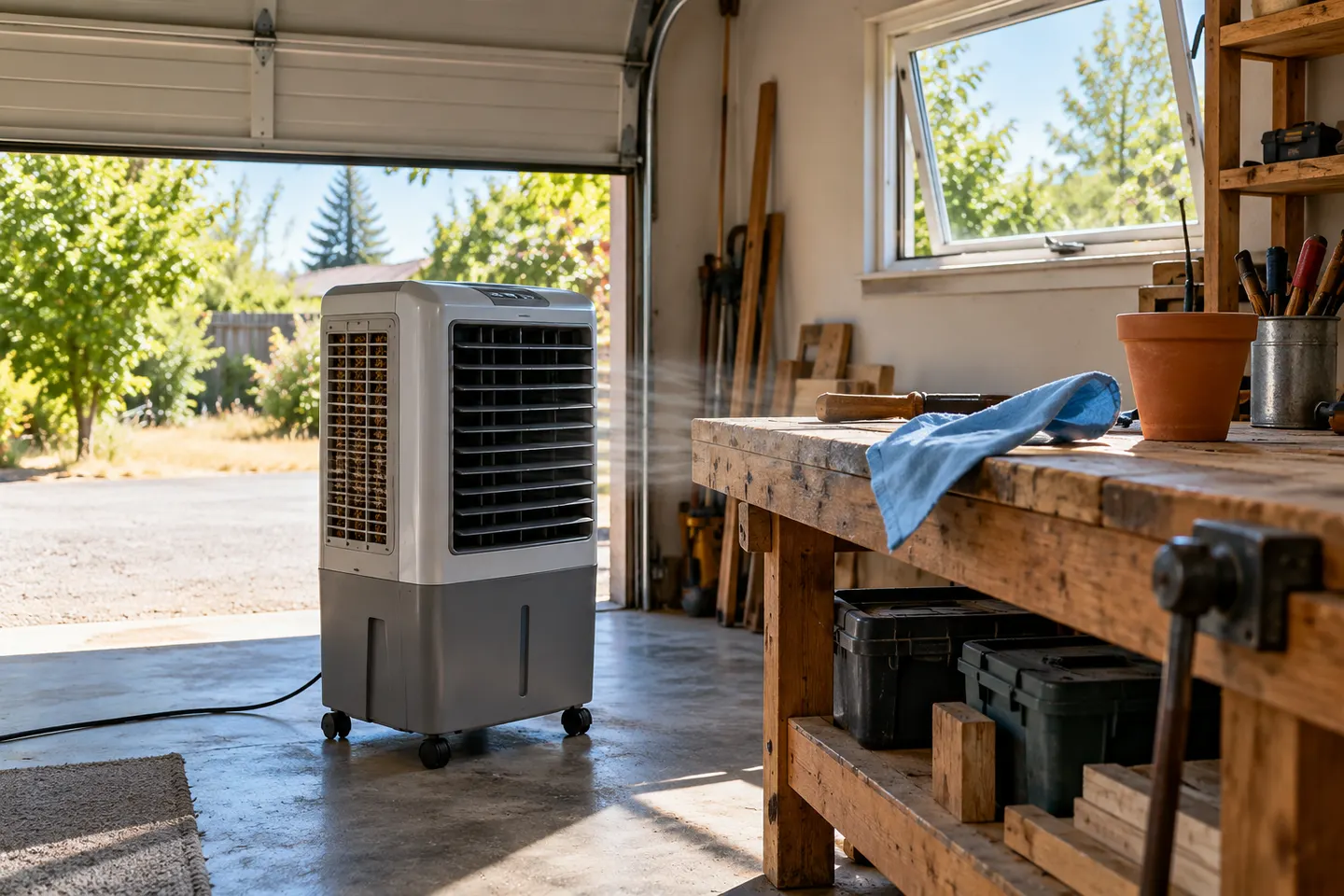
A fan draws air through water-wetted pads. Some water evaporates, taking heat from the passing air; the resulting supply air is cooler and more humid. This is the basic operation of a direct evaporative cooler.
It works less effectively as the air becomes more humid because less water can evaporate. In a humid climate, a fan or refrigeration-based air conditioner may be a better fit for the cooling task.
A direct unit sends humidified air into the room. An open window, door or vent gives displaced indoor air a route out and helps prevent moisture from accumulating.
An evaporative cooler uses water evaporation and does not dehumidify like a typical air conditioner. AC moves heat through a refrigeration cycle and generally requires a way to reject that heat outdoors.
Outdoor humidity, inlet temperature, airflow, pad condition and where the unit is placed all matter. Use the manufacturer's room guidance as a starting point, not a guarantee of a particular room temperature.
Clean and drain the reservoir as directed, inspect the cooling media and follow the manual’s seasonal storage instructions. Maintenance helps keep the water path and airflow in the condition intended by the manufacturer.
Common questions
They can cool incoming air through evaporation, with the strongest effect generally in dry conditions. Ventilation is needed because the process adds moisture.
A direct evaporative cooler needs an exhaust path for indoor air. Operating it in a closed room can allow humidity to build up.
There is no universal result; performance depends on climate, room and equipment. It is a different technology and does not provide the same dehumidifying action as typical AC.
Usage varies by fan and pump power and by operating time. Compare the manufacturer’s wattage with the rating of an air conditioner serving a similar space.
Keep exploring
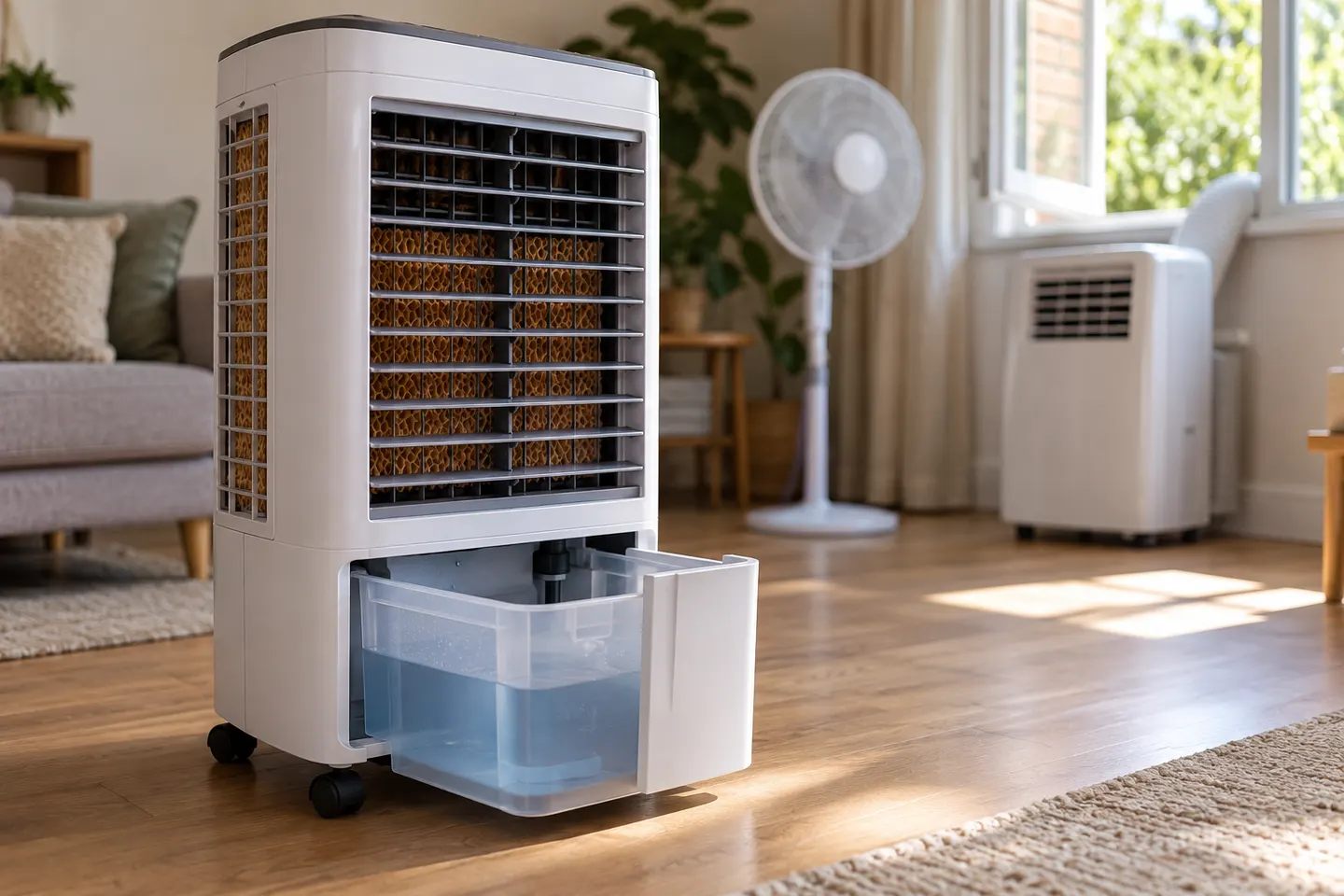
A portable air cooler can mean an evaporative unit or simply a fan marketed for personal cooling. Start by matching the technology to your room and climate.
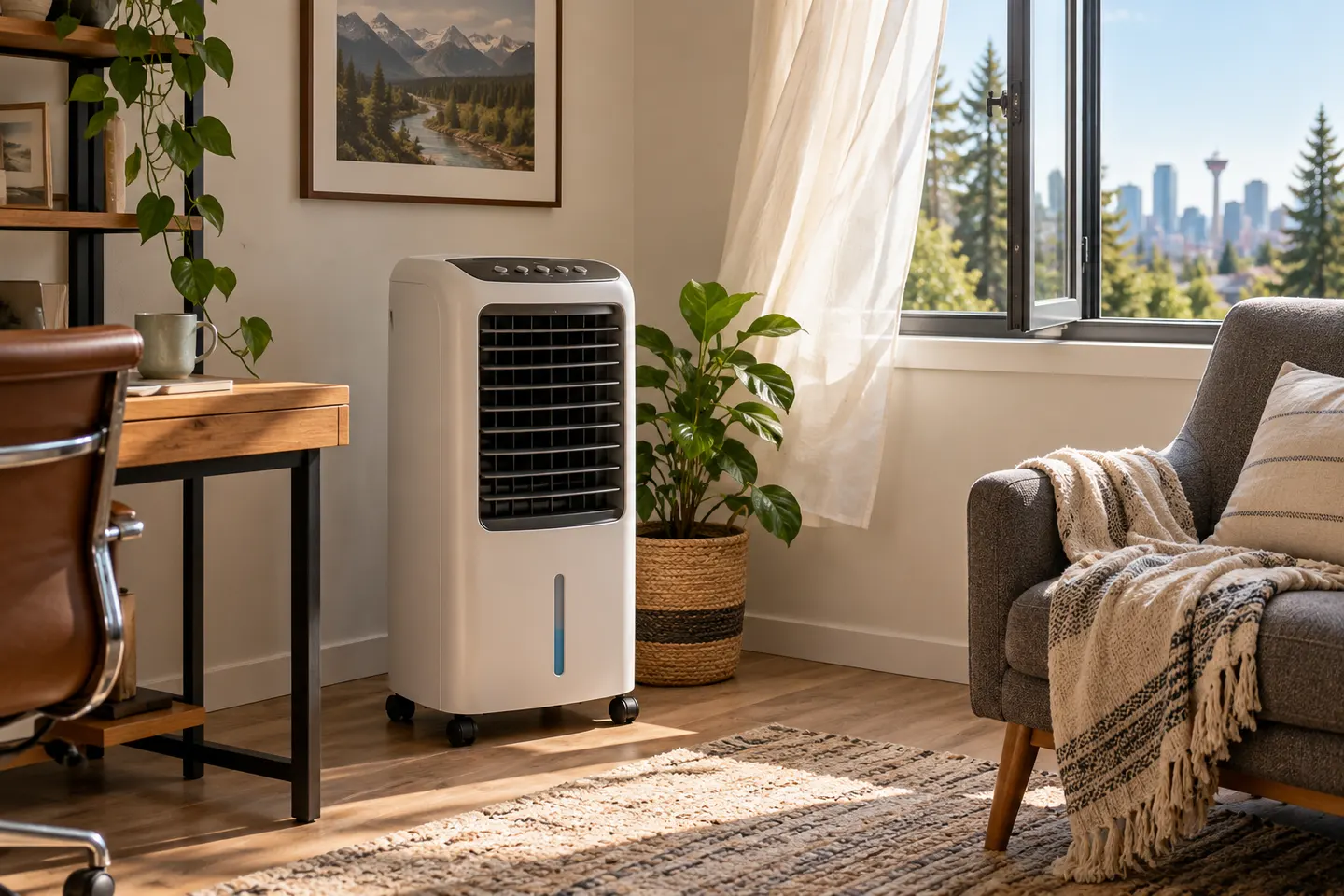
An indoor evaporative cooler is most useful where air is dry and a window or vent can let air escape. It adds moisture as it cools, so room conditions matter.
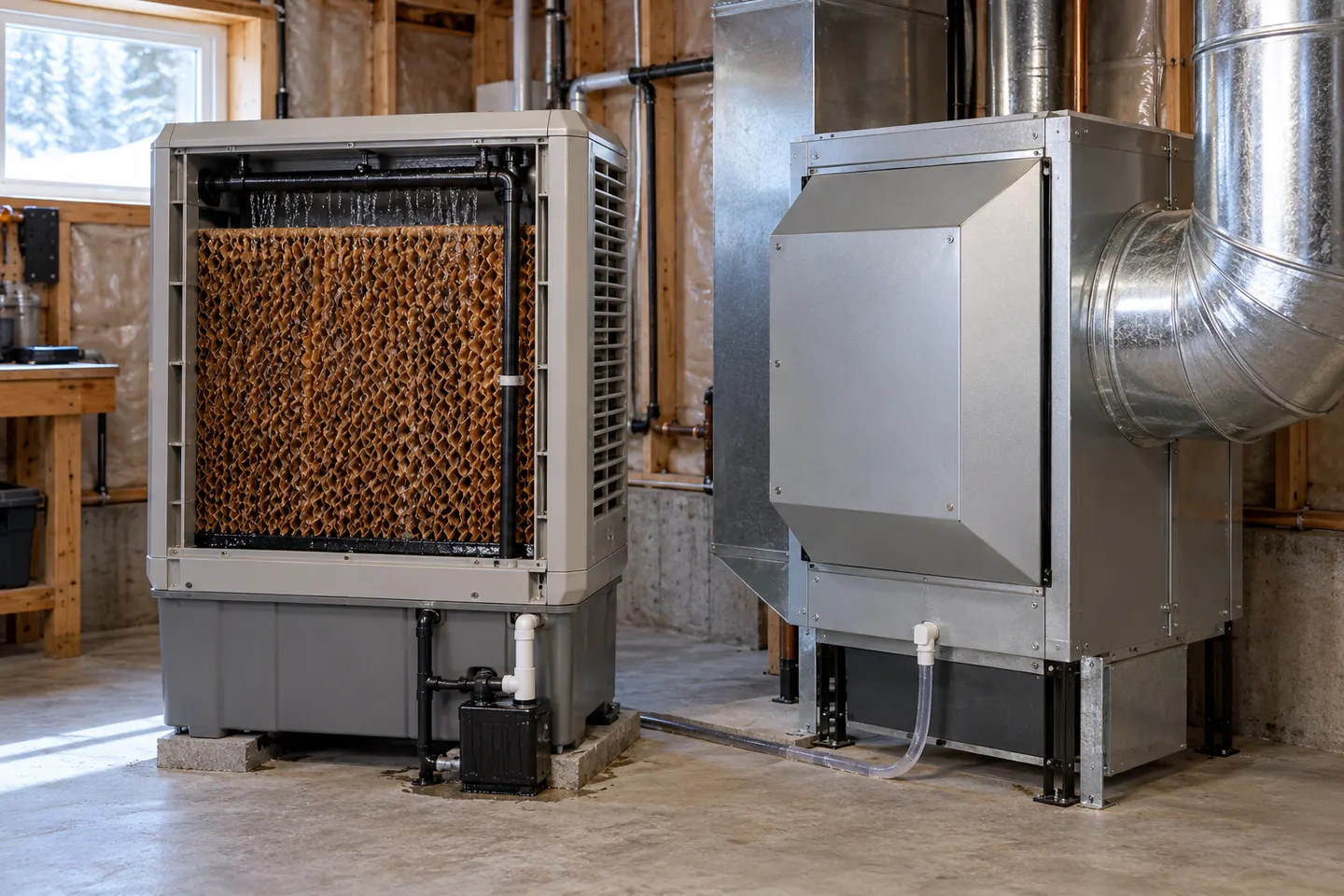
Direct evaporative systems cool air through wet media and add moisture; indirect designs use heat exchange to limit that effect. The right system depends on climate, space and installation.
For a Canadian home, begin with Midea’s locally listed evaporative unit, then consider a personal fan or purifier fan if added moisture is a poor fit.