What happens inside an evaporative cooler?
A fan pulls air through water-wetted media. As some water evaporates, the air temperature can fall while its moisture content rises; the fan then moves that air into the space.

 Best picksGood Meat Thermometers for Every Kind of Cook
 Best picksBest WiFi Extenders: Which Range Extender Should You Buy?
 Best picksBest Dash Cams for Cars in 2026
 Best picksBest Radar Detectors for Cars: Models Compared
 Best picksGood Winter Gloves for Cold Weather: Five Useful Picks
 Best picksBest Headlamps: Six Lights Compared for Different Uses
 Best picksTop 10 Best Battery-Powered Weed Eaters for Different Yards
 Best picksBest Portable Air Coolers for Patios, Workshops and Small Spaces (2026)
 Best picksBest Air Purifier for Bedroom in the US: Quiet Models Compared
Gearjury may earn a commission from retailer links. This guide uses cited technical information.
Guide
They can provide useful cooling in dry conditions, but results depend on ventilation, humidity and choosing the right appliance.
A fan pulls air through water-wetted media. As some water evaporates, the air temperature can fall while its moisture content rises; the fan then moves that air into the space.
Evaporation becomes less effective when air already contains more water vapour. In humid conditions, the unit may add clamminess without delivering the same temperature change as it would in dry air.
Direct evaporative systems supply outdoor air rather than recirculating a sealed room. Provide an exit path through a window or vent so warm, moist air can move out.
A conventional air conditioner uses a refrigeration cycle to move heat outdoors and typically dehumidifies indoor air. An evaporative cooler uses water evaporation and raises indoor humidity.
Follow the manual for draining, cleaning the reservoir and caring for pads. Mineral deposits can restrict airflow, and standing water needs regular attention.
Consider typical humidity, window and vent arrangements, the maker?s room guidance, water handling and noise. The label ?air cooler? alone does not answer these questions.
Common questions
They are less effective when the air is humid because evaporation slows. Check local conditions and manufacturer guidance.
Direct evaporative models need an air exit path. Follow the instructions for the particular unit and room.
It can lower incoming air temperature under suitable dry conditions, but the effect across a room depends on airflow, ventilation and heat entering the space.
Water is the core evaporative medium. Some products allow ice packs, but that does not remove the need for ventilation or make the unit equivalent to air conditioning.
Keep exploring
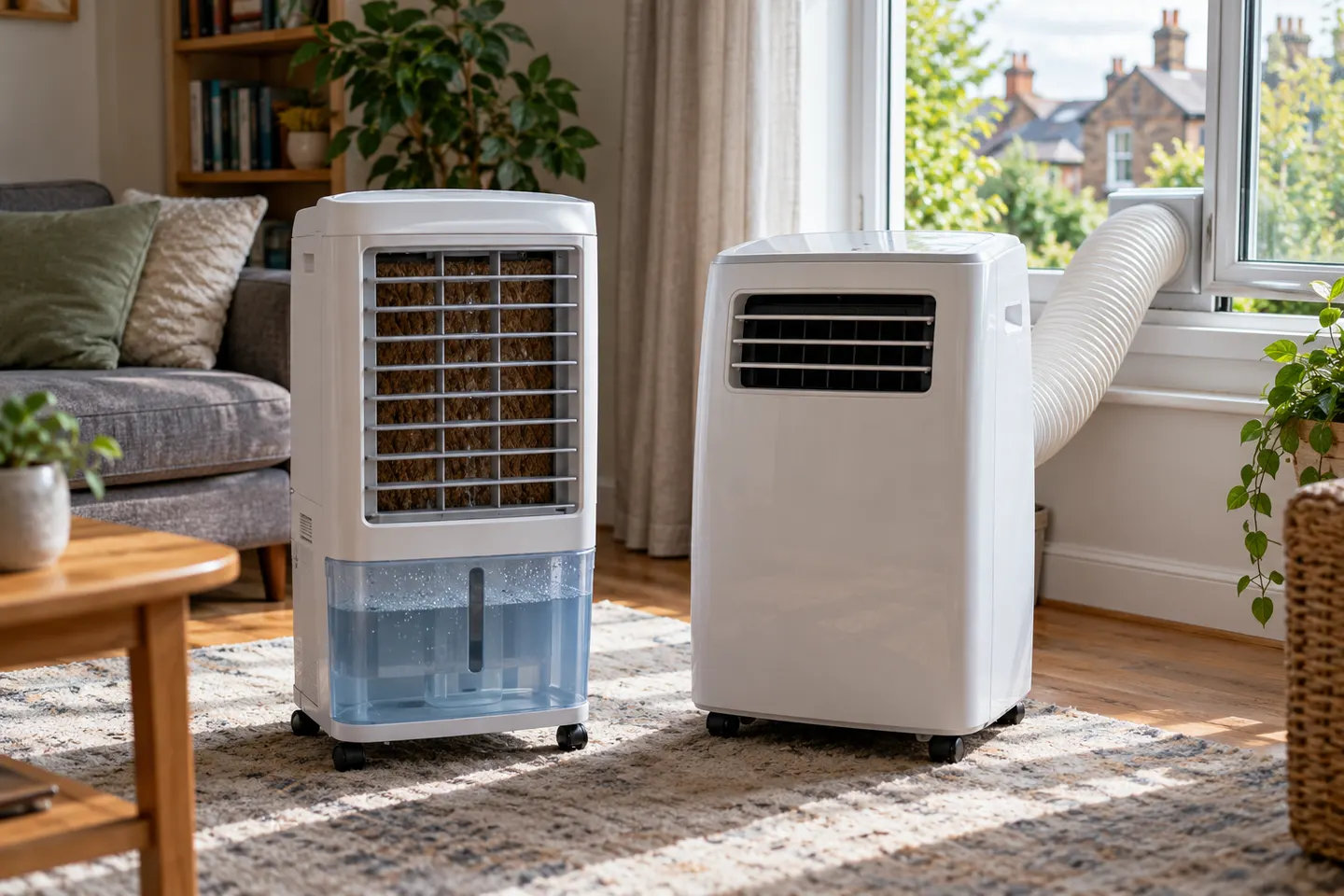
An evaporative cooler can make a nearby breeze feel cooler, but it is not a portable air conditioner. Climate and ventilation determine which option fits.
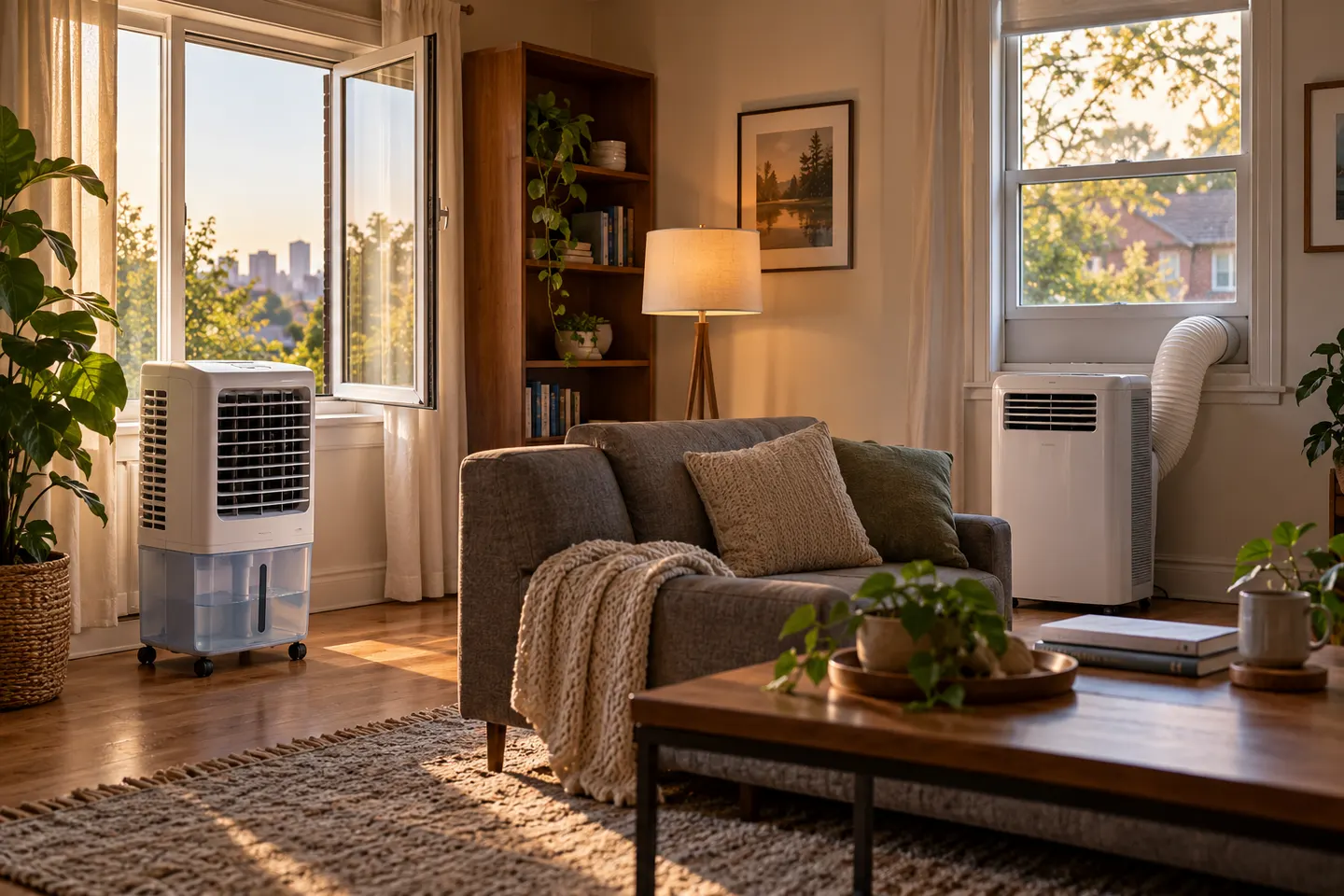
Evaporative coolers circulate air through wet media; portable air conditioners move heat through an exhaust hose. The better choice depends on humidity and room setup.
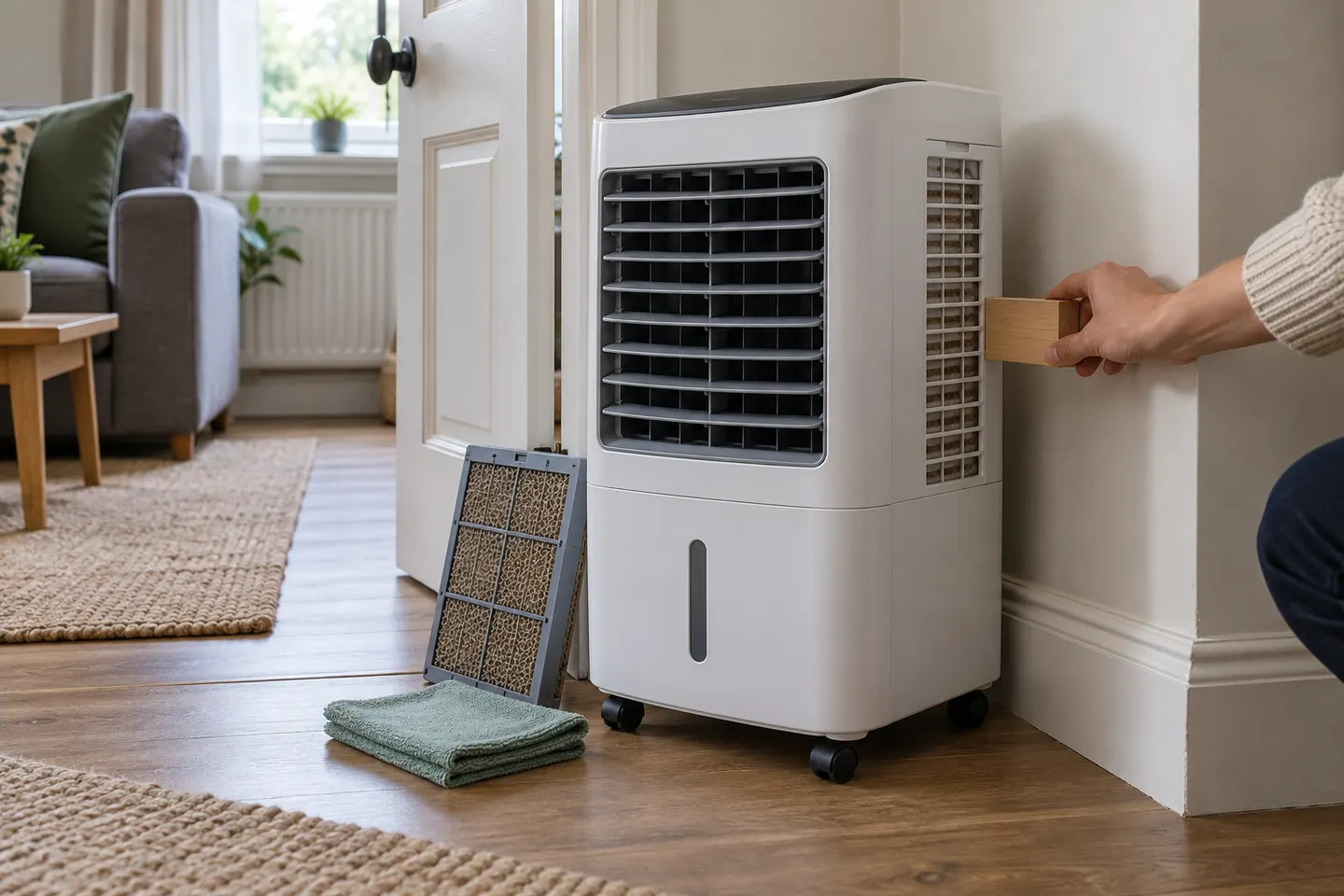
Match an evaporative cooler’s airflow and water capacity to the area you occupy. These units move air and add moisture; they do not replace a refrigeration AC.
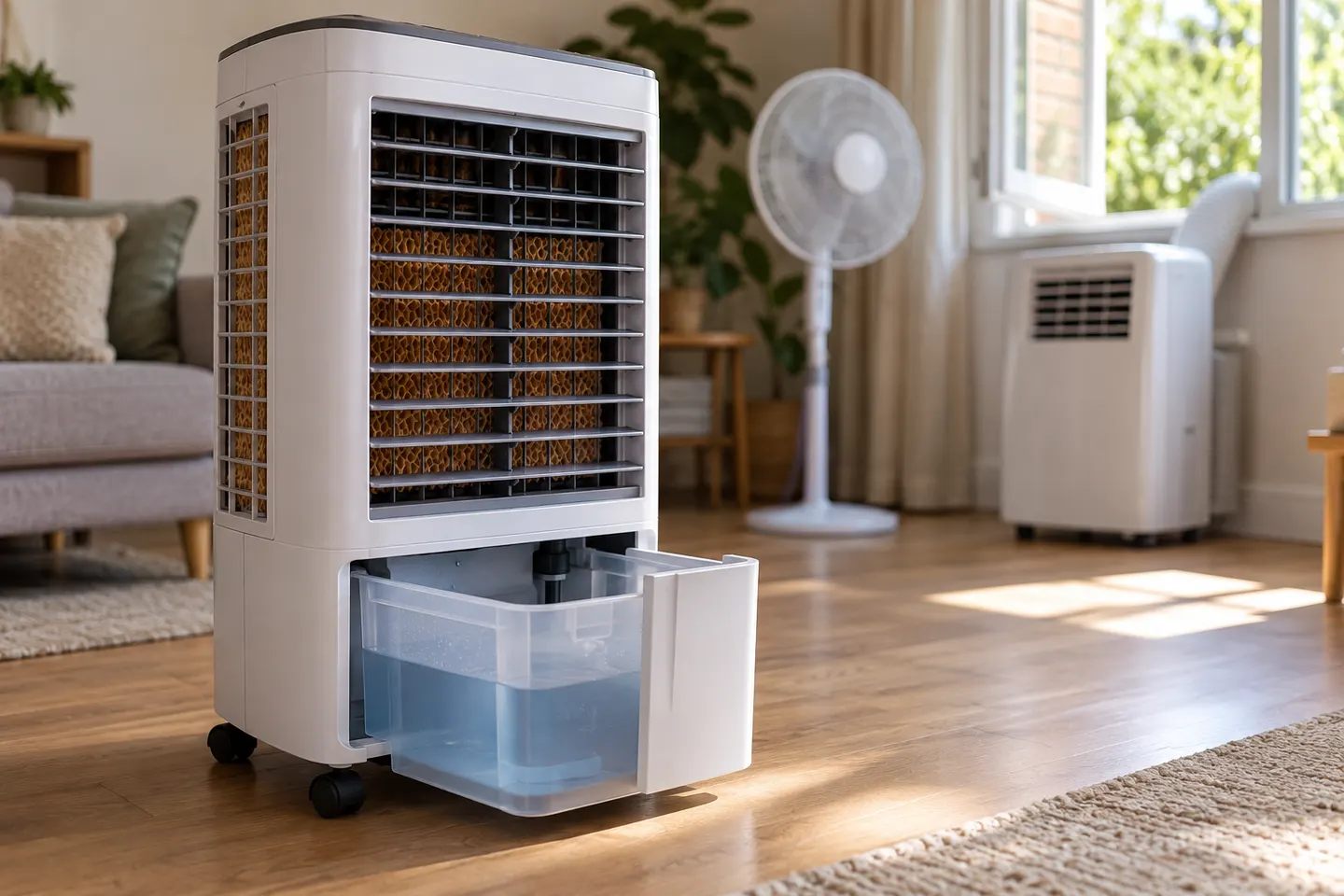
A portable air cooler can mean a fan-based evaporative unit or a portable air conditioner. Start with your climate: evaporative models add moisture and suit dry conditions, while air conditioners actively remove heat from a room.