How does a 360 car camera work?
Wide-angle cameras placed at the front, rear and under the side mirrors capture overlapping areas. A controller receives the feeds in real time and prepares them for display.

 Best picksThe Best Dash Cam Cameras for Different Drivers
 Best picksBest WiFi Extenders in Canada for Different Home Networks
 Best picksBest Meat Thermometers in Canada for 2026
 Best picksBest Winter Gloves for Canadian Conditions (2026)
 Best picksBest Headlamps: Compare Reliable Options for Canada
 Best picksRadar Detector Best Picks for Canadian Drivers (2026)
 Best picksBest Portable Air Coolers to Consider in 2026
 Best picksBest cordless grass trimmers with a battery and charger
 Best picksBest Air Purifier for Bedroom in the Canada: Quiet Models Compared
Gearjury may earn a commission from relevant retailer links. Explanations are based on cited technical sources.
Guide
Four wide-angle cameras usually capture the front, rear and sides. Software corrects distortion, changes perspective and stitches those feeds into a simulated overhead parking view.
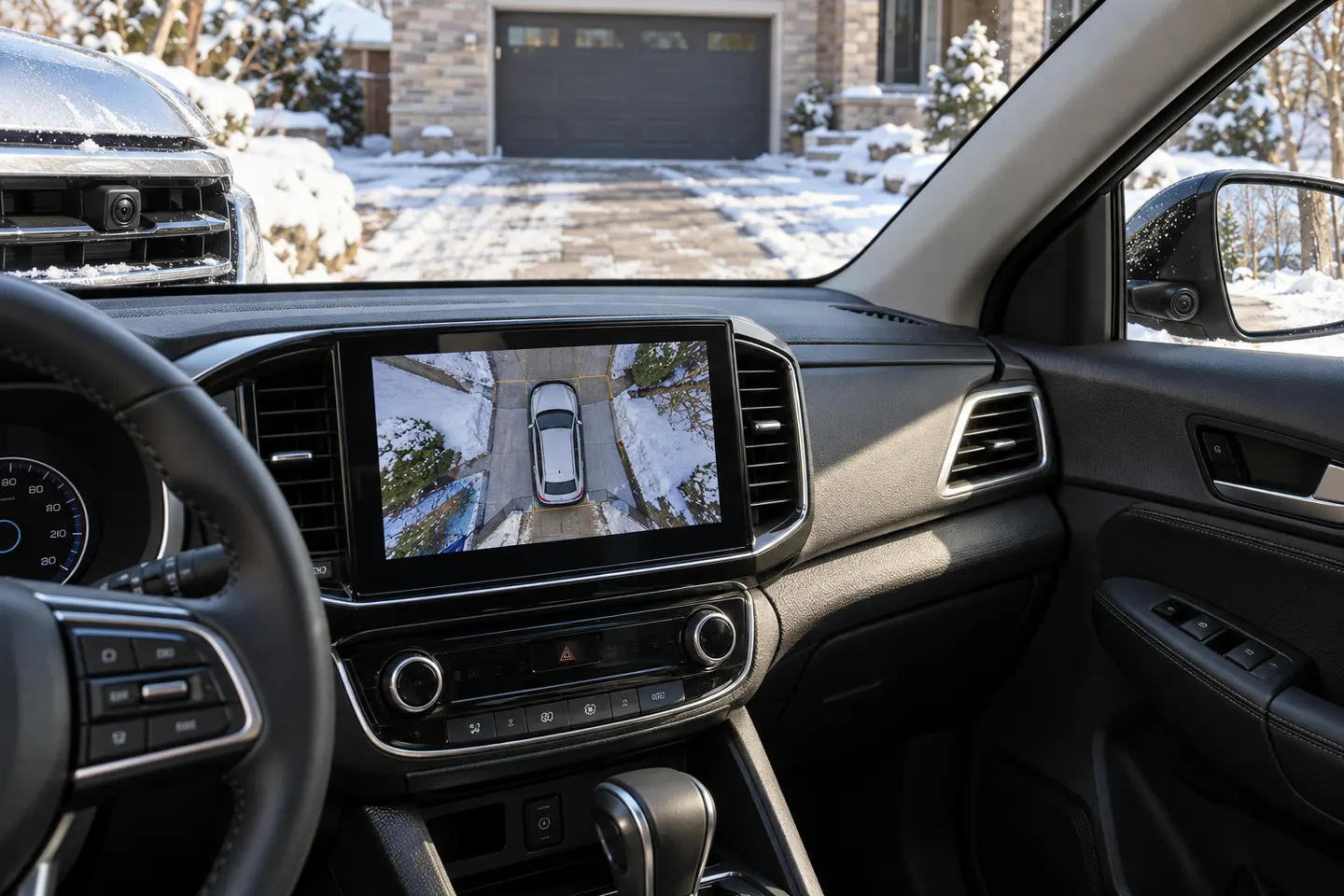
Wide-angle cameras placed at the front, rear and under the side mirrors capture overlapping areas. A controller receives the feeds in real time and prepares them for display.
Each fisheye-like view is warped at its edges. Image processing maps it onto a flatter virtual surface so road markings and nearby objects can be aligned.
The controller changes the apparent viewing angle and blends overlapping regions. The centre is not a live roof camera view; it is normally filled with a vehicle graphic.
Known markers around the vehicle tell the system where each camera points. Correct calibration reduces visible seams and makes the composite more useful for low-speed positioning.
Factory systems can show a composite alongside a front, rear, curb or junction view. The available views and activation speeds differ by vehicle and system.
Tall objects can appear stretched or split where images meet, and anything outside a lens's coverage is invisible. Snow, dirt, darkness and damaged calibration can further reduce accuracy.
Common questions
It does not see the roof from above. The system places a graphic or stored vehicle image in the centre of the stitched exterior views.
Many factory systems use four: front, rear and one beneath each side mirror. Designs can differ, so the exact vehicle documentation is decisive.
Surround parking views are often limited to low speeds, although individual camera views may support other functions. Activation rules vary by manufacturer.
An object crossing a stitching boundary can be stretched, duplicated or clipped because it is being reconstructed from different camera perspectives.
Keep exploring
The VIOFO A229 Pro 2CH is our broadest all-round choice for front-and-rear detail. Garmin Mini 3 suits a discreet setup, while Thinkware U3000 targets parking surveillance.
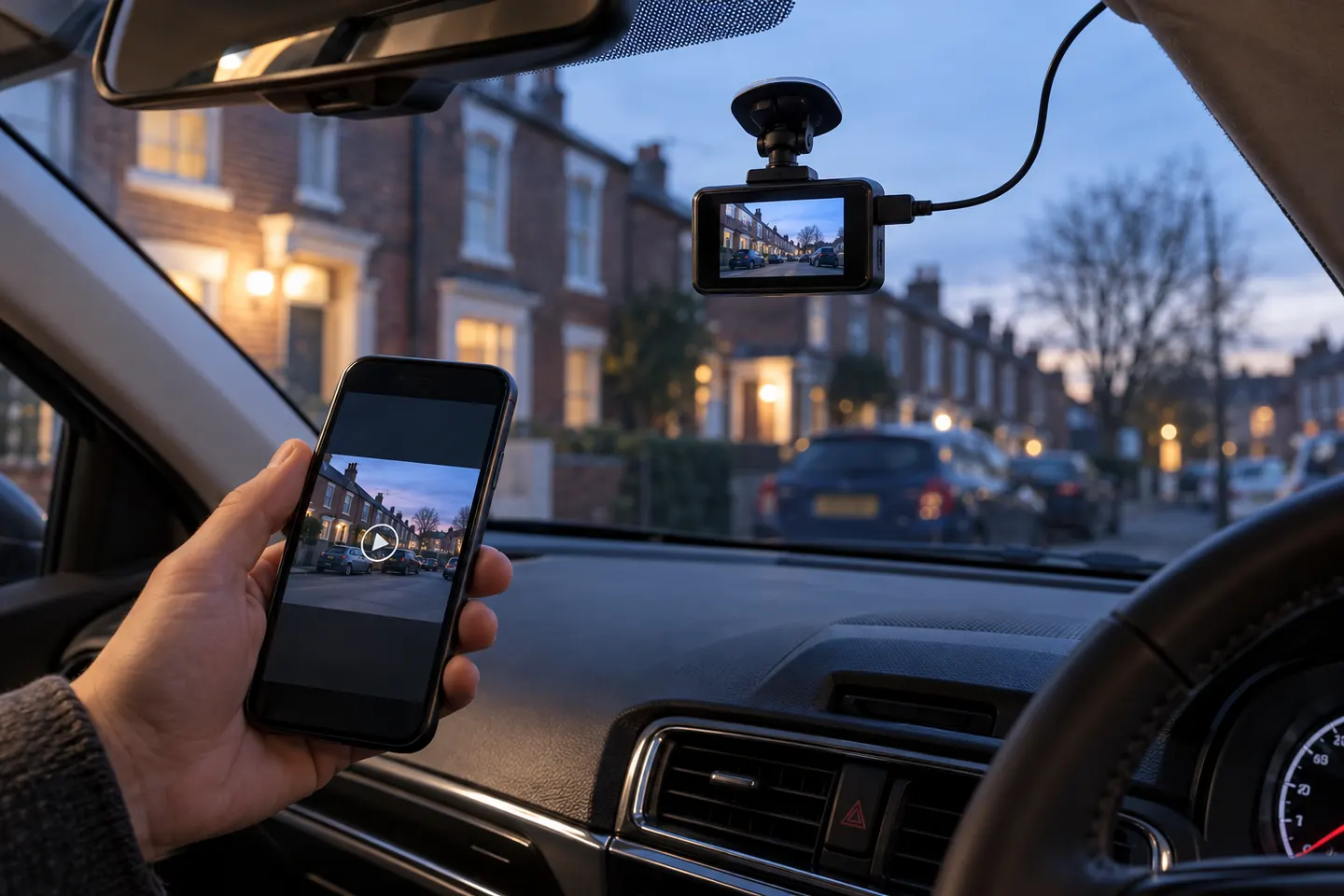
A wireless dash cam normally uses Wi-Fi or LTE to move footage or connect remotely. It still needs power, and a rear camera often still needs a cable.
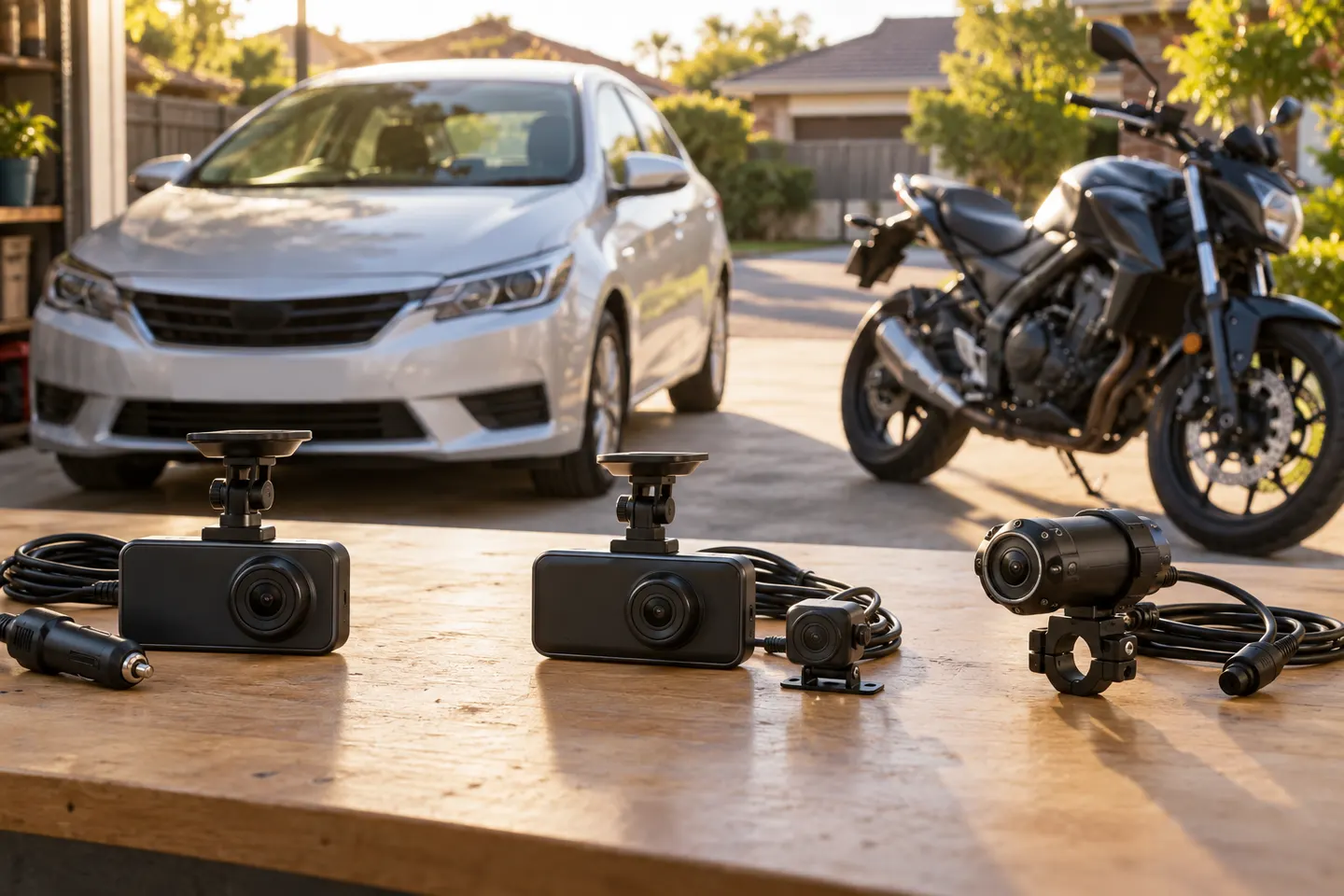
Start with the view you need: front-only for simple evidence, front-and-rear for broader coverage, or parking mode for protection while stopped.
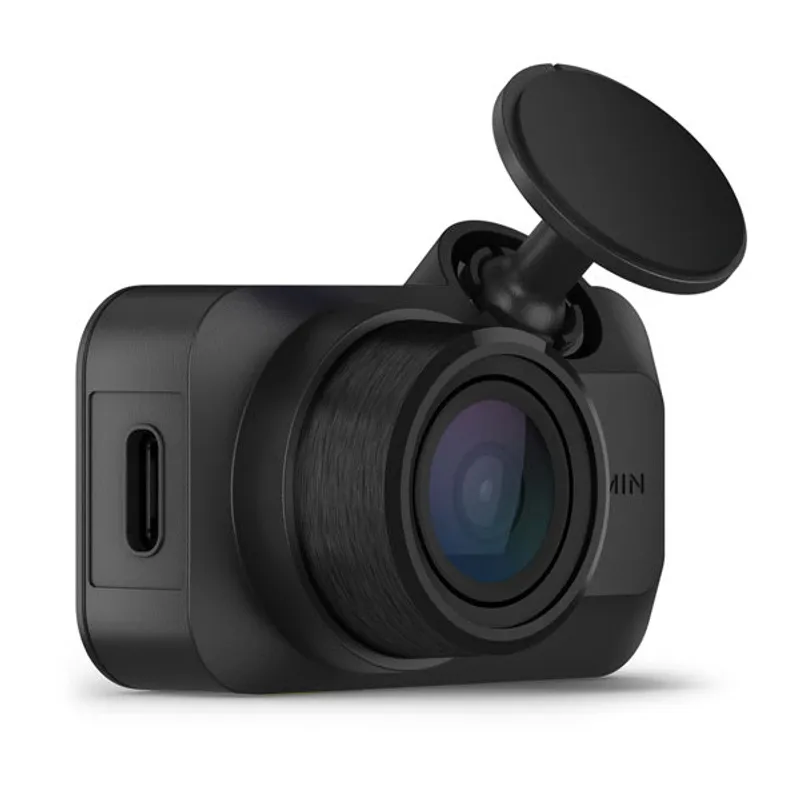
Mini 3 is the smallest choice; X110 adds GPS and a screen, X210 raises resolution, and X310 is the 4K touchscreen option.