How does a 360 car camera work?
Cameras positioned around the vehicle capture overlapping wide-angle views. Software corrects lens distortion, aligns the images to a calibrated model of the car and combines them into a simulated overhead display.

 Best picksBest Dash Cam in Australia: Five Models Compared
 Best picksBest Wi-Fi Extenders in Australia for Different Homes
 Best picksThe Best Meat Thermometer for Every Kind of Cook
 Best picksBest Headlamp Torches for Different Uses in 2026
 Best picksBest Portable Air Coolers to Consider in Australia (2026)
 Best picksBest Winter Gloves for Everyday Wear and Outdoor Use
 Best picksBest Cordless String Trimmers for Australian Gardens (2026)
 Best picksBest air purifier for bedroom in Australia: five models compared
Gearjury may earn a commission when you follow a retailer link. This guide is based on cited documentation.
Guide
A factory surround-view system combines feeds from several wide-angle cameras into a stitched overhead image. A so-called 360 dash cam may instead record several directions without creating that bird's-eye view.
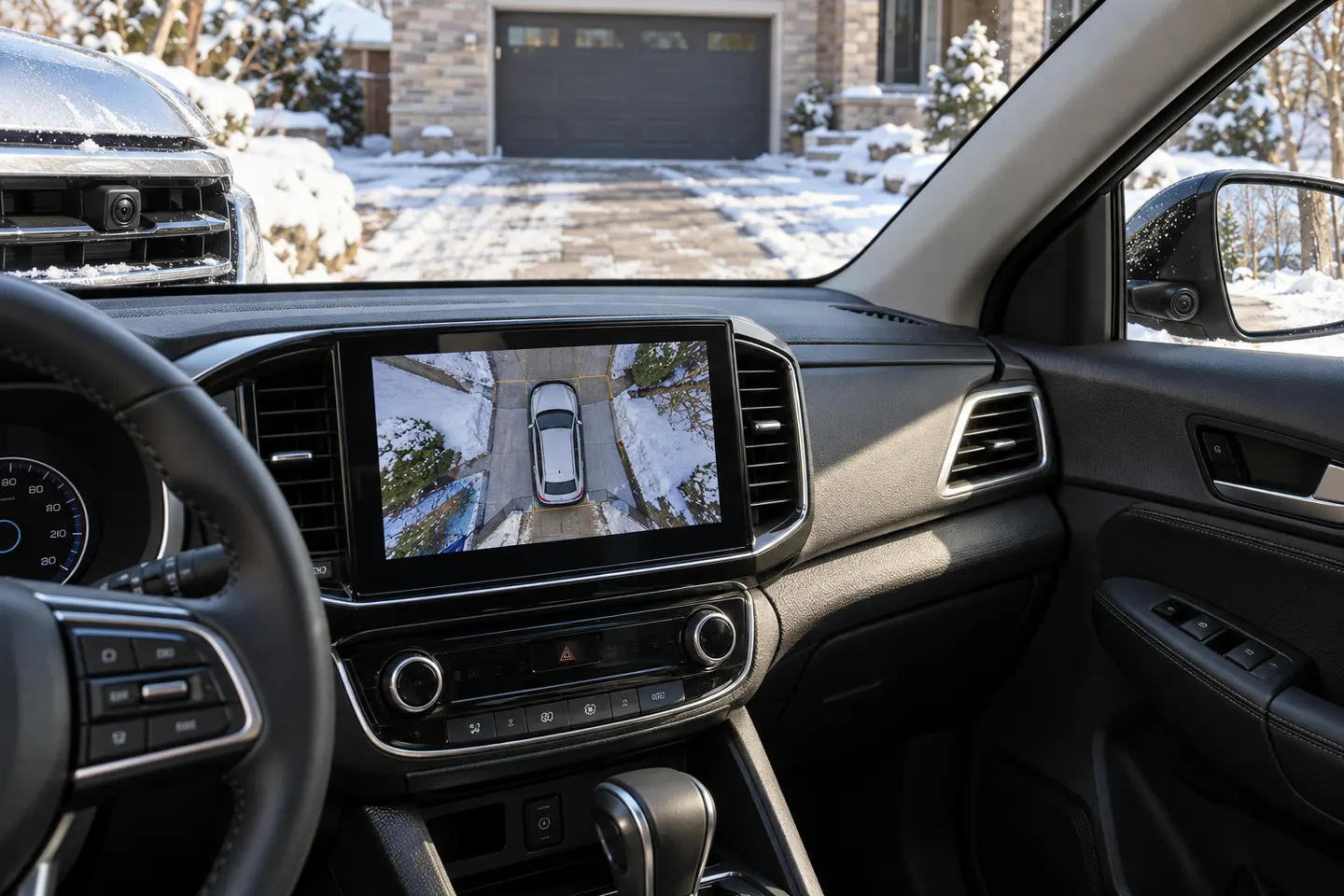
Cameras positioned around the vehicle capture overlapping wide-angle views. Software corrects lens distortion, aligns the images to a calibrated model of the car and combines them into a simulated overhead display.
Factory systems commonly use a front camera, a rear camera and cameras beneath the side mirrors. Their exact placement and coverage vary by vehicle, so the owner's manual is the authority.
The processor maps each corrected camera image onto a virtual surface around the car. It blends overlapping areas and places a vehicle graphic in the centre, producing a useful parking aid rather than a literal camera floating overhead.
Not necessarily. A multi-channel dash cam can record the front, rear, cabin or sides as separate files. It may offer broad coverage without the calibrated top-down composite supplied by an integrated vehicle system.
Wide-angle lenses stretch edges, while blind areas and stitching boundaries can hide or duplicate small objects. Dirt, rain, misalignment or a changed camera position can also degrade the composite.
Calibration may be required after camera, mirror, body or windscreen work, depending on the vehicle. Follow the maker's repair procedure and use a qualified technician where specified.
Common questions
Usually no. The overhead image is stitched from outward-facing cameras and contains blind areas close to or beneath the body.
That depends on the vehicle or dash-cam system. A live parking display does not automatically mean footage is stored when the ignition is off.
The cameras cannot see through the vehicle itself, so software places a representation of the car over the central unseen area.
Aftermarket systems exist, but a convincing stitched view needs compatible cameras, careful positioning and calibration. Installation complexity varies substantially by vehicle.
Keep exploring
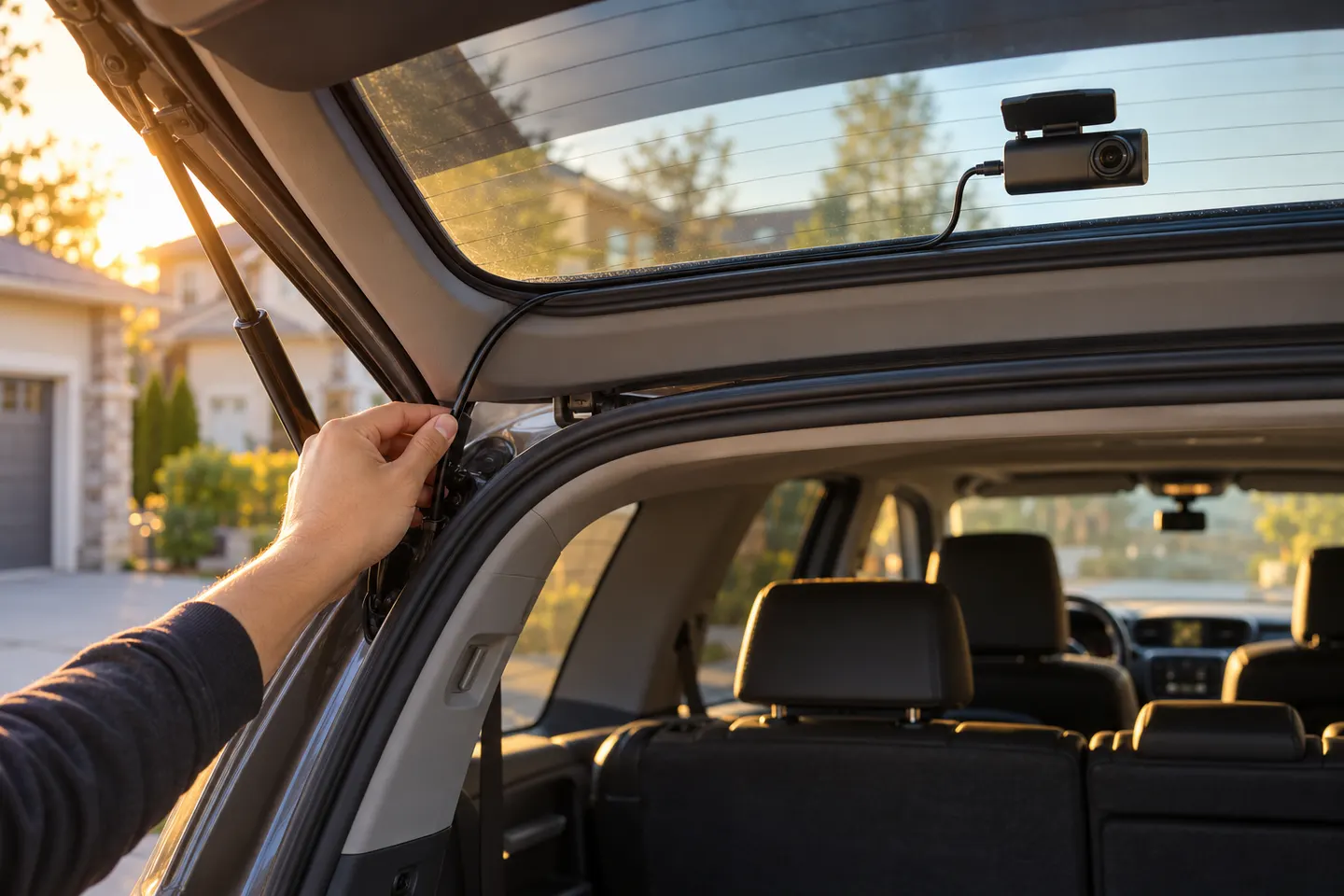
A two-channel system is the clearest choice when you want evidence from both directions. Prioritise rear-camera quality, cable length and an installation that keeps the driver's view clear.
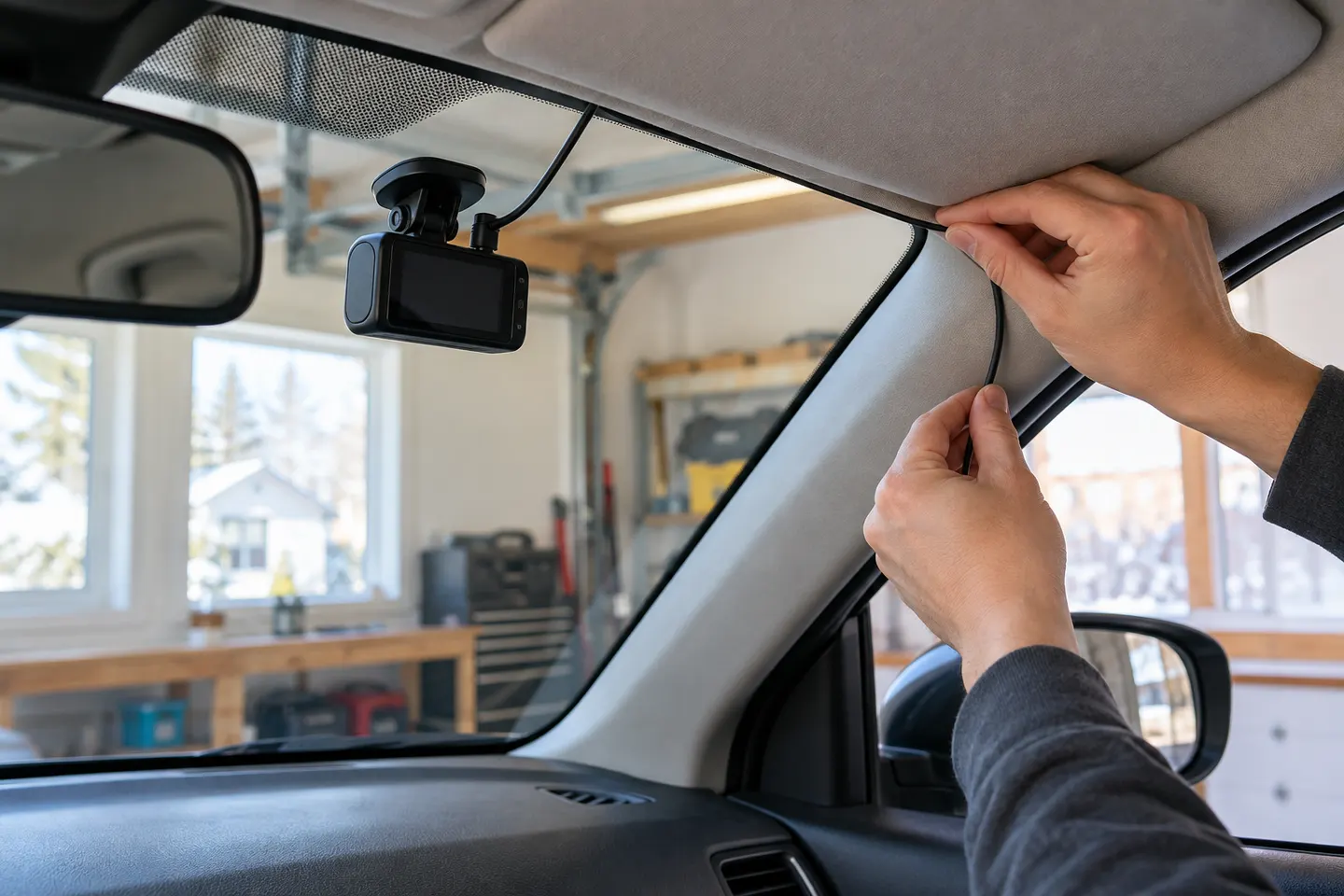
A plug-in installation suits basic driving recording; professional hardwiring is the safer route for neat cabling and parking mode. Keep every camera and cable clear of vision and airbags.
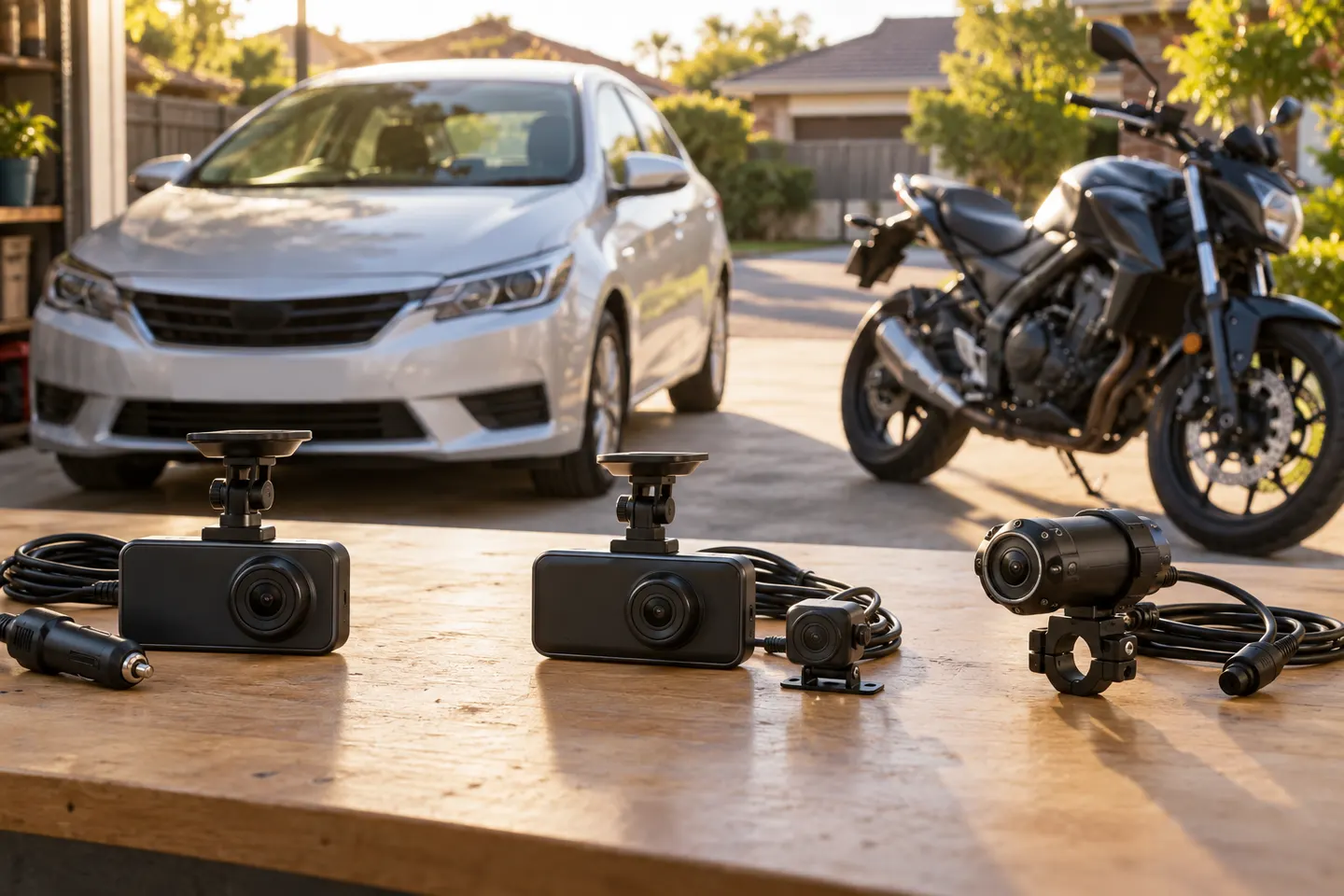
Start with the coverage you need: front-only for simplicity, front-rear for broader evidence, or a dedicated motorcycle system. Then decide how you will power it.