The extender joins your existing WiFi
During setup, the extender authenticates to the router over WiFi, much like another network device. Depending on the model, you can use WPS, a manufacturer app or a browser-based setup page.

 Best picksBest Meat Thermometers in Canada for 2026
 Best picksBest WiFi Extenders in Canada for Different Home Networks
 Best picksThe Best Dash Cam Cameras for Different Drivers
 Best picksRadar Detector Best Picks for Canadian Drivers (2026)
 Best picksBest Air Purifier for Bedroom in the Canada: Quiet Models Compared
Gearjury may earn a commission when you buy through retailer links. Our recommendations are based on cited product information.
Guide
A WiFi extender connects to your router’s wireless network and rebroadcasts coverage from a new location. It can fill a local weak spot, but it cannot create bandwidth the router does not receive.
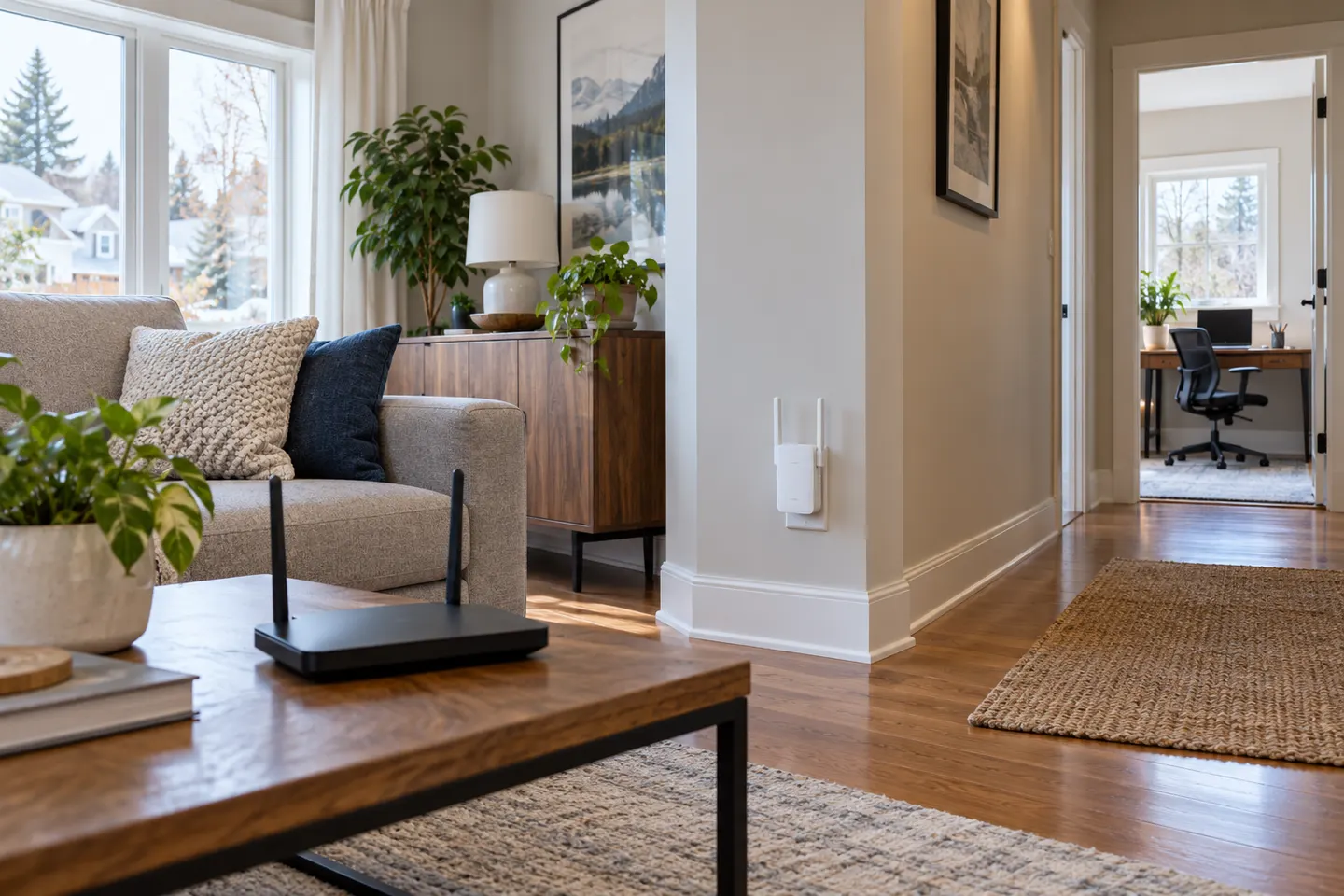
During setup, the extender authenticates to the router over WiFi, much like another network device. Depending on the model, you can use WPS, a manufacturer app or a browser-based setup page.
Once linked, the extender provides WiFi coverage closer to the room or device that needs it. Some models repeat the network name; others let you choose a distinct extended-network name.
The extender can only work with the signal it receives. If that backhaul link is weak or congested, devices connected to the extender may also experience slowdowns or dropouts.
A midway location often balances a usable connection to the router with proximity to the dead zone. Thick walls, metal, appliances and neighbouring networks can influence the best outlet.
A repeater improves local reach, not the speed supplied by your internet plan or the capacity of a congested connection. For several weak areas, a coordinated mesh system or wired access point may be a better design.
Some extenders can also run as access points when connected to Ethernet, while others support mesh features with compatible routers. Read the exact specifications before planning the network.
Common questions
It connects wirelessly to your router and rebroadcasts coverage from its own location, helping devices in a weak-signal area connect through it.
A booster joins the existing router network and relays traffic between connected devices and the router. Its performance depends on the quality of that link and the surrounding radio environment.
It may improve the connection where the router’s signal was weak, but it does not increase your internet plan speed. A wireless repeater can also reduce available throughput depending on its design and conditions.
One extender can suit a focused dead zone; mesh is designed to coordinate multiple coverage points across a larger layout. Compare compatibility, placement and backhaul options.
Keep exploring
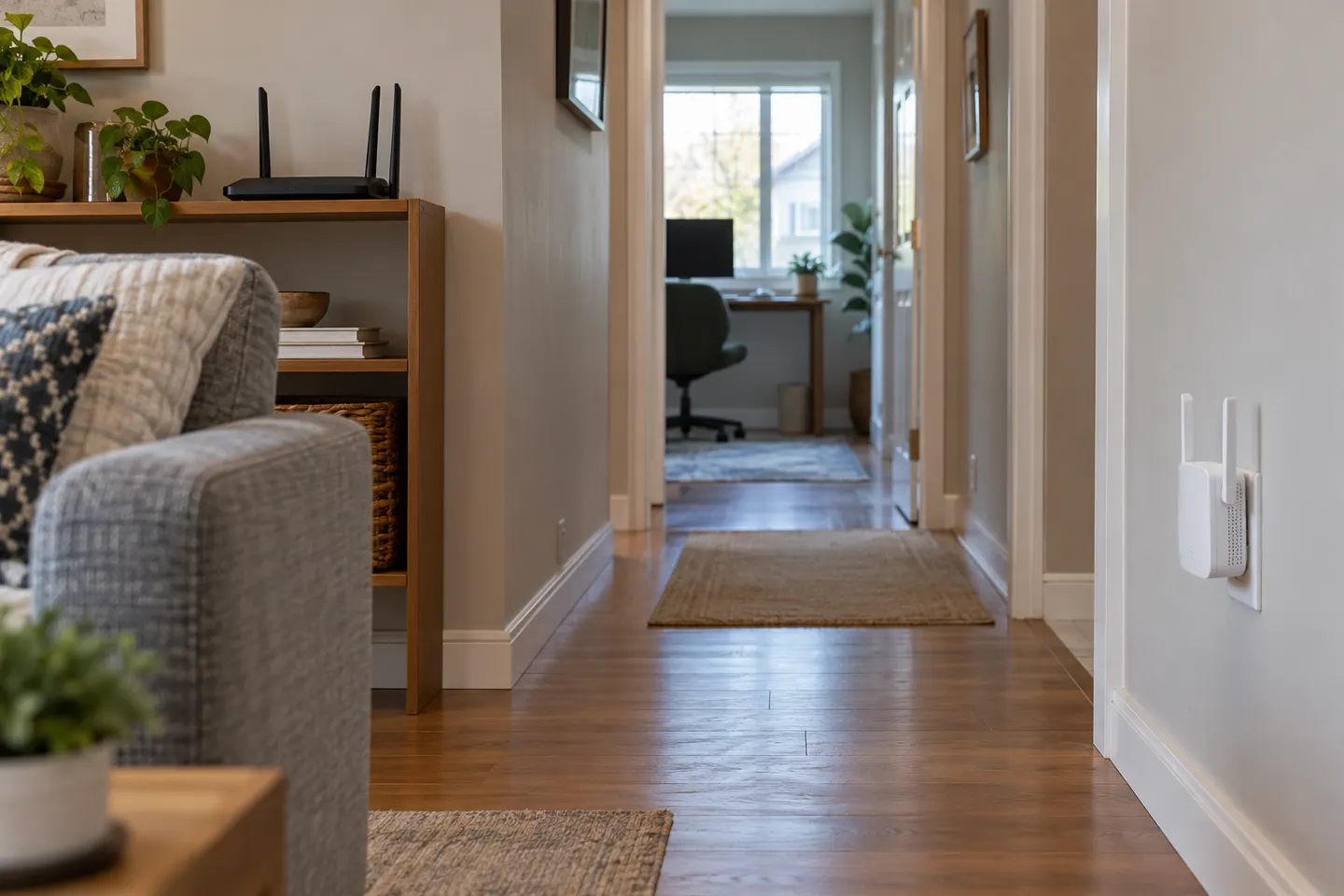
A WiFi extender can carry an existing router’s signal into a weak-coverage area. Start with compatibility and placement, then compare a standalone repeater with a provider mesh system.
The TP-Link RE705X is a strong feature-led starting point, with WiFi 6, AX3000 class and a Gigabit port. Consider NETGEAR EAX15 for mesh-style WiFi 6 or simpler plug-in models for a basic dead zone.
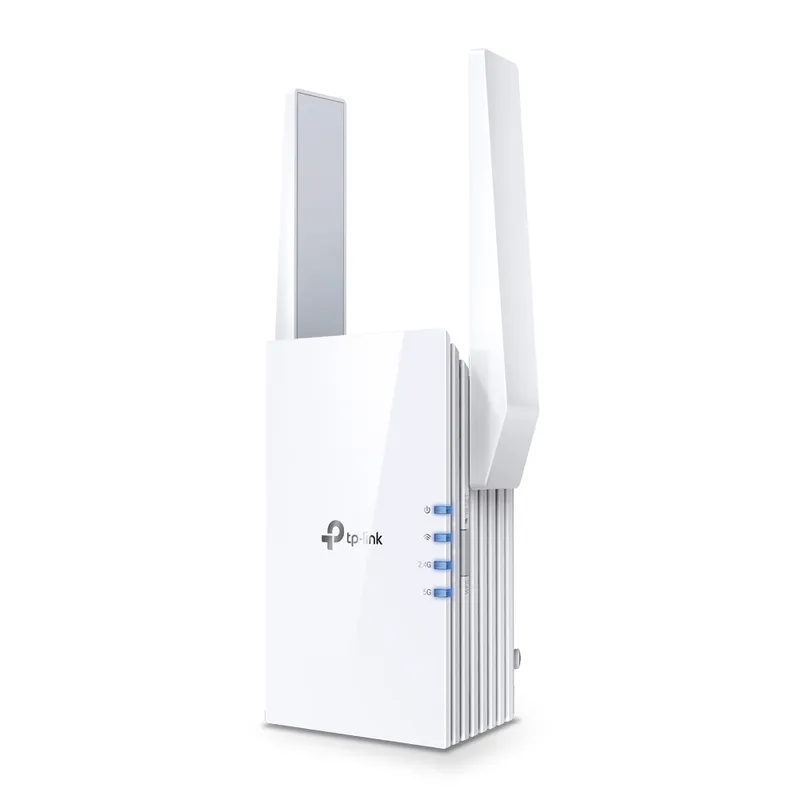
TP-Link’s Canadian range includes WiFi 7, WiFi 6 and older dual-band extenders. Match the model to your router, desired features and available placement.
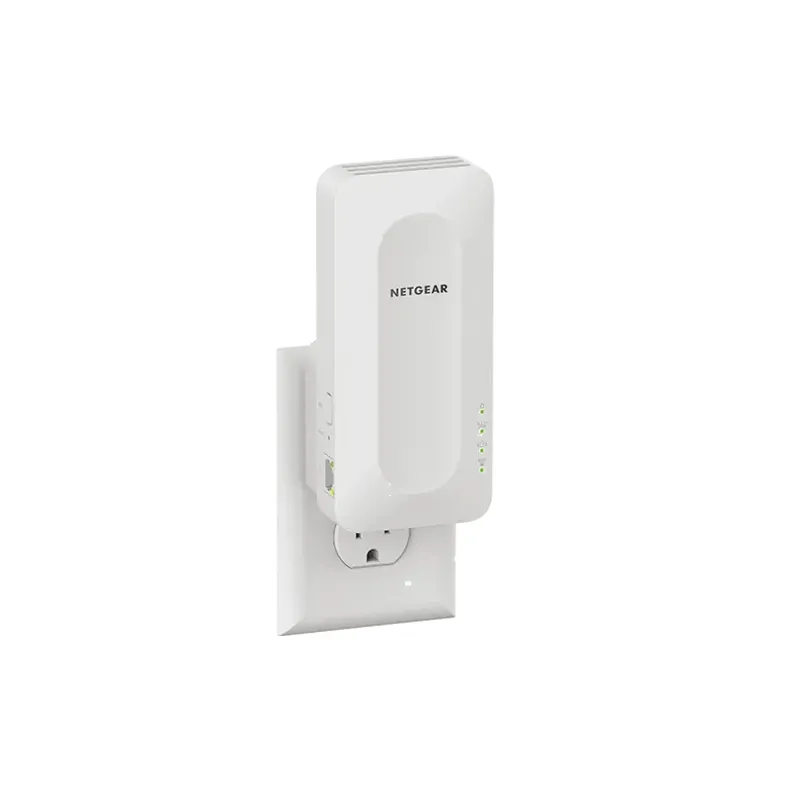
NETGEAR’s Canadian range includes WiFi 6 mesh extenders and older AC models. Check each model’s port, generation and setup method before choosing.