Gearjury may earn a commission from qualifying retailer links. This does not change our editorial criteria.
Guide
How Does a WiFi Extender Work? A Practical Guide
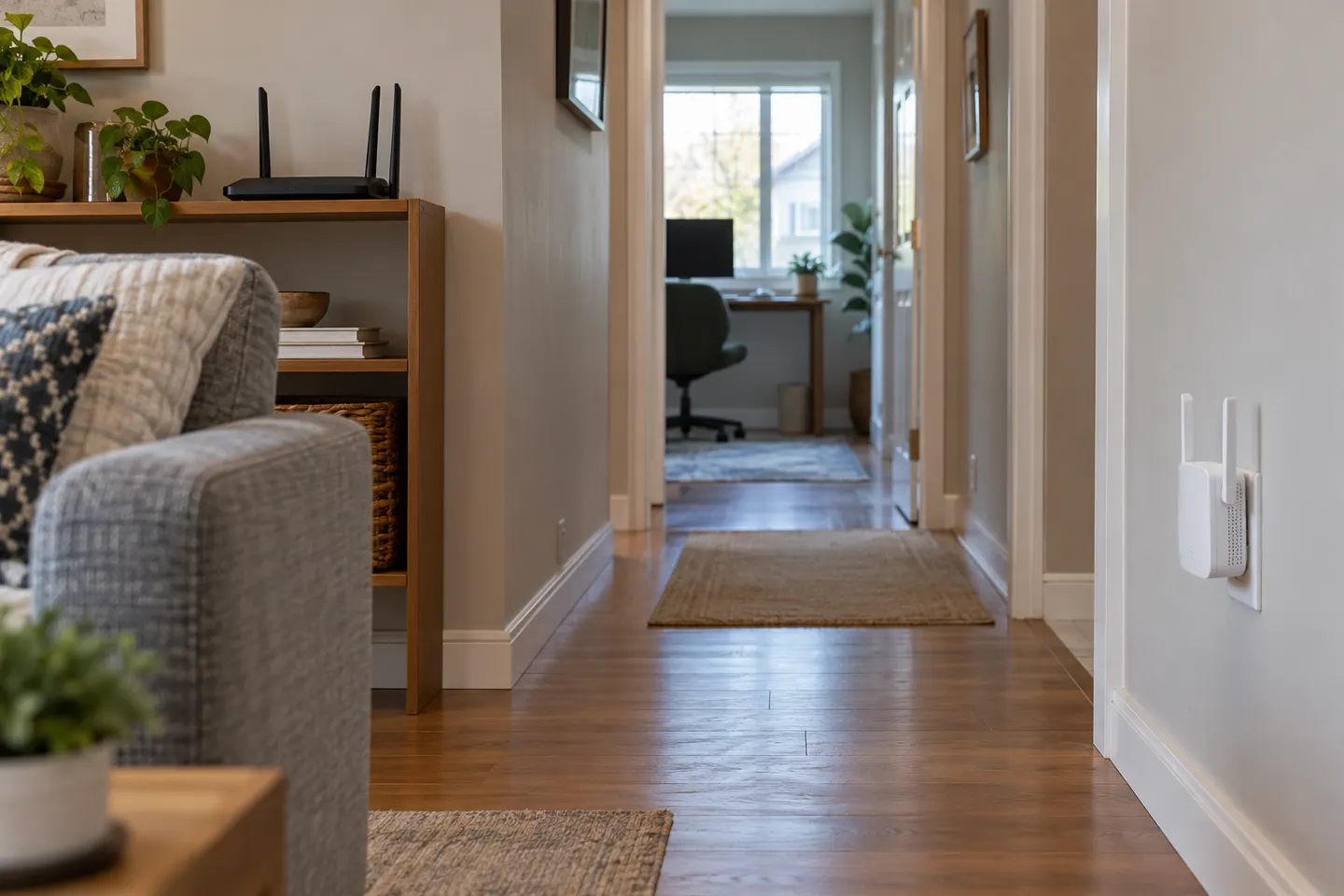
A WiFi extender receives your router’s wireless signal and rebroadcasts it, extending coverage into a weak-signal area. Its position matters: it needs a usable connection to the router before it can relay one.
GGearjury editorial team · Updated 15 October 2026· 4 min
01
What happens to the signal
A wireless range extender links to your existing router over WiFi, then broadcasts a signal for devices in a nearby coverage gap. A WiFi booster is often another name for this kind of repeater; it does not create a faster broadband connection.
02
Why placement changes the result
Put the unit where the router signal is still reliable, roughly between the router and the problem room as a starting point. A socket inside the dead zone may leave the extender with too little signal to relay.
03
How a WiFi booster works across bands
Many dual-band models use 2.4 GHz and 5 GHz radios. The bands trade reach and capacity differently, and the actual link depends on walls, interference, router capability and client device. The advertised combined link rate is not the same as application throughput.
04
When an Ethernet connection helps
Some extenders have an Ethernet port for a wired client, while access-point mode on supported models can use Ethernet as the connection back to the router. Check the exact model’s manual: these are different functions.
05
Extender or mesh system
A standalone extender is a focused way to cover a weak area; mesh systems use coordinated nodes and may offer a shared network name and roaming features. A wired access point can suit homes where Ethernet is already available. Compare setup and compatibility as well as coverage claims.
06
What to check before buying
Confirm router compatibility, supported WiFi generation, bands, Ethernet port speed and operating mode. Then consider outlet location and whether your bottleneck is wireless coverage or the broadband service itself.
Common questions
Questions before you buy
How does a WiFi range extender work?
It connects wirelessly to your router and rebroadcasts the connection to nearby devices. It can improve reach where its own link to the router remains usable.
How do WiFi boosters work?
The term usually describes a repeater or range extender: it receives a router signal and relays it. It cannot improve the broadband service entering the router.
Does a WiFi extender make internet faster?
It may improve connection quality in a weak coverage area, but it does not raise your broadband plan’s speed. Wireless relay overhead, interference and placement can affect throughput.
Where should I put a WiFi extender?
Start around halfway between the router and the area with poor reception, then use the manufacturer’s signal indicator or setup guidance to refine the position. Avoid placing it where the router signal is already unusable.
A WiFi extender can carry your router signal further, but placement and backhaul matter. Choose a plug-in repeater for a nearby dead zone, powerline WiFi for difficult layouts, or an outdoor-rated unit for a garden.
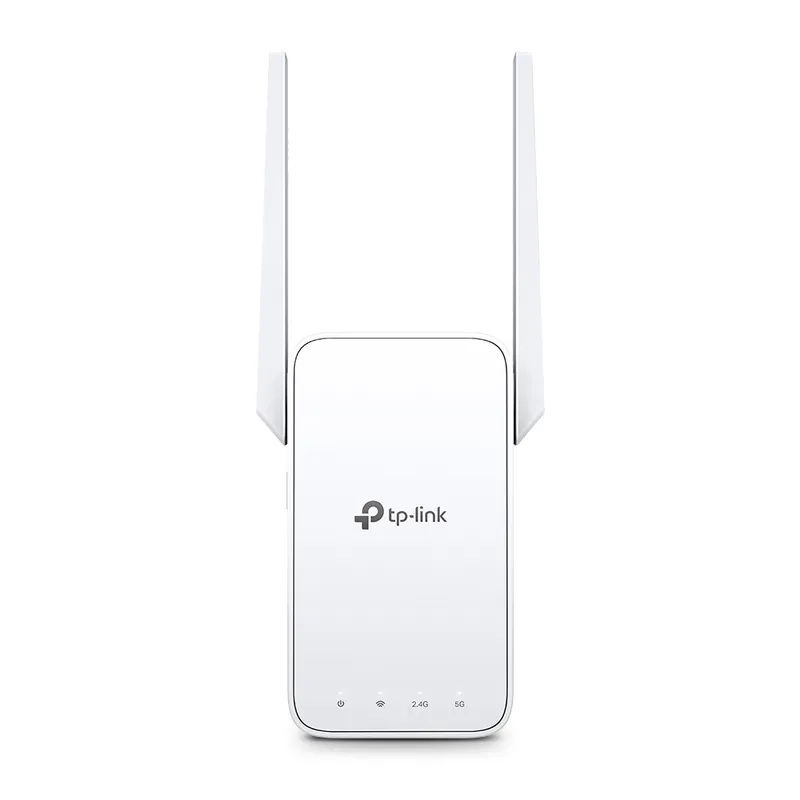
TP-Link RE315 is a practical starting point for a standard indoor dead zone. Consider a Wi-Fi 6 device for newer kit, outdoor-rated hardware for a garden, or powerline where a wireless hop struggles.
Sky has different booster products for different broadband generations. Sky Max customers may use a Max Pod; check your account and hub-specific help before seeking a third-party extender.
Your privacy
We use cookies and similar technologies. Necessary ones keep the site working. With your permission we also use statistics cookies (Google Analytics and Microsoft Clarity) to understand which guides help readers. You can accept all, reject all or choose. You can change your choice at any time from "Cookie settings" at the bottom of every page. Cookie policy