Independent buying guidance · US editionHow we work
Gearjury
All categories
All categories
Best picksGood Meat Thermometers for Every Kind of Cook
Best picksBest WiFi Extenders: Which Range Extender Should You Buy?
Best picksBest Dash Cams for Cars in 2026
Best picksBest Radar Detectors for Cars: Models Compared
Best picksGood Winter Gloves for Cold Weather: Five Useful Picks
Best picksBest Headlamps: Six Lights Compared for Different Uses
Best picksTop 10 Best Battery-Powered Weed Eaters for Different Yards
Best picksBest Portable Air Coolers for Patios, Workshops and Small Spaces (2026)
Best picksBest Air Purifier for Bedroom in the US: Quiet Models Compared
United StatesEnglish

Category hub

Dashcam Capacitors: How They Work and What to Compare

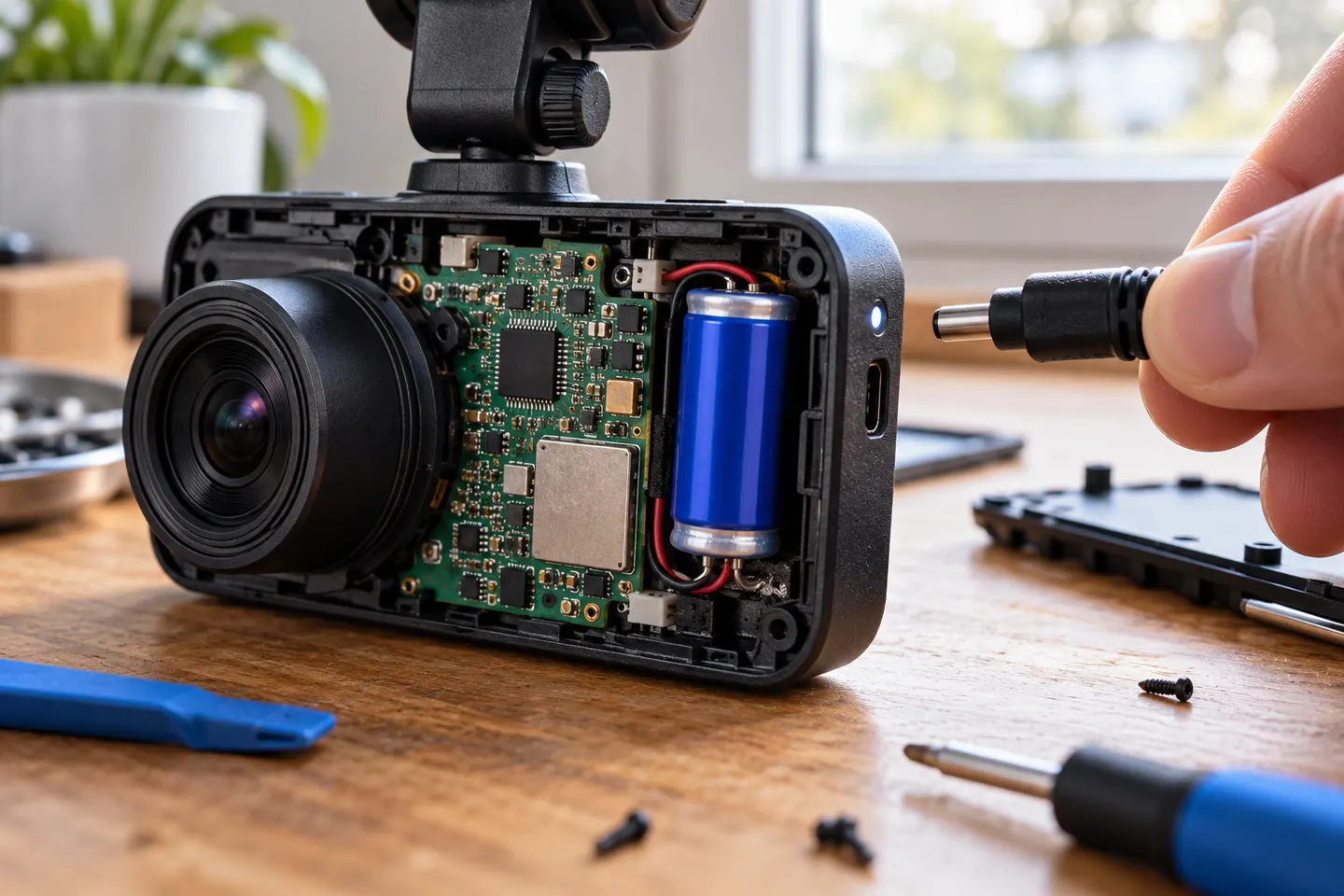
A supercapacitor supplies brief reserve power so a camera can finish saving a file after external power stops. It is not intended to run extended parking recording by itself.

A dashcam capacitor is a short-duration energy store, not a miniature parking battery. In a supercapacitor camera, its main job is to let the device close the current video file and shut down cleanly when vehicle power disappears. That distinction matters when listings imply that internal reserve power will record a parked car for hours.

Dashcam Capacitors: How They Work and What to Compare

More topics

1

Common questions

Questions before you buy

Is a capacitor better than a battery in a dashcam?

A supercapacitor is well suited to short backup duties and is common in cameras designed for wide cabin temperatures. It does not provide long standalone runtime.

Will a capacitor dashcam record when parked?

Only with an external parking-power setup supported by the camera. The capacitor alone is not the continuous power source.

How long does a dashcam capacitor last after unplugging?

Usually only long enough for controlled file saving and shutdown. Manufacturers may not publish a precise duration because it is not normal recording runtime.

Can a dashcam capacitor be replaced?

It may be a service component rather than user-replaceable. Contact the manufacturer and do not open the unit unless its instructions explicitly permit it.