Gearjury may earn a commission when you buy through a retailer link. Our editorial choices remain independent.
Guide
How to Hide a Dashcam Cord Safely in Your Car
Plan a route from the camera to power before tucking anything away. Use the headliner edge and fixed trim only where the cable stays clear of curtain airbags, controls and moving parts.
GGearjury editorial team · Updated October 15, 2026· 6 min
01
How should you plan the dashcam cable route?
Park safely, switch the vehicle off and hold the complete cord along the intended path before fixing it. Start at the camera, allow a small service loop near the plug, then map a route along the headliner edge, down a safe pillar path and toward the power source without stretching the cable.
02
Tuck the cord along the headliner without forcing it
Use a plastic trim tool only where the vehicle manual and trim design permit it. Slip the cable just far enough behind the headliner edge to hold it; do not crush the cable, disturb clips or push tools deeply into an unknown space.
03
Keep the wire clear of the A-pillar airbag
Check the owner's manual for curtain-airbag locations. Never route a cable across the airbag or bind it to the airbag module. If safe routing behind or around the pillar trim is not explicit, keep the cable on an approved surface route with clips or ask a qualified installer.
04
Run the cable past the dashboard and footwell
Follow fixed trim toward the power outlet or fuse area. Secure every loose section away from pedals, steering components, seat tracks, sharp metal, heat and any control the driver may need.
05
Secure visible sections with correctly sized clips
Clean compatible hard surfaces and let them dry before applying clips. The clip should stop sagging without pinching the insulation. Place extra support at corners and leave connectors free from sideways tension.
06
Test the installation before the first drive
Power the camera, confirm its view and move the steering wheel, seats, visors, doors and hatch through their normal ranges. Verify that the cord stays fixed and no warning light appears. Recheck the route after the cabin has gone through hot and cold conditions.
Common questions
Questions before you buy
Can I tuck a dashcam cord into the headliner?
Often you can use the headliner edge, but only with light pressure and a route that does not interfere with airbags, clips or wiring. Follow the vehicle manual.
How do I hide a dashcam cord without removing trim?
Use the accessible headliner edge and surface-mounted adhesive clips along fixed trim. Keep the route neat and away from the driver's view and controls.
Can I run a dashcam wire behind the A-pillar?
Only if the vehicle's documented route keeps it clear of the curtain airbag. Do not simply push the wire behind the trim where its position cannot be confirmed.
How do I hide the cord for a rear dashcam?
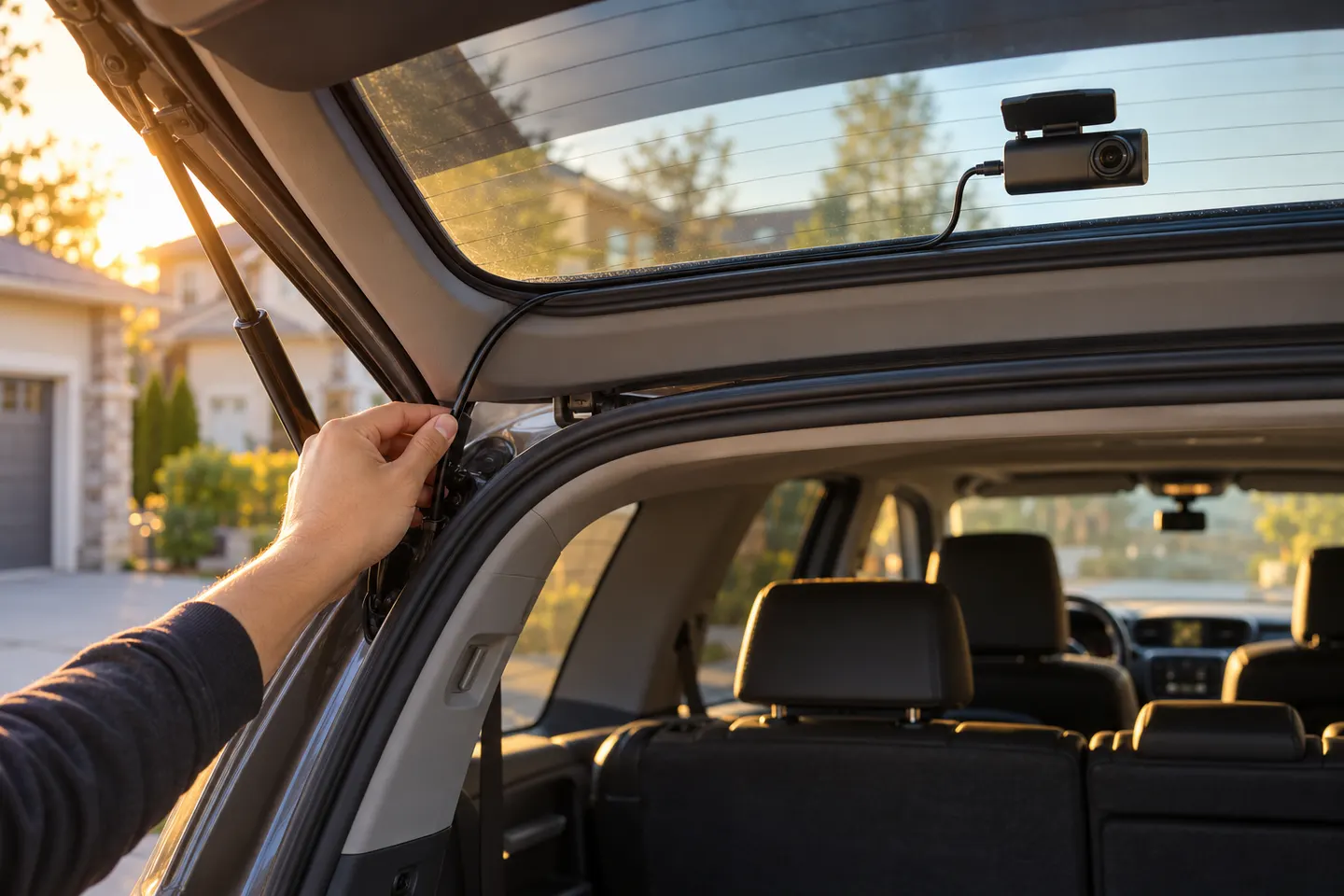
Follow fixed upper trim toward the rear while avoiding airbags, then leave protected slack at a hatch or liftgate hinge. Never let the cable cross a seal or hinge where it can be pinched.
Should I hardwire a dashcam to hide the cable?
Hardwiring can create a cleaner finish and enable supported parking modes, but circuits and battery protection must be correct for the vehicle and camera. Use a qualified installer if you are not confident with automotive electrical work.
VIOFO A229 Pro 2CH is our broad recommendation for detailed front and rear coverage. Garmin Mini 3 favors discretion, while Garmin X310 is the sharper single-camera choice.
A front and rear dash cam records both directions and can provide context a single lens misses. Check the rear-camera cable route and simultaneous recording resolution before buying.
The A329S serves buyers seeking high-detail multichannel recording; A229 models cover more moderate dual-camera needs, while A119 Mini 2 is the compact front-only option.
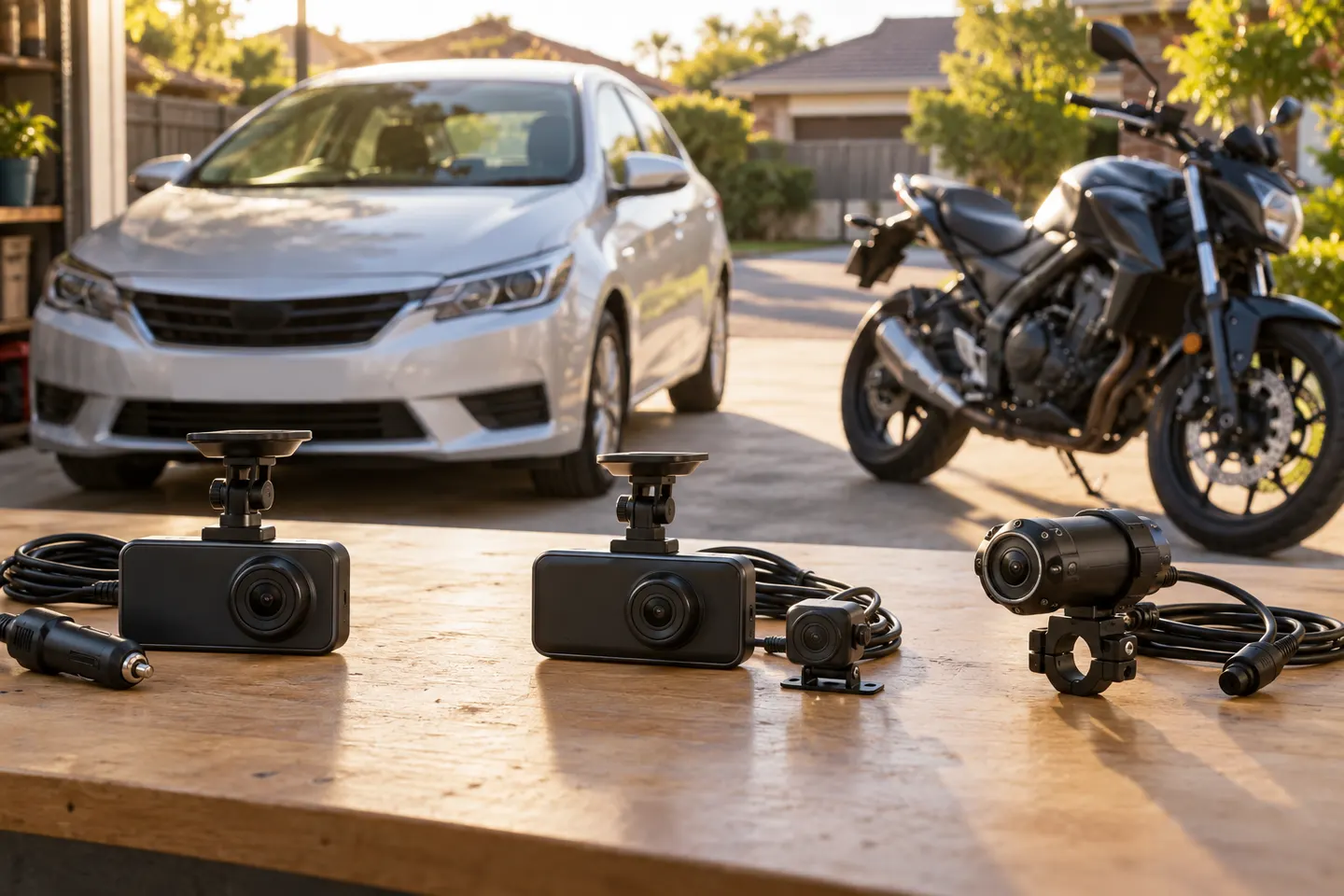
Start with the coverage you need: front-only, front and rear, cabin or a wider multi-camera view. Then compare recording detail, storage and power requirements.
Your privacy
We use cookies and similar technologies. Necessary ones keep the site working. With your permission we also use statistics cookies (Google Analytics and Microsoft Clarity) to understand which guides help readers. You can accept all, reject all or choose. You can change your choice at any time from "Cookie settings" at the bottom of every page. Cookie policy