Gearjury may earn a commission when you buy through a retailer link. Safety guidance is based on manufacturer installation documents.
Guide
How to Hide Dashcam Wires Safely in Your Car
Plan the cable route before pressing anything into trim. Keep wiring clear of airbags, driver controls, camera sensors, moving panels, and sharp edges.
GGearjury editorial team · Updated October 15, 2026· 6 min
01
Choose the camera and power route first
Sit in the normal driving position and confirm the camera does not obstruct your view or any vehicle sensor. Trace a cable route from the camera to the outlet, OBD adapter, or approved hardwire point before fitting clips or lifting trim.
02
Tuck the wire along the headliner without forcing it
Run the power lead across the upper windshield edge with gentle slack at the camera. Use removable clips if the headliner does not accept the wire easily; forcing a thick plug or cable behind trim can damage both.
03
Keep the dashcam wire away from curtain airbags
Do not route a cable across an airbag or where deployment could pull it loose. A-pillar designs differ, so consult the vehicle service information; if trim removal or airbag routing is unclear, use a qualified installer.
04
Continue down a fixed edge of the dashboard
Follow an existing non-moving trim line toward the power source. Keep the lead away from pedals, steering components, vents, seat tracks, glove-box hinges, and sharp metal edges.
05
Manage excess cable instead of packing it into trim
Coil only the spare length needed, secure it where it cannot rattle or fall, and never place a bundle in an airbag deployment zone. Avoid tight bends at USB connectors and camera plugs.
06
Test every function before final fastening
Start the vehicle, confirm recording, inspect the full camera view, and move doors, visors, seats, and the glove box. Check that no cable shifts, pinches, blocks a sensor, or enters the driver's footwell.
Common questions
Questions before you buy
Can I tuck a dashcam wire into the headliner?
Usually only lightly and where the vehicle design permits it. Do not force the cable, disturb clips, or cross an airbag deployment path.
Should a dashcam cable go behind the A-pillar trim?
Only when the vehicle-specific routing keeps it secured behind or away from the curtain airbag as instructed. If that path is not documented, ask a qualified installer.
How do I hide a rear dashcam wire?
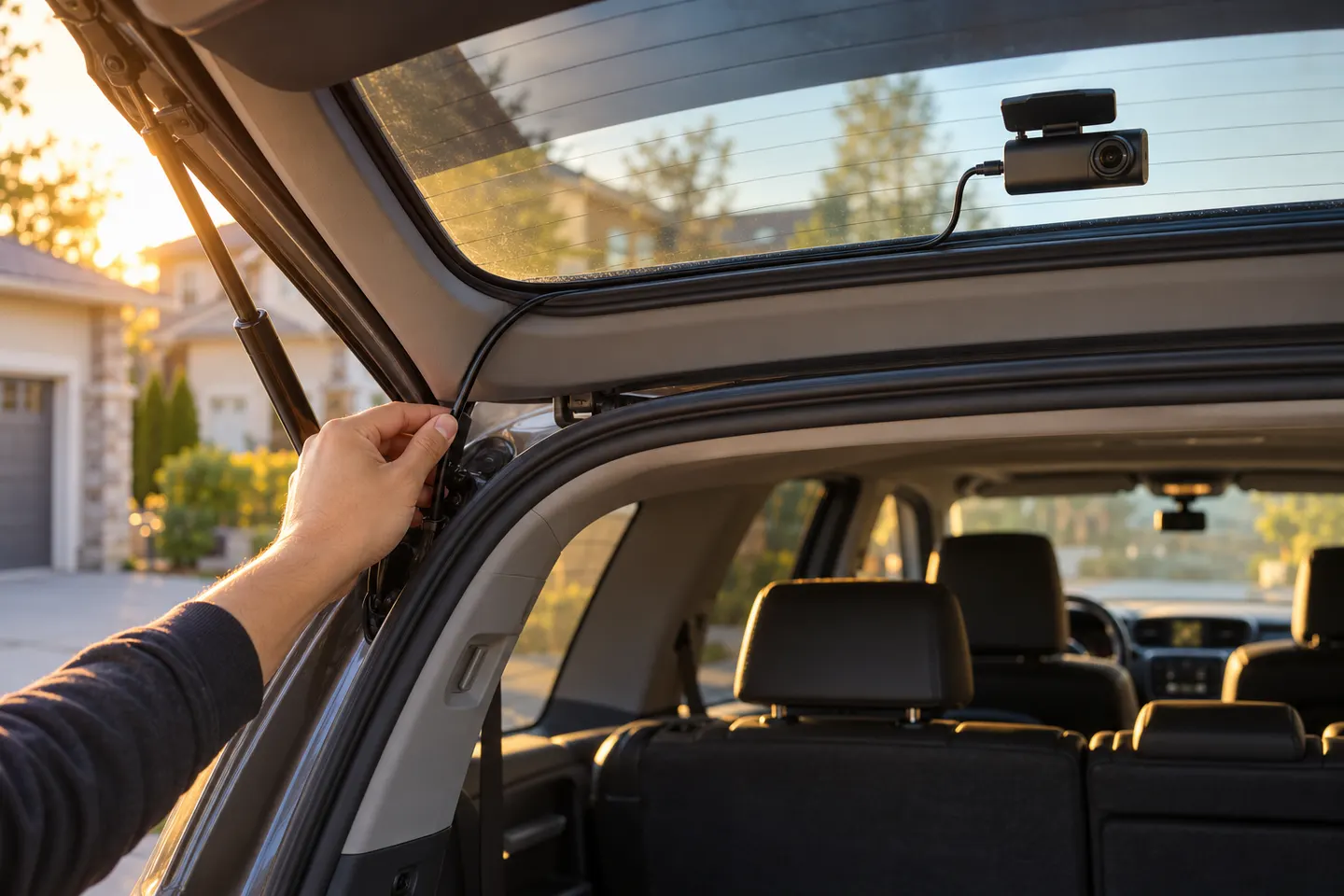
Follow fixed upper trim toward the rear while allowing for hatch or trunk movement. Protect the cable at hinges and flexible boots, and keep it clear of airbags and heated-window connections.
Can I use adhesive cable clips on the dashboard?
Yes, on a clean fixed surface that does not block visibility, controls, vents, sensors, or airbag covers. Use automotive-safe adhesive and check it after temperature changes.
Where should I put extra dashcam cable?
Secure a loose coil in a fixed, accessible area away from pedals, airbags, moving seats, heat, and sharp edges. Do not cram it into a pillar cavity.
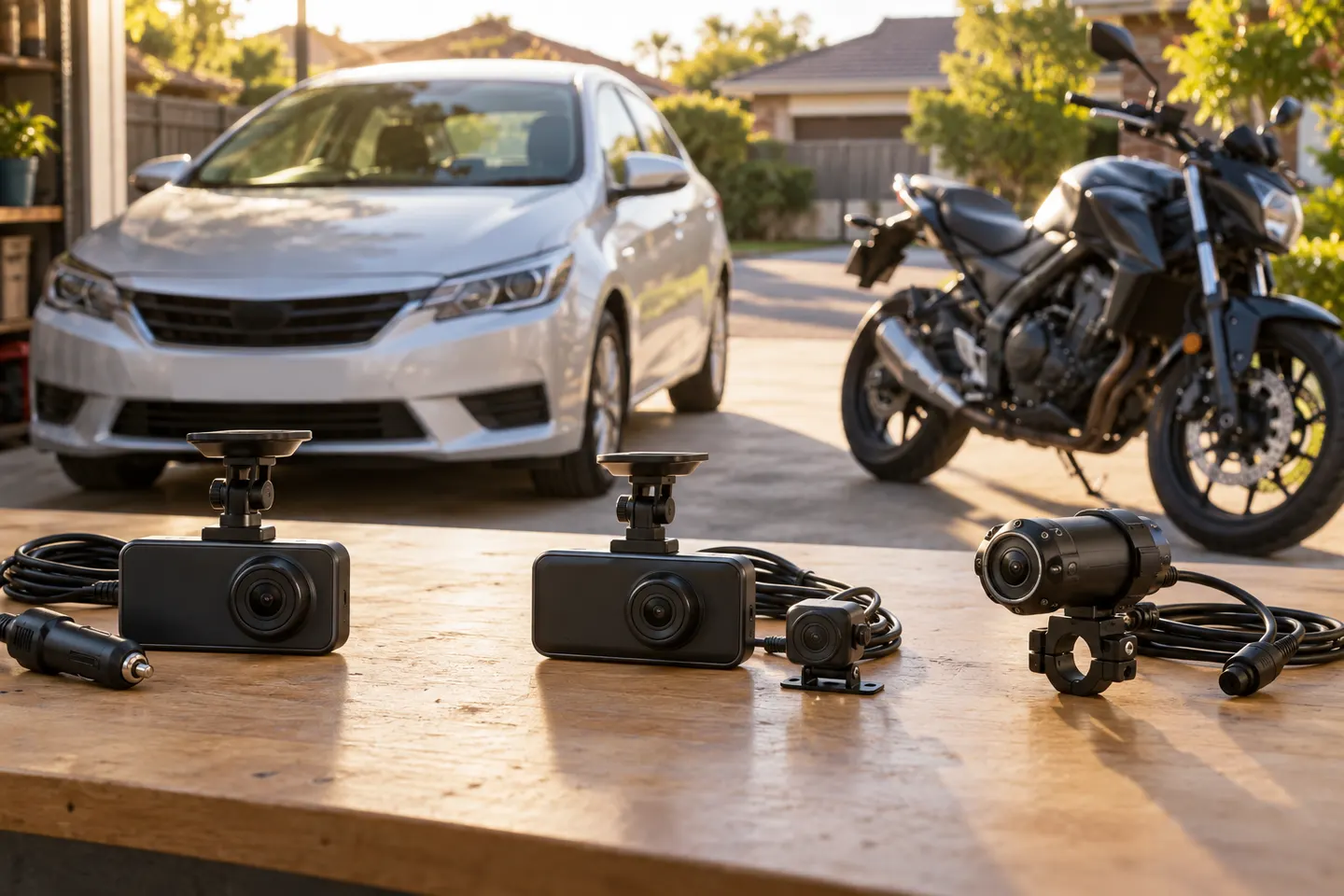
Start with the coverage you need: front-only, front and rear, cabin or a wider multi-camera view. Then compare recording detail, storage and power requirements.
A front and rear dash cam records both directions and can provide context a single lens misses. Check the rear-camera cable route and simultaneous recording resolution before buying.
VIOFO A229 Pro 2CH is our broad recommendation for detailed front and rear coverage. Garmin Mini 3 favors discretion, while Garmin X310 is the sharper single-camera choice.
The A329S serves buyers seeking high-detail multichannel recording; A229 models cover more moderate dual-camera needs, while A119 Mini 2 is the compact front-only option.
Your privacy
We use cookies and similar technologies. Necessary ones keep the site working. With your permission we also use statistics cookies (Google Analytics and Microsoft Clarity) to understand which guides help readers. You can accept all, reject all or choose. You can change your choice at any time from "Cookie settings" at the bottom of every page. Cookie policy