Independent buying guidance · US editionHow we work
Gearjury
All categories
All categories
Best picksGood Meat Thermometers for Every Kind of Cook
Best picksBest WiFi Extenders: Which Range Extender Should You Buy?
Best picksBest Dash Cams for Cars in 2026
Best picksBest Radar Detectors for Cars: Models Compared
Best picksGood Winter Gloves for Cold Weather: Five Useful Picks
Best picksBest Headlamps: Six Lights Compared for Different Uses
Best picksTop 10 Best Battery-Powered Weed Eaters for Different Yards
Best picksBest Portable Air Coolers for Patios, Workshops and Small Spaces (2026)
Best picksBest Air Purifier for Bedroom in the US: Quiet Models Compared
United StatesEnglish

Category hub

Air Cooler Energy Efficient: A Practical Comparison Guide

A fair comparison pairs rated power with the cooling job and climate.

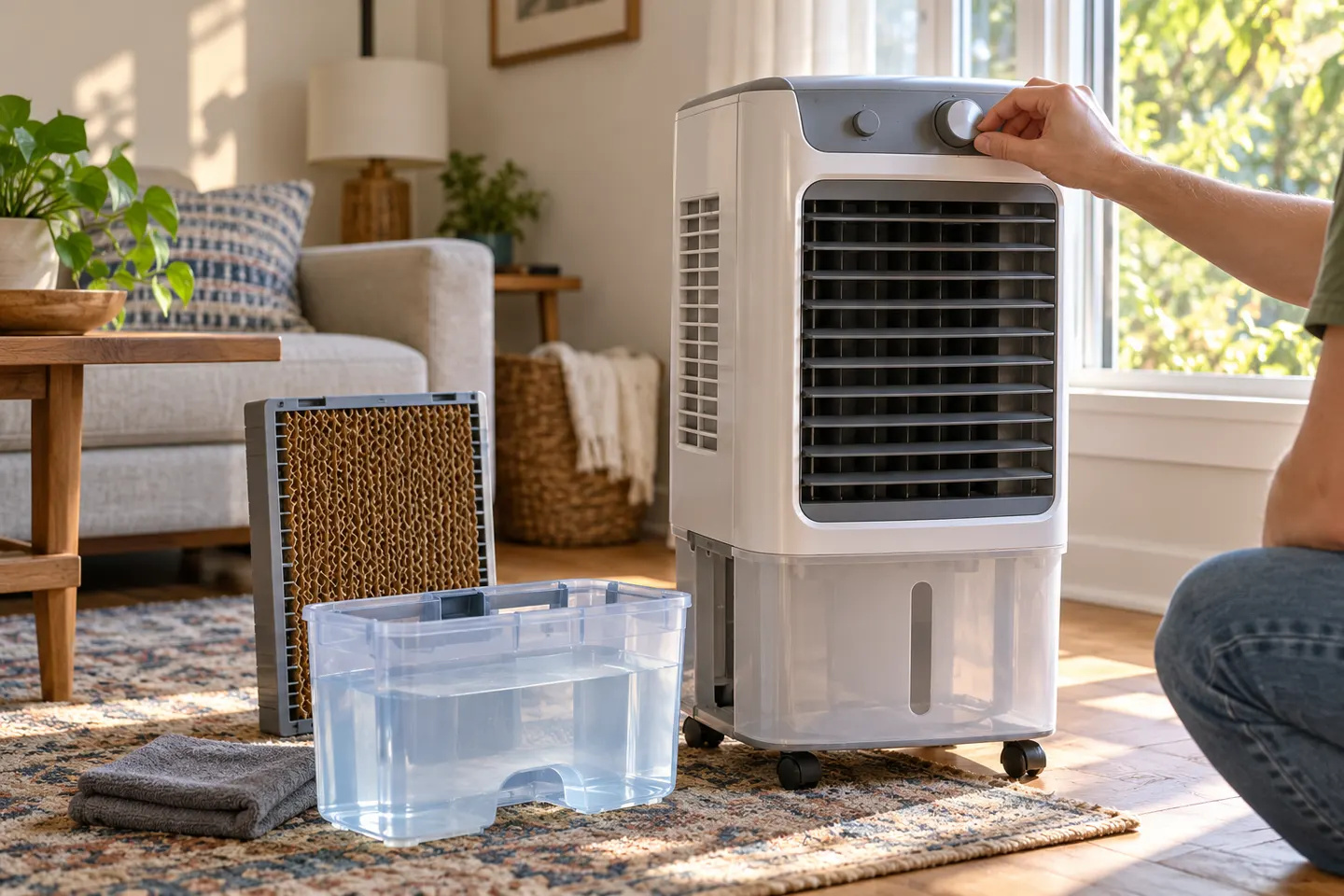
Air cooler energy efficient searches call for more than a low-wattage claim. An evaporative cooler moves air and water, while an air conditioner uses refrigeration to remove heat from an enclosed space. Compare rated power, expected run time, room guidance and humidity limits; an undersized device is not an efficient answer to a larger cooling need.

Air Cooler Energy Efficient: A Practical Comparison Guide

Common questions

Questions before you buy

How much electricity does an air cooler use?

Consumption depends on the model and settings. Use stated watts and expected operating hours to estimate energy use.

Can an air cooler use less electricity than an air conditioner?

Some evaporative designs avoid a compressor, but perform a different cooling task. Compare ratings and suitability.

Does humidity affect energy efficiency?

Humidity affects evaporative performance. In damp air, less evaporation can mean less useful cooling for the electricity consumed.

What is the fairest way to compare running use?

Compare watts, hours and operating modes for the same practical purpose, then account for climate and maintenance.