Air enters the cooler
A fan draws room or outdoor air through an intake grille. Keep the inlet clear and place the appliance as its manual directs so the fan can move air freely.

 Best picksGood Meat Thermometers for Every Kind of Cook
 Best picksBest WiFi Extenders: Which Range Extender Should You Buy?
 Best picksBest Dash Cams for Cars in 2026
 Best picksBest Radar Detectors for Cars: Models Compared
 Best picksGood Winter Gloves for Cold Weather: Five Useful Picks
 Best picksBest Headlamps: Six Lights Compared for Different Uses
 Best picksTop 10 Best Battery-Powered Weed Eaters for Different Yards
 Best picksBest Portable Air Coolers for Patios, Workshops and Small Spaces (2026)
 Best picksBest Air Purifier for Bedroom in the US: Quiet Models Compared
Gearjury may earn a commission from qualifying purchases made through retailer links.
Guide
An evaporative portable cooler pulls air across wet media and sends the cooled, moistened air into the room. Dry air and a path for ventilation support the process.
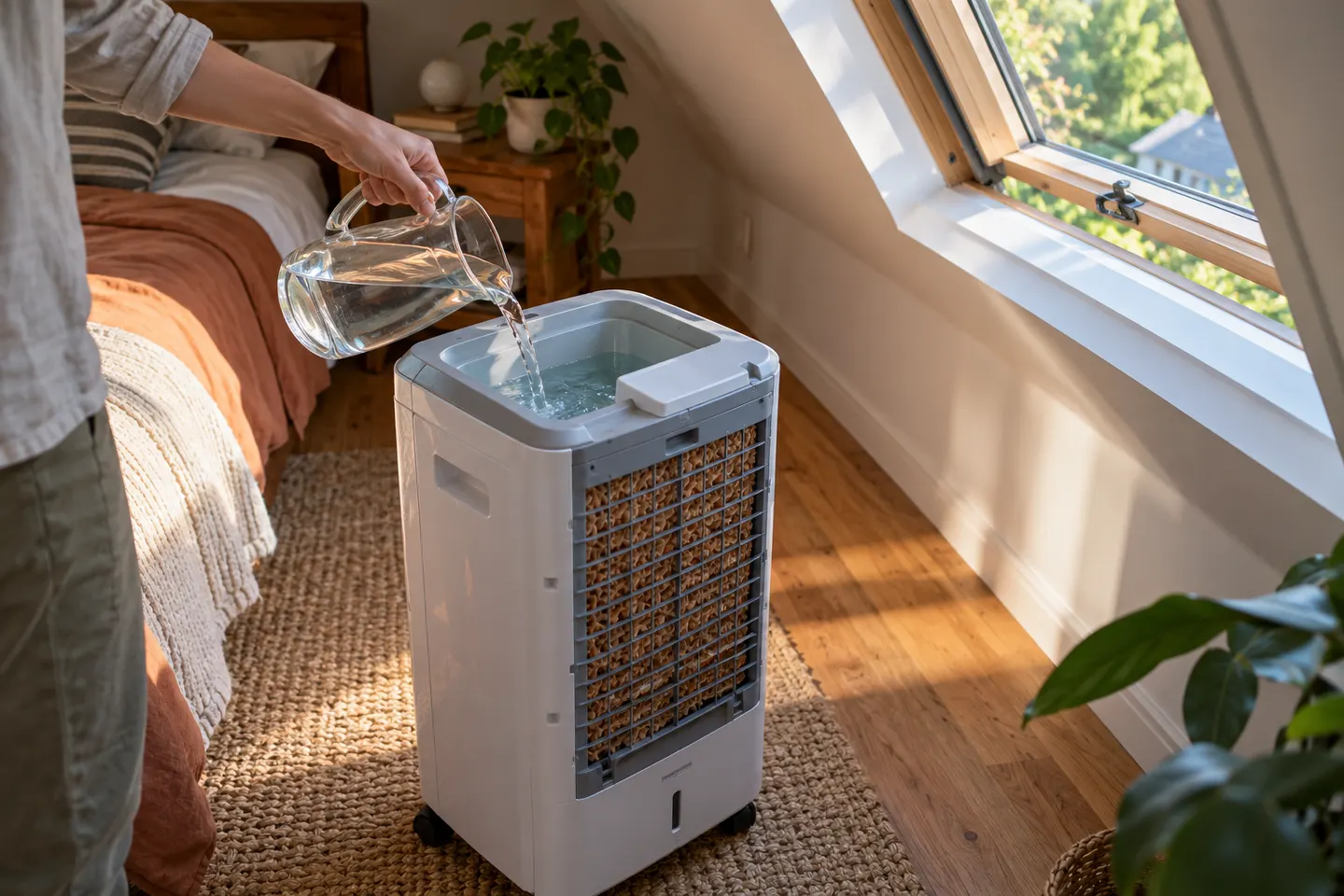
A fan draws room or outdoor air through an intake grille. Keep the inlet clear and place the appliance as its manual directs so the fan can move air freely.
A pump or gravity feed supplies water to a porous pad or similar media. The design varies by model; do not assume that every portable cooler uses the same filter, pump or tank arrangement.
As some water changes into vapour, it absorbs heat from the air passing through the media. The outlet air is cooler and more humid. The Department of Energy describes this process as a useful cooling option especially in dry climates.
The fan directs the treated air toward people or across the room. Unlike a refrigerated air conditioner, an evaporative cooler does not remove heat through a compressor and condenser; room results depend on ventilation and conditions.
Provide the exhaust or open-window arrangement specified by the manufacturer. Without a way for moist air to leave, humidity can build up and reduce the evaporation that drives cooling.
Empty, refill and clean the reservoir and media on the schedule in the model's manual. Unplug before maintenance and stop use if the unit, cord or plug is damaged.
Common questions
A fan moves air through a wetted pad. Water evaporates into that airflow, taking heat from it and increasing the air's moisture content.
Ventilation lets humid air leave the space. The unit adds moisture rather than removing it, and trapped humidity can limit the cooling process.
A standard evaporative cooler uses water evaporation rather than a refrigerant cycle. A portable air conditioner is a different appliance and typically vents heat through a hose.
Drier air can accept more water vapour, supporting evaporation. High humidity limits that process, while the cooler still adds moisture to its output.
Keep exploring
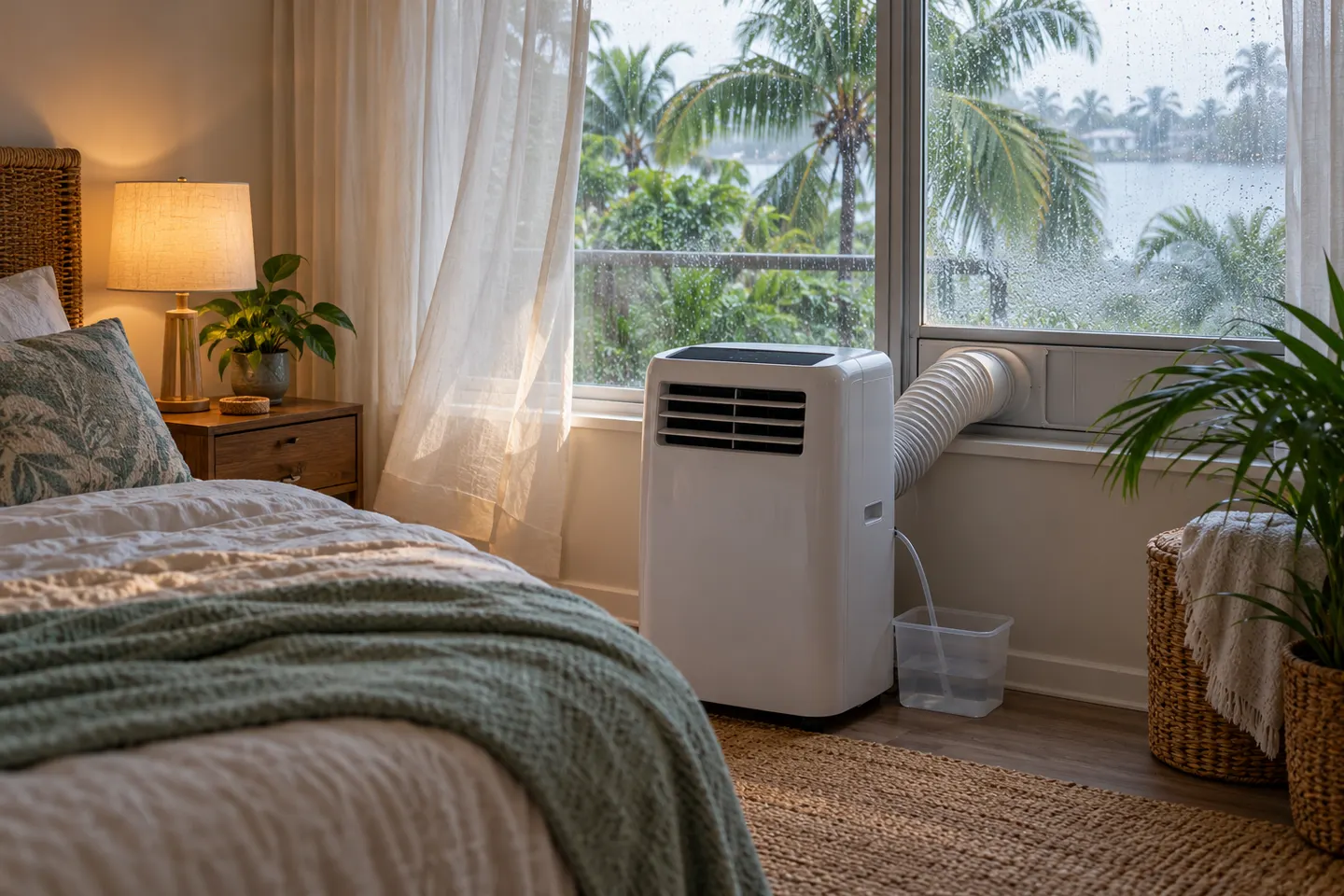
Direct evaporative coolers add water vapour and generally suit dry air better. In humid conditions, compare a fan for air movement or refrigerated AC for dehumidifying and cooling.
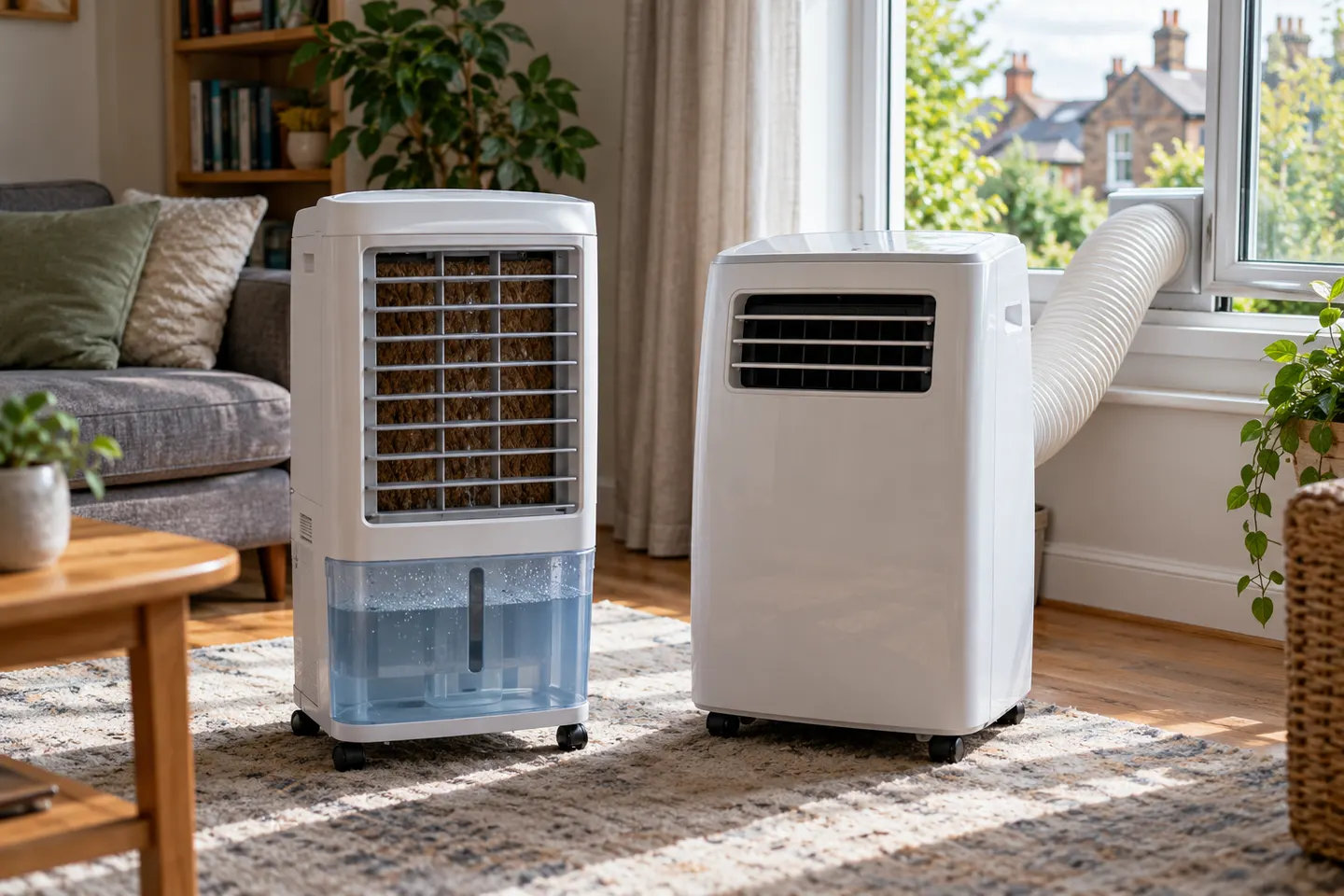
An evaporative cooler can make a nearby breeze feel cooler, but it is not a portable air conditioner. Climate and ventilation determine which option fits.
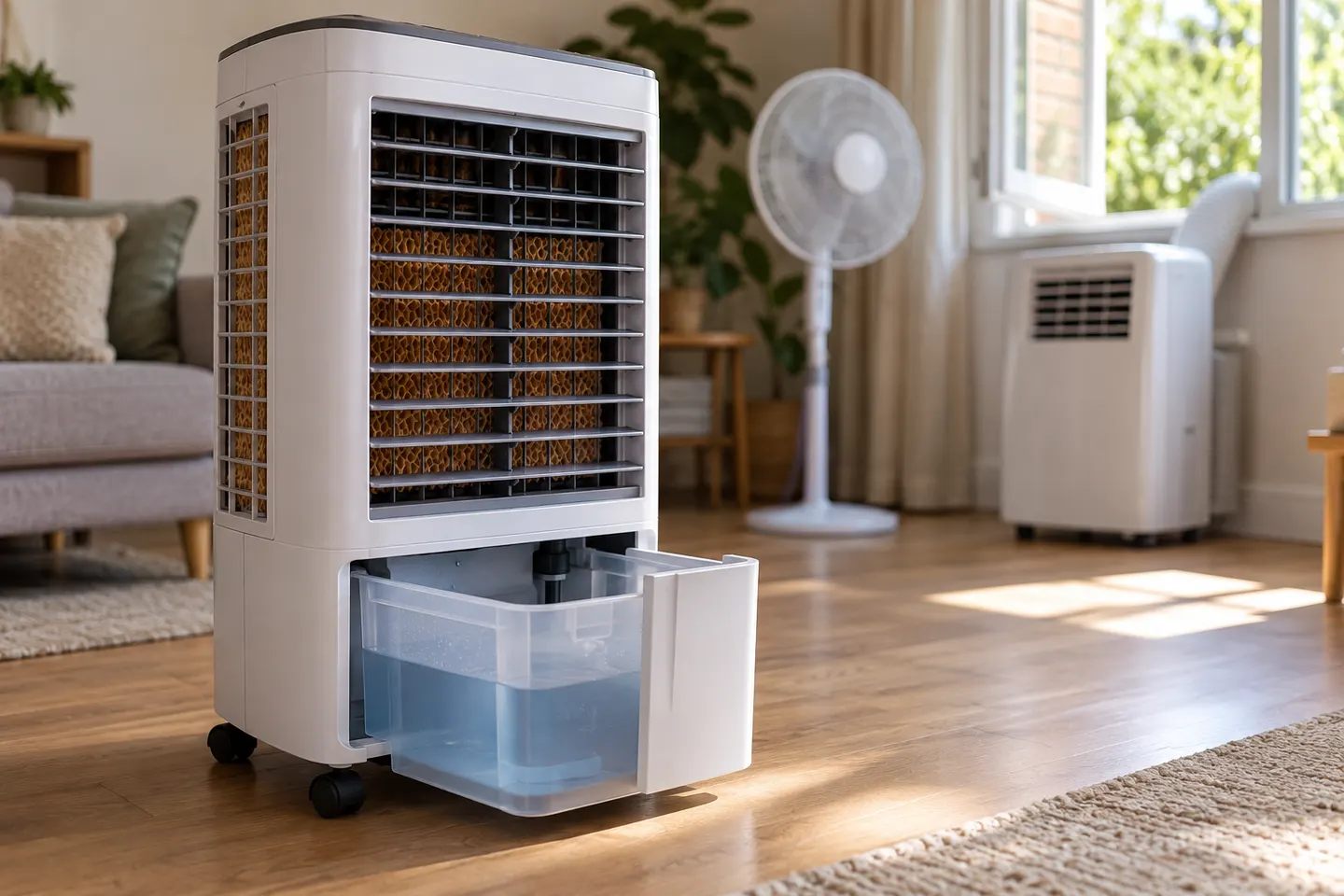
A portable air cooler can mean a fan-based evaporative unit or a portable air conditioner. Start with your climate: evaporative models add moisture and suit dry conditions, while air conditioners actively remove heat from a room.
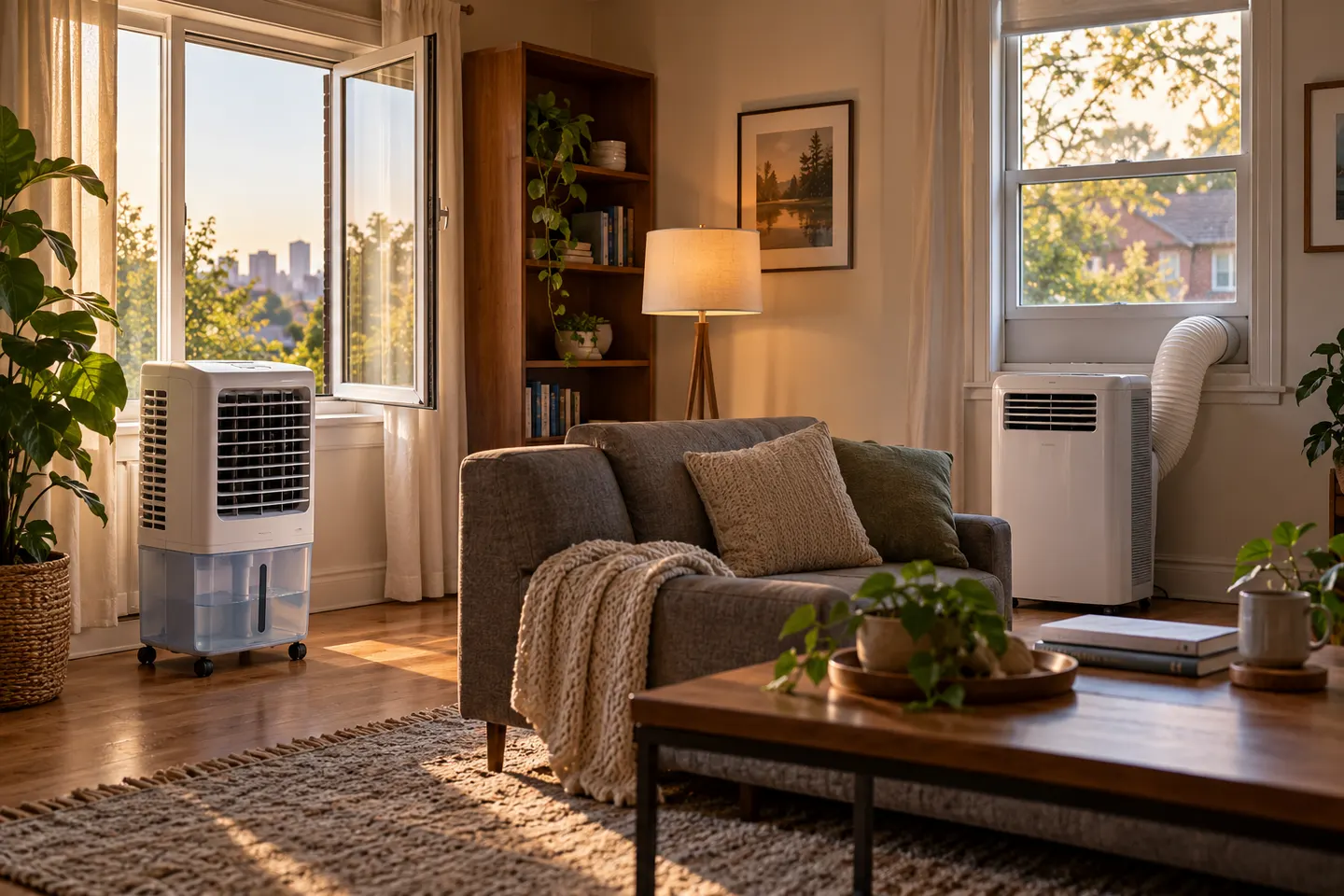
Evaporative coolers circulate air through wet media; portable air conditioners move heat through an exhaust hose. The better choice depends on humidity and room setup.