Gearjury may earn a commission when you buy through a retailer link. Editorial conclusions are based on cited evidence.
Guide
How to Wire a Dashcam Safely
Use the hardwire kit specified for your exact camera, identify constant and ignition-switched circuits with a meter, add the correct fuse taps and ground connection, then route cables away from airbags and controls.
GGearjury editorial team · Updated October 15, 2026· 7 min
01
What do you need to hardwire a dashcam?
Get the manufacturer-approved hardwire kit, correctly sized fuse taps for the vehicle, matching replacement fuses, a trim tool and a multimeter. Confirm the kit matches the camera connector and supports the parking feature you intend to use.
02
Choose a safe camera and cable route
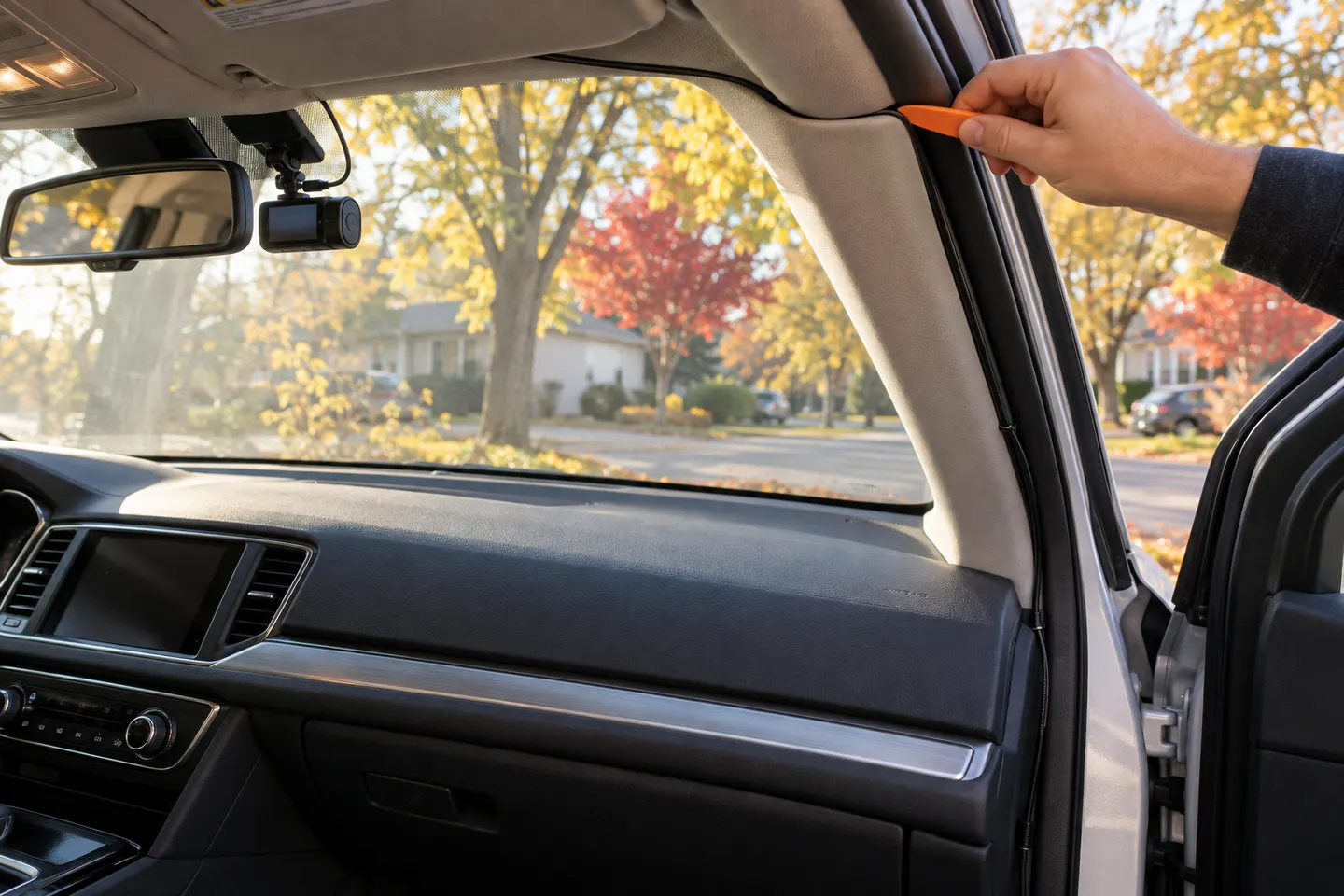
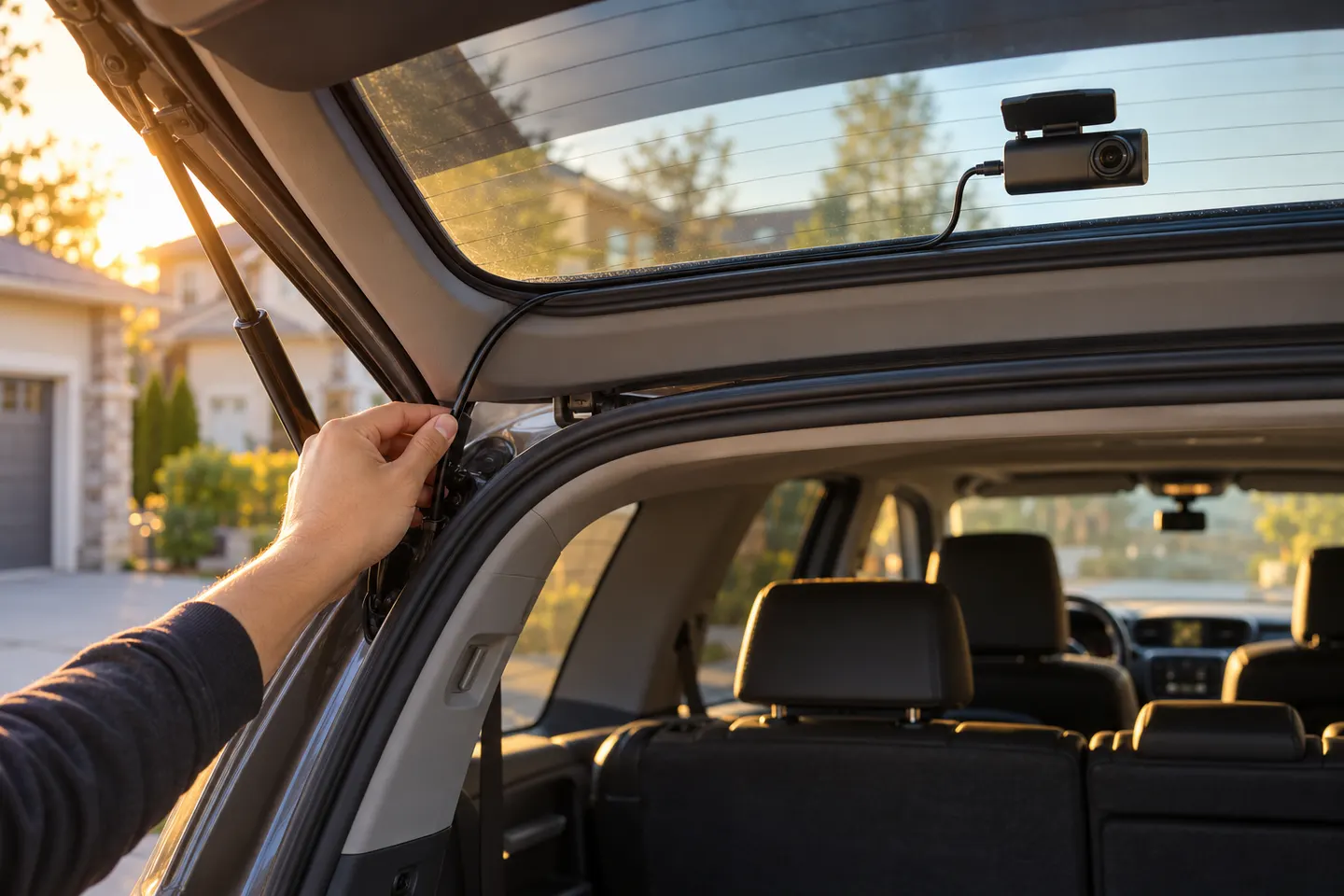
Position the camera without blocking the driver's view or vehicle sensors. Plan the power lead along the headliner and pillar trim, but do not run it across an airbag deployment path. Use the vehicle service information when the airbag location is unclear.
03
How do you find constant and accessory fuses?
With the ignition off, use a multimeter to identify a constant circuit that remains powered. Then find an accessory circuit that is off with the vehicle and becomes live when the ignition is on. Never rely only on the label printed on a fuse-box cover.
04
Connect the fuse taps and ground
Disconnect power as directed by the vehicle manual. Install each original fuse and the accessory fuse in the correct positions in its tap, connect the hardwire leads according to the kit diagram, and fasten the ground terminal to an approved chassis point.
05
Set low-voltage protection
If the kit offers selectable battery protection, follow the camera and vehicle guidance. Parking recording should shut down before the vehicle battery is depleted; a hardwire kit cannot guarantee a healthy battery.
06
Test before replacing trim
Verify normal recording with the ignition on, parking mode after shutdown and clean startup after the vehicle rests. Check that no warning lights appear, the camera clock is correct and saved clips play before securing every panel.
Common questions
Questions before you buy
Can I hardwire a dashcam myself?
Yes, if you can safely test circuits and follow both the vehicle and hardwire-kit instructions. Otherwise, professional installation is the safer choice.
Which fuse should a dashcam use?
A parking-mode kit commonly needs one constant and one ignition-switched circuit, but the exact circuits depend on the vehicle. Confirm them with a multimeter and avoid safety-critical systems.
Will hardwiring a dashcam drain the battery?
It can if the camera runs too long or protection is configured poorly. Use a compatible kit with low-voltage cutoff and check the vehicle battery's condition.
Can a dashcam cable go behind an A-pillar airbag?
Do not place a cable where it can obstruct deployment. Follow the vehicle service guidance or let a qualified installer route it around the airbag system.
A front and rear dash cam records both directions and can provide context a single lens misses. Check the rear-camera cable route and simultaneous recording resolution before buying.
VIOFO A229 Pro 2CH is our broad recommendation for detailed front and rear coverage. Garmin Mini 3 favors discretion, while Garmin X310 is the sharper single-camera choice.
The A329S serves buyers seeking high-detail multichannel recording; A229 models cover more moderate dual-camera needs, while A119 Mini 2 is the compact front-only option.
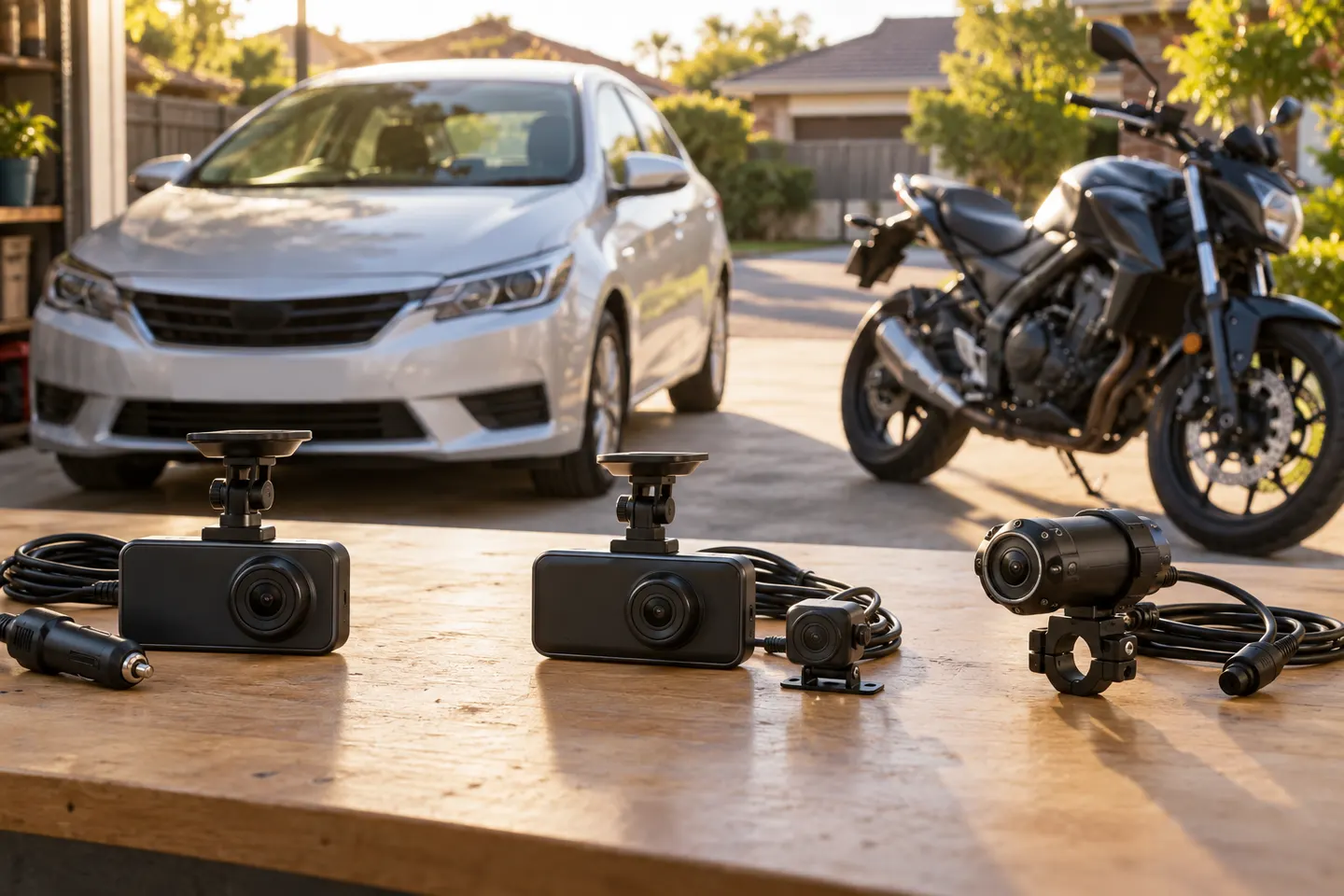
Start with the coverage you need: front-only, front and rear, cabin or a wider multi-camera view. Then compare recording detail, storage and power requirements.
Your privacy
We use cookies and similar technologies. Necessary ones keep the site working. With your permission we also use statistics cookies (Google Analytics and Microsoft Clarity) to understand which guides help readers. You can accept all, reject all or choose. You can change your choice at any time from "Cookie settings" at the bottom of every page. Cookie policy