Whole cuts: 145°F and a three-minute rest
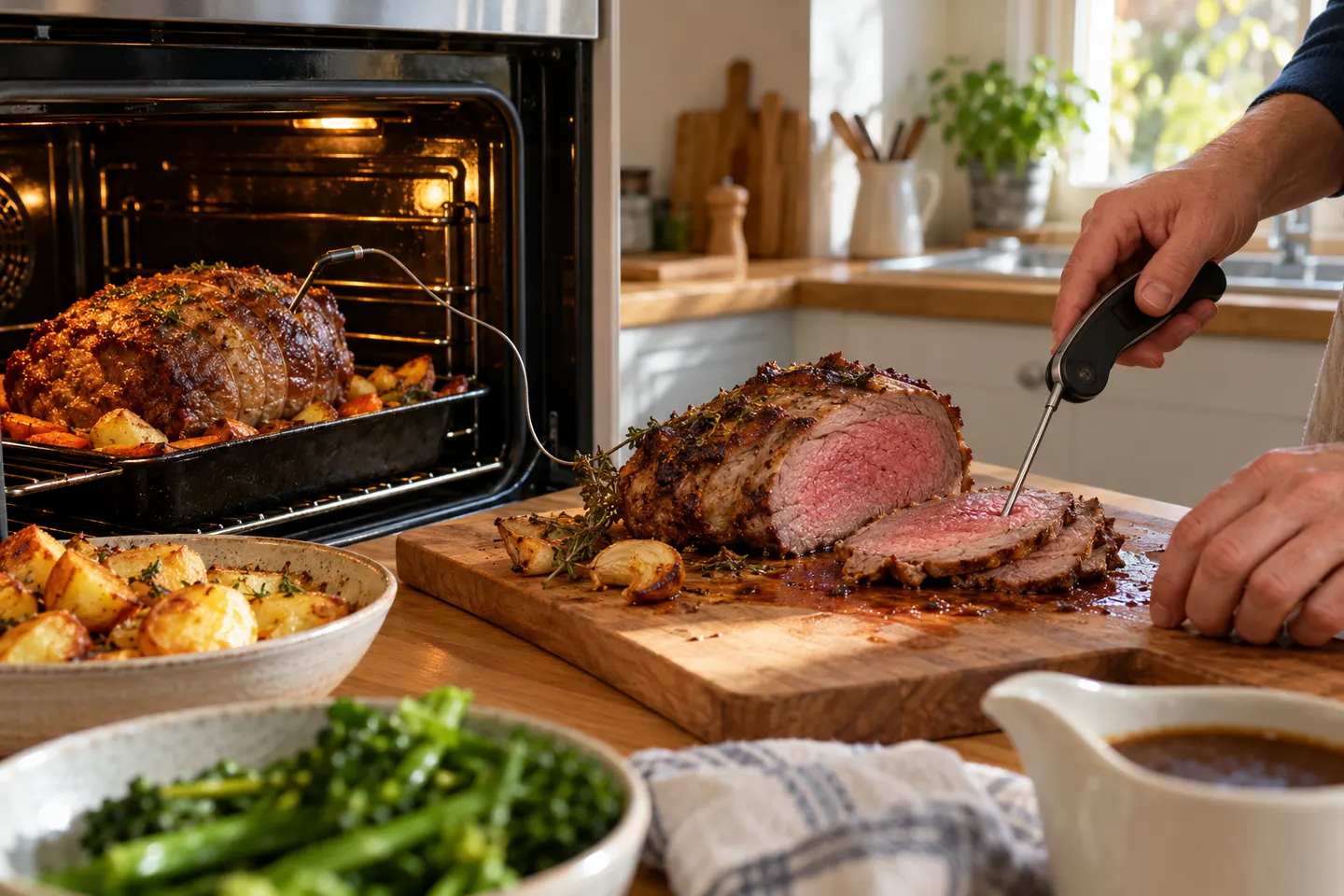
This food thermometer chart follows USDA guidance for beef, pork, veal and lamb steaks, chops and roasts. Reach at least 145°F, then rest the meat for at least three minutes before carving or eating.

 Best picksGood Meat Thermometers for Every Kind of Cook
 Best picksBest WiFi Extenders: Which Range Extender Should You Buy?
 Best picksBest Dash Cams for Cars in 2026
 Best picksBest Radar Detectors for Cars: Models Compared
 Best picksGood Winter Gloves for Cold Weather: Five Useful Picks
 Best picksBest Headlamps: Six Lights Compared for Different Uses
 Best picksTop 10 Best Battery-Powered Weed Eaters for Different Yards
 Best picksBest Portable Air Coolers for Patios, Workshops and Small Spaces (2026)
 Best picksBest Air Purifier for Bedroom in the US: Quiet Models Compared
Gearjury may earn a commission through qualifying retailer links. Safety values come from the cited authorities.
Guide
Use 145°F plus a three-minute rest for whole cuts of beef, pork, veal and lamb; 160°F for ground meats; and 165°F for poultry, stuffing, casseroles and leftovers. Measure the coldest central area with a food thermometer.
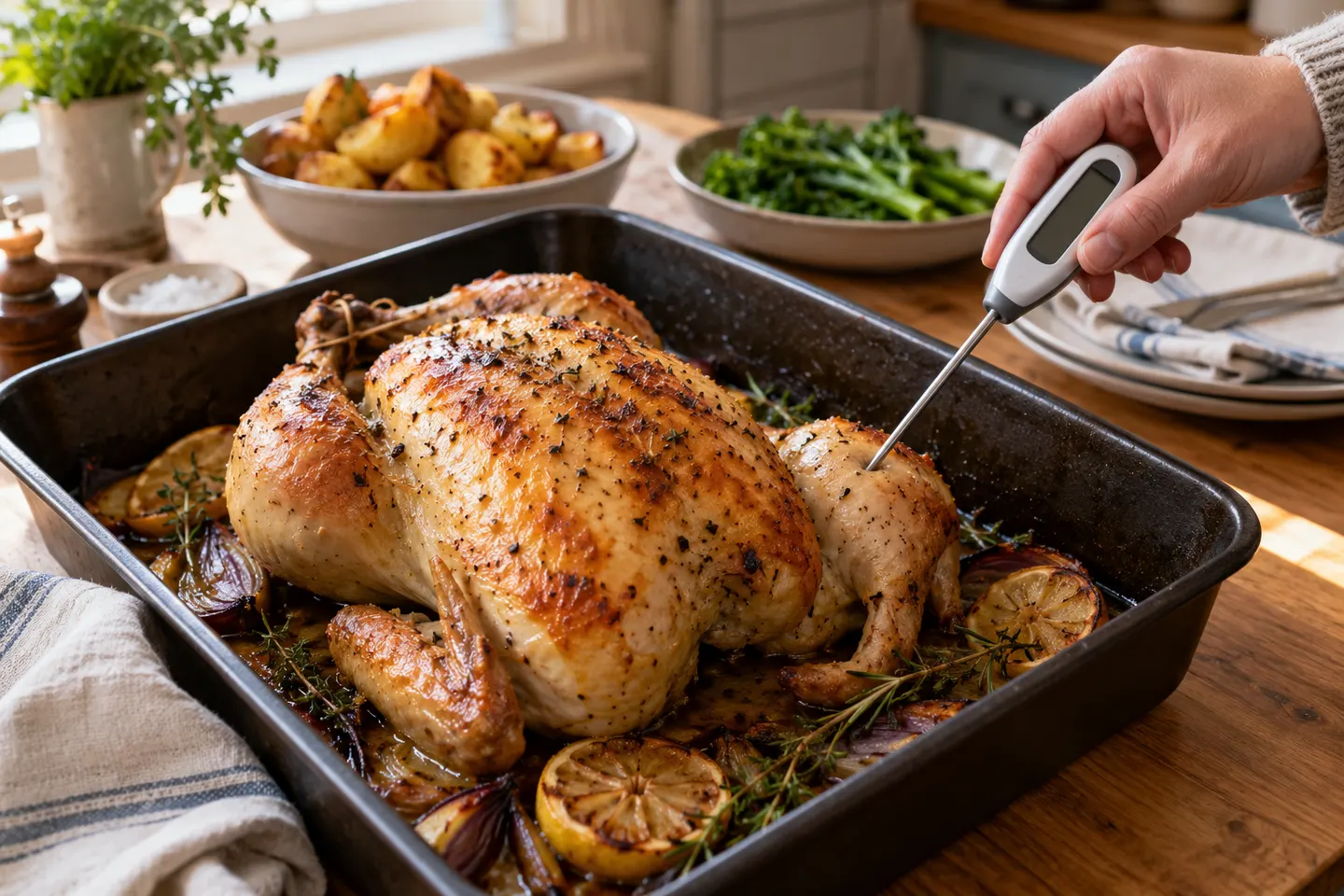
This food thermometer chart follows USDA guidance for beef, pork, veal and lamb steaks, chops and roasts. Reach at least 145°F, then rest the meat for at least three minutes before carving or eating.
Ground beef, pork, veal and lamb should reach 160°F. Check the center of patties from the side so the sensor sits in the coolest portion.
Chicken, turkey, duck, ground poultry, giblets and stuffing should reach 165°F. For a whole bird, check the innermost thigh and wing and the thickest breast without touching bone.
USDA lists 145°F for fish and shellfish. Place the probe in the thickest portion or center and check more than one place when thickness varies.
Eggs are listed at 160°F, while egg dishes, casseroles and reheated leftovers should reach 165°F under the federal chart. Measure the center and sample separate areas in a large dish.
Common questions
For safety, USDA specifies at least 145°F for beef steak followed by a three-minute rest. Personal doneness preferences may call for a higher temperature.
All poultry should reach at least 165°F in the appropriate internal locations.
Place the sensor in the thickest part away from bone, fat and gristle. Enter thin food from the side to reach its center.
It can, but do not rely on predicted carryover to replace the USDA minimum and required rest-time instruction.
Keep exploring
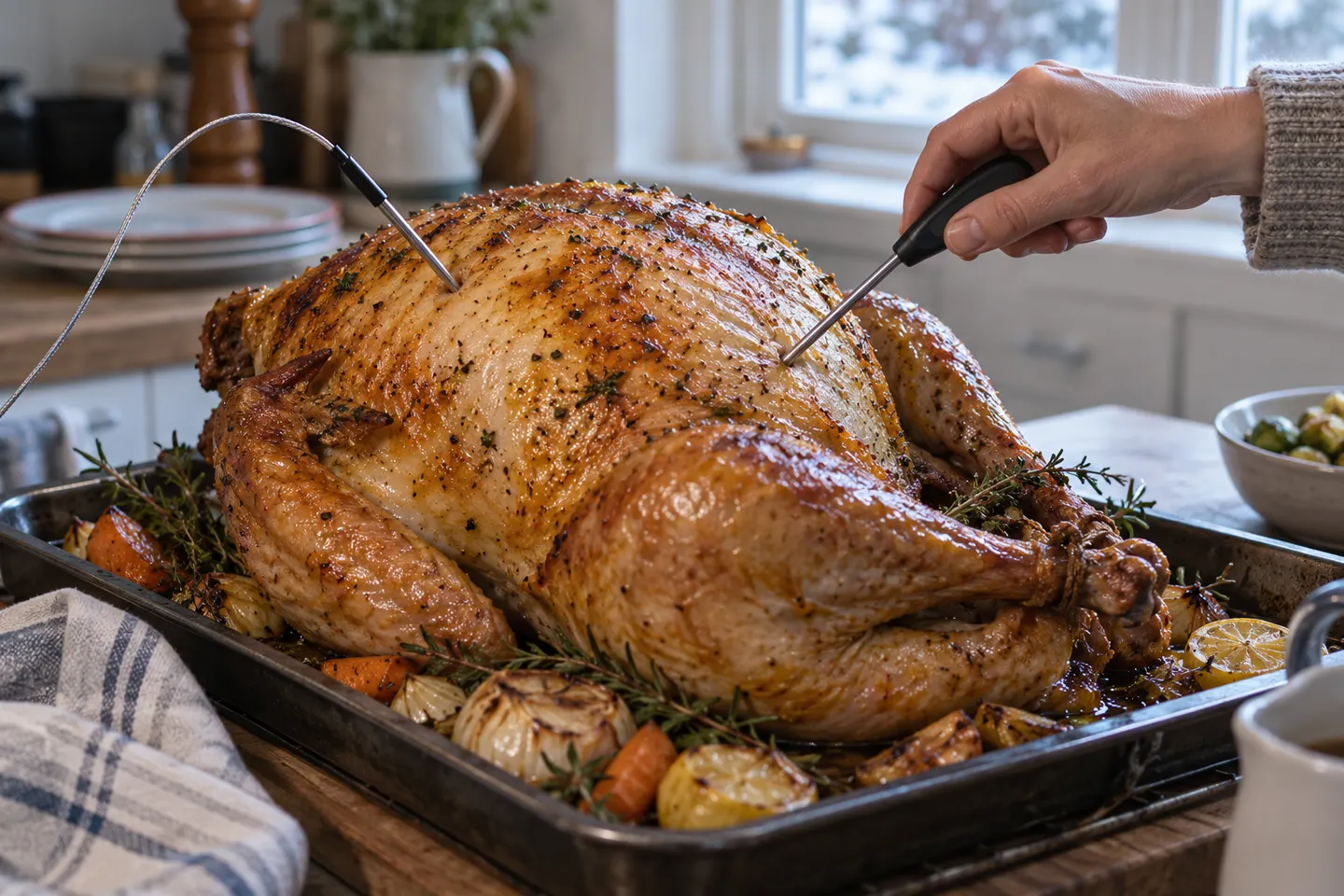
Use a leave-in probe to track the cook and an instant-read model to check more than one spot before serving.
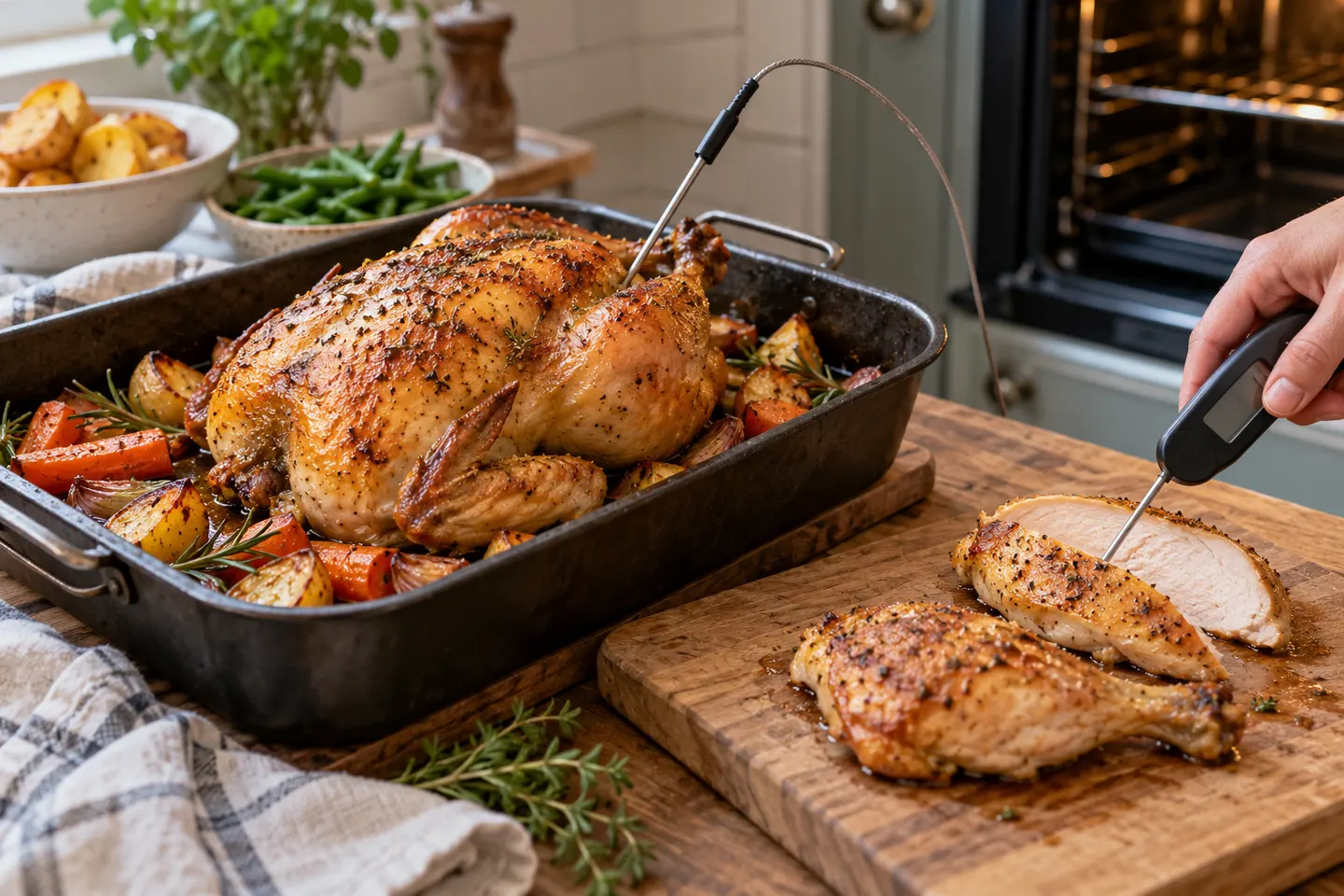
A fast, thin probe works well for portions; a heat-safe leave-in probe makes a whole roast easier to monitor.
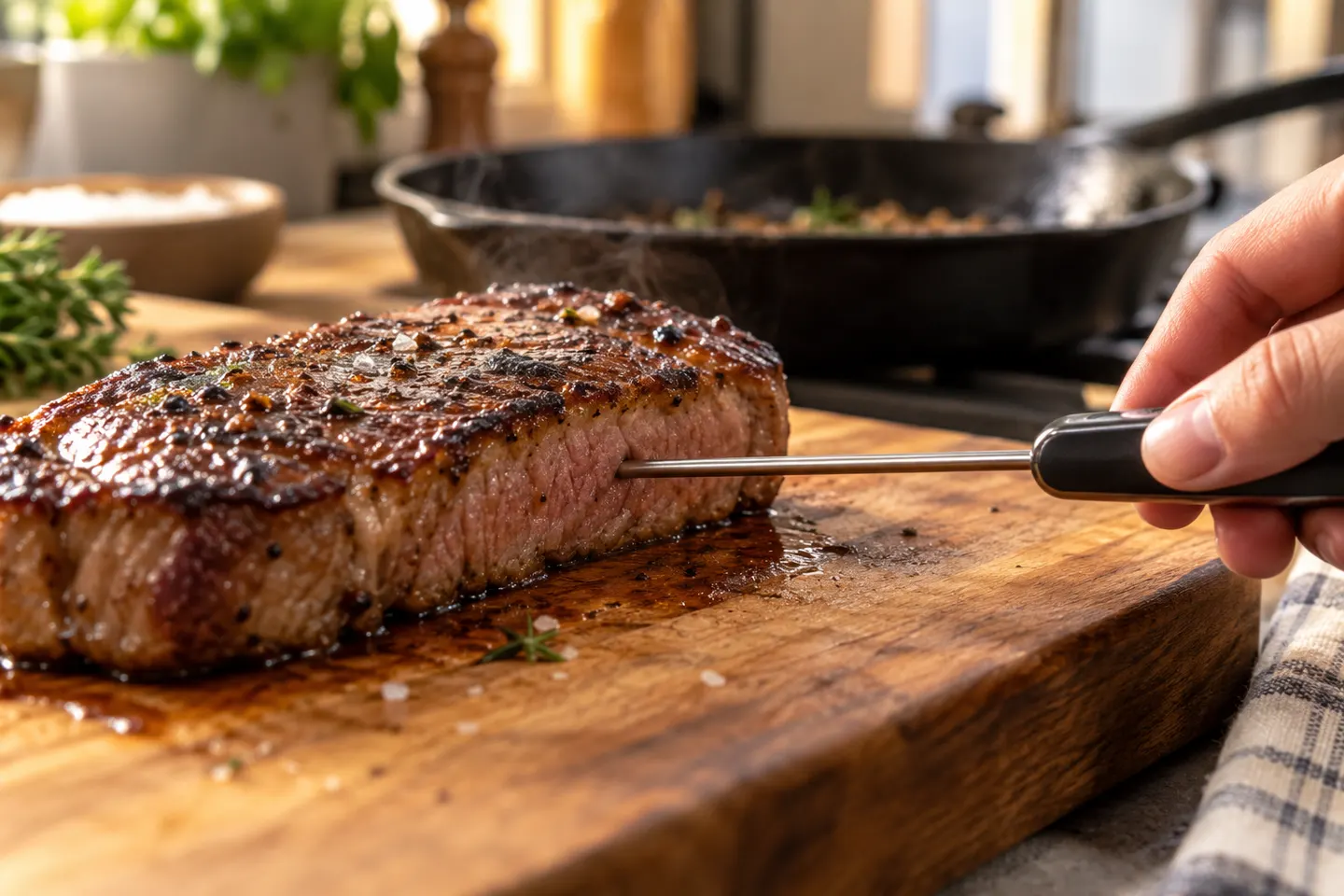
A fast instant-read probe is the most practical choice for steaks; insert it from the side into the center.
Start with a dependable instant-read thermometer; add a leave-in or wireless probe when you want continuous monitoring.