Gearjury may earn a commission when you buy through an Amazon link. Editorial guidance is based on the cited sources.
Guide
What Is the Difference Between a Meat Thermometer and a Candy Thermometer?
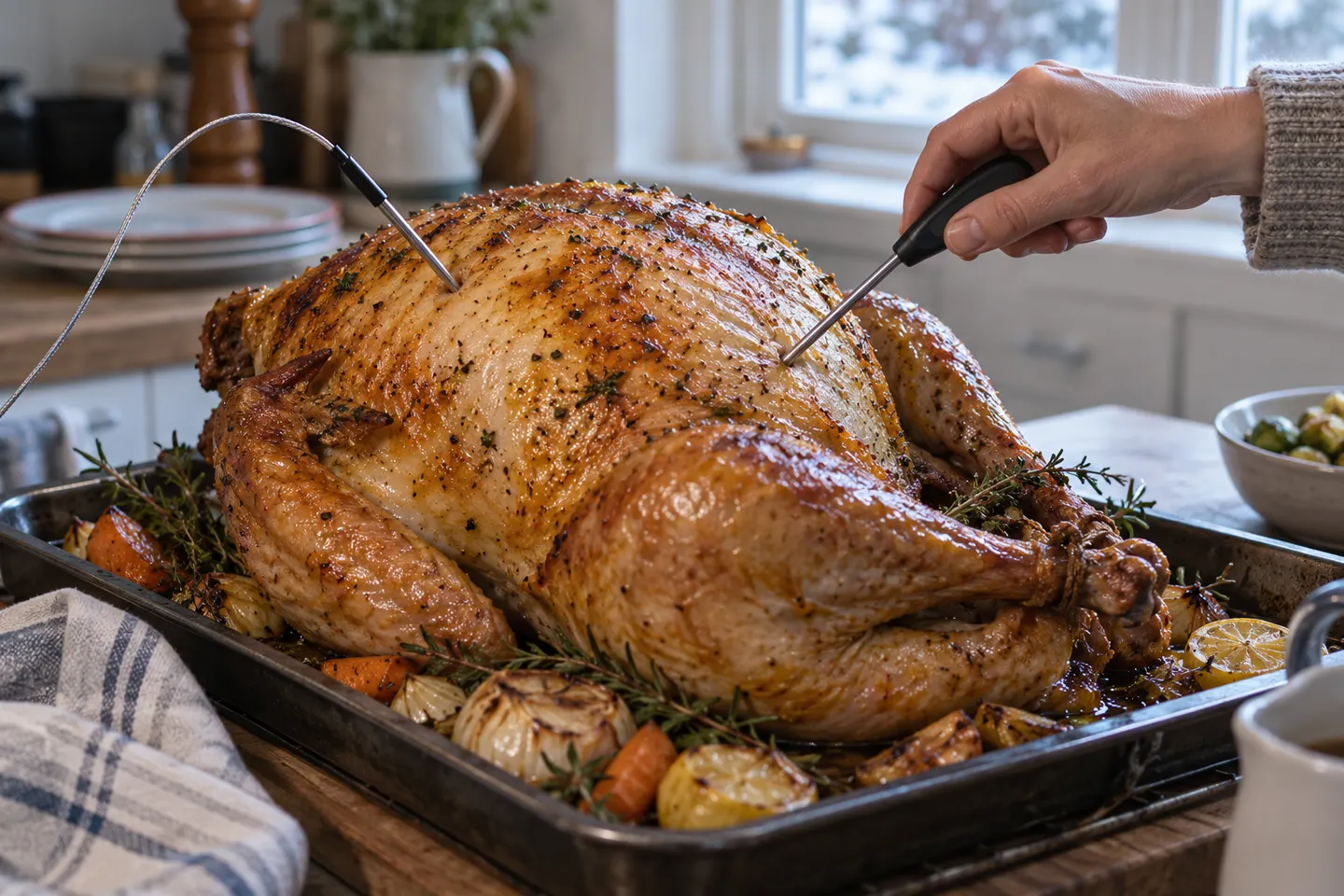
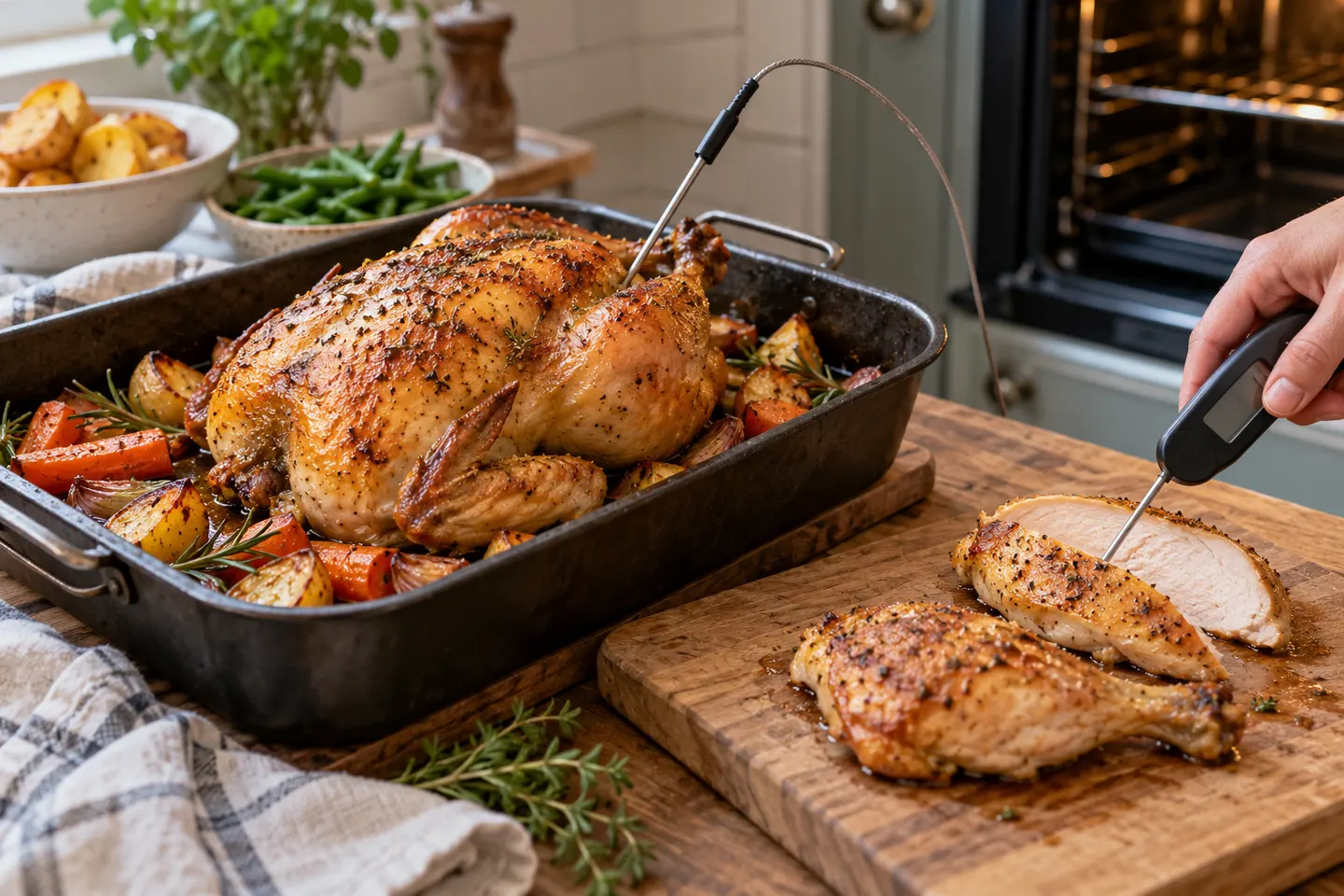
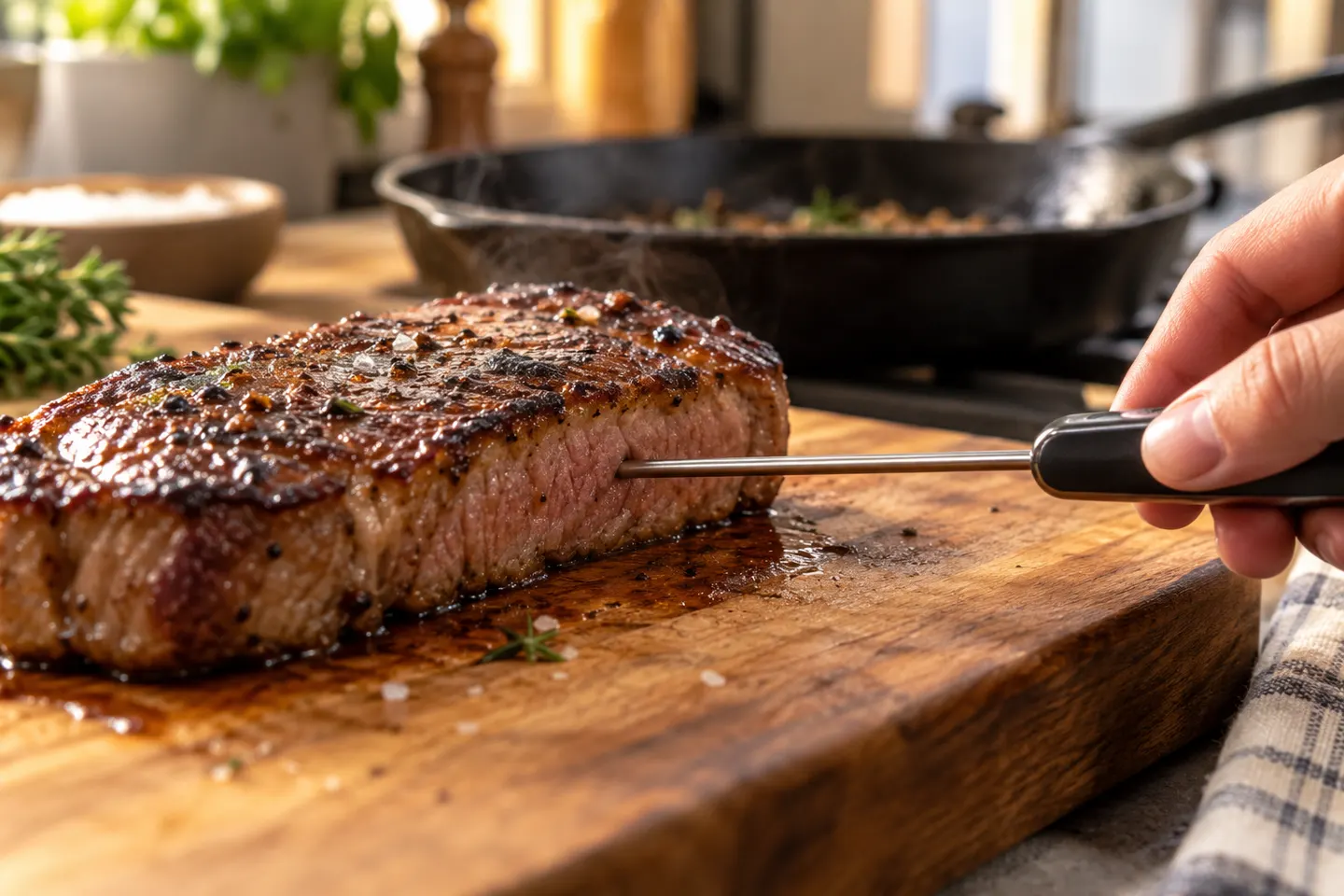
A meat thermometer measures internal food temperature, usually through a pointed probe placed in the thickest part. A candy thermometer is built to monitor hotter liquids continuously and usually clips to the side of a pan.
GGearjury editorial team · Updated October 15, 2026· 6 min
01
What is the difference between a meat thermometer and a candy thermometer?
The difference between meat thermometer and candy thermometer designs starts with the job. A meat thermometer checks the internal temperature of solid food through a pointed probe. A candy thermometer follows the temperature of sugar syrup, jelly, or frying oil and is commonly held against a pan by a clip. USDA guidance describes candy, jelly, and deep-fry thermometers as tools for the extra-high temperatures used in those tasks.
02
Compare their temperature ranges
A typical candy thermometer covers a hotter band than many meat-focused models; USDA guidance gives a general candy, jelly, and deep-fry range of 100 to 400 degrees Fahrenheit. Meat thermometers vary widely by sensor type, so read the marked range or manual instead of assuming every probe can tolerate hot oil or direct flame.
03
Look at probe shape and sensing area
A meat probe is shaped to enter food, but its sensing area may be at the tip or extend farther up the stem. Candy thermometers are designed to sit in liquid without resting on the pan bottom. A clip helps keep the sensing area immersed while separating it from the hotter metal surface.
04
Can you use a meat thermometer for candy?
Only if the manufacturer says its range, probe materials, and usage method are suitable for candy temperatures. Many meat thermometers do not cover the necessary upper range or cannot be clipped safely to a pan, so a purpose-built candy thermometer is the dependable choice.
05
Can you use a candy thermometer for meat?
It may display a temperature in meat, but its long sensing area, slower response, and pan-oriented shape can make correct placement awkward. For safe checks, use a food thermometer intended for meat and place it in the thickest part away from bone, fat, and gristle.
06
Choose the right tool for the cooking method
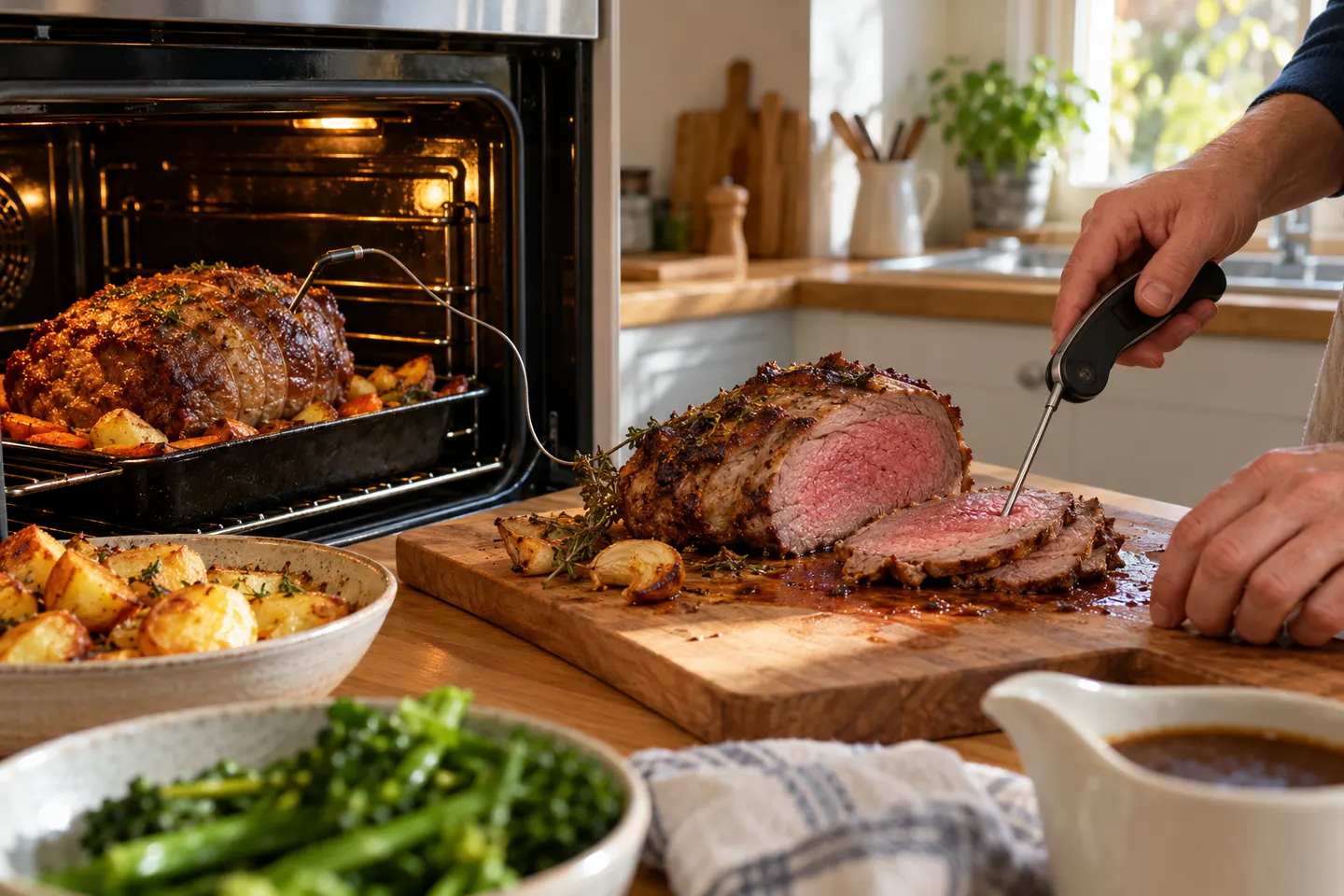
Choose an instant-read meat thermometer for quick checks, a leave-in model when its instructions allow monitoring during cooking, and a candy thermometer for syrup, jelly, or deep frying. For any model, stay within the stated heat limit, clean the food-contact area, and follow the maker's insertion or immersion guidance.
Common questions
Questions before you buy
Can I use a meat thermometer instead of a candy thermometer?
Use it only when the manufacturer explicitly permits the required temperature and liquid-cooking method. Otherwise, its range, materials, or shape may be unsuitable.
Can I use a candy thermometer to check meat?
A candy thermometer is not the best tool for meat because its sensing area and shape are designed for liquids. A meat thermometer makes correct placement in the thickest part easier.
Why does a candy thermometer clip to the pan?
The clip keeps the sensing area in the liquid while helping prevent contact with the pan bottom. Touching the pan can expose the sensor to a hotter surface than the mixture being measured.
What temperature range does a candy thermometer use?
USDA guidance describes candy, jelly, and deep-fry thermometers as generally measuring from 100 to 400 degrees Fahrenheit. Check the scale on your own model before use.
Is an instant-read thermometer the same as a candy thermometer?
No. Instant-read describes how a thermometer is used for a quick check, while candy thermometers are designed for continuous monitoring of hot liquid during candy making.
Start with a dependable instant-read thermometer; add a leave-in or wireless probe when you want continuous monitoring.
Your privacy
We use cookies and similar technologies. Necessary ones keep the site working. With your permission we also use statistics cookies (Google Analytics and Microsoft Clarity) to understand which guides help readers. You can accept all, reject all or choose. You can change your choice at any time from "Cookie settings" at the bottom of every page. Cookie policy