Prepare a clean, accurate food thermometer
Use an instant-read thermometer for final checks or an oven-safe leave-in probe for continuous monitoring. Clean the stem as directed before it touches the cooked bird.

 Best picksGood Meat Thermometers for Every Kind of Cook
 Best picksBest WiFi Extenders: Which Range Extender Should You Buy?
 Best picksBest Dash Cams for Cars in 2026
 Best picksBest Radar Detectors for Cars: Models Compared
 Best picksGood Winter Gloves for Cold Weather: Five Useful Picks
 Best picksBest Headlamps: Six Lights Compared for Different Uses
 Best picksTop 10 Best Battery-Powered Weed Eaters for Different Yards
 Best picksBest Portable Air Coolers for Patios, Workshops and Small Spaces (2026)
 Best picksBest Air Purifier for Bedroom in the US: Quiet Models Compared
Gearjury may earn a commission from retailer links. Food-safety advice follows the cited public guidance.
Guide
Check the thickest breast and the innermost thigh and wing areas without touching bone. USDA guidance says whole turkey is safe when all three locations reach 165°F.
Use an instant-read thermometer for final checks or an oven-safe leave-in probe for continuous monitoring. Clean the stem as directed before it touches the cooked bird.
Insert from the side or top so the sensing area reaches the center of the thickest breast meat. Stop short of the breastbone, which can give a misleading reading.
Place the probe into the deepest thigh meat where it joins the body, avoiding the joint and bone. Reposition if the temperature changes abruptly when the tip touches bone.
USDA guidance calls for checking the innermost wing as well as breast and thigh. Test more than one location because a whole bird does not heat uniformly.
Continue cooking if any valid reading is below 165°F. If the turkey is stuffed, the center of the stuffing also needs to reach 165°F.
Let the turkey rest according to your recipe before carving, but do not use resting to excuse an under-temperature location. Clean and sanitize the thermometer after contact with food.
Common questions
Use the manufacturer's calibration procedure. An ice-water check should read 32°F when prepared correctly; adjust only if the model supports it.
Inspect it for damage, clean the probe, confirm the battery or dial works, and perform the maker's recommended accuracy check if the reading is in doubt.
Check the thickest breast and the innermost thigh and wing areas, keeping the sensing area away from bone.
USDA guidance specifies 165°F in the breast, innermost thigh, and innermost wing; stuffing in the bird must also reach 165°F.
Use a food thermometer to confirm all required locations. A single indicator cannot show the temperature throughout the whole bird.
Keep exploring
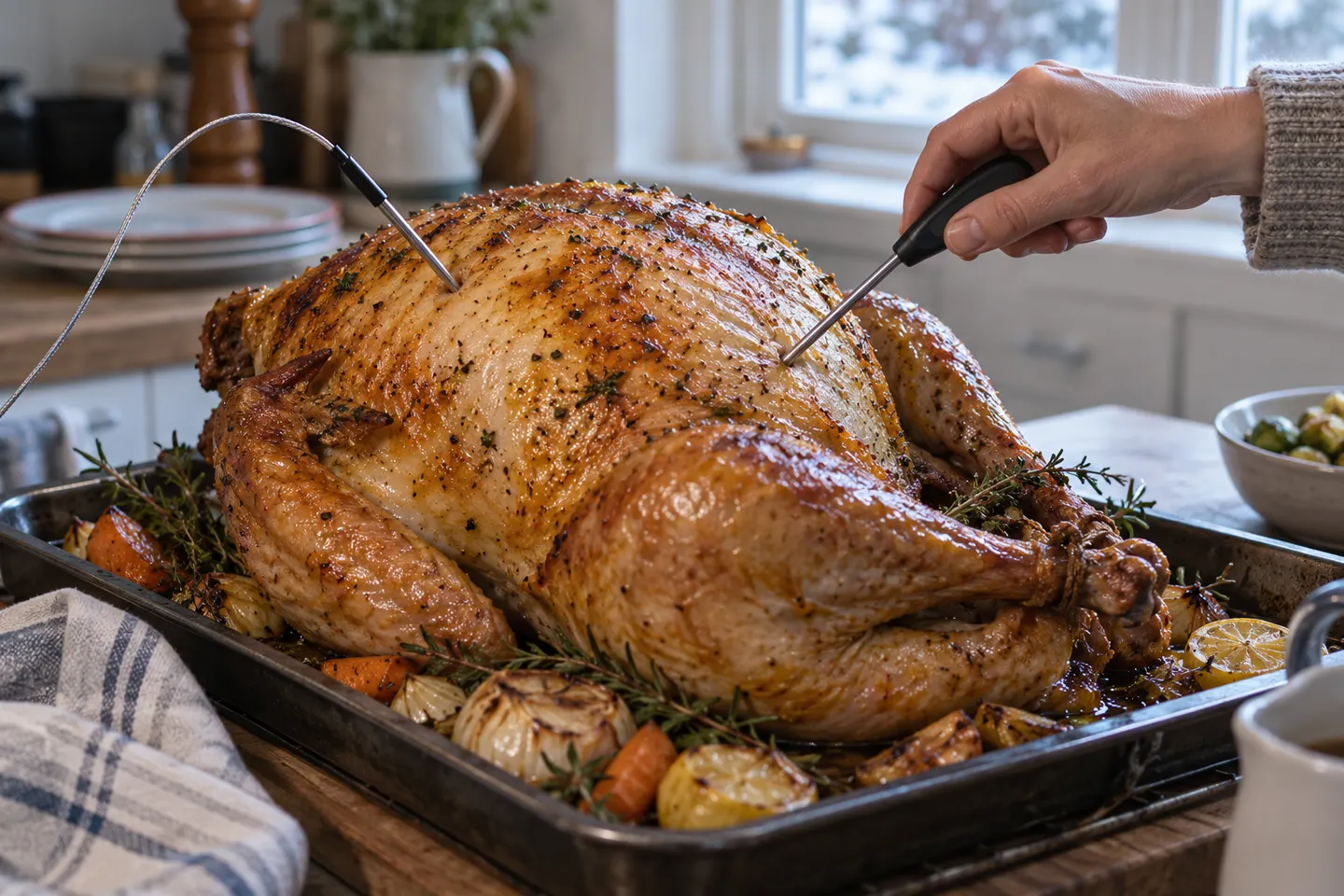
Use a leave-in probe to track the cook and an instant-read model to check more than one spot before serving.
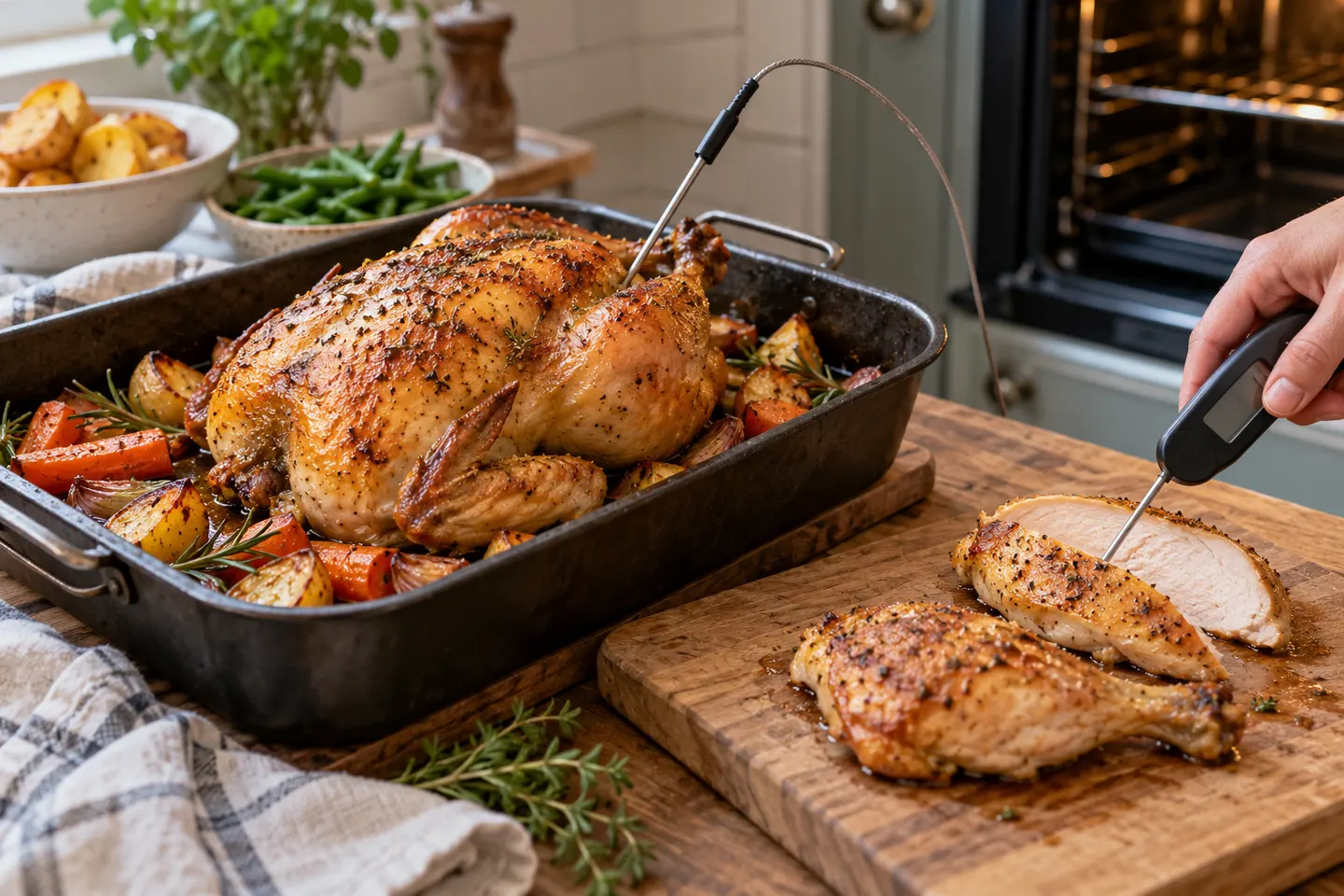
A fast, thin probe works well for portions; a heat-safe leave-in probe makes a whole roast easier to monitor.
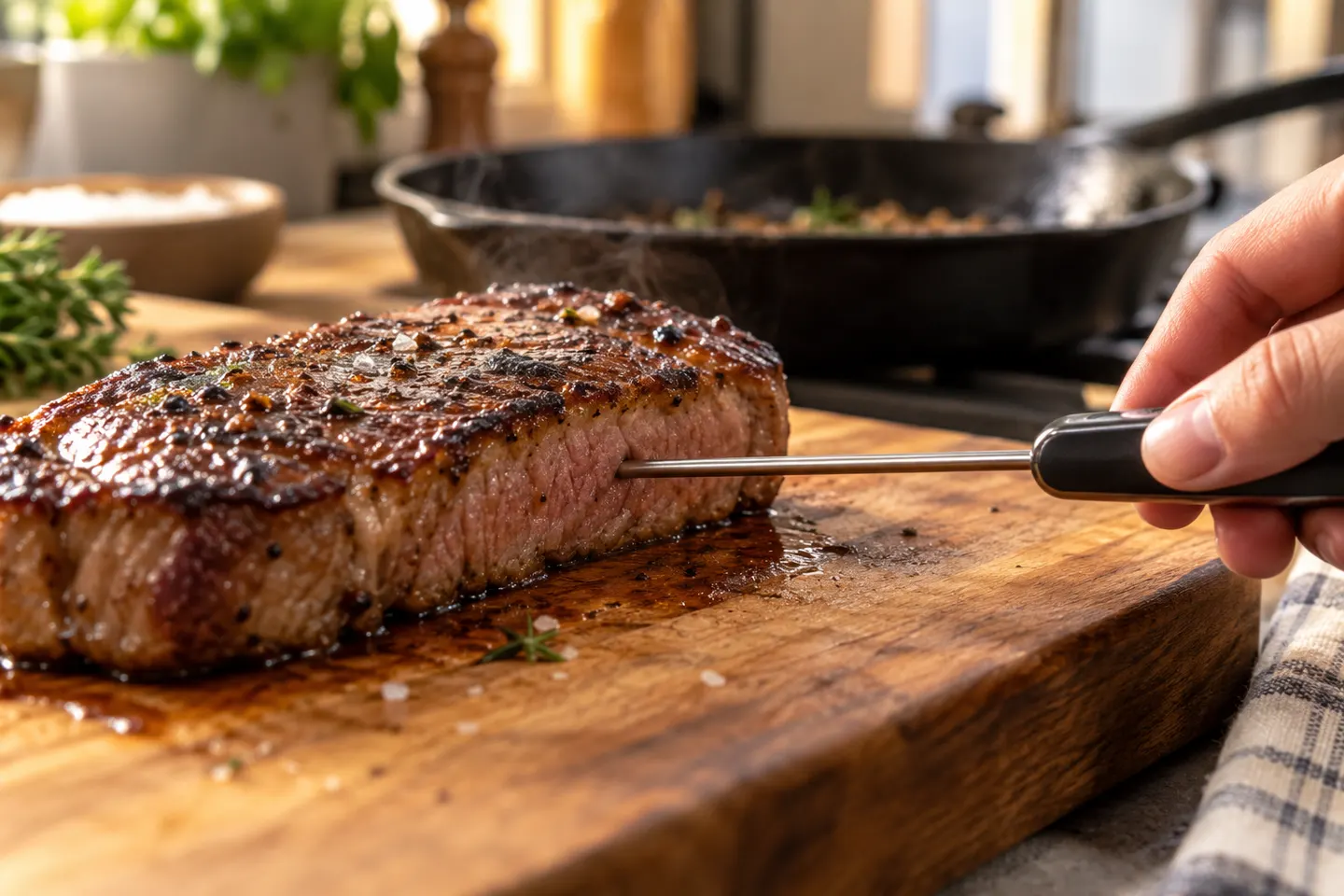
A fast instant-read probe is the most practical choice for steaks; insert it from the side into the center.
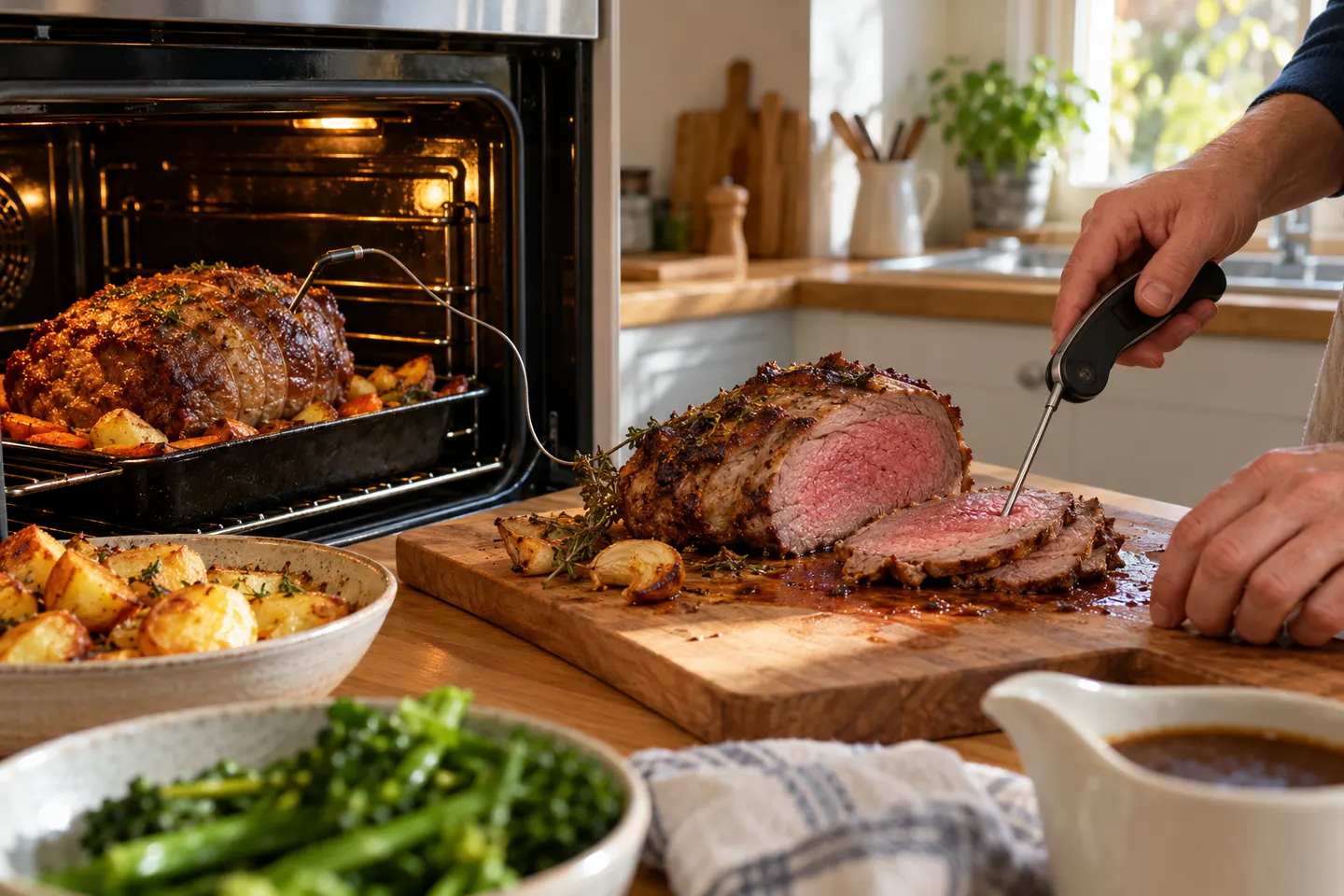
Start with a dependable instant-read thermometer; add a leave-in or wireless probe when you want continuous monitoring.