Choose the thickest section
Lay the breast so you can see its thick and tapered ends. The center of the thickest edible section is the location most likely to lag behind during cooking.

 Best picksGood Meat Thermometers for Every Kind of Cook
 Best picksBest WiFi Extenders: Which Range Extender Should You Buy?
 Best picksBest Dash Cams for Cars in 2026
 Best picksBest Radar Detectors for Cars: Models Compared
 Best picksGood Winter Gloves for Cold Weather: Five Useful Picks
 Best picksBest Headlamps: Six Lights Compared for Different Uses
 Best picksTop 10 Best Battery-Powered Weed Eaters for Different Yards
 Best picksBest Portable Air Coolers for Patios, Workshops and Small Spaces (2026)
 Best picksBest Air Purifier for Bedroom in the US: Quiet Models Compared
Gearjury may earn a commission when you buy through a retailer link. Our guidance is based on cited evidence.
Guide
Insert from the side into the thickest part so the sensing tip reaches the center without touching bone or the pan. Check every unusually thick piece.
Lay the breast so you can see its thick and tapered ends. The center of the thickest edible section is the location most likely to lag behind during cooking.
For a boneless breast, slide a thin probe horizontally from the side. This keeps more of the sensing area inside the meat and makes it easier to reach the thermal center.
On bone-in chicken, keep the tip beside rather than against the bone. Do not let it touch a pan, grill grate or skewer, which may give a misleading reading.
Move the tip slowly through the center and watch for the lowest stable value. Wash and sanitize the probe between raw and cooked contact according to its instructions.
USDA lists a safe minimum internal temperature of 165°F for all poultry, measured in the thickest breast and the relevant inner thigh and wing areas for a whole bird.
Common questions
Place the sensing tip in the center of the thickest part, usually by inserting from the side, without touching bone or the pan.
USDA lists 165°F as the safe minimum internal temperature for poultry.
Yes. Near the expected finish, check promptly and close the oven or grill again if more cooking is needed.
Check pieces that differ in thickness or sit in different heat zones. The thickest or least-exposed piece may finish last.
Keep exploring
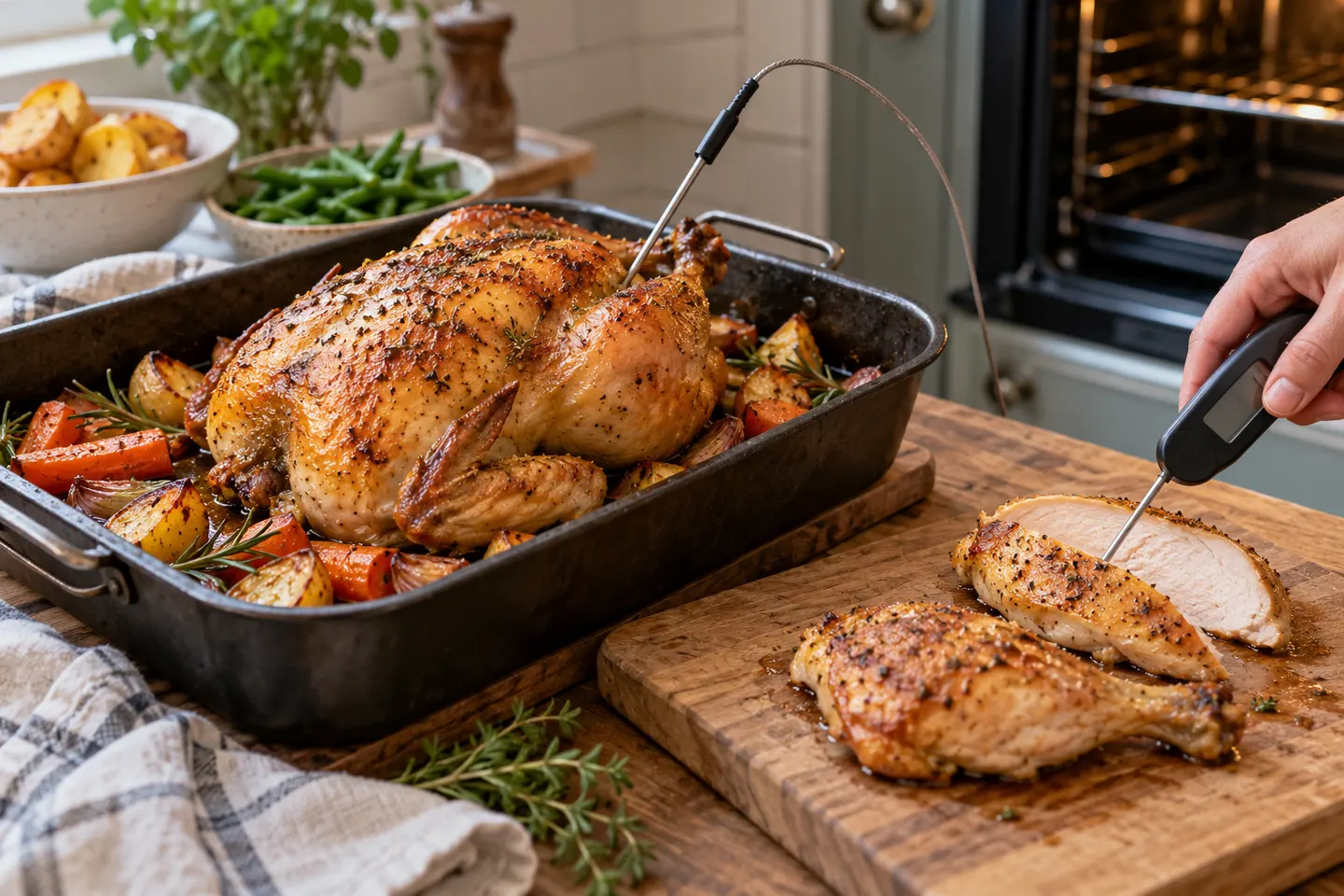
A fast, thin probe works well for portions; a heat-safe leave-in probe makes a whole roast easier to monitor.
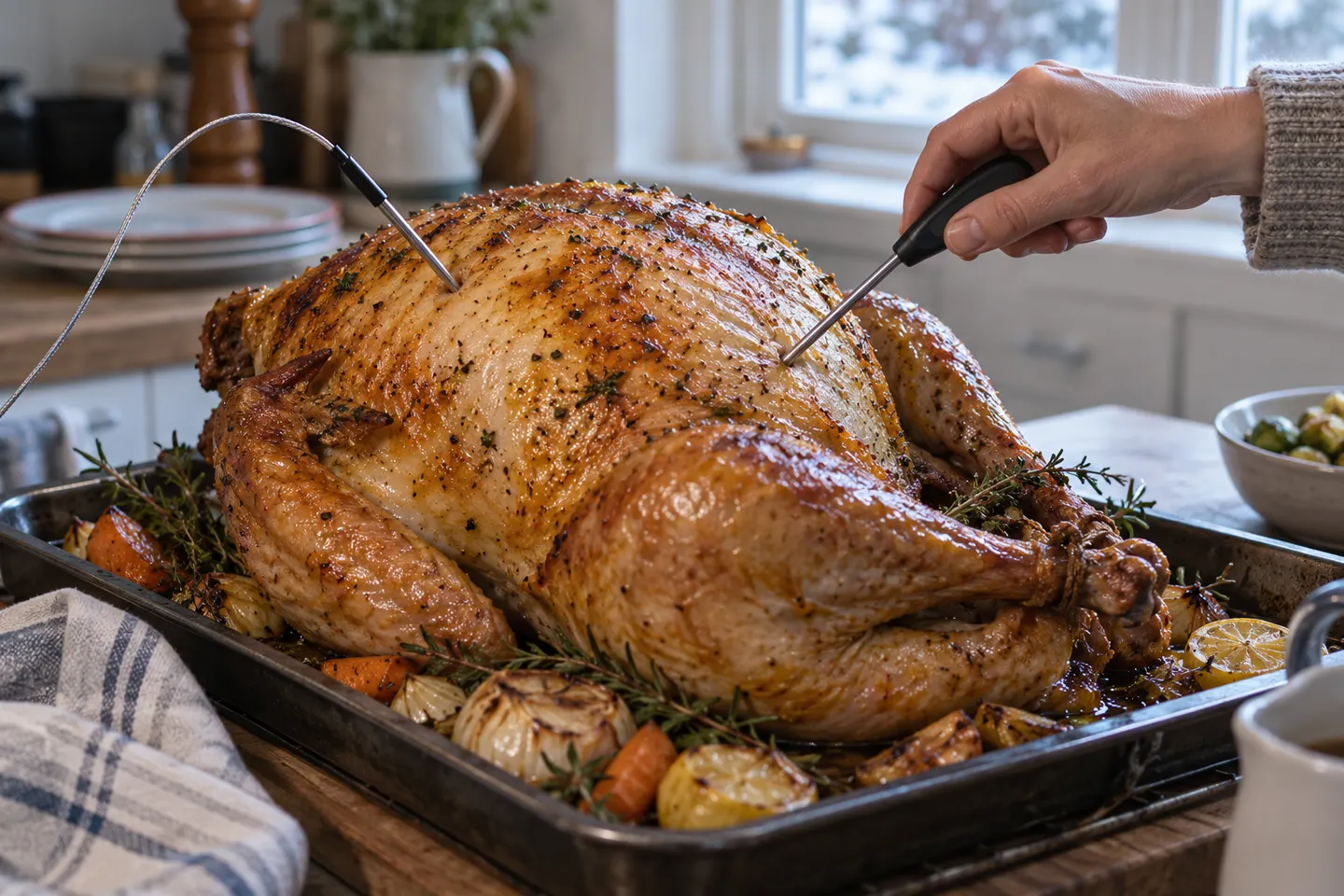
Use a leave-in probe to track the cook and an instant-read model to check more than one spot before serving.
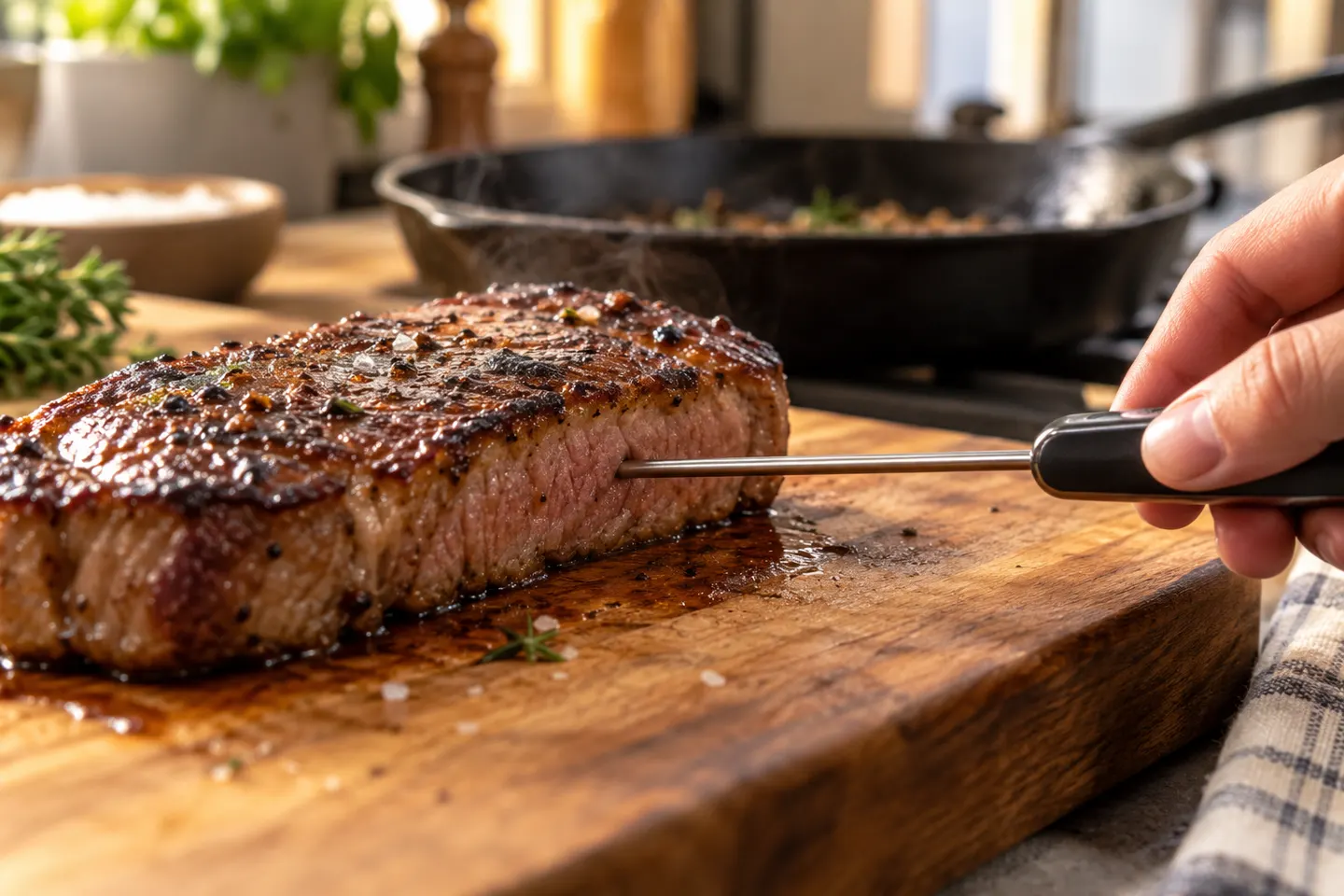
A fast instant-read probe is the most practical choice for steaks; insert it from the side into the center.
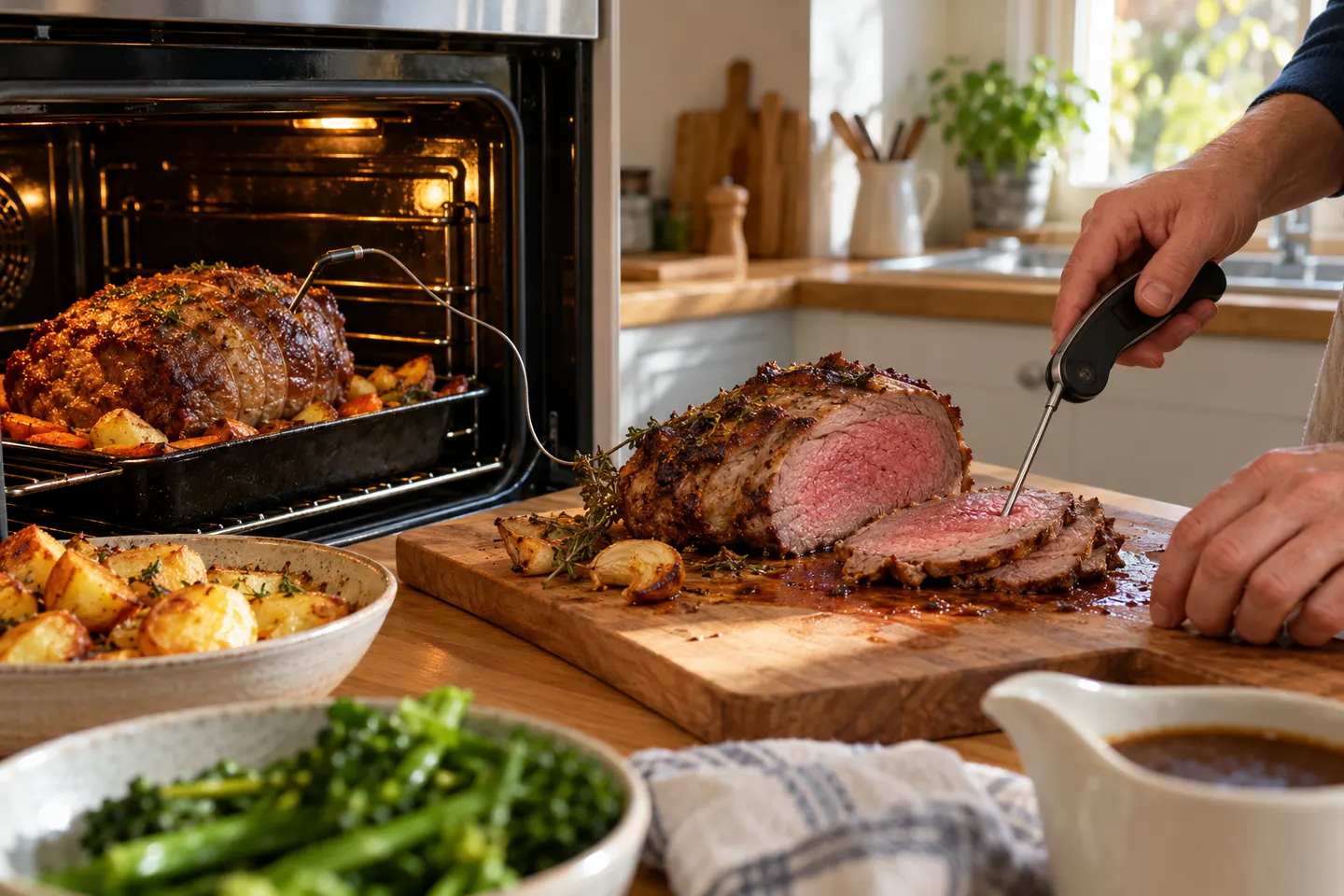
Start with a dependable instant-read thermometer; add a leave-in or wireless probe when you want continuous monitoring.