Decide whether the thermometer is leave-in or instant-read
Leave-in probes are made to monitor during cooking. Instant-read thermometers are inserted for a reading and then removed.

 Best picksGood Meat Thermometers for Every Kind of Cook
 Best picksBest WiFi Extenders: Which Range Extender Should You Buy?
 Best picksBest Dash Cams for Cars in 2026
 Best picksBest Radar Detectors for Cars: Models Compared
 Best picksGood Winter Gloves for Cold Weather: Five Useful Picks
 Best picksBest Headlamps: Six Lights Compared for Different Uses
 Best picksBest Portable Air Coolers for Patios, Workshops and Small Spaces (2026)
 Best picksTop 10 Best Battery-Powered Weed Eaters for Different Yards
 Best picksBest Air Purifier for Bedroom in the US: Quiet Models Compared
Gearjury may earn a commission from qualifying purchases made through retailer links.
Guide
Use a leave-in thermometer throughout cooking only when it is designed for that job. Use an instant-read thermometer for brief checks near the expected finish.
Leave-in probes are made to monitor during cooking. Instant-read thermometers are inserted for a reading and then removed.
Aim for the thickest relevant portion and avoid bone, gristle, the cooking surface, and large pockets of fat.
For burgers, chops, and thin cuts, inserting from the side can place more of the sensing area in the center.
Large or irregular foods can heat unevenly. Verify additional areas rather than trusting a single point.
Clean the probe as directed to avoid transferring contamination, and keep non-waterproof electronics dry.
Common questions
Do so for an oven-safe leave-in probe. For an instant-read model, check near the expected finish and remove it after reading.
Deep enough to place the model's full sensing area in the center of the thickest relevant portion.
Bone can conduct heat differently and produce a reading that does not represent the surrounding meat.
Yes, especially in large, whole, stuffed, or irregular foods where temperature may vary.
Keep exploring
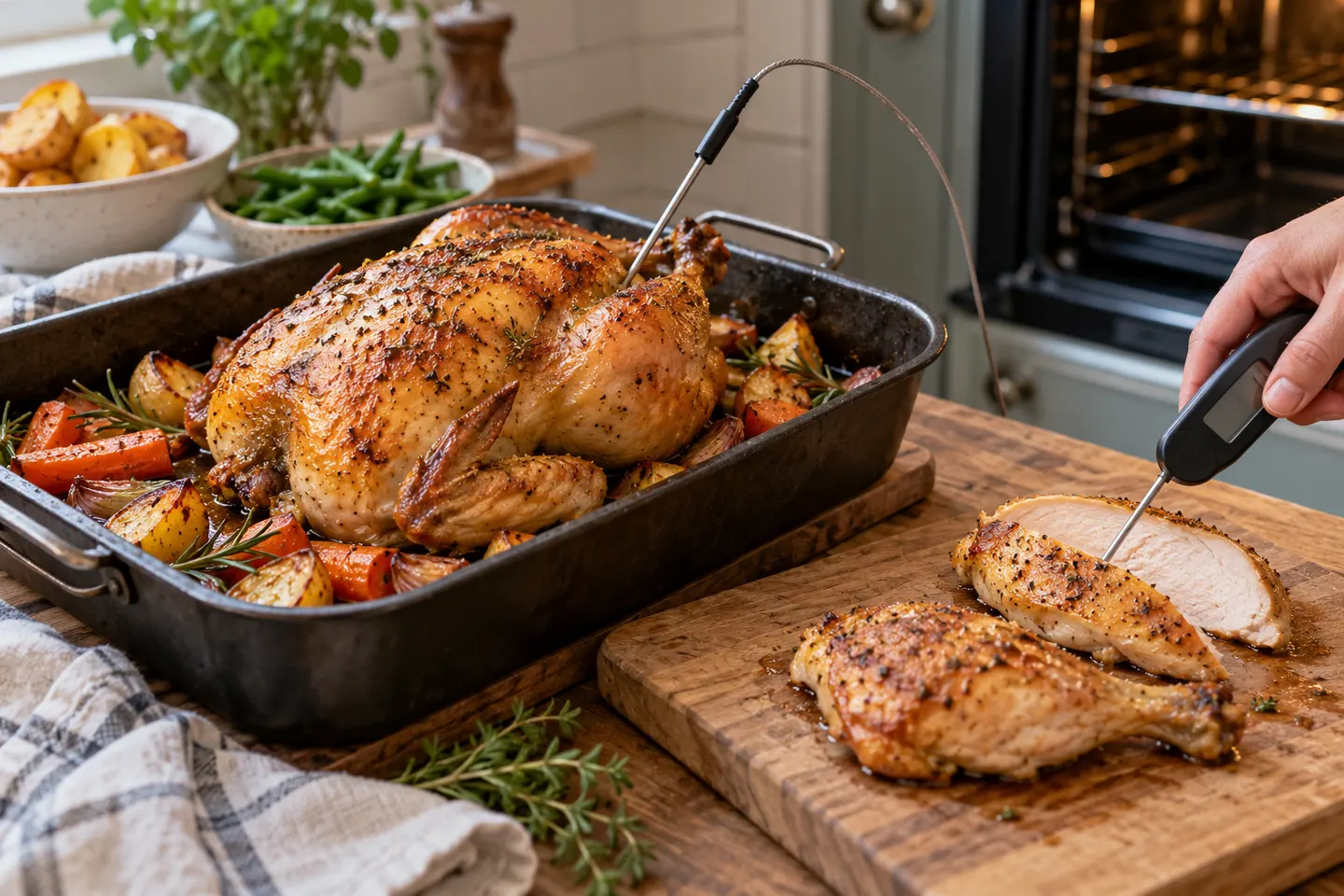
A fast, thin probe works well for portions; a heat-safe leave-in probe makes a whole roast easier to monitor.
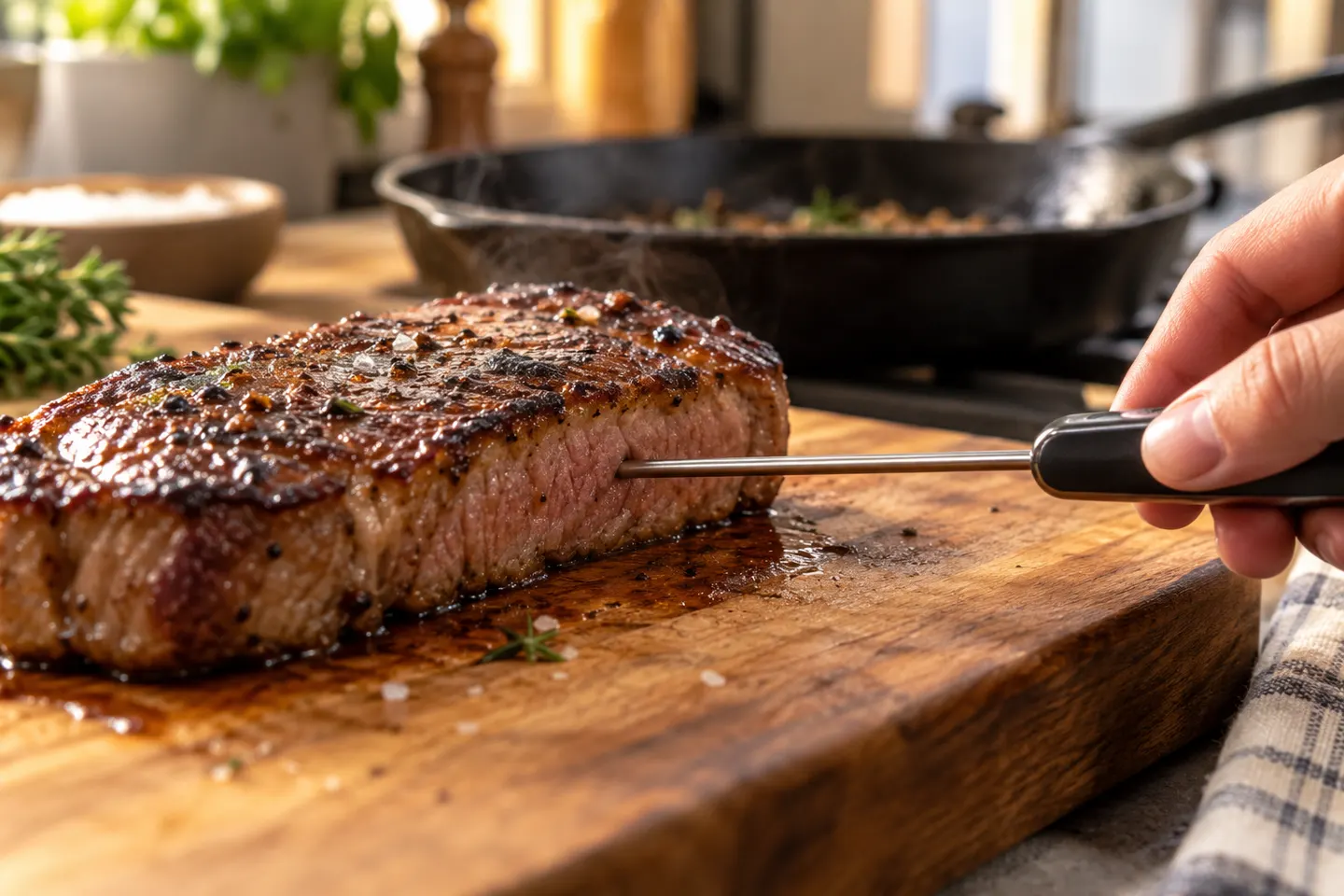
A fast instant-read probe is the most practical choice for steaks; insert it from the side into the center.
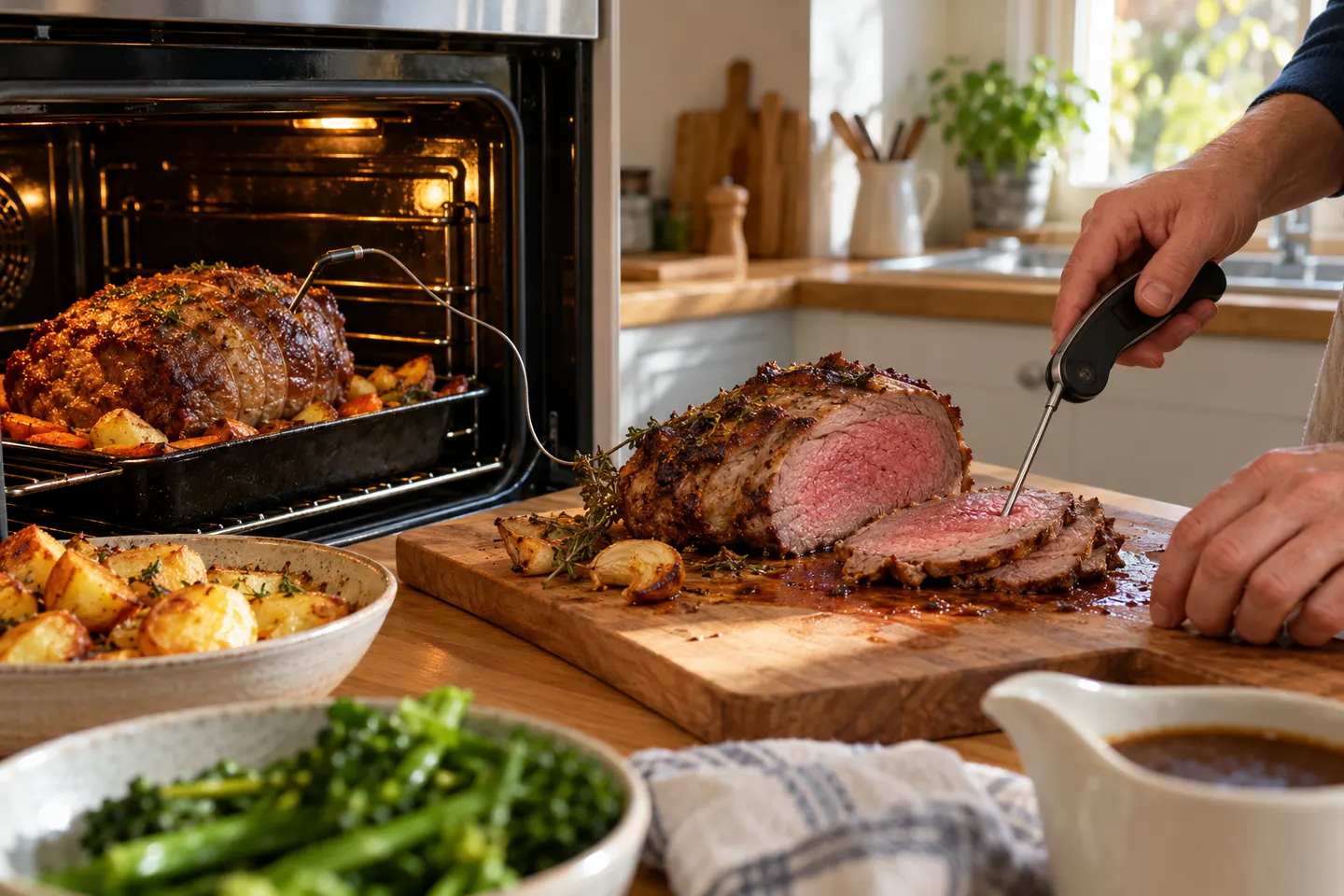
Start with a dependable instant-read thermometer; add a leave-in or wireless probe when you want continuous monitoring.
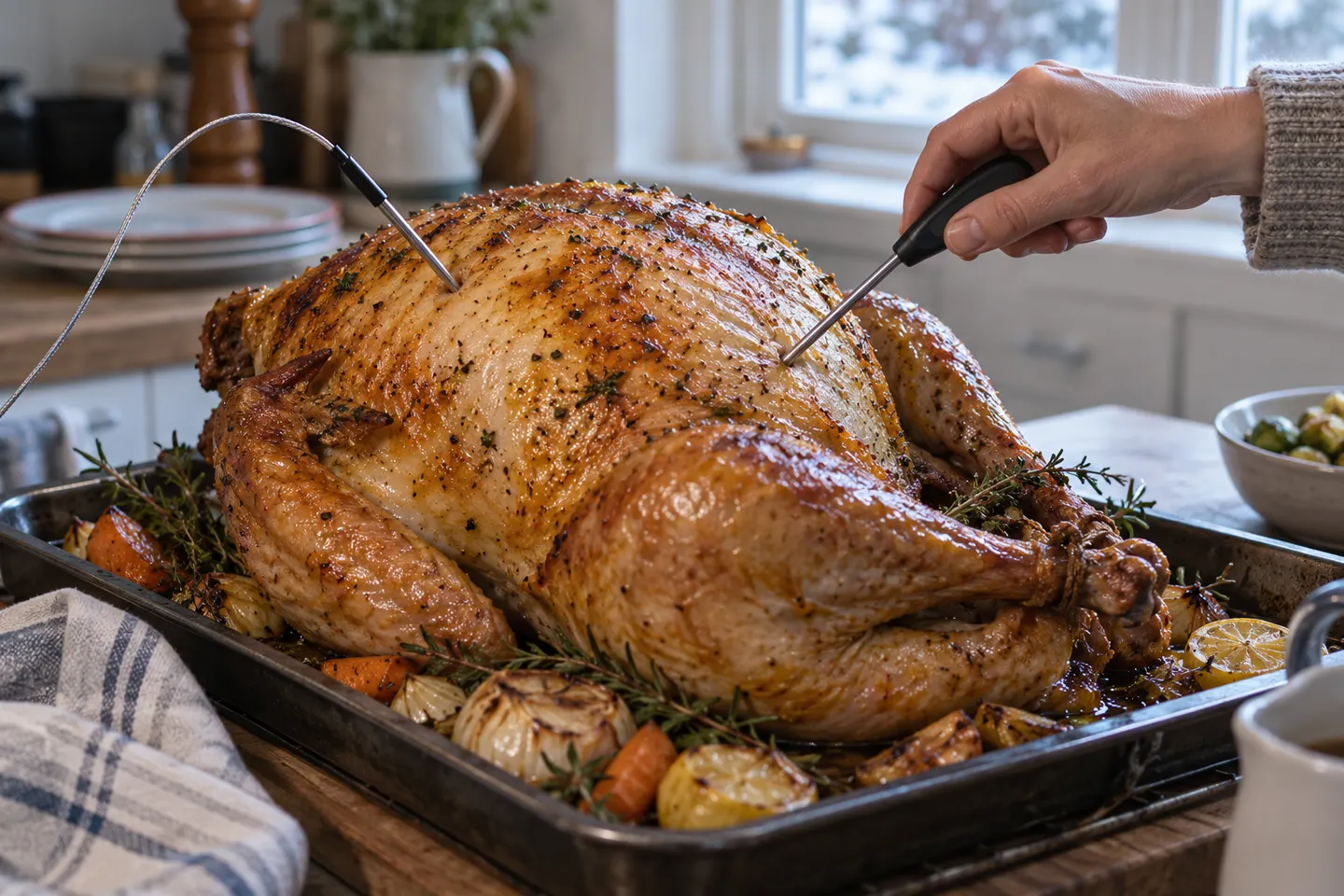
Use a leave-in probe to track the cook and an instant-read model to check more than one spot before serving.