









Low-humidity conditions
Gearjury may earn a commission from qualifying retailer links. This does not affect our editorial conclusions.
Head to head
Evaporative Cooler vs Air Con: Which Works for You?
For dry air and fresh ventilation, an evaporative cooler may suit; for humid weather, moisture removal and more controlled cooling, air conditioning is usually the stronger fit.
Humidity reduction
Newair Portable Air Conditioner AC-14100H
The verdict
There is no universal winner; the better choice depends on climate, airflow needs and the feature that matters most.
Low-humidity conditions: Newair Evaporative Air Cooler NEC500SI00
Newair describes the NEC500SI00 as an evaporative cooler using a water tank and wet media.
Humidity reduction: Newair Portable Air Conditioner AC-14100H
Air conditioning uses refrigeration and is the more appropriate category when dehumidification matters.
Ventilation flexibility: Newair Portable Air Conditioner AC-14100H
The portable AC exhausts heat through a hose; evaporative operation needs fresh-air movement and an exit path.
Compare them side by side
| Newair Evaporative Air Cooler NEC500SI00 | Newair Portable Air Conditioner AC-14100H | |
|---|---|---|
| Cooling process | Water evaporation | Refrigeration |
| Added moisture | Yes, in direct evaporative cooling | No; AC typically removes moisture |
| Air exchange | Needs an outlet path for air | Exhausts heat outdoors |
| Climate suitability | Dry conditions | Dry or humid conditions |
| Example class | Newair NEC500SI00 | Newair AC-14100H |
Common questions
Questions before you buy
Is an evaporative cooler as good as air con?
It depends on climate and expectations. Evaporative coolers are most suitable in dry air; air conditioning is better when humidity control and steadier cooling matter.
Does an evaporative cooler need a window open?
Direct evaporative systems need a route for air to exit as fresh air enters. Follow the appliance guidance for the room arrangement.
Which is better for a humid climate, an air cooler or air con?
Air conditioning is generally more suitable because an evaporative cooler adds moisture and loses effectiveness as humidity rises.
Is an evaporative cooler the same as portable air con?
No. A portable AC uses a refrigeration cycle and usually vents hot air through a hose; an evaporative cooler uses water and airflow.
Sources and how we chose
- US Department of Energy: HVAC guide · 2026-10-22
- YourHome Australian Government: heating and cooling · 2026-10-22
- UK Energy Technology List · 2026-10-22
Keep exploring
Related guides
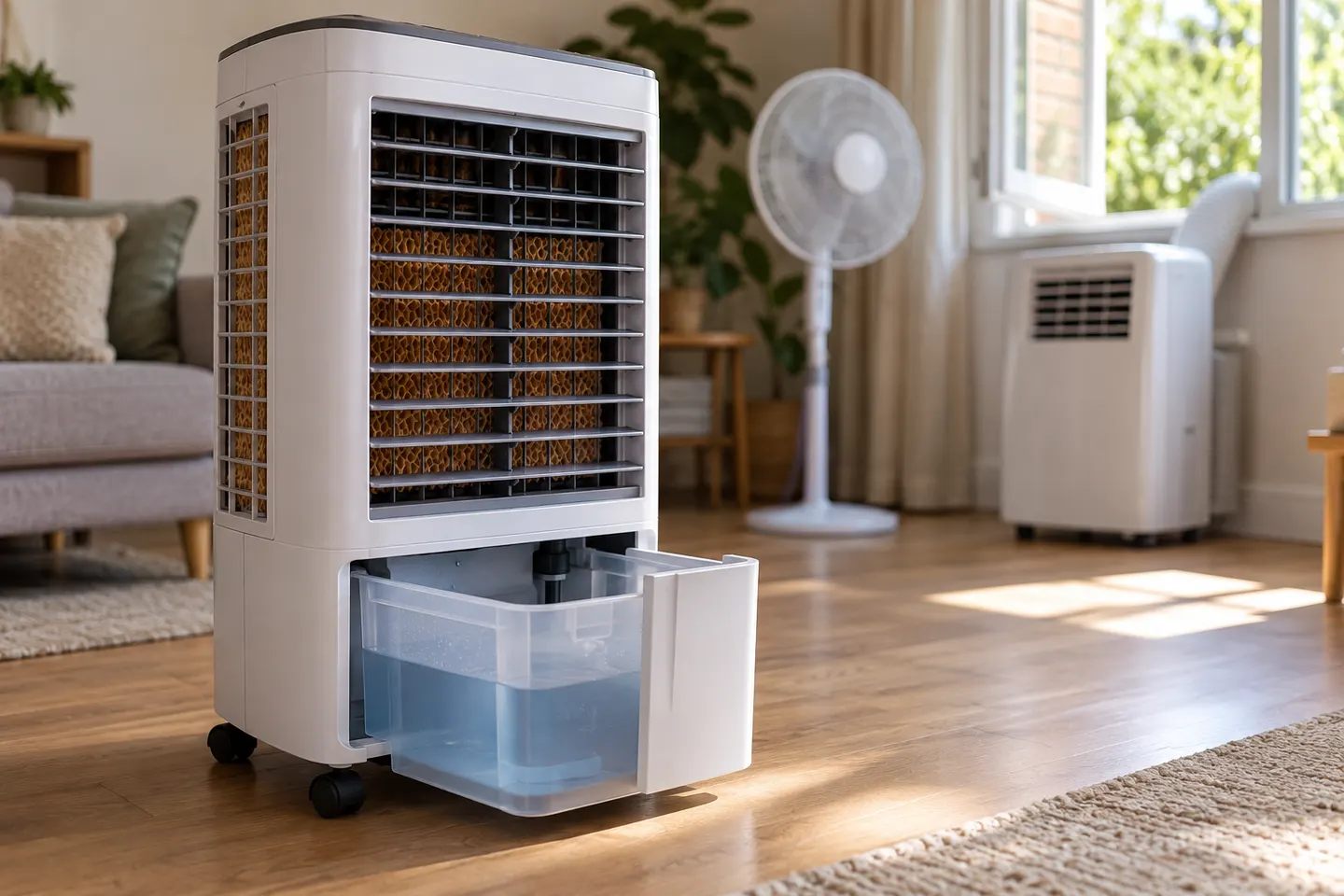
Portable Air Coolers: Compare Evaporative Cooling Options
A portable air cooler can mean a fan-based evaporative unit or a portable air conditioner. Start with your climate: evaporative models add moisture and suit dry conditions, while air conditioners actively remove heat from a room.
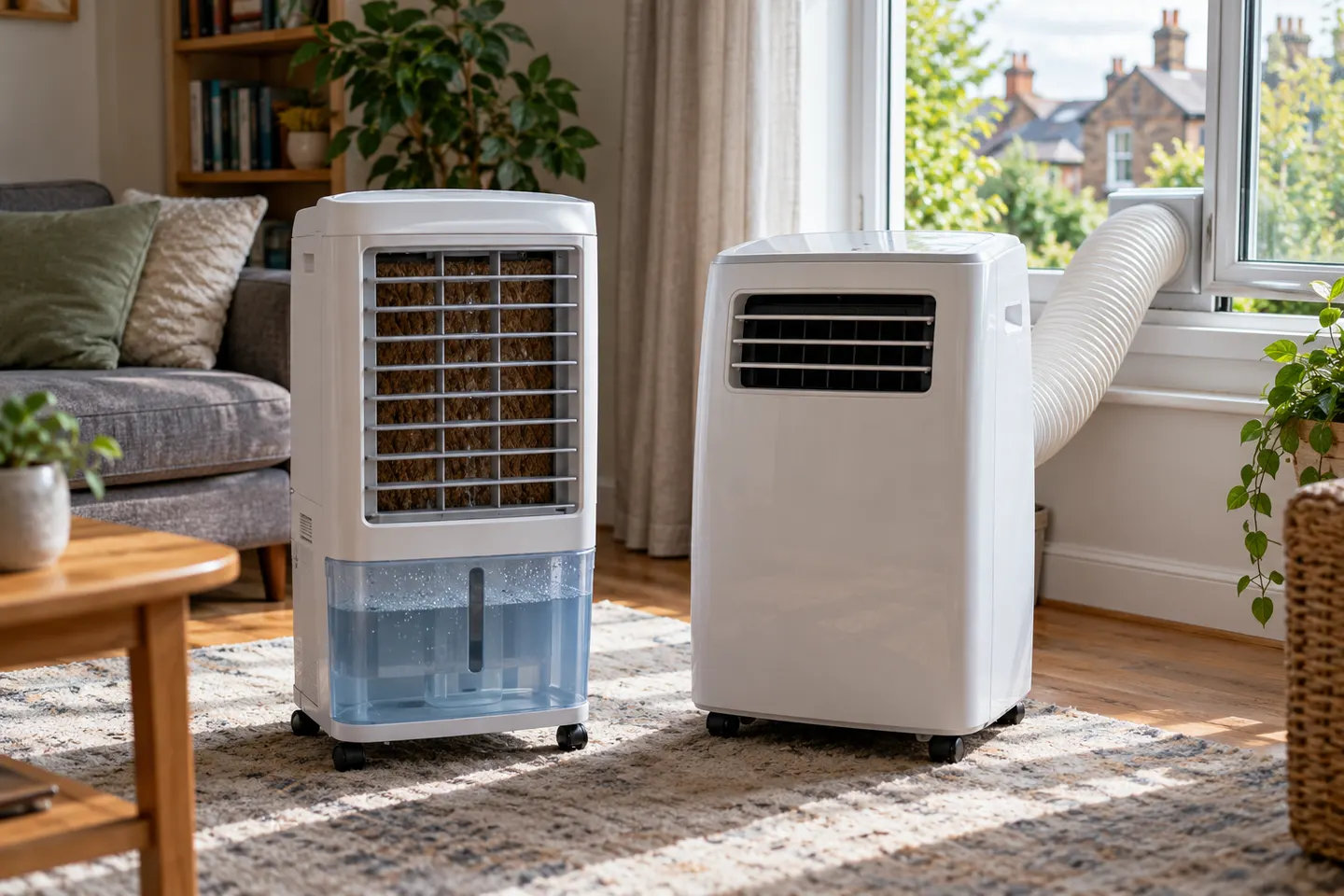
Portable Air Cooler or Air Conditioner: How to Choose
An evaporative cooler can make a nearby breeze feel cooler, but it is not a portable air conditioner. Climate and ventilation determine which option fits.
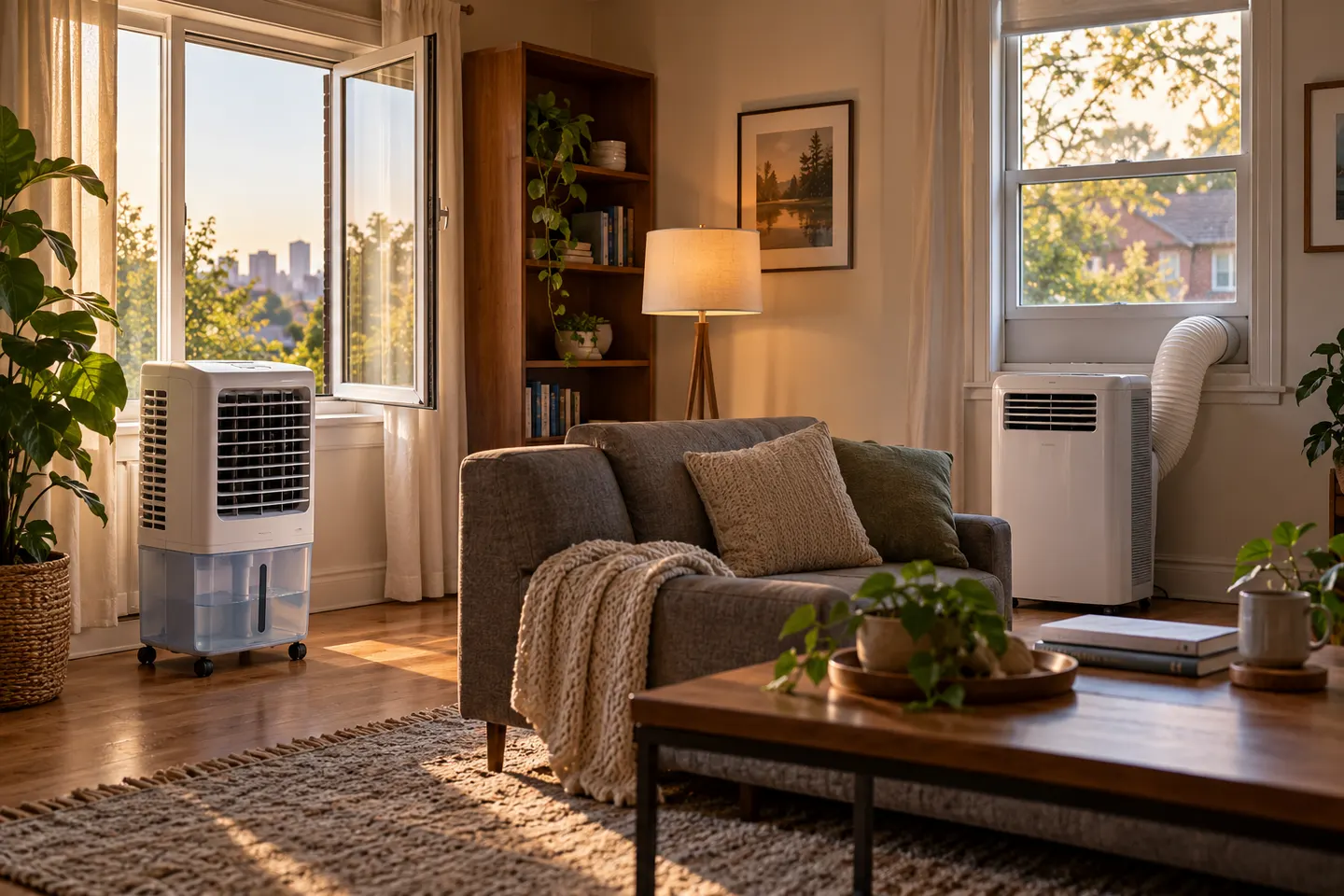
Portable Air Cooler Air Conditioning: Choosing the Right Type
Evaporative coolers circulate air through wet media; portable air conditioners move heat through an exhaust hose. The better choice depends on humidity and room setup.
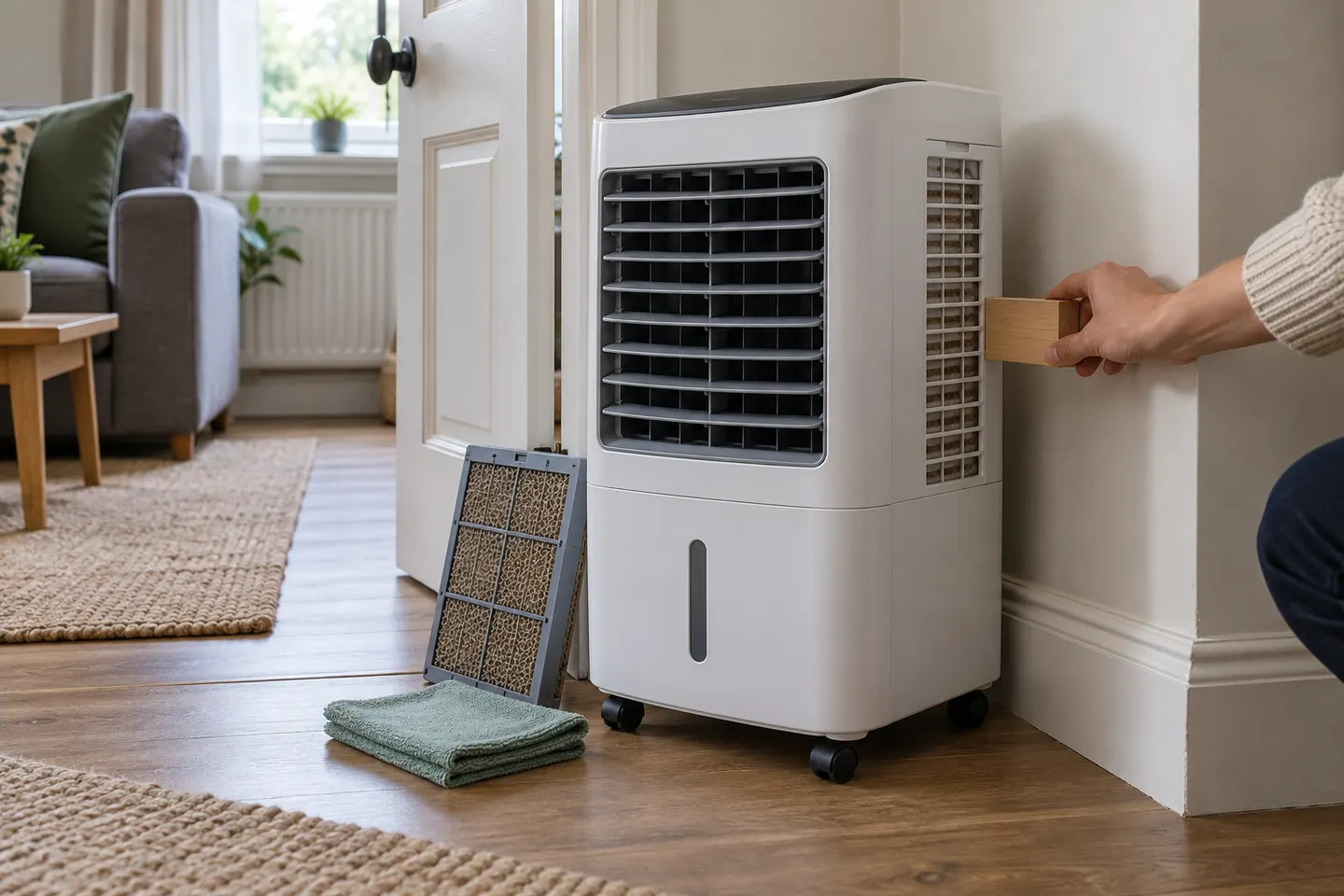
Portable Air Cooler Units for Spot and Room Cooling
Match an evaporative cooler’s airflow and water capacity to the area you occupy. These units move air and add moisture; they do not replace a refrigeration AC.