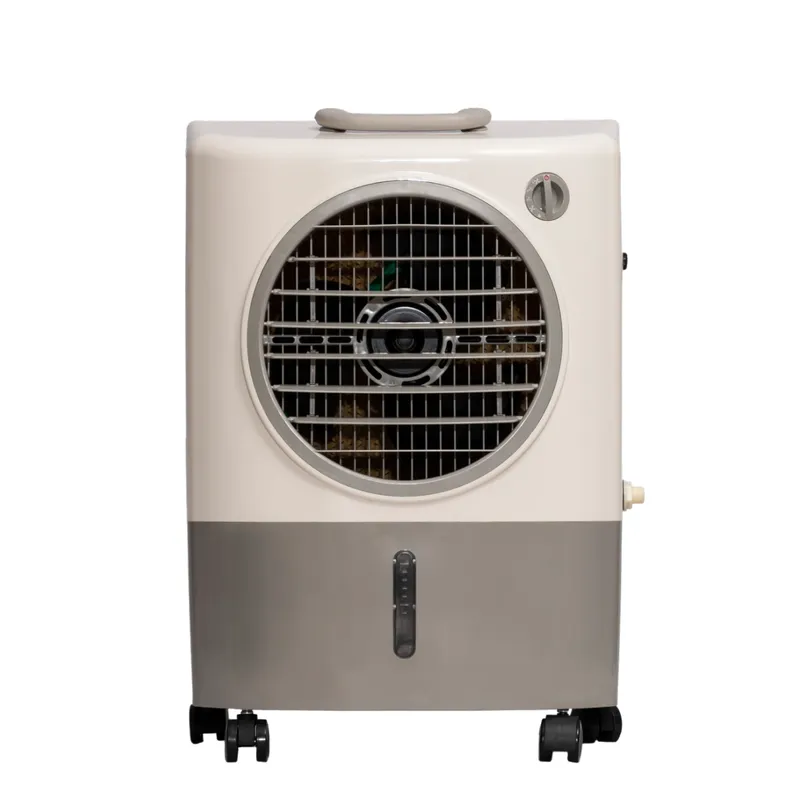
 Official manufacturer image
Dry climate and portable spot cooling
Hessaire MC18M
Check price on AmazonSponsored link · no live price shown

 Best picksGood Meat Thermometers for Every Kind of Cook
 Best picksBest WiFi Extenders: Which Range Extender Should You Buy?
 Best picksBest Dash Cams for Cars in 2026
 Best picksBest Radar Detectors for Cars: Models Compared
 Best picksGood Winter Gloves for Cold Weather: Five Useful Picks
 Best picksBest Headlamps: Six Lights Compared for Different Uses
 Best picksTop 10 Best Battery-Powered Weed Eaters for Different Yards
 Best picksBest Portable Air Coolers for Patios, Workshops and Small Spaces (2026)
 Best picksBest Air Purifier for Bedroom in the US: Quiet Models Compared
Gearjury may earn a commission when you buy through retailer links. Our editorial guidance is based on cited sources.
Head to head
Choose a swamp cooler for dry air, ventilation and water-based cooling. Choose a window air conditioner when you need refrigeration-based temperature control, including in humid weather.
Official manufacturer image
Dry climate and portable spot cooling
Defined room cooling capacity
The verdict
Hessaire specifies 1,300 CFM and a 4.8-gallon water tank; evaporative cooling depends on dry air and ventilation.
Midea lists 5,000 BTU cooling capacity and a 150 sq ft room-size basis for this window AC.
A window AC uses refrigeration rather than relying on water evaporation, which is less effective as ambient humidity rises.
| Official manufacturer imageHessaire MC18M | Midea MAW05M1BWT | |
|---|---|---|
| Cooling process | Evaporation through wetted media | Refrigeration cycle |
| Published capacity | 1,300 CFM airflow | 5,000 BTU |
| Published area | Up to 500 sq ft (manufacturer) | 150 sq ft (manufacturer) |
| Water required | Yes; 4.8-gallon tank | No water tank listed |
| Climate fit | Best in dry conditions | Suitable where refrigeration-based cooling is needed |
| Ventilation / installation | Ventilated use; airflow path needed | Installed in a compatible window |
| Published electrical data | 85 W; 0.7 A | 115 V |
| Check price on Amazon |
Common questions
It depends on climate and installation. Evaporative coolers fit dry, ventilated settings, while a window AC provides refrigeration-based cooling and is generally the stronger choice in humid weather.
Direct evaporative coolers need adequate air exchange so humid air can leave. Portacool advises opening a door or window when its portable units are used in semi-closed spaces.
Their ratings are different: a cooler may publish airflow and coverage, while an AC publishes cooling capacity in BTU. They also work through different processes, so do not compare those numbers as equivalent.
It varies by model and operating conditions. The Department of Energy notes evaporative coolers use a fan and water pump rather than a compressor; compare each product's rated power and local use pattern.
Keep exploring
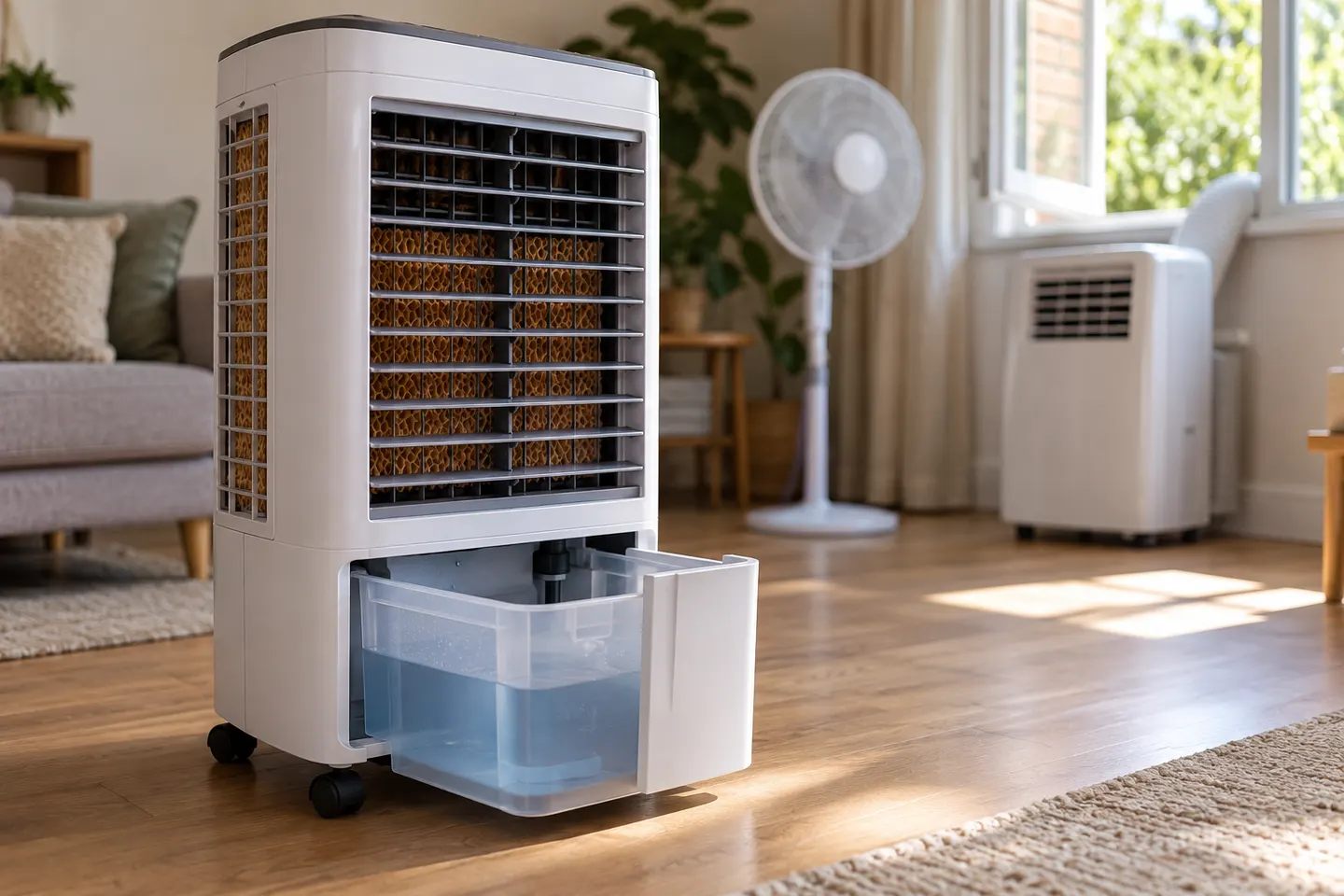
A portable air cooler can mean a fan-based evaporative unit or a portable air conditioner. Start with your climate: evaporative models add moisture and suit dry conditions, while air conditioners actively remove heat from a room.
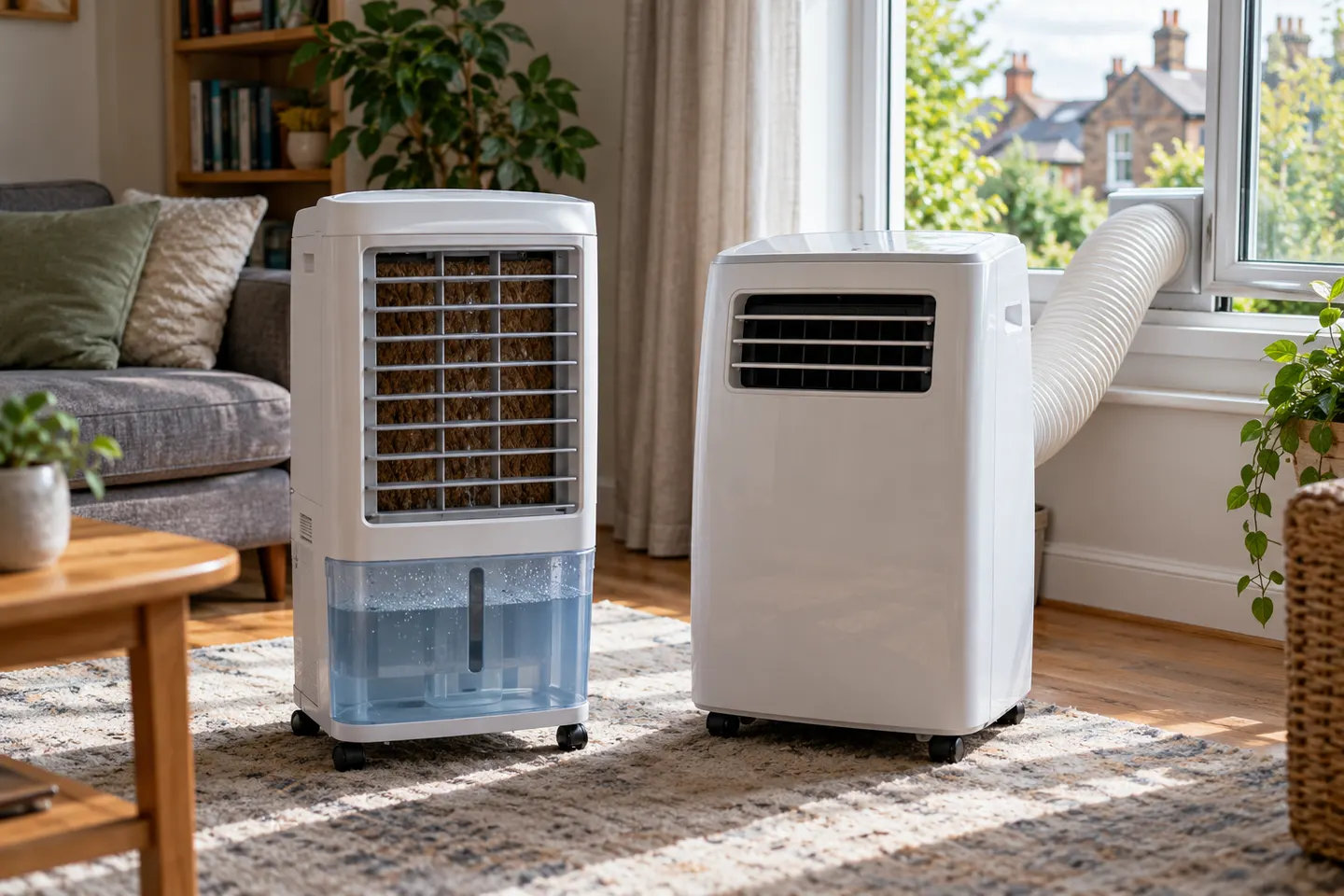
An evaporative cooler can make a nearby breeze feel cooler, but it is not a portable air conditioner. Climate and ventilation determine which option fits.
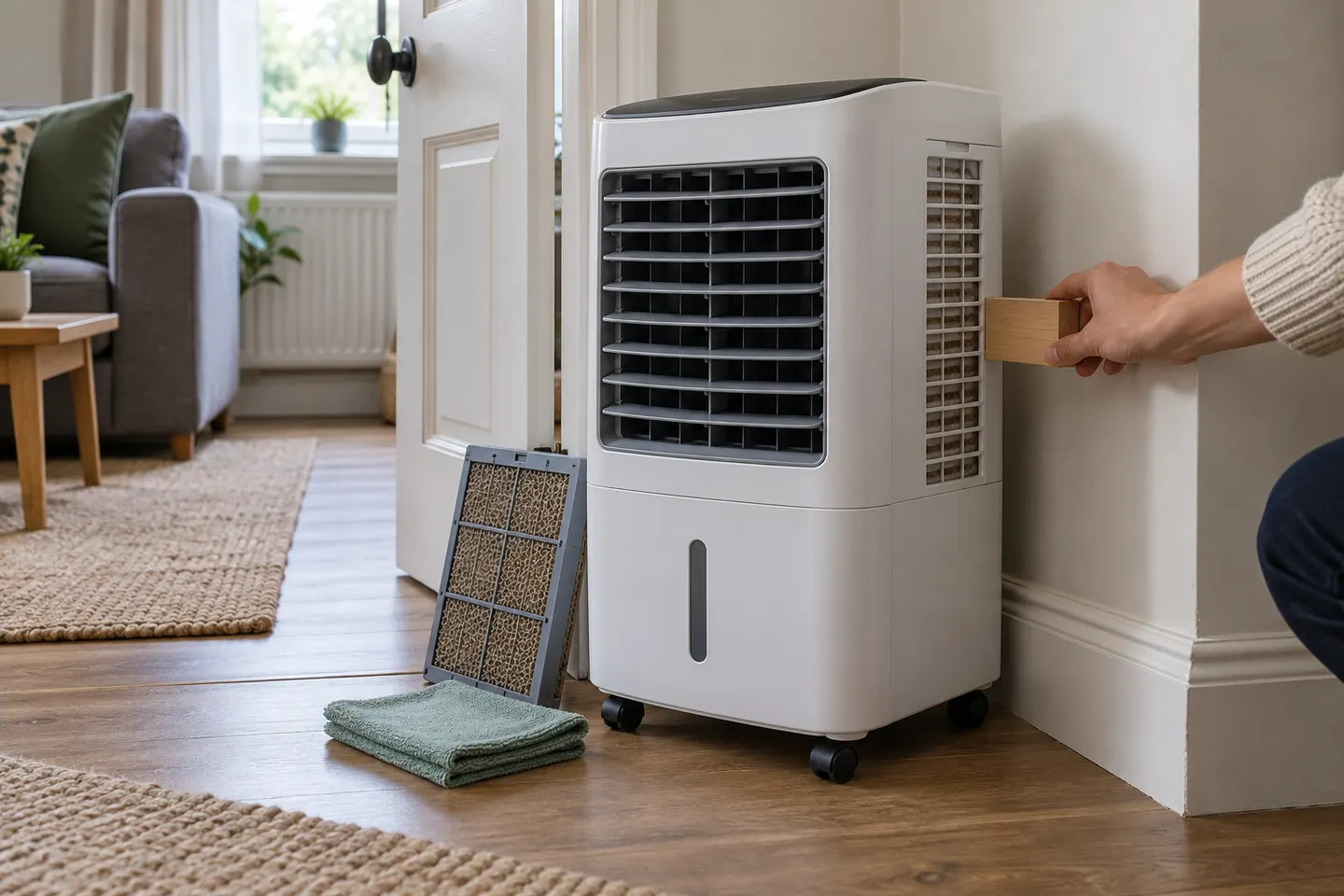
Match an evaporative cooler’s airflow and water capacity to the area you occupy. These units move air and add moisture; they do not replace a refrigeration AC.

Evaporative coolers circulate air through wet media; portable air conditioners move heat through an exhaust hose. The better choice depends on humidity and room setup.