Gather a fan and a stable container
Use a small fan, a shallow watertight tray or bowl, and ice sealed in a leak-resistant container. Keep the fan and its electrical connection well away from meltwater.

 Best picksGood Meat Thermometers for Every Kind of Cook
 Best picksBest WiFi Extenders: Which Range Extender Should You Buy?
 Best picksBest Dash Cams for Cars in 2026
 Best picksBest Radar Detectors for Cars: Models Compared
 Best picksGood Winter Gloves for Cold Weather: Five Useful Picks
 Best picksBest Headlamps: Six Lights Compared for Different Uses
 Best picksTop 10 Best Battery-Powered Weed Eaters for Different Yards
 Best picksBest Portable Air Coolers for Patios, Workshops and Small Spaces (2026)
 Best picksBest Air Purifier for Bedroom in the US: Quiet Models Compared
Gearjury may earn a commission from qualifying Amazon purchases.
Guide
A simple fan-and-ice setup can direct a cool breeze nearby for a short time. It is not an air conditioner, and it will not cool a whole room reliably.
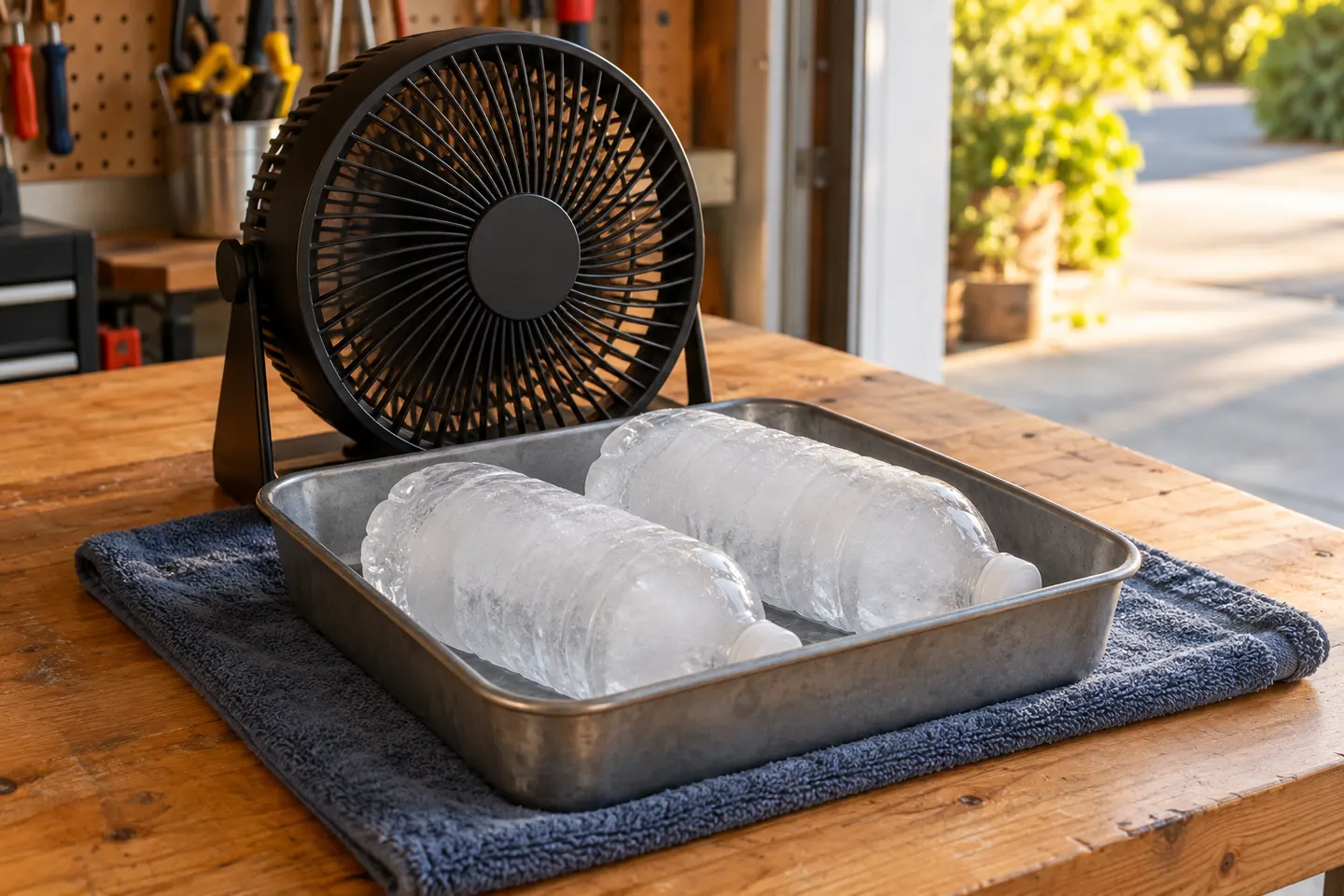
Use a small fan, a shallow watertight tray or bowl, and ice sealed in a leak-resistant container. Keep the fan and its electrical connection well away from meltwater.
Set the ice container in front of the fan’s airflow without blocking the fan intake or creating a tip hazard. A stable stand helps keep water away from the motor and cord.
Place the setup on a level surface and direct the breeze toward your immediate seating area. This arrangement offers local comfort rather than dependable whole-room temperature control.
Do not pour water into a fan or use exposed wiring near ice. Unplug the fan before cleaning spills, and stop using any appliance that becomes wet or damaged.
Replace melted ice as needed, empty the container carefully and dry the surrounding surface. Do not leave standing water where children or pets can reach it.
A homemade fan-and-ice arrangement has no rated cooling capacity and needs frequent attention. For sustained use, compare purpose-built room coolers and their manufacturer instructions.
Common questions
A fan blowing across a damp surface can add moisture to moving air, but the result depends on humidity and airflow. Use a purpose-built device for sustained operation and follow its safety instructions.
It can make the air near the fan feel cooler temporarily, but ice melts quickly and the setup does not provide reliable whole-room cooling.
No. Keep water and ice away from the fan motor, controls and electrical connections. Place sealed ice in a separate stable container outside the appliance.
Do not leave a makeshift arrangement with water near electrical equipment unattended. Unplug it before moving or cleaning, and use an appliance designed for continuous operation when needed.
Keep exploring
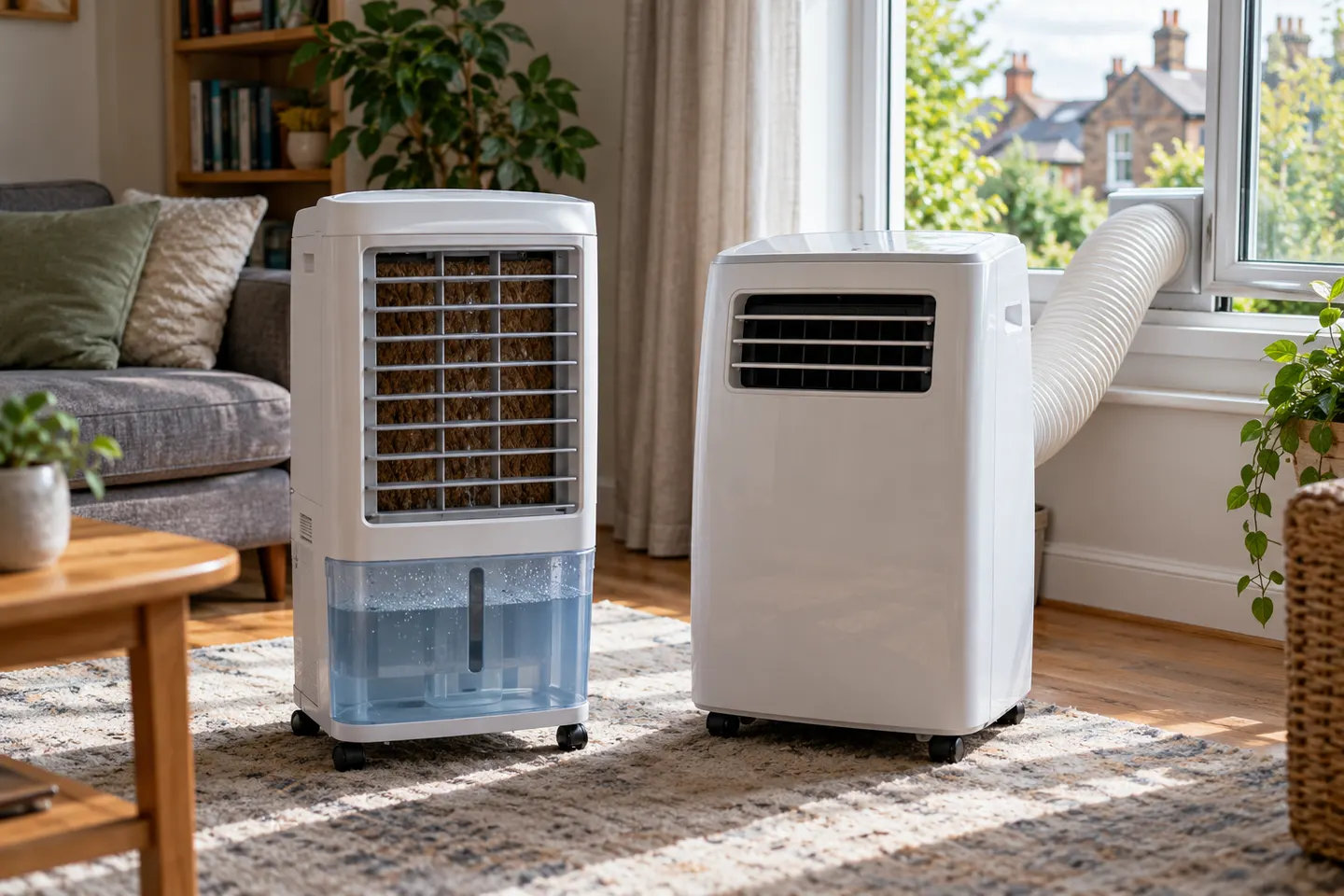
An evaporative cooler can make a nearby breeze feel cooler, but it is not a portable air conditioner. Climate and ventilation determine which option fits.
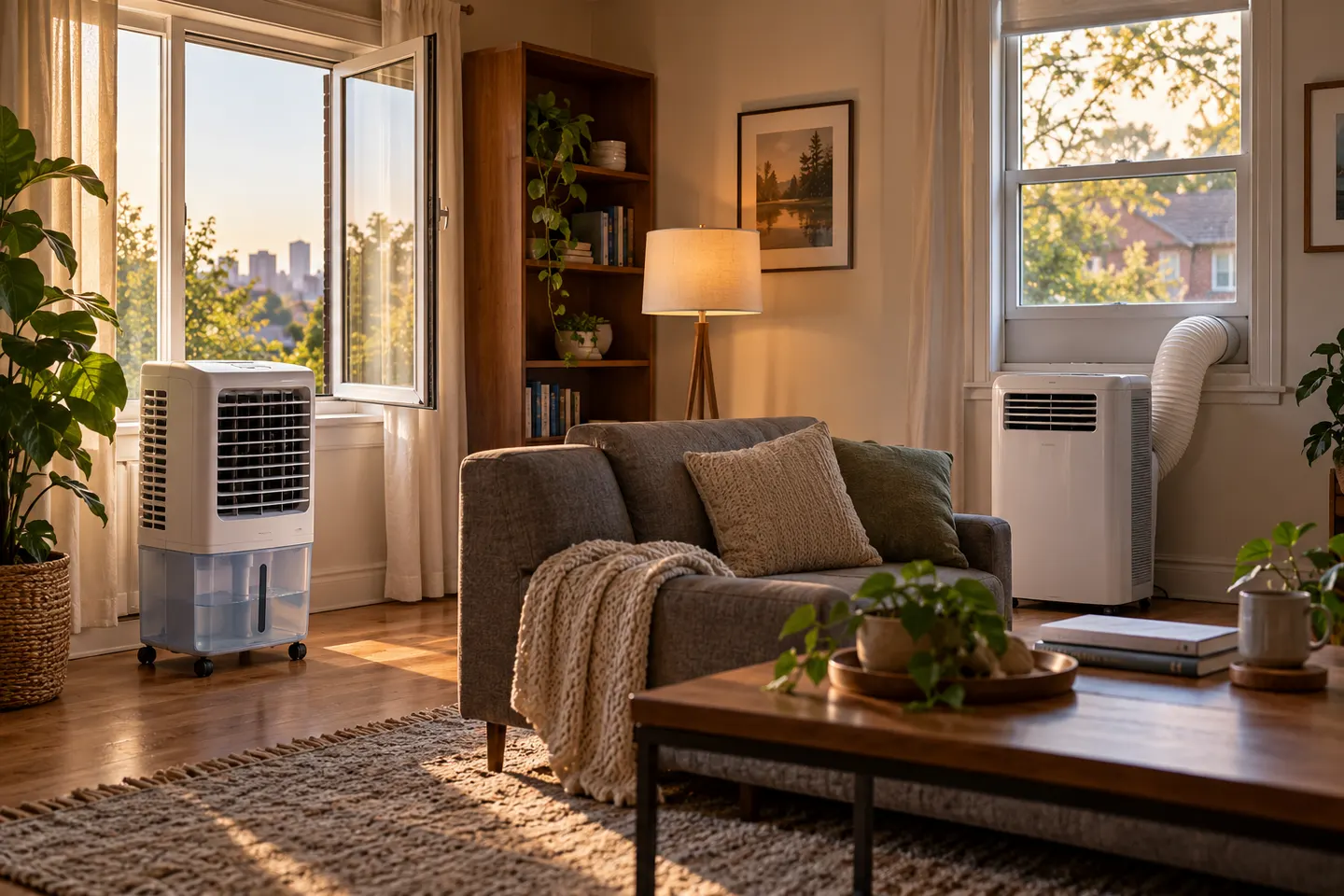
Evaporative coolers circulate air through wet media; portable air conditioners move heat through an exhaust hose. The better choice depends on humidity and room setup.
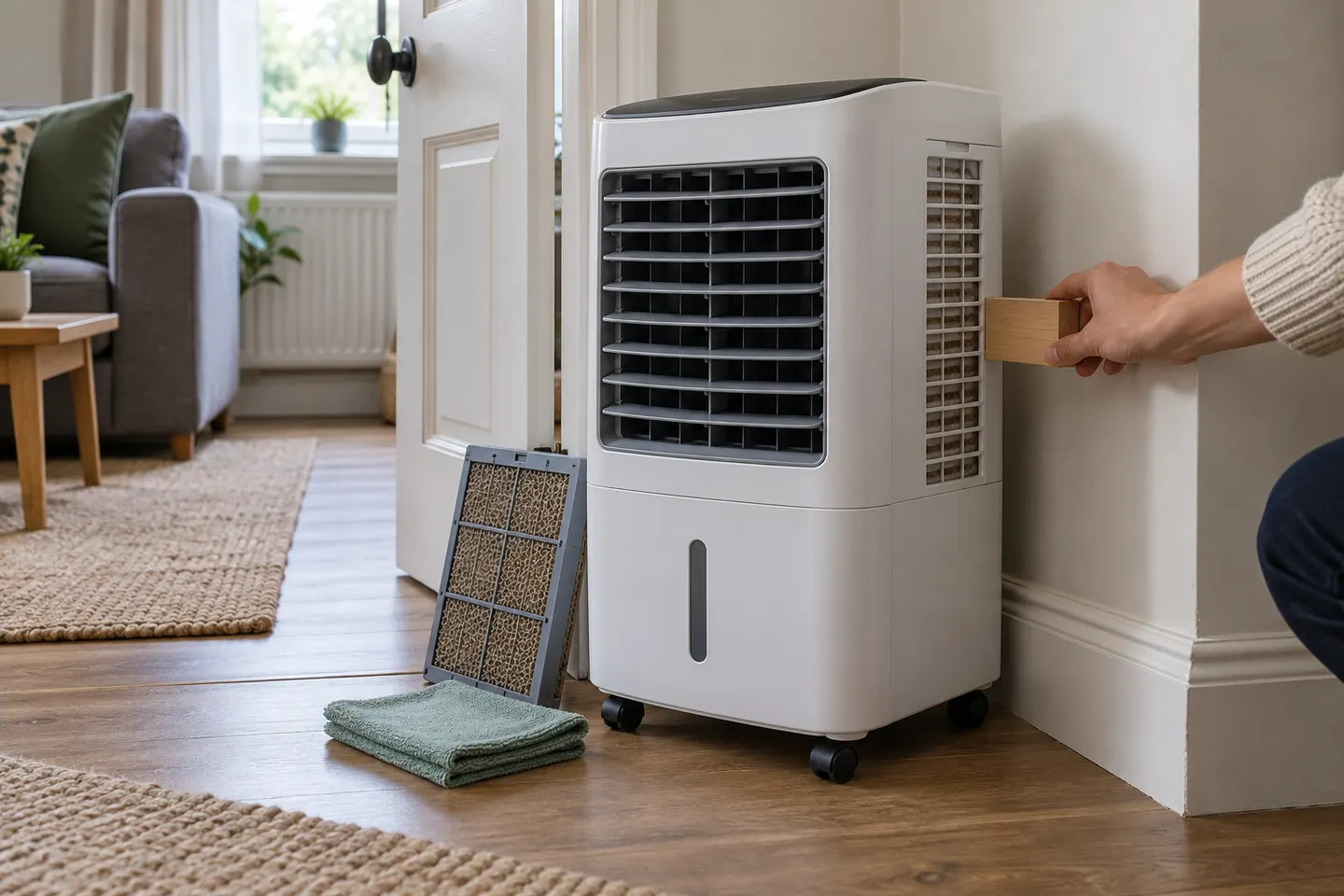
Match an evaporative cooler’s airflow and water capacity to the area you occupy. These units move air and add moisture; they do not replace a refrigeration AC.
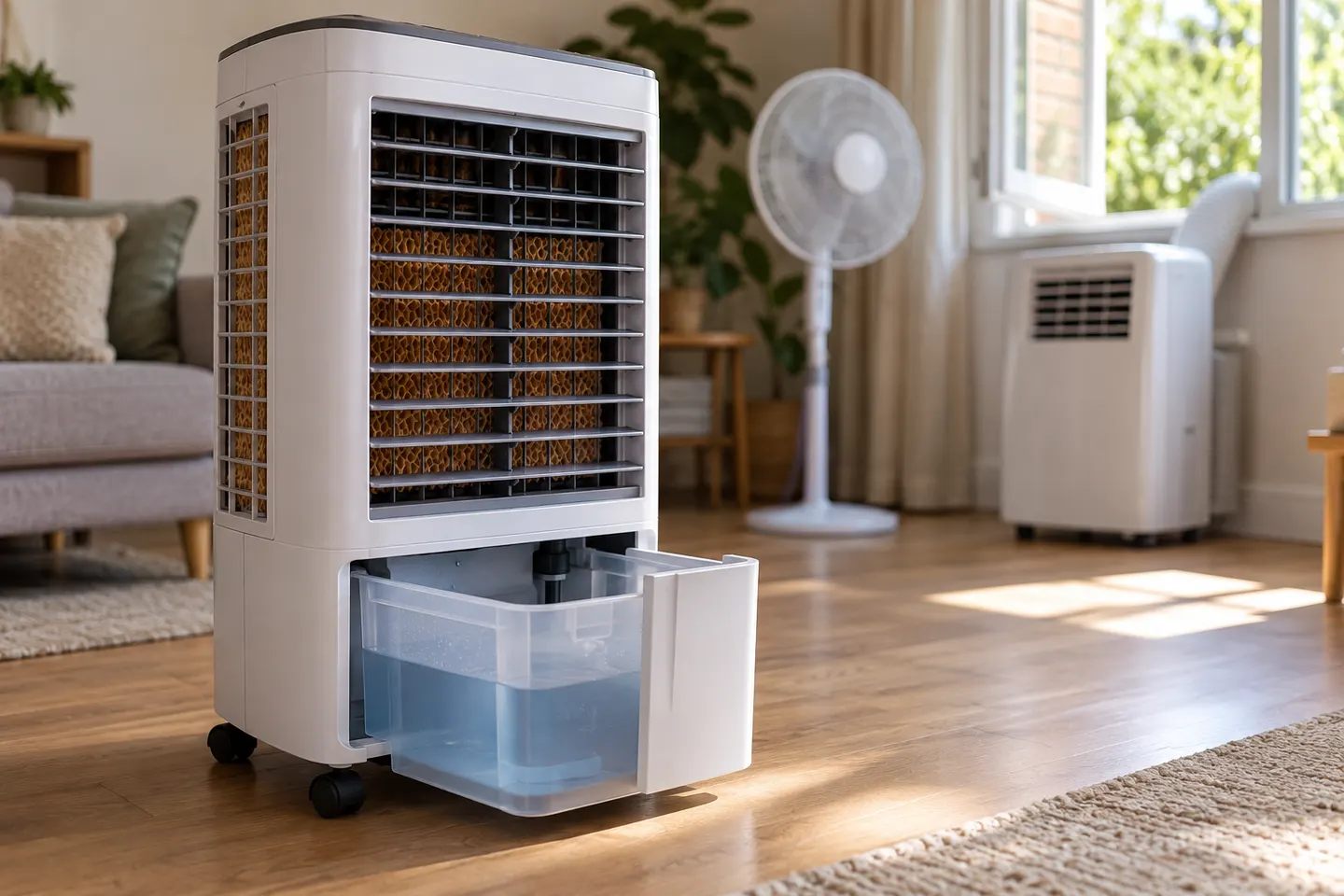
A portable air cooler can mean a fan-based evaporative unit or a portable air conditioner. Start with your climate: evaporative models add moisture and suit dry conditions, while air conditioners actively remove heat from a room.