Gearjury may earn a commission from qualifying purchases made through retailer links.
Guide
Is a Liquid Cooler Better Than an Air Cooler for Your Room?
A water-based evaporative cooler can suit a dry, ventilated room; an air conditioner is usually the better fit when you need controlled cooling or humidity removal. The right choice depends on climate and what you mean by “liquid cooler.”
GGearjury editorial team · Updated October 22, 2026· 4 min
01
First, define “liquid cooler”
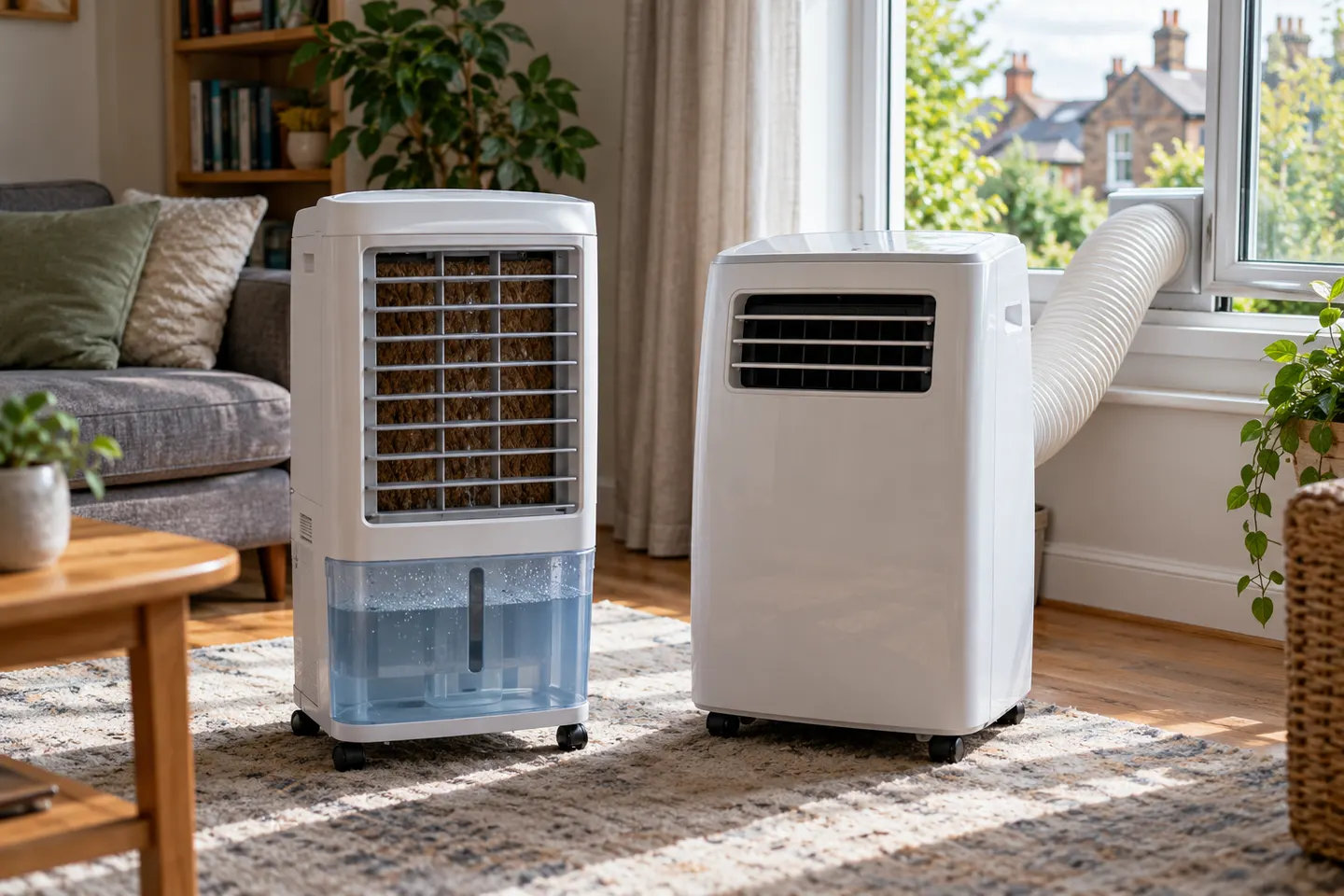
For a room, this usually means an evaporative cooler that moves air across a wet pad or wick. It adds moisture as water evaporates. A refrigerant air conditioner transfers heat out of the room and can remove moisture; a fan only moves air and helps you feel cooler without lowering room temperature.
02
When an evaporative cooler makes sense
In hot, dry conditions, evaporation can cool incoming air while using a fan and water pump. The US Department of Energy describes evaporative cooling as a potential option in dry climates. A direct unit needs a path for air to leave, so plan for ventilation rather than treating it like a sealed-room appliance.
03
When an air conditioner is the better choice
Choose air conditioning when the room is humid, windows need to stay closed, or you need more predictable temperature control. Because evaporative cooling adds moisture, it is a poor match when indoor humidity is already a concern.
04
Compare the real running conditions
Check the room area, outdoor humidity, ventilation, water-tank capacity and the maker's stated airflow or coverage. For an air conditioner, check cooling capacity, installation needs, filter care and whether the unit can drain condensate. Do not compare unlike coverage figures as though they guarantee the same result.
05
A quick decision rule
For a dry, ventilated space where added humidity is acceptable, consider an evaporative cooler. For humid weather, a closed room or active moisture removal, look at an air conditioner. If you only want a breeze at a person, a conventional fan may be enough.
06
Care and comfort matter too
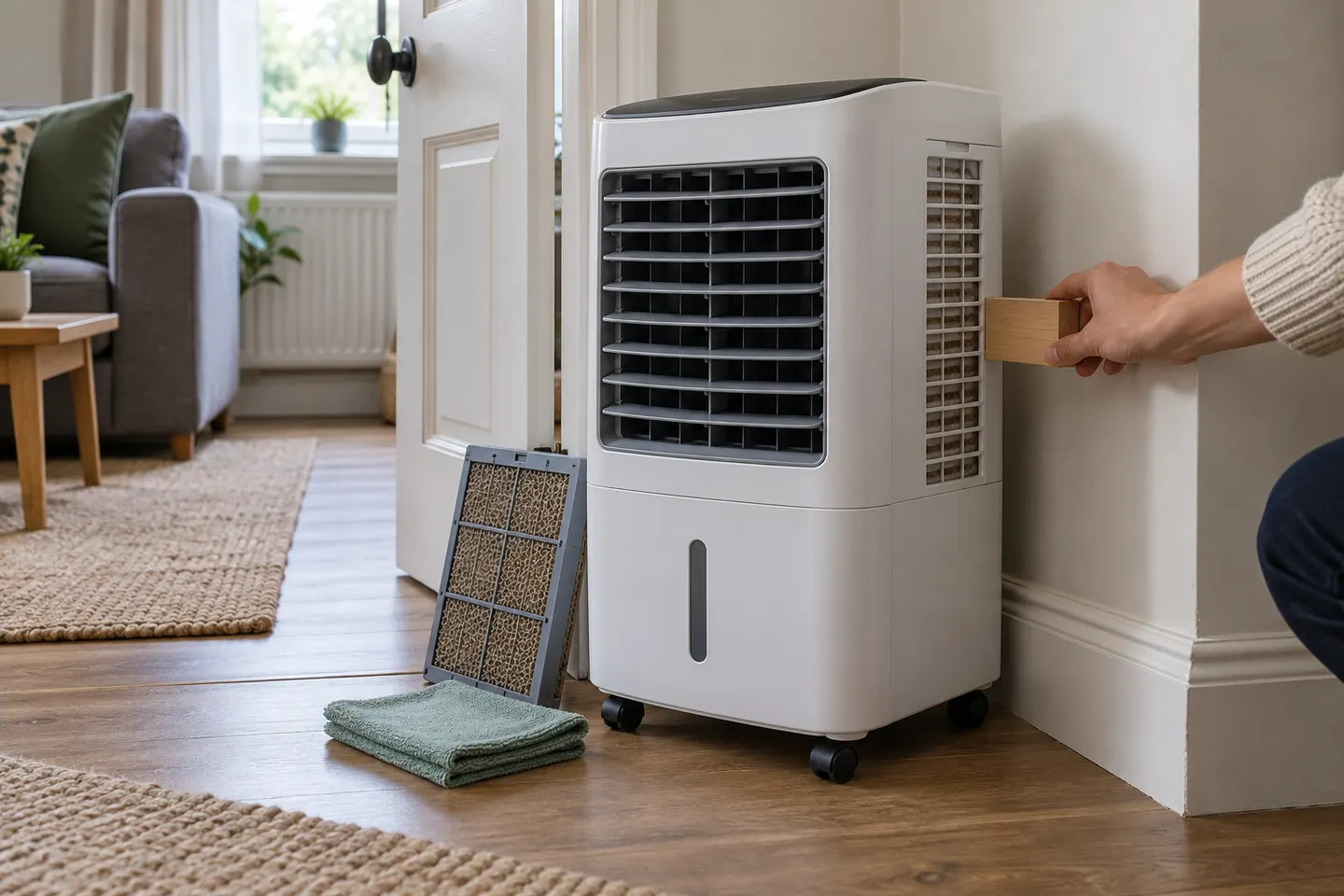
Follow the manufacturer's cleaning and water-draining instructions for evaporative units, and monitor indoor dampness. Keep air-conditioner filters and condensate paths maintained as directed. The most suitable device is one you can ventilate, operate and maintain properly in your home.
Common questions
Questions before you buy
Is a liquid cooler the same as an air conditioner?
No. A liquid or evaporative cooler uses water evaporation and adds moisture to the air. An air conditioner uses a refrigeration cycle to move heat outdoors and can also remove moisture.
Does an evaporative cooler work in a humid climate?
It is generally less suitable when the air is already humid, because evaporation becomes less effective and the device adds moisture. Check local conditions and the manufacturer's guidance.
Do you need to open a window for an evaporative cooler?
Many direct evaporative systems need ventilation so humid air can leave the space. Follow the unit's instructions for the required openings and airflow.
Will a liquid cooler lower the room temperature like AC?
It can cool the air stream through evaporation, but its result depends strongly on humidity and ventilation. It does not provide the same controlled heat removal and dehumidification as an air conditioner.
An evaporative cooler can make a nearby breeze feel cooler, but it is not a portable air conditioner. Climate and ventilation determine which option fits.
Evaporative coolers circulate air through wet media; portable air conditioners move heat through an exhaust hose. The better choice depends on humidity and room setup.
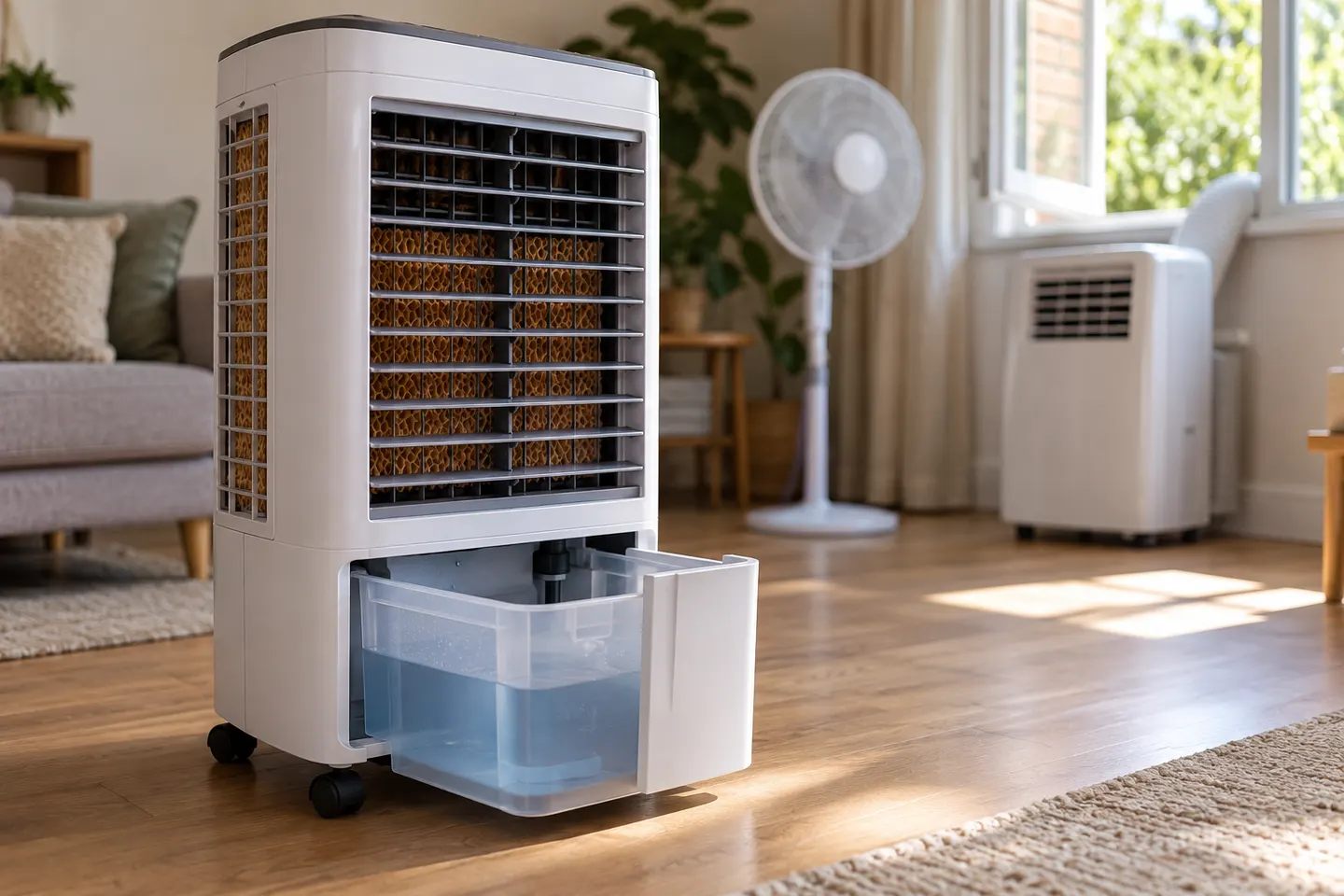
Match an evaporative cooler’s airflow and water capacity to the area you occupy. These units move air and add moisture; they do not replace a refrigeration AC.
A portable air cooler can mean a fan-based evaporative unit or a portable air conditioner. Start with your climate: evaporative models add moisture and suit dry conditions, while air conditioners actively remove heat from a room.
Your privacy
We use cookies and similar technologies. Necessary ones keep the site working. With your permission we also use statistics cookies (Google Analytics and Microsoft Clarity) to understand which guides help readers. You can accept all, reject all or choose. You can change your choice at any time from "Cookie settings" at the bottom of every page. Cookie policy