Gearjury may earn a commission when you buy through links on this page. This does not affect our editorial guidance.
Guide
Why Is My Swamp Cooler Not Blowing Cold Air? Common Causes and Checks
A swamp cooler may blow warm air when outdoor humidity is high, its pads are dry or clogged, or the room has no exhaust path. Start with airflow and water delivery, then check the manual before servicing the unit.
GGearjury editorial team · Updated October 22, 2026· 4 min
01
Why is my swamp cooler not blowing cold air?
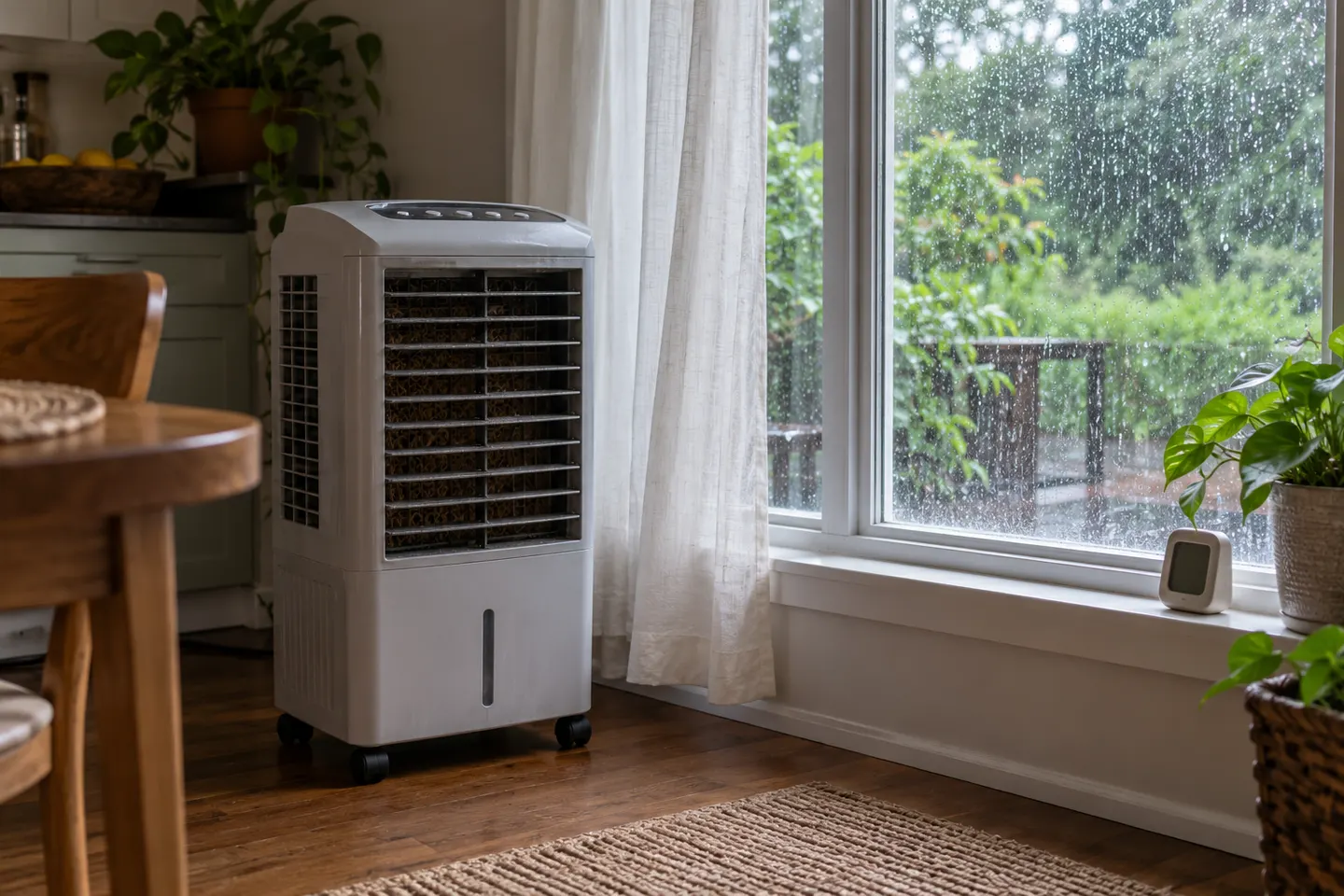
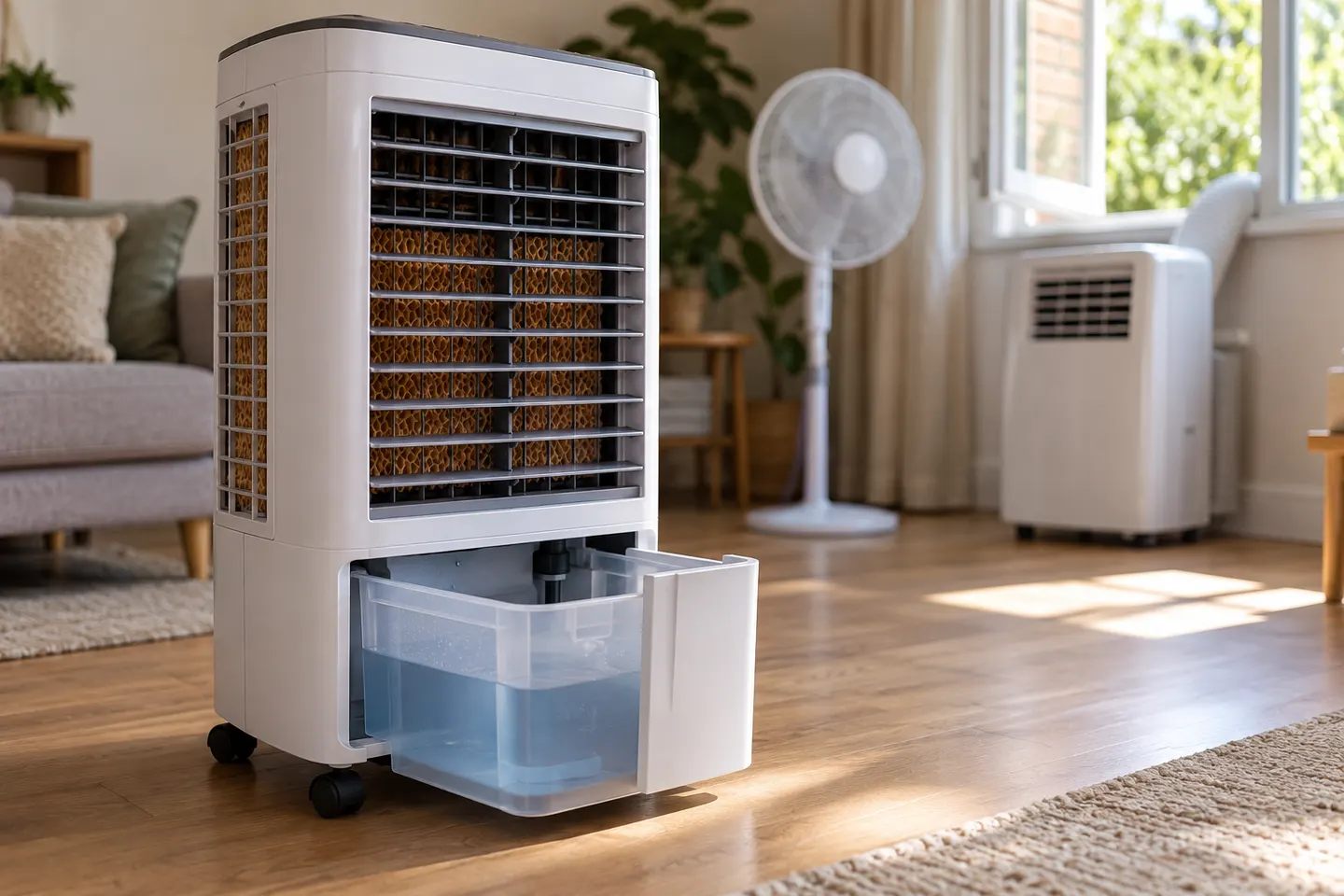
Why is my swamp cooler not blowing cold air? Evaporative cooling depends on water evaporating as air passes through damp pads. High outdoor humidity leaves less room for evaporation, while dry pads, restricted airflow or poor water distribution can also make the discharge feel warm. These are common checks, not a diagnosis of a specific unit.
02
Check whether the air is humid enough already
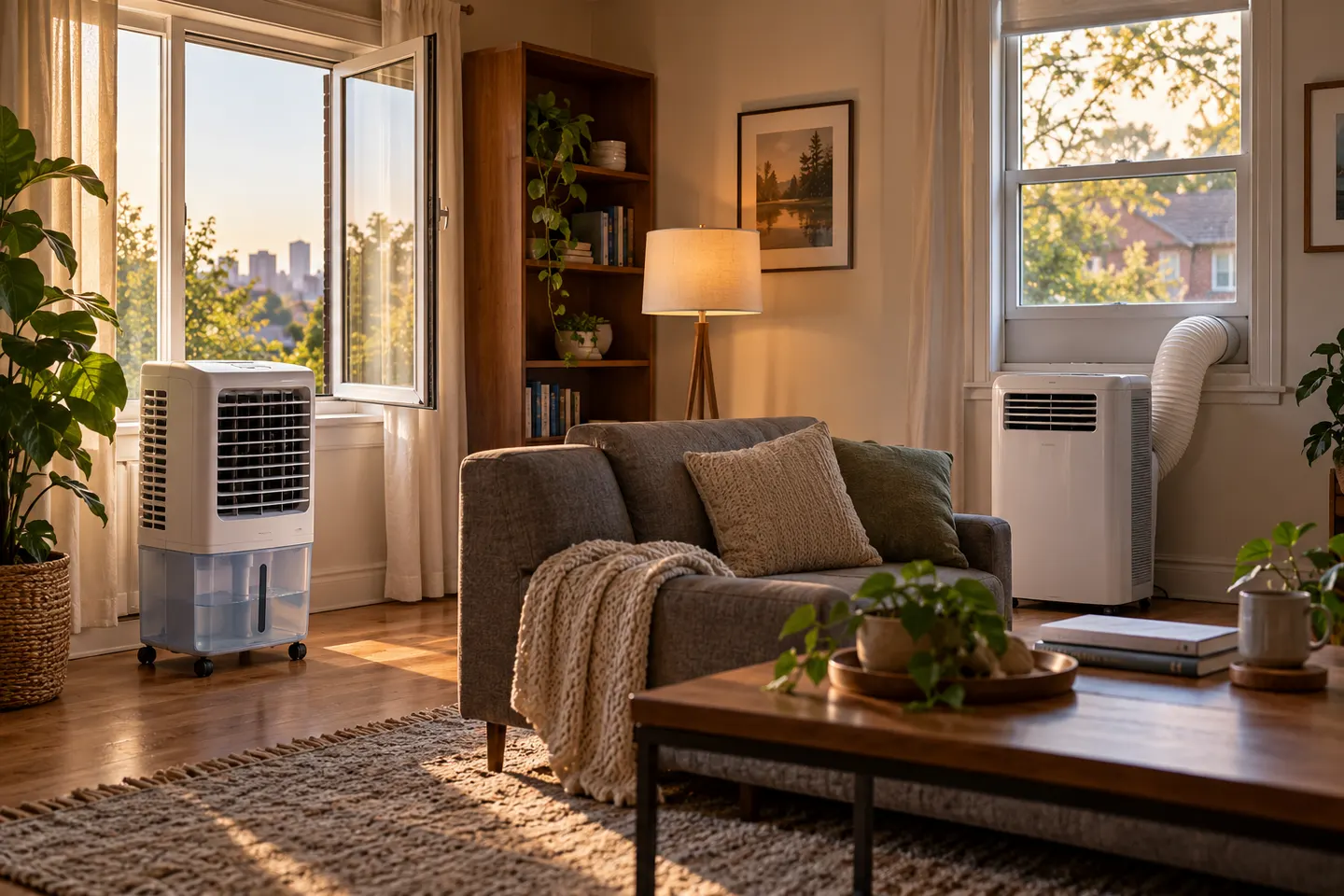
Evaporative coolers work best in dry conditions. When the air is humid, evaporation slows and the unit cannot provide the same temperature drop. A room that feels stuffy may also need more ventilation; opening a suitable window or door gives air a route out, as the U.S. Department of Energy describes for direct evaporative cooling.
03
Make sure water reaches the pads
With the unit switched off and unplugged, follow the owner's manual to inspect the reservoir level and visible water distribution. A pump that is not circulating water, a blocked feed line, or mineral scale can leave parts of the pad dry. Do not open electrical compartments or reach into moving parts.
04
Look for clogged or worn cooling pads
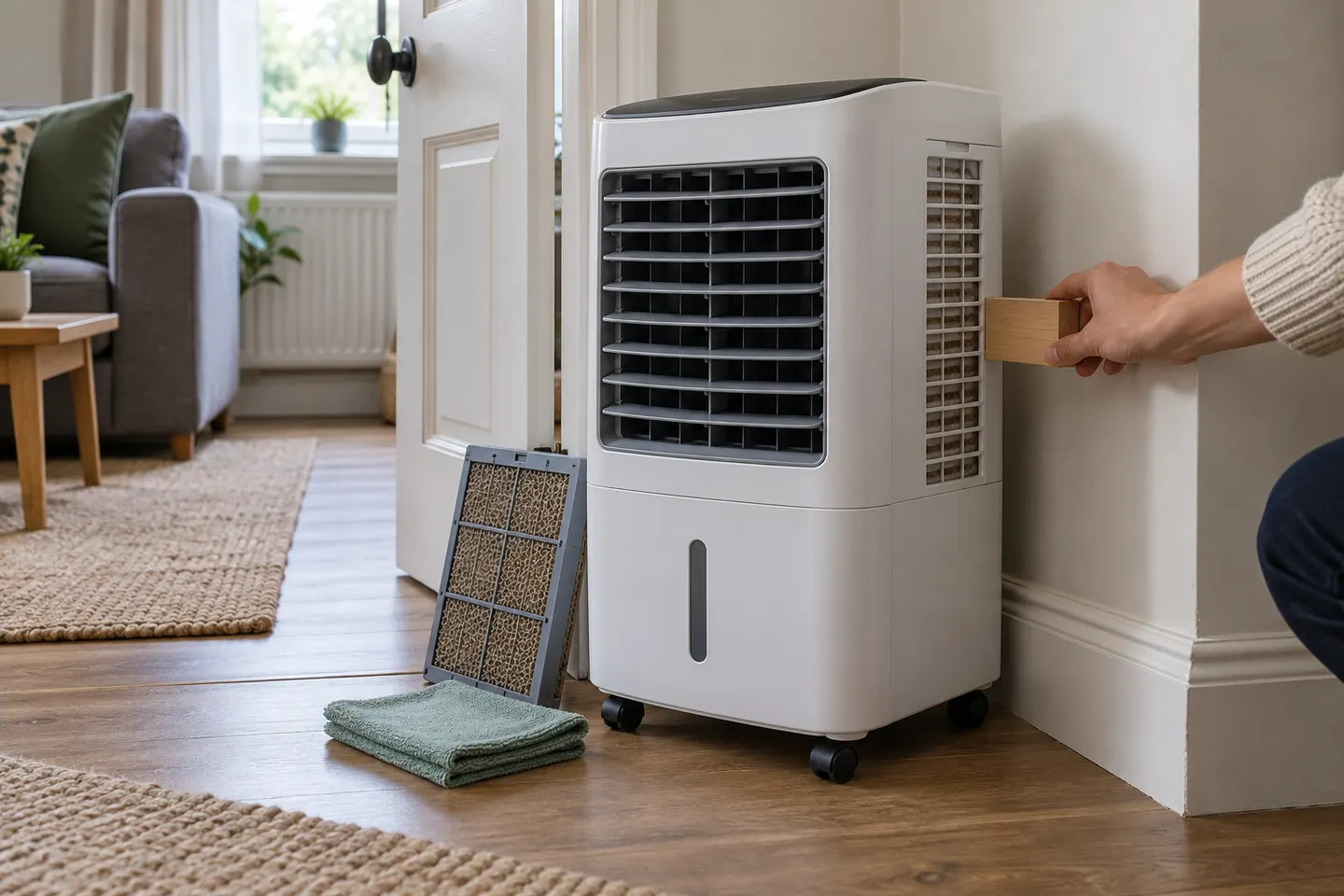
Dust and mineral deposits can restrict airflow through evaporative media and reduce cooling. Check the pads only as the manufacturer permits. Clean or replace them using the specified method; do not run the cooler with panels removed or substitute an incompatible pad.
05
Check airflow and the room's exhaust path
Confirm the intake and outlet are not blocked by curtains, furniture or debris, and select the cooling mode rather than fan-only mode. A direct evaporative cooler adds moisture to incoming air, so provide a safe path for indoor air to leave. Follow the unit's placement and ventilation directions.
06
When the cooler still blows warm air
Turn the unit off if you notice a burning smell, leaking near electrical parts, unusual grinding or a damaged cord. For persistent trouble, consult the model manual or a qualified service technician; pump, motor and wiring repairs should not be improvised. Never add ice or chemicals unless the manufacturer explicitly allows it.
Common questions
Questions before you buy
Why is evaporative cooler blowing hot air?
High humidity can limit evaporation, and dry or clogged pads, poor water circulation, blocked airflow or fan-only mode can reduce cooling. Check the manual and inspect only accessible parts with the unit unplugged.
Why is my evaporative cooler blowing warm air?
The cooler may not be getting enough dry air, water may not be wetting the pads evenly, or the pads may be scaled or obstructed. Make sure the selected mode is cooling and the room has an exhaust path.
Should a swamp cooler have a window open?
A direct evaporative cooler generally needs a way for indoor air to escape as it supplies fresh, humidified air. Follow the manufacturer's ventilation guidance and use a suitable opening.
Can I run an evaporative cooler when it is humid outside?
You can operate it according to its instructions, but humid conditions reduce the scope for evaporation and may make cooling less effective. Consider fan-only operation or another cooling method if the room becomes uncomfortable.
How can I tell if swamp cooler pads need cleaning or replacement?
Visible heavy scale, dirt, damage or uneven wetting can indicate a maintenance issue. Use the pad inspection and replacement guidance for your specific model.
An evaporative cooler can make a nearby breeze feel cooler, but it is not a portable air conditioner. Climate and ventilation determine which option fits.
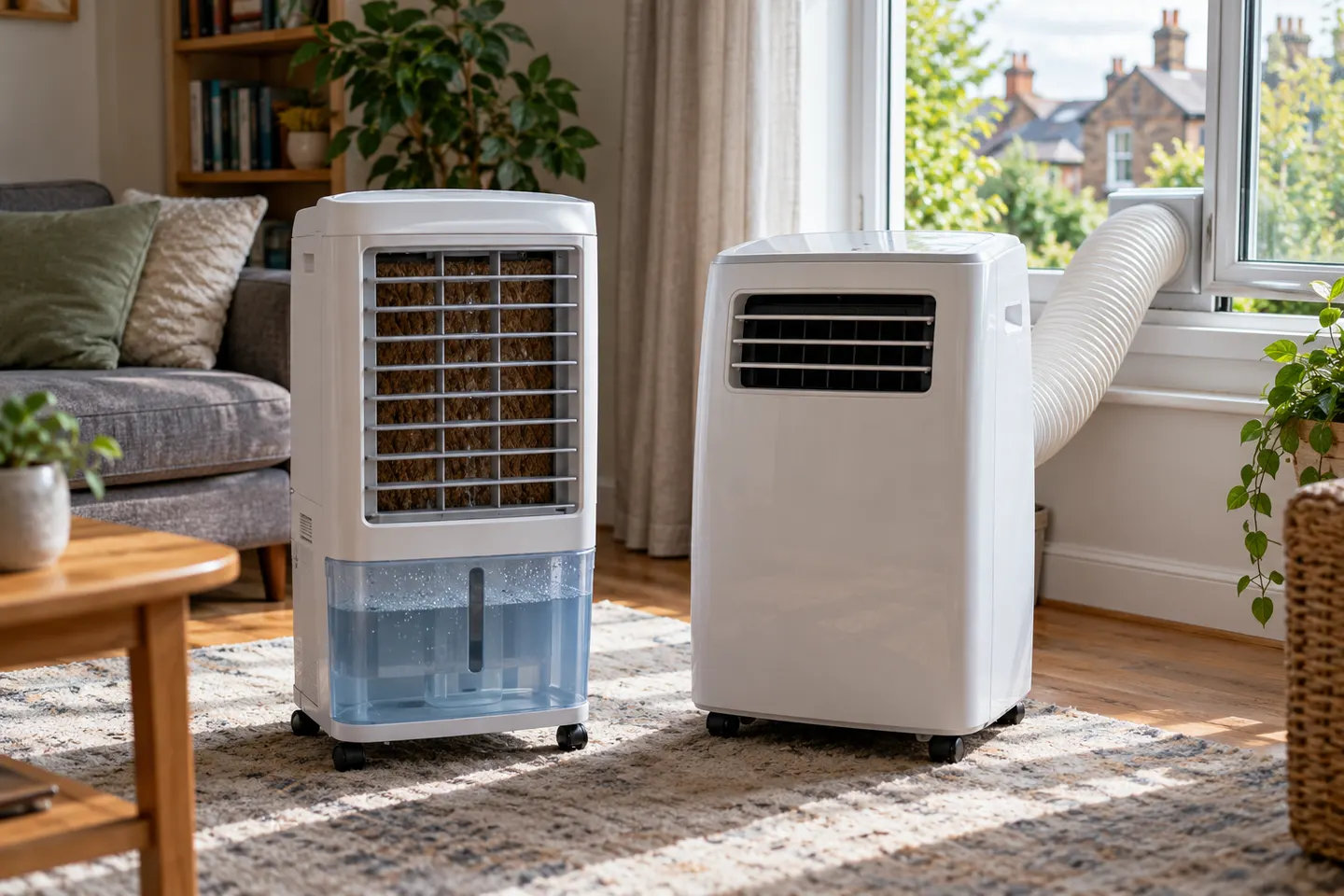
Evaporative coolers circulate air through wet media; portable air conditioners move heat through an exhaust hose. The better choice depends on humidity and room setup.
Match an evaporative cooler’s airflow and water capacity to the area you occupy. These units move air and add moisture; they do not replace a refrigeration AC.
A portable air cooler can mean a fan-based evaporative unit or a portable air conditioner. Start with your climate: evaporative models add moisture and suit dry conditions, while air conditioners actively remove heat from a room.
Your privacy
We use cookies and similar technologies. Necessary ones keep the site working. With your permission we also use statistics cookies (Google Analytics and Microsoft Clarity) to understand which guides help readers. You can accept all, reject all or choose. You can change your choice at any time from "Cookie settings" at the bottom of every page. Cookie policy