Gearjury may earn a commission when you buy through a retailer link. Our guidance is based on cited documentation.
Guide
How to Choose a Dashcam for Your Car
Choose coverage first, then compare real recording detail, storage and power requirements. A camera you can install cleanly and maintain is more useful than a feature-heavy model you cannot configure.
GGearjury editorial team · Updated October 15, 2026· 8 min
01
Decide which views need recording
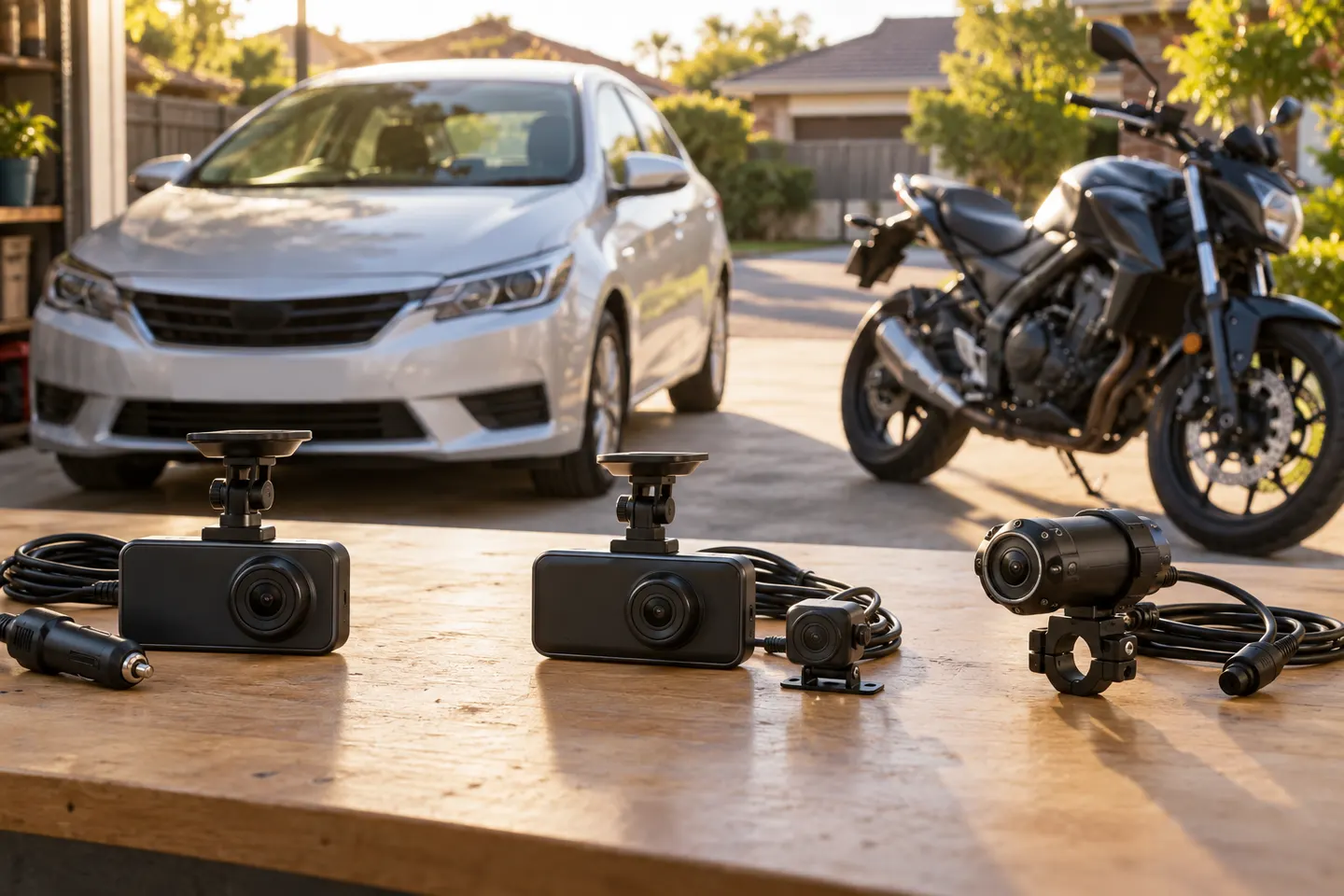
Start with the evidence gap you want to close. A front camera handles the road ahead with the least wiring; a two-channel front-and-rear system adds incidents behind; a cabin-facing channel is more relevant to rideshare work. Extra channels use more storage and add installation work.
02
Compare usable video detail, not resolution alone
Resolution is only one input. Look for published sample footage in daylight and darkness, HDR behavior, field of view and whether the rear stream drops in quality when all channels record. A very wide lens captures more scene but can make distant details smaller.
03
Check memory-card rules before buying
Confirm maximum capacity, required speed class and the maker's approved or recommended high-endurance cards. Estimate retention using the actual multi-channel bitrate when it is published, then plan to inspect footage and format the card as directed.
04
Choose the right parking mode
Simple impact recording, buffered event capture, low-bitrate recording and time lapse serve different needs. Check what the camera can record before an impact and whether the feature requires a separate hardwire kit, OBD accessory or dashcam battery.
05
Plan power and cable routing
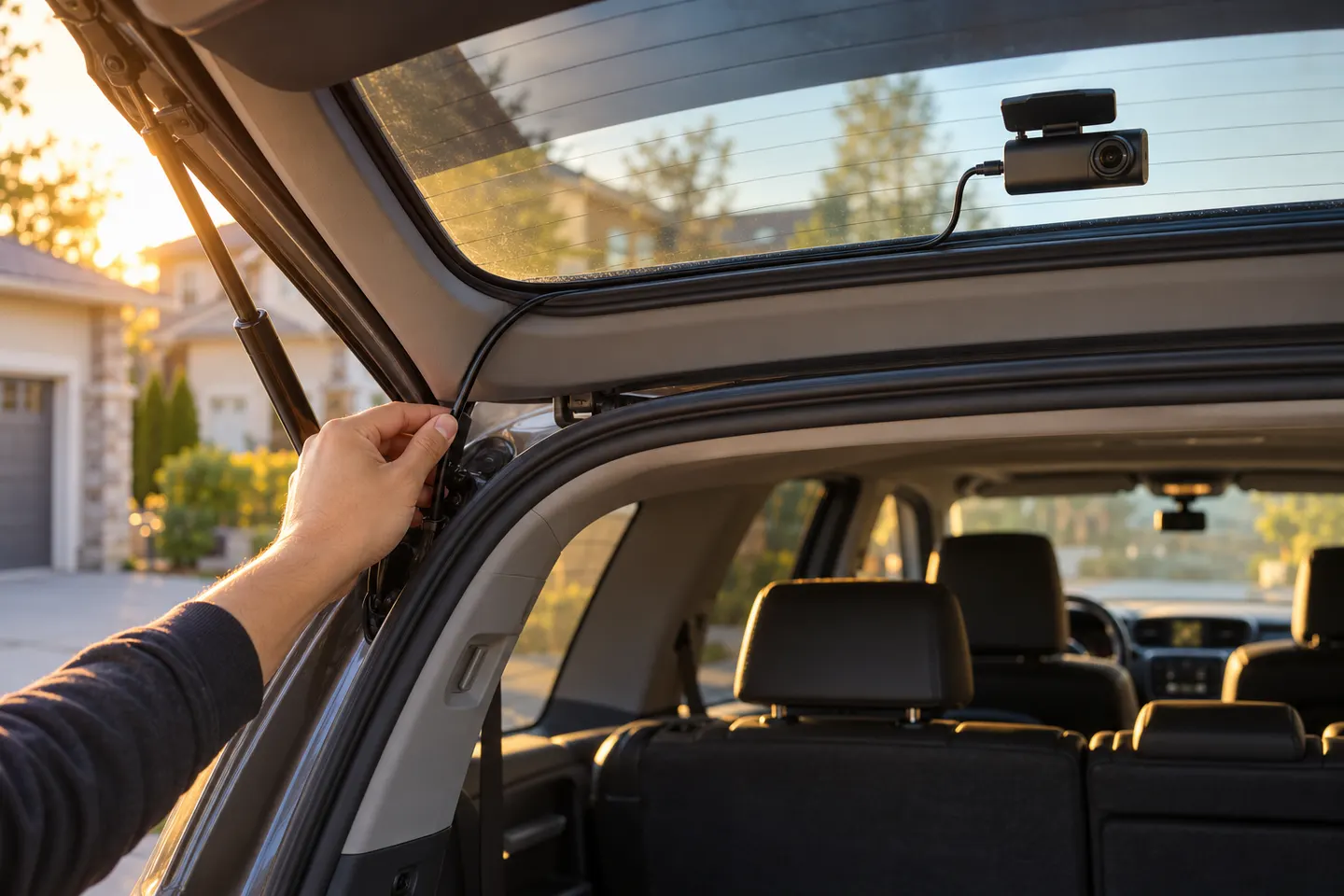
A plug-in cable is easiest to remove. Hardwiring can look cleaner and enable parking operation, but it must use an appropriate circuit, battery protection and a route that does not interfere with airbags. Vehicle-specific uncertainty is a reason to use a qualified installer.
06
Treat apps and cloud access as ongoing services
Wi-Fi usually transfers clips only when your phone is near the camera. Remote alerts and live view normally need LTE or another internet connection, continuous power and sometimes a subscription. Review current platform support, privacy controls and plan limits.
07
Confirm legal placement and recording settings
Windshield-mount, audio-recording and privacy rules differ by jurisdiction. Keep the device outside your critical sight line, disclose cabin recording where required and configure the microphone deliberately rather than leaving defaults unchecked.
Common questions
Questions before you buy
Is 4K necessary for a dashcam?
No. Higher resolution can preserve more detail, but sensor quality, lens, exposure, bitrate and motion also affect whether a plate or event is readable.
Should I get a front-only or front-and-rear dashcam?
Choose front-only for the simplest installation. Choose front-and-rear when evidence behind the vehicle justifies extra cost, cable routing and storage use.
What size memory card is best for a dashcam?
Use a high-endurance card within the camera's supported capacity range. Larger supported cards retain more loop footage and spread repeated writes across more memory.
Do I need to hardwire a dashcam?
Not for ordinary driving recording. Hardwiring is mainly useful for a clean installation or parking features that need power after the ignition is off.
Where should a dashcam be mounted?
Mount it where it has a clear swept view but does not obstruct the driver's sight line or vehicle sensors. Follow both local law and the installation manual.
VIOFO A229 Pro 2CH is our broad recommendation for detailed front and rear coverage. Garmin Mini 3 favors discretion, while Garmin X310 is the sharper single-camera choice.
A front and rear dash cam records both directions and can provide context a single lens misses. Check the rear-camera cable route and simultaneous recording resolution before buying.
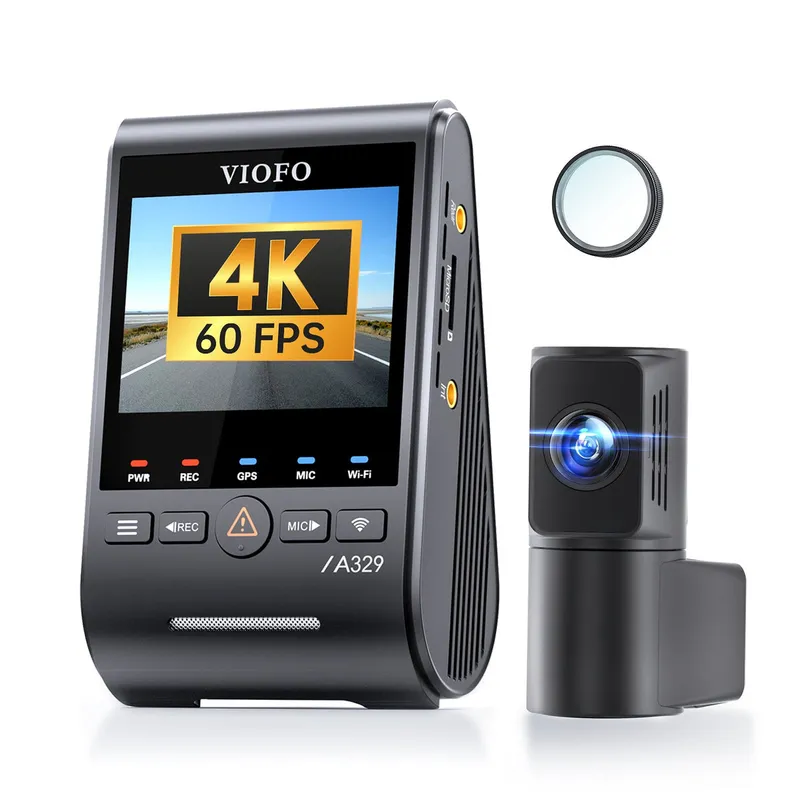
The A329S serves buyers seeking high-detail multichannel recording; A229 models cover more moderate dual-camera needs, while A119 Mini 2 is the compact front-only option.
Start with the coverage you need: front-only, front and rear, cabin or a wider multi-camera view. Then compare recording detail, storage and power requirements.
Your privacy
We use cookies and similar technologies. Necessary ones keep the site working. With your permission we also use statistics cookies (Google Analytics and Microsoft Clarity) to understand which guides help readers. You can accept all, reject all or choose. You can change your choice at any time from "Cookie settings" at the bottom of every page. Cookie policy