Gearjury may earn a commission when you buy through a retailer link. Our editorial guidance is based on the cited sources.
Guide
Where to Mount a Dashcam for a Clear, Legal View
Mount the camera high on the windshield, usually behind or close to the rearview mirror, while keeping the lens inside the wiper-cleared area and the device out of your driving view. Local rules and the vehicle manual take priority.
GGearjury editorial team · Updated October 15, 2026· 5 min
01
Choose a position that does not obstruct your view
Sit in your normal driving position before attaching anything. A compact camera tucked behind the rearview mirror is less distracting than one placed in the center of the windshield. Check the law that applies where you drive because windshield-device rules vary by state.
02
Keep the lens in the wiper-cleared area
Place the lens where the windshield wipers clear rain and road spray. Aim through clean glass and keep the camera away from heavy tint bands, dotted ceramic areas that prevent adhesion, and sensor housings that intrude into the frame.
03
Center the road, not the hood
Use the live view to keep the horizon roughly level and show the lanes ahead. A small strip of hood can help with context, but too much wastes detail that could otherwise capture traffic signs and vehicle movement.
04
Protect cameras and driver-assistance sensors
Do not cover the factory camera, rain sensor, antenna area, airbag path, or mirror controls. Read the vehicle and dashcam manuals before routing a cable around the headliner or pillars.
05
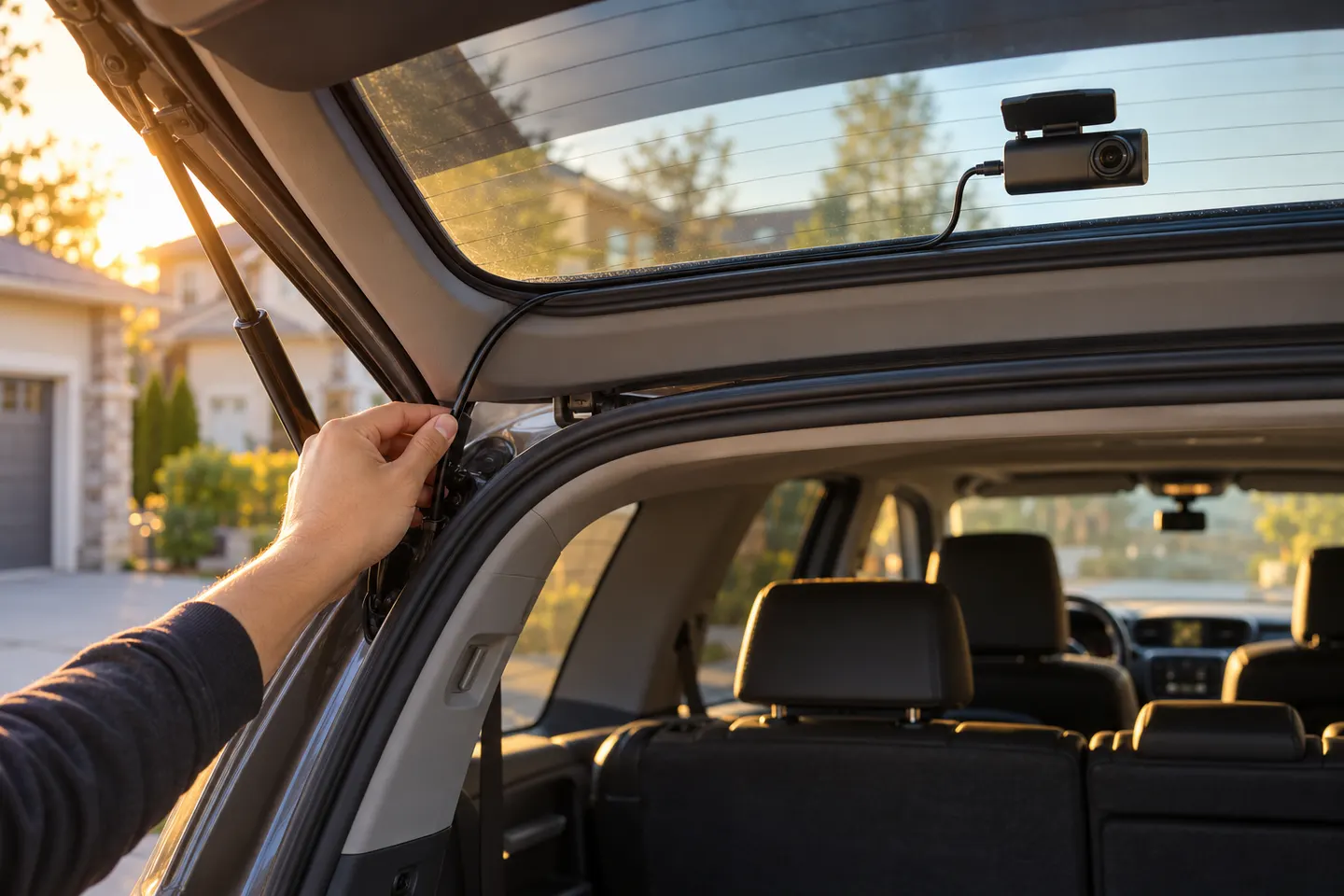
Route the power lead safely
Secure the cable so it cannot drop into the steering wheel, pedals, gear selector, or driver footwell. Keep it clear of curtain airbags; a professional installer can identify a safer route when trim removal or hardwiring is involved.
06
Review footage before final adhesion
Record a short daytime clip, then check glare, dashboard reflections, focus, horizon level, and whether the mirror or sensor housing blocks a corner. Confirm the wipers clear the lens area before pressing an adhesive mount firmly into place.
Common questions
Questions before you buy
Should a dashcam go behind the rearview mirror?
That is often a discreet position if the camera remains accessible and its lens has a clear, wiper-swept view. It must not block the driver or vehicle sensors.
Can I mount a dashcam in the center of the windshield?
Rules differ by state, and a central mount may obstruct your sightline. Check local law and favor the smallest permitted area that still gives the camera a useful view.
How much hood should appear in dashcam footage?
Only a narrow strip is normally useful for context. Aim primarily at the road and keep the horizon level rather than filling the frame with the hood or sky.
Will the black dots on a windshield affect a dashcam mount?
The dotted ceramic frit can reduce suction or adhesive contact and may enter the image. Position the lens below or beside it while preserving a safe, unobstructed location.
VIOFO A229 Pro 2CH is our broad recommendation for detailed front and rear coverage. Garmin Mini 3 favors discretion, while Garmin X310 is the sharper single-camera choice.
A front and rear dash cam records both directions and can provide context a single lens misses. Check the rear-camera cable route and simultaneous recording resolution before buying.
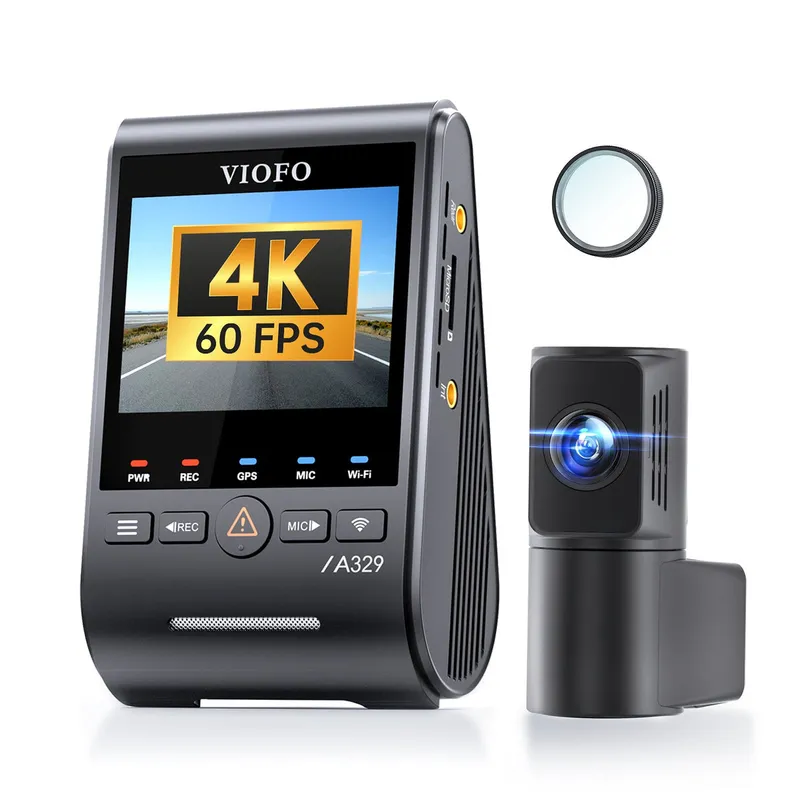
The A329S serves buyers seeking high-detail multichannel recording; A229 models cover more moderate dual-camera needs, while A119 Mini 2 is the compact front-only option.
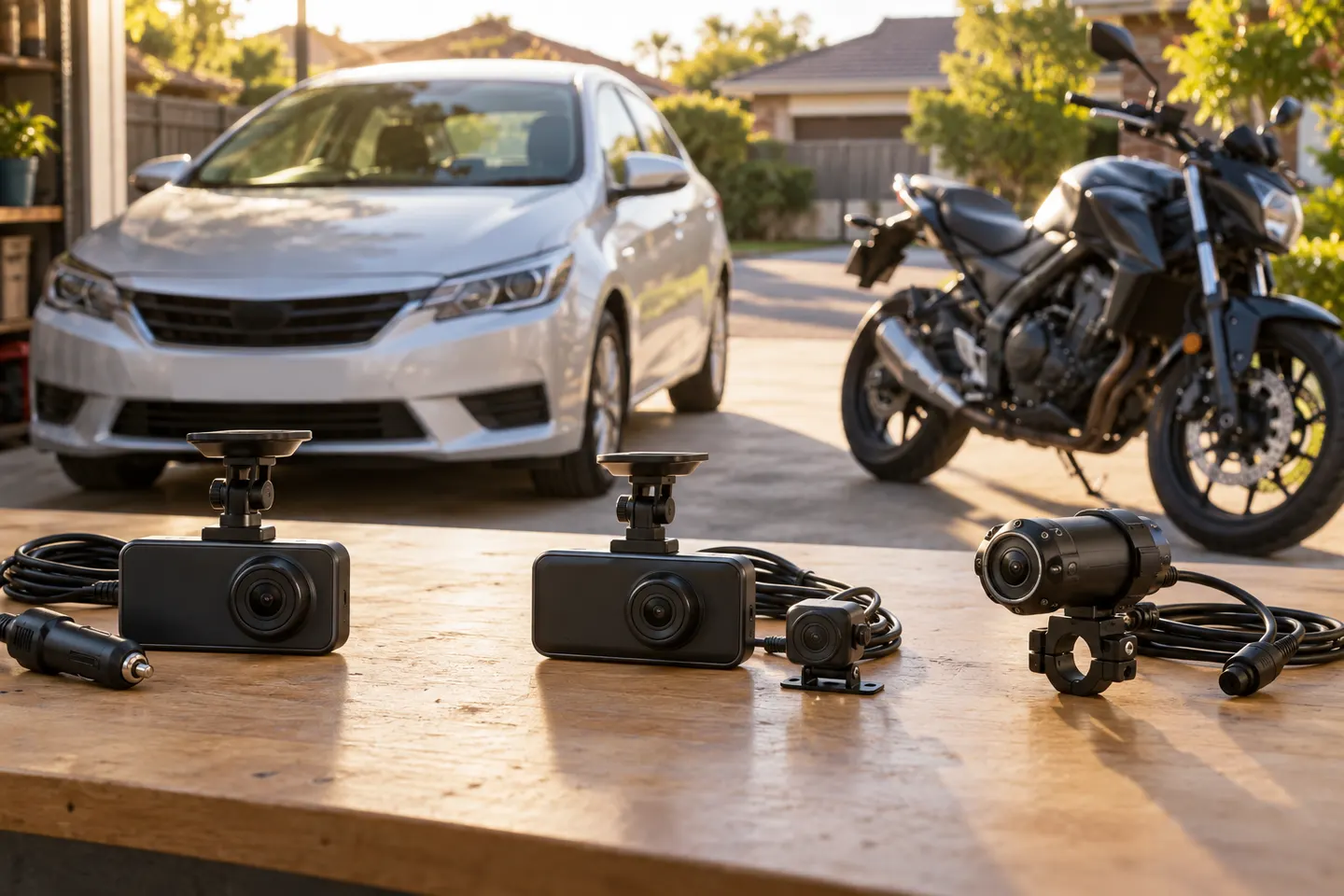
Start with the coverage you need: front-only, front and rear, cabin or a wider multi-camera view. Then compare recording detail, storage and power requirements.
Your privacy
We use cookies and similar technologies. Necessary ones keep the site working. With your permission we also use statistics cookies (Google Analytics and Microsoft Clarity) to understand which guides help readers. You can accept all, reject all or choose. You can change your choice at any time from "Cookie settings" at the bottom of every page. Cookie policy