









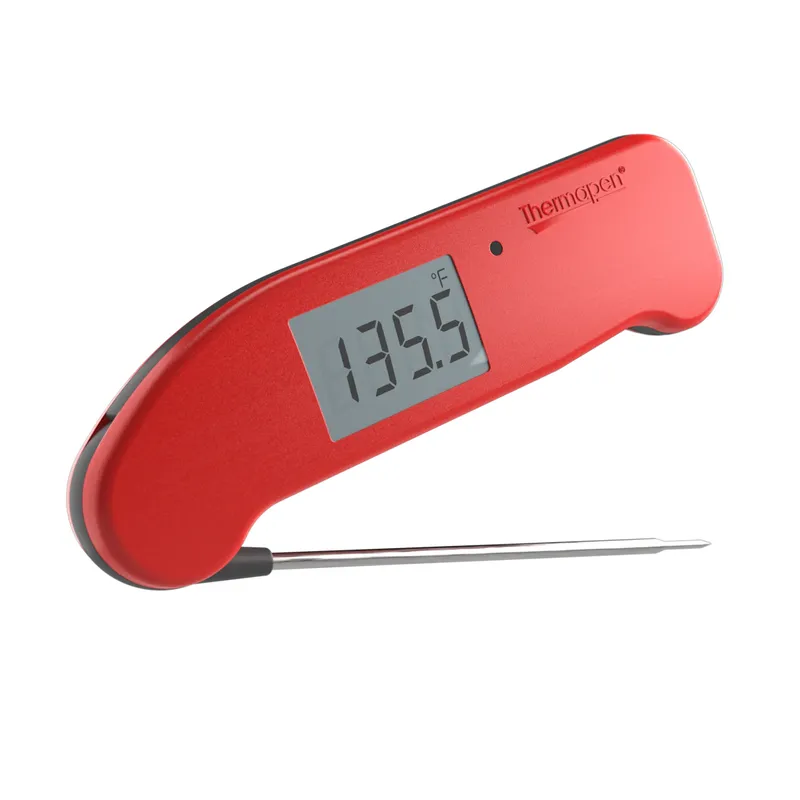
 Official manufacturer image
Our picks
Top picks
Official manufacturer image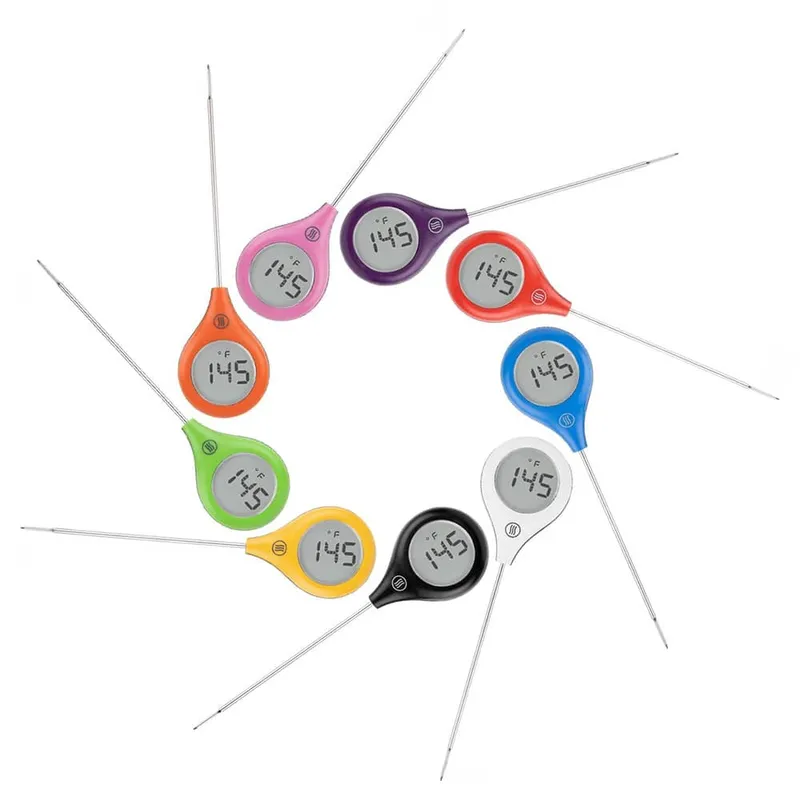 Official manufacturer image
ThermoWorks ThermoPop 2
Check price on Amazon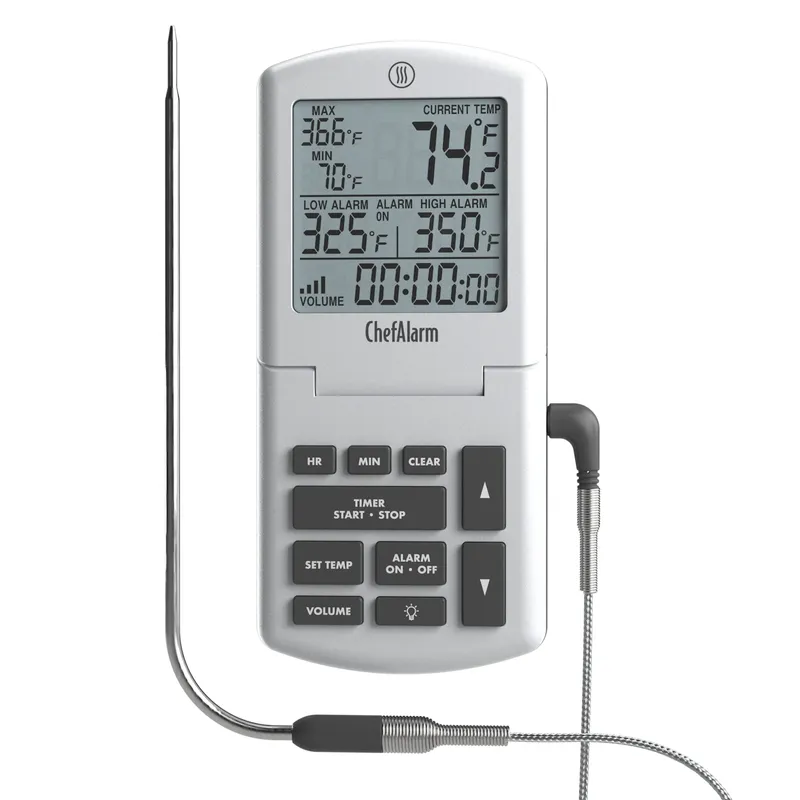 Official manufacturer image
ThermoWorks ChefAlarm
Check price on AmazonMore topics
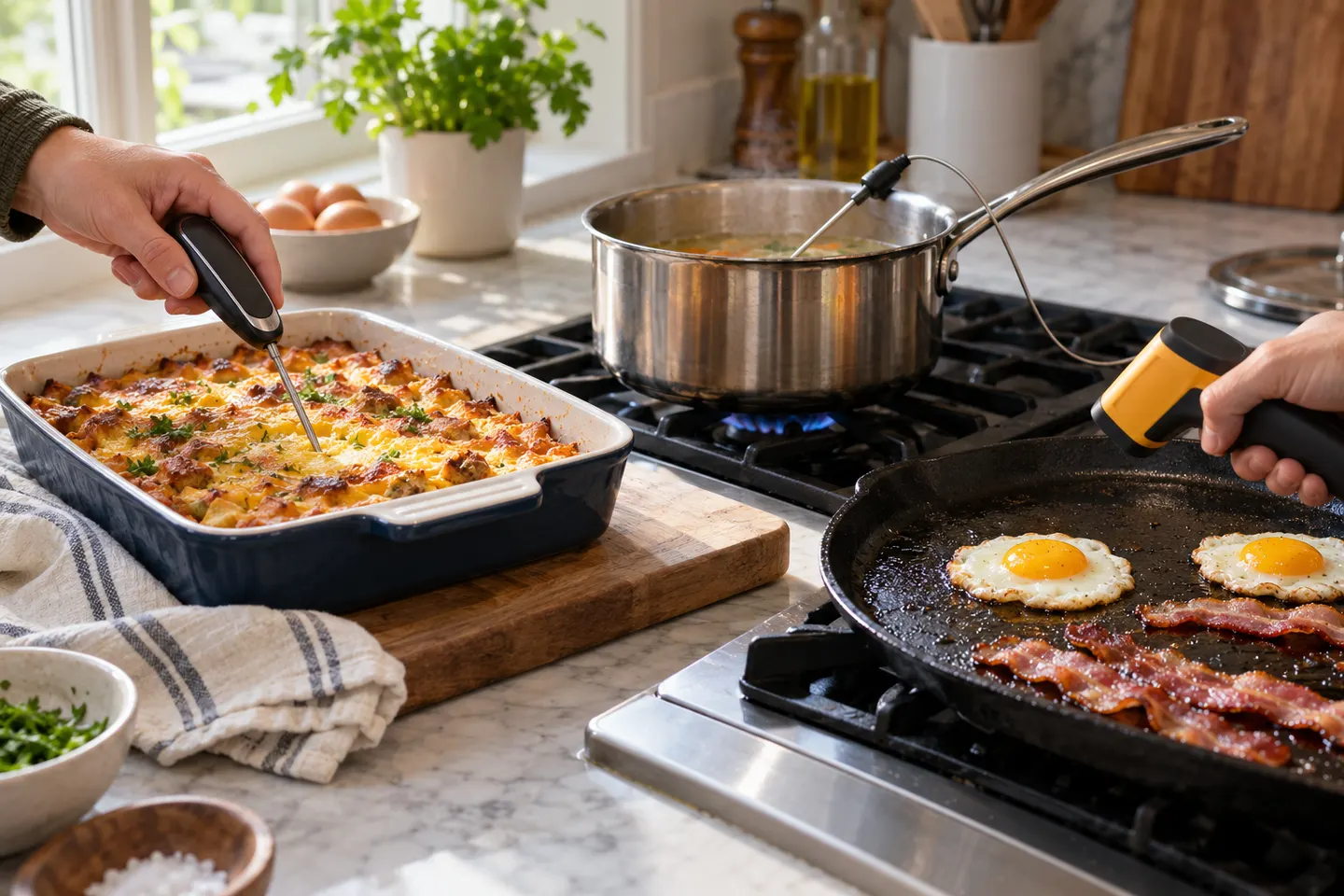 Food Thermometer Types and When to Use Each One
Common questions
Questions before you buy
What are the three main types of food thermometers?
A useful kitchen classification is instant-read probe, leave-in cooking and noncontact infrared. Each measures a different stage or location.
What is the difference between instant-read and leave-in thermometers?
An instant-read model is inserted briefly to check a spot. A leave-in probe is built to remain in food while its cable or wireless system reports the temperature.
Is a dial thermometer a separate type?
Dial describes the display. A dial model may be a bimetal instant-read or an oven-safe leave-in thermometer, so check its sensing area and instructions.
Which thermometer type works for thin food?
A fine, tip-sensitive thermocouple or thermistor probe is easiest to position in the center of a thin patty or cutlet from the side.