Independent buying guidance · US editionHow we work
Gearjury
All categories
All categories
Best picksGood Meat Thermometers for Every Kind of Cook
Best picksBest WiFi Extenders: Which Range Extender Should You Buy?
Best picksBest Dash Cams for Cars in 2026
Best picksBest Radar Detectors for Cars: Models Compared
Best picksGood Winter Gloves for Cold Weather: Five Useful Picks
Best picksBest Headlamps: Six Lights Compared for Different Uses
Best picksTop 10 Best Battery-Powered Weed Eaters for Different Yards
Best picksBest Portable Air Coolers for Patios, Workshops and Small Spaces (2026)
Best picksBest Air Purifier for Bedroom in the US: Quiet Models Compared
United StatesEnglish

Category hub

Food Danger Zone Thermometers for Safer Temperature Checks

There is no special sensor that makes a thermometer a danger-zone model. Use the correct food thermometer for the location being measured, and interpret it against current safety guidance.

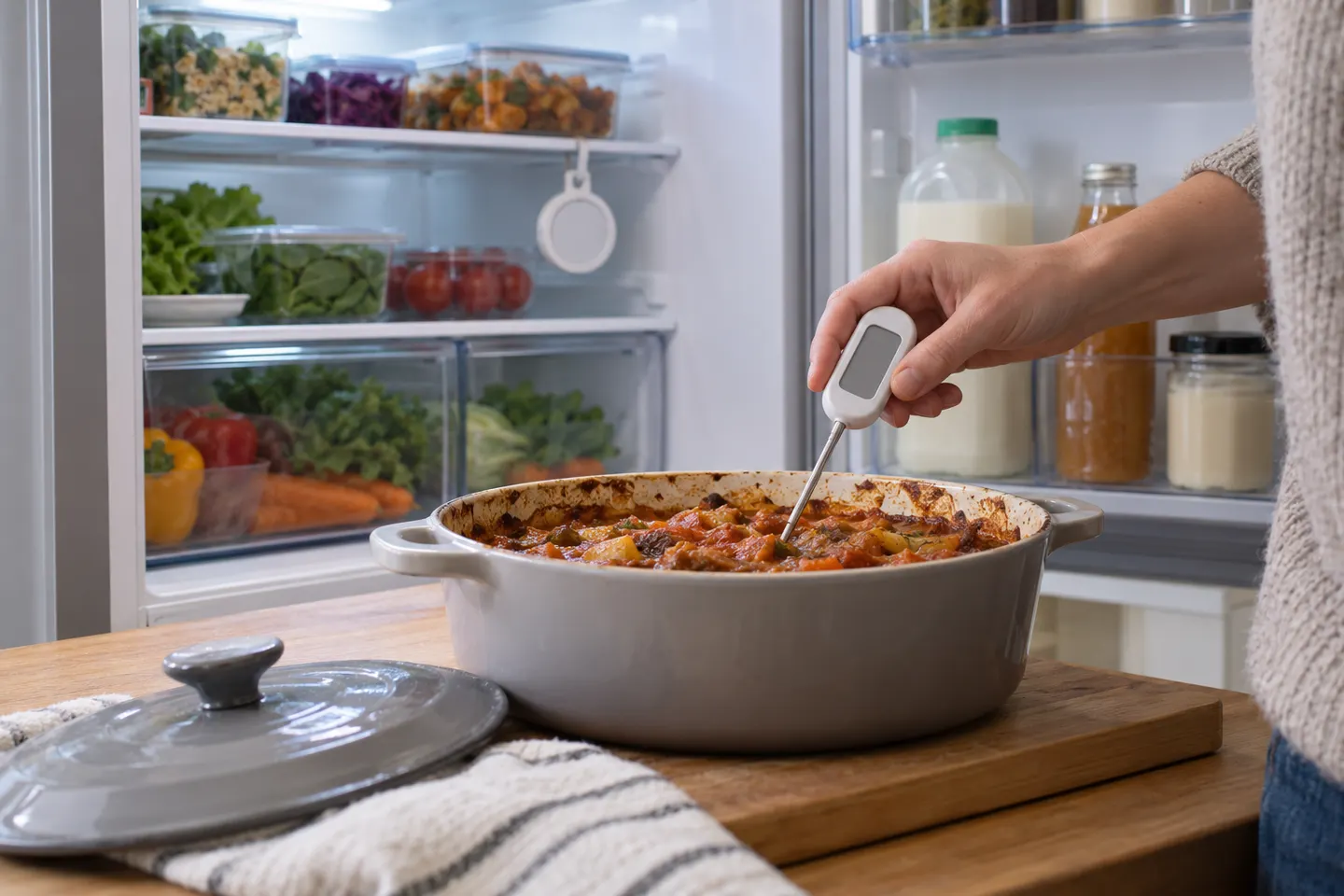
A food danger zone thermometer should measure the part of the food that determines the decision. Use a sanitized penetration probe for internal temperature, an appliance thermometer for refrigerator conditions and an appropriate leave-in instrument for holding equipment. A surface-only infrared reading cannot reveal the center temperature.

Food Danger Zone Thermometers for Safer Temperature Checks

Common questions

Questions before you buy

What is the food thermometer danger zone?

USDA consumer guidance describes 40°F to 140°F as the range in which perishable food should not remain for extended periods.

Can an infrared thermometer check whether meat is safe?

It reads surface temperature, not the center. Use a penetration thermometer to verify internal doneness.

Which thermometer is used for hot holding?

Use a calibrated food thermometer suitable for the product, or fixed equipment instrumentation where the applicable code permits it. Measure the actual food, not just the surrounding air.

How often should a food thermometer be checked?

Follow the maker and workplace procedure, and check after a drop, extreme exposure or any suspect reading. Ice-point or boiling-point methods may apply to adjustable models.