









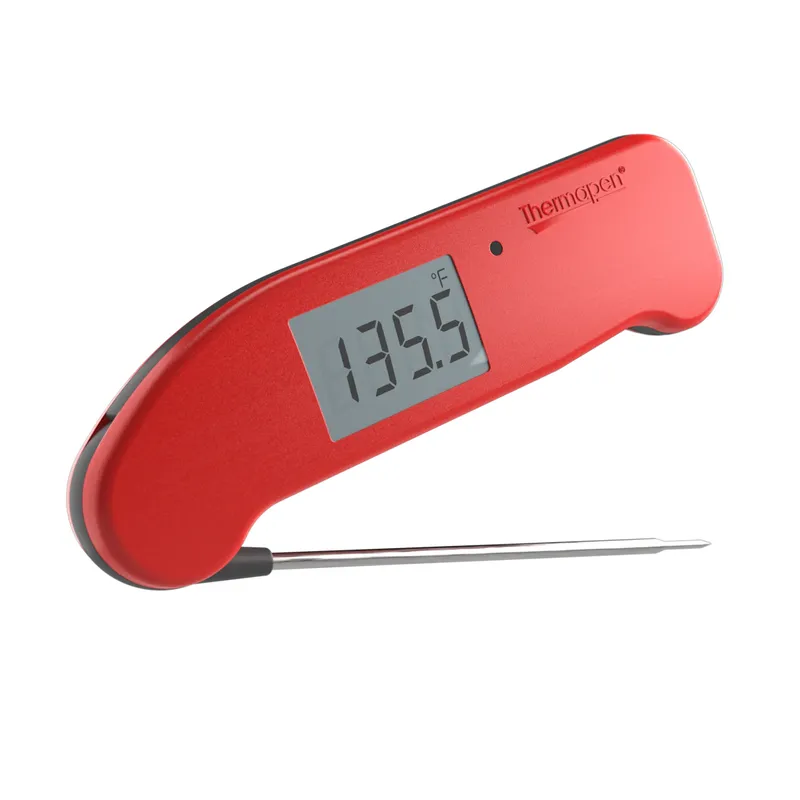
 Official manufacturer image
Our picks
Top picks
Official manufacturer image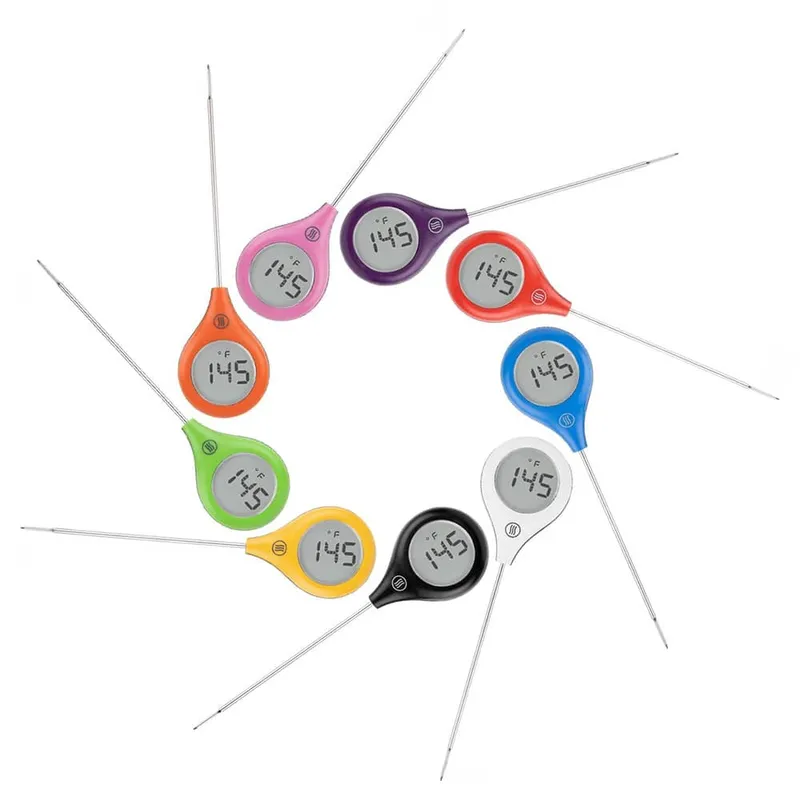 Official manufacturer image
ThermoWorks ThermoPop 2
Check price on Amazon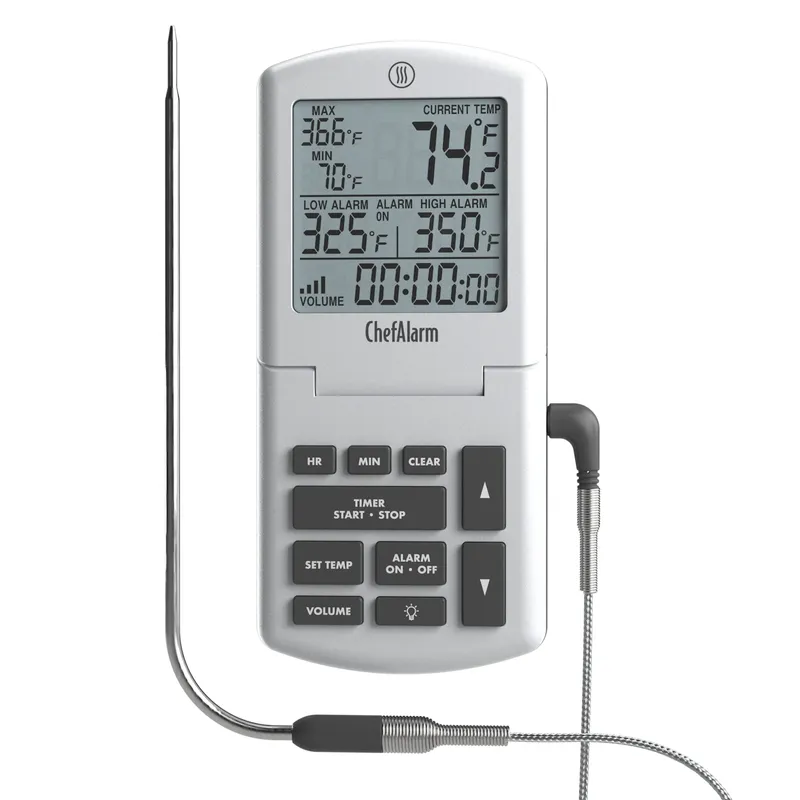 Official manufacturer image
ThermoWorks ChefAlarm
Check price on AmazonBy food
 Oil
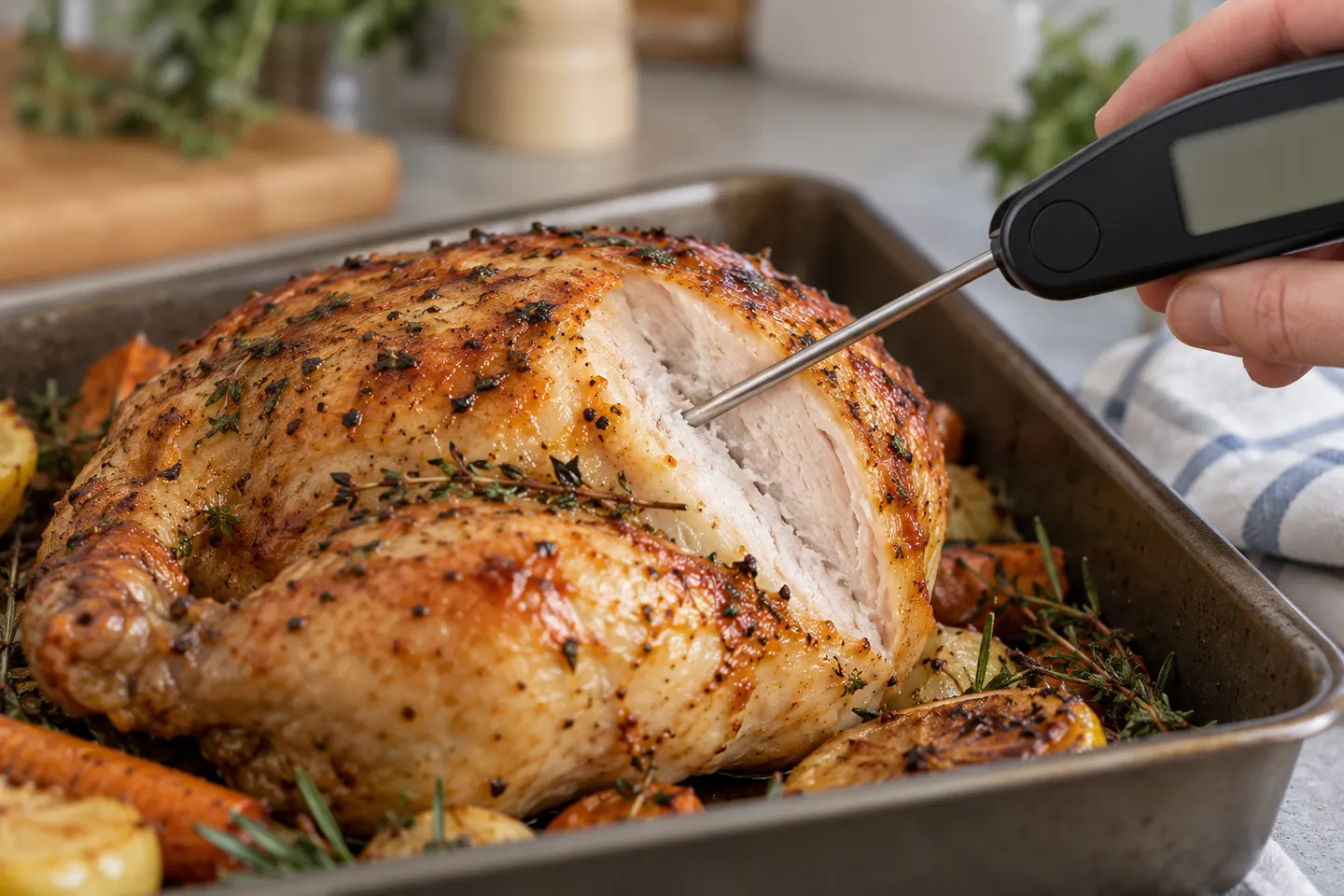 Chicken temperature
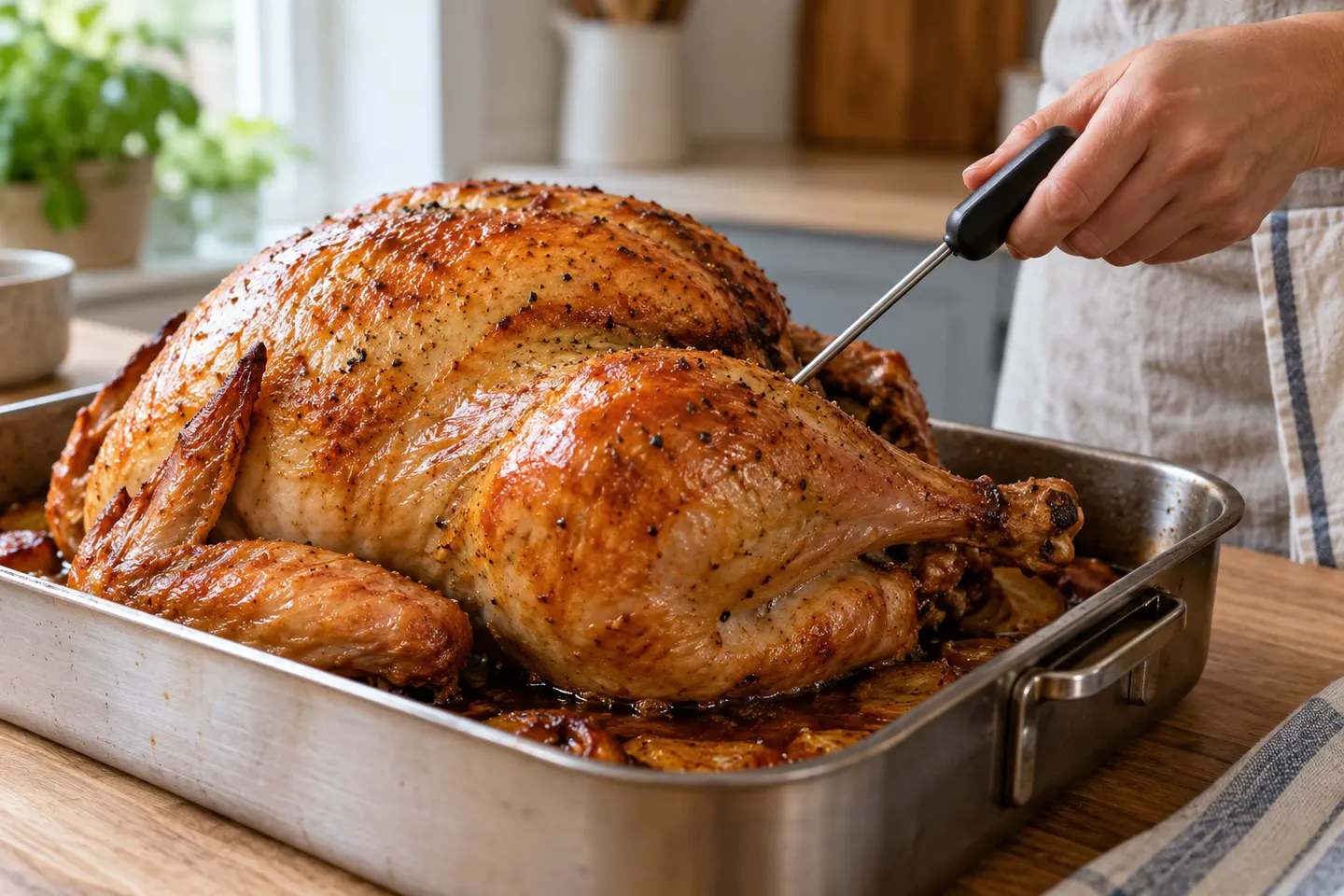 Turkey temperature
How-to guides
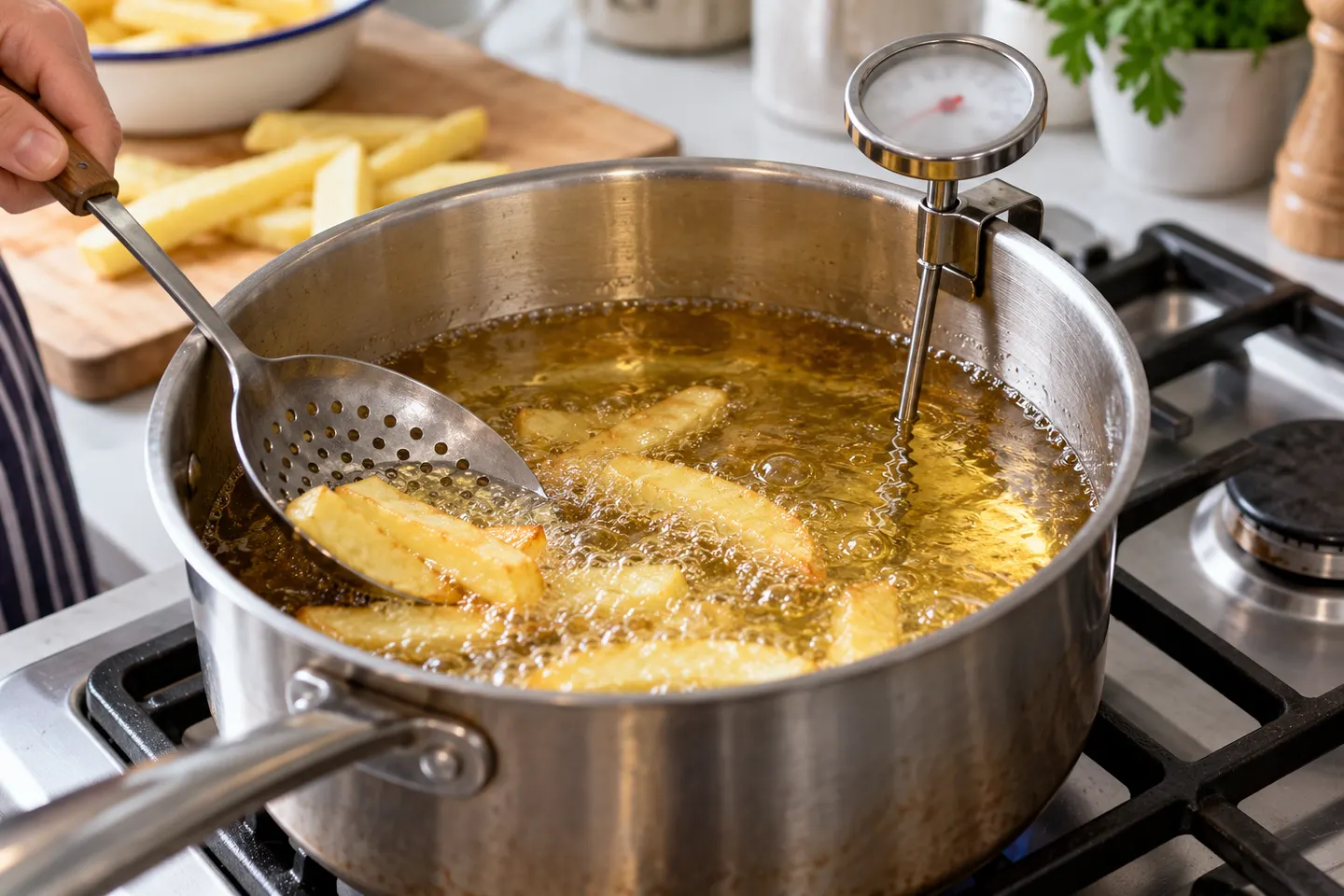 Can You Use a Meat Thermometer for Hot Oil?
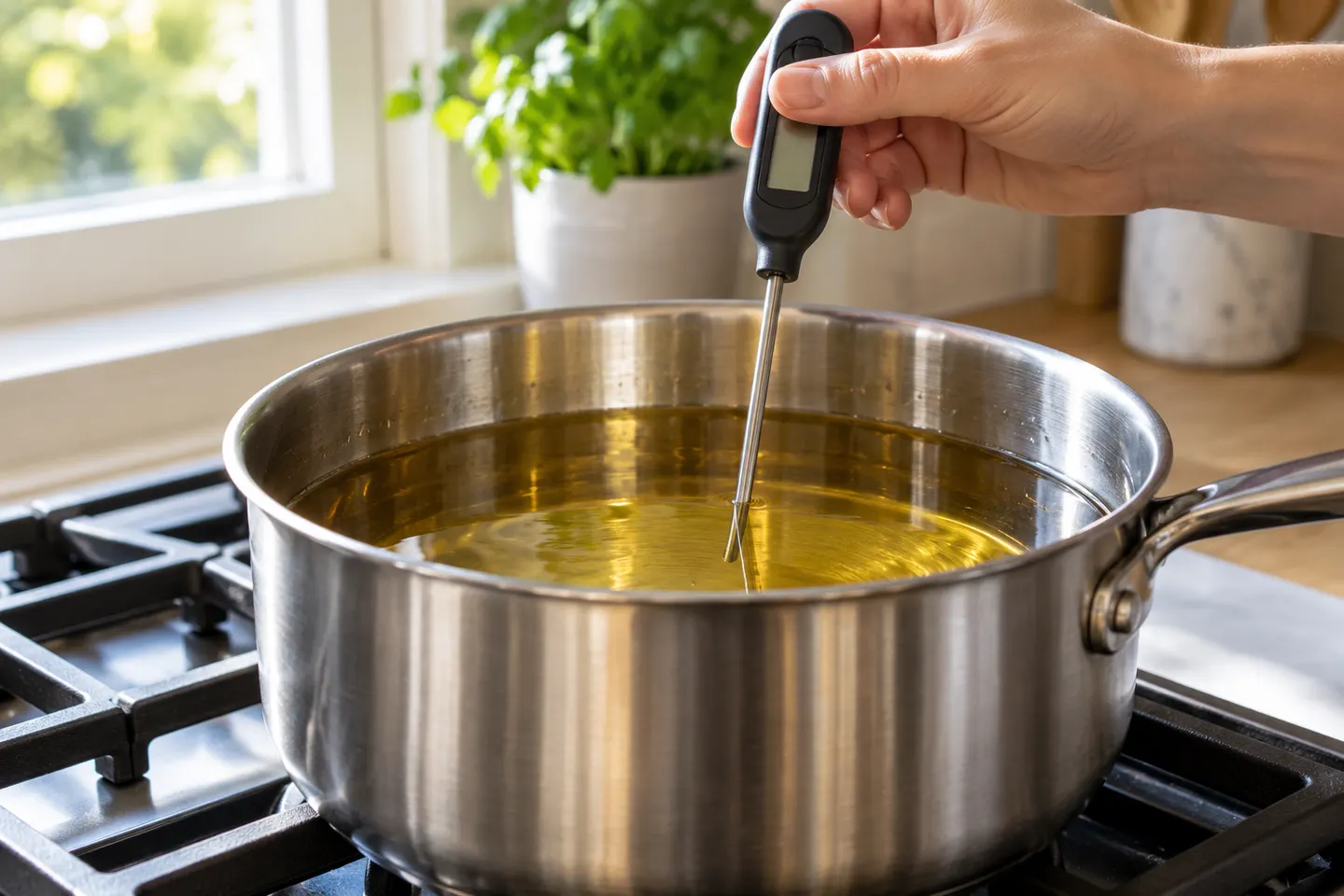 Can I Use a Meat Thermometer for Oil?
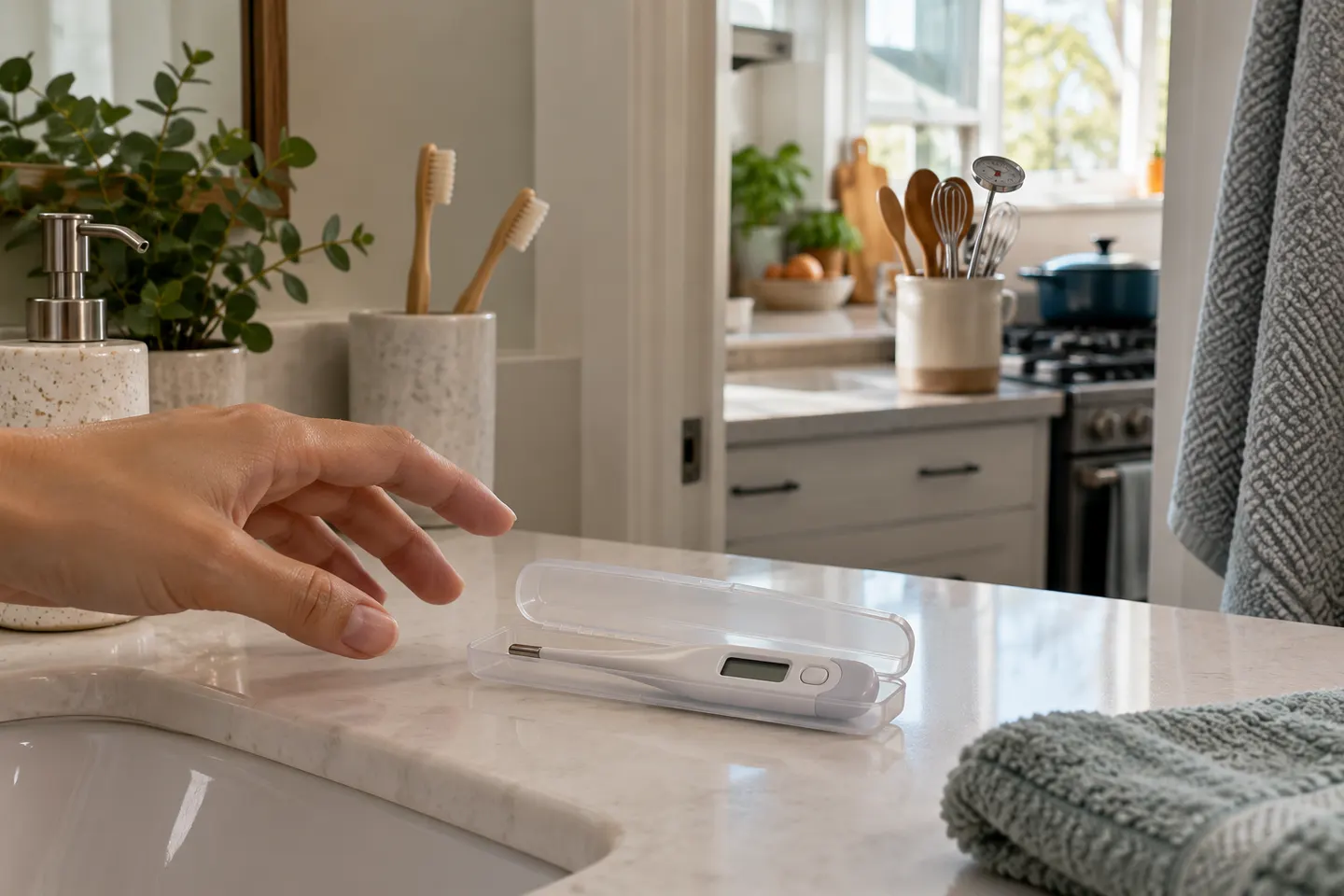 Can You Use a Meat Thermometer to Check Your…
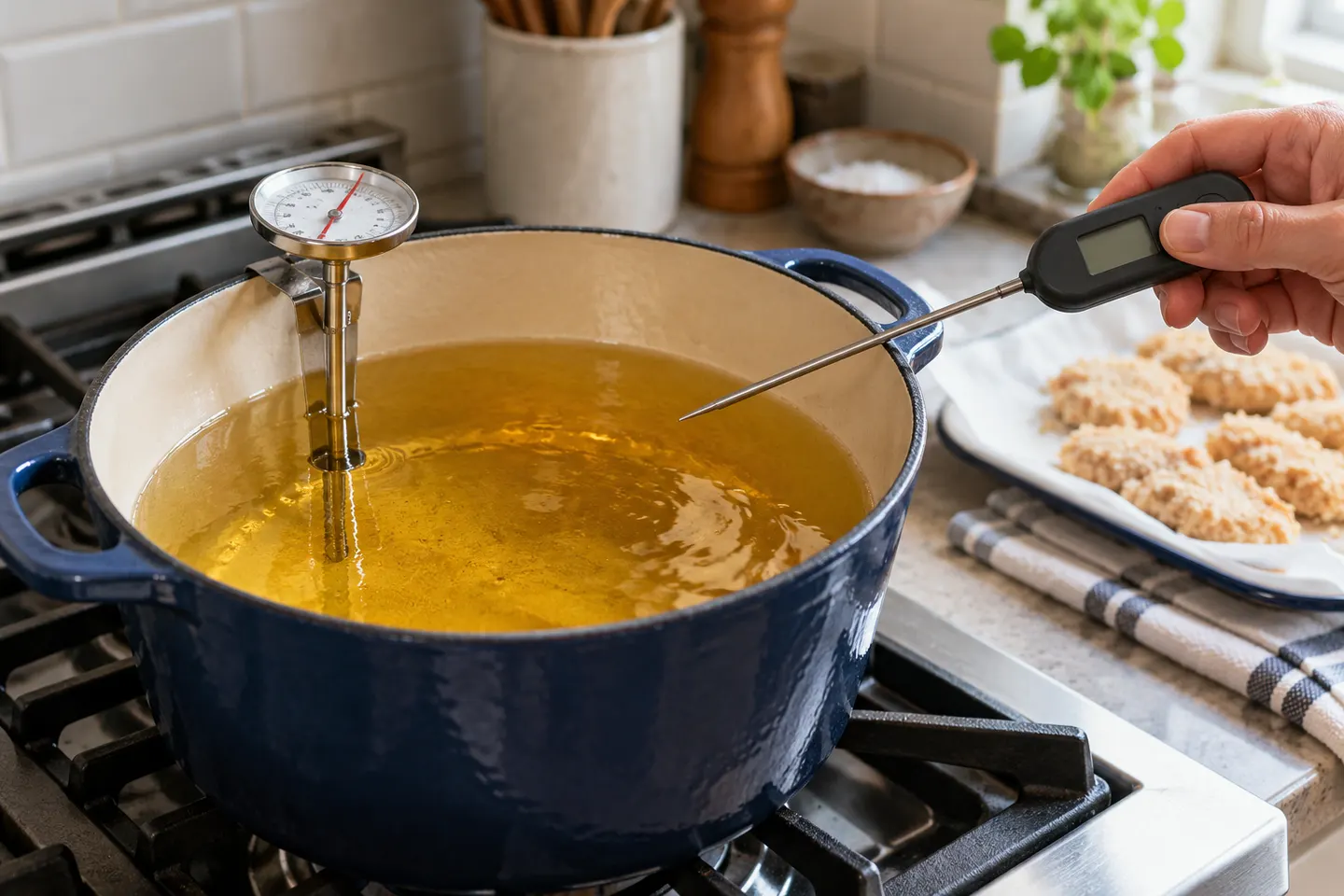 Can a Meat Thermometer Be Used for Oil and Other…
More topics
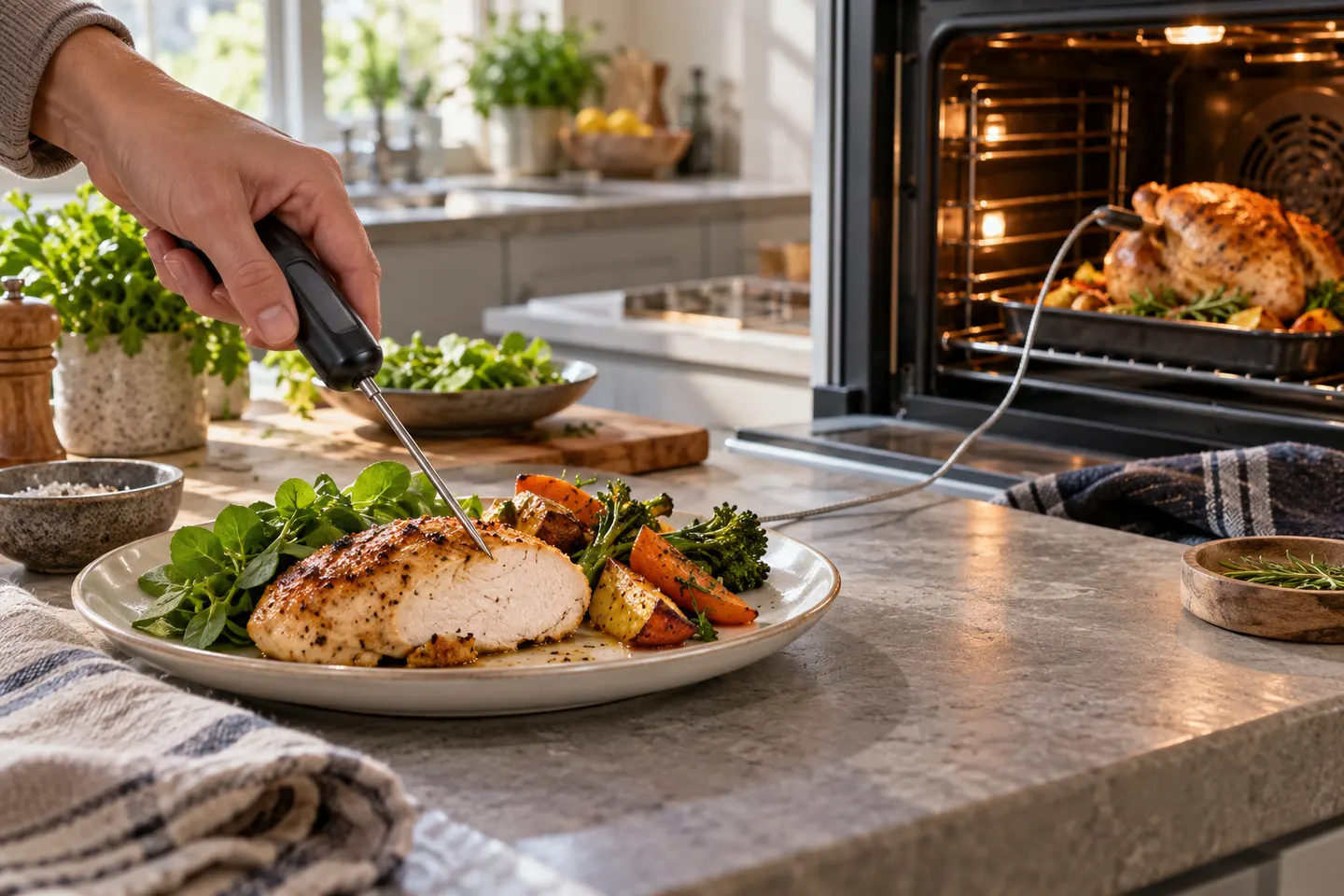 Food Temperature Thermometers and Safe Cooking…
Common questions
Questions before you buy
What thermometer can I use for cooking oil?
Use a deep-fry or candy thermometer whose manufacturer specifies a range suitable for hot oil. Its probe and clip should keep the sensing area submerged but off the vessel.
Can a meat thermometer measure frying oil?
Only if its stated temperature range and construction are suitable. Many meat thermometers are intended for brief checks rather than continuous exposure to hot oil.
Where should the probe sit in a pot of oil?
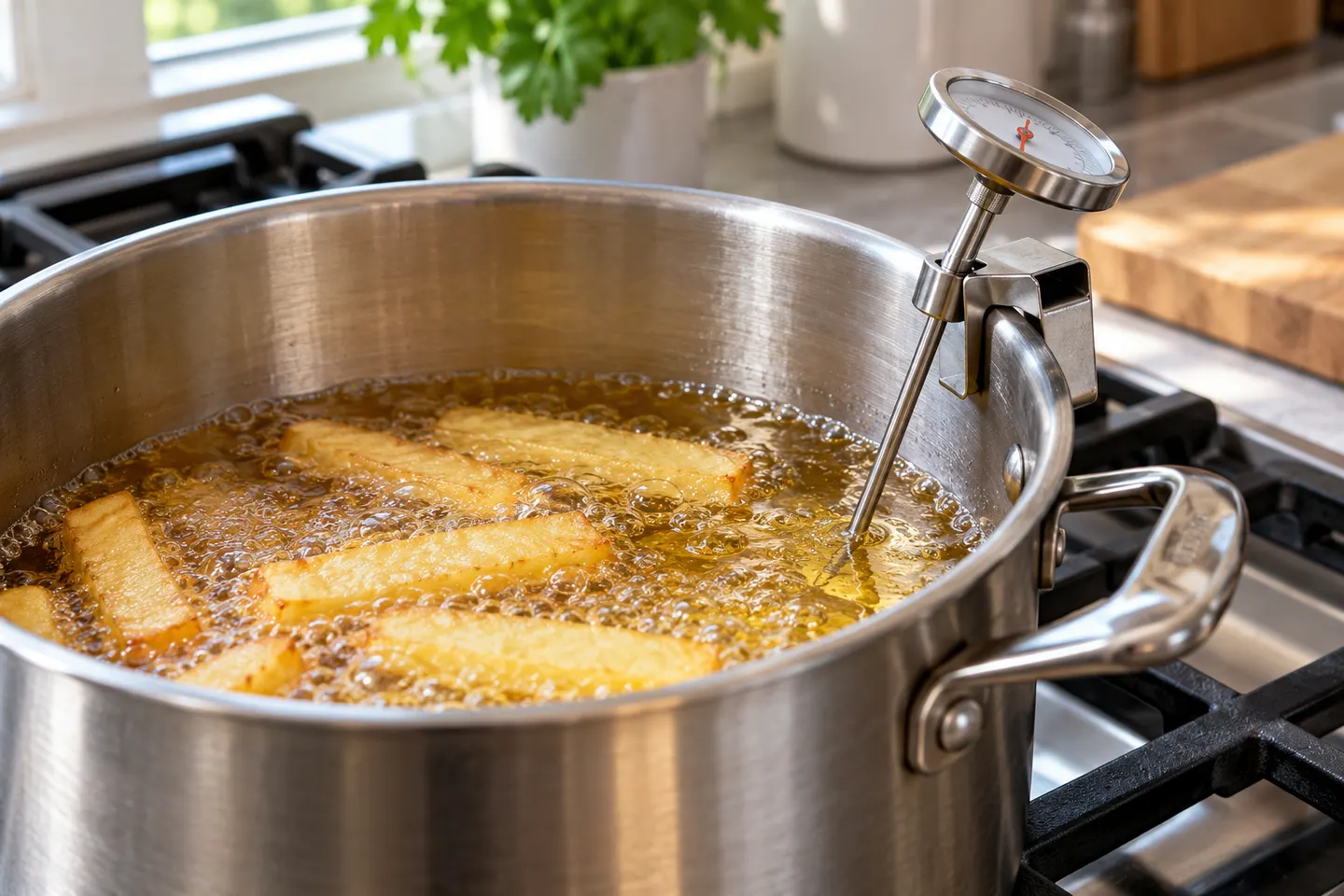
Keep the sensing area in the oil, away from the bottom and sides of the pot. Those metal surfaces can be hotter than the oil you intend to measure.
Is an infrared thermometer accurate for cooking oil?
It can estimate the surface temperature when used correctly, but reflections, emissivity, steam, and surface movement can affect the reading. A suitable immersed probe gives a more representative in-oil measurement.