Gearjury may earn a commission from qualifying retailer links. This does not affect our editorial coverage.
Guide
Is a Radar Detector Illegal in Illinois? What Drivers Should Know
For an ordinary passenger car, Illinois law does not make a passive radar detector illegal. Commercial motor vehicles face a specific restriction, and radar or laser jammers are a separate matter.
GGearjury editorial team · Updated October 15, 2026· 4 min
01
The short answer for passenger cars
Illinois Vehicle Code section 12-714 prohibits operating a defined commercial motor vehicle while equipped with a device designed to detect police radar. Its text is limited to commercial motor vehicles, so it does not establish a general ban on passive detectors in private passenger cars. Check the vehicle's legal classification if it is used for work.
02
Commercial vehicles have a specific restriction
Section 12-714 covers commercial motor vehicles as defined by the Illinois Vehicle Code. It also describes a narrow exception for a detector that is switched off and secured in a locked opaque container or outside the passenger compartment. Drivers should confirm whether their vehicle falls within the statute before carrying or using equipment.
03
A detector is not a jammer
A detector receives radar signals; a jammer is designed to interfere with enforcement signals. Illinois section 12-613 separately prohibits operating a vehicle equipped with a radar or laser jamming device, subject to the statute's stated exception. Do not treat a detector's alerting features as permission to use signal-interference equipment.
04
Check the mounting and local rules
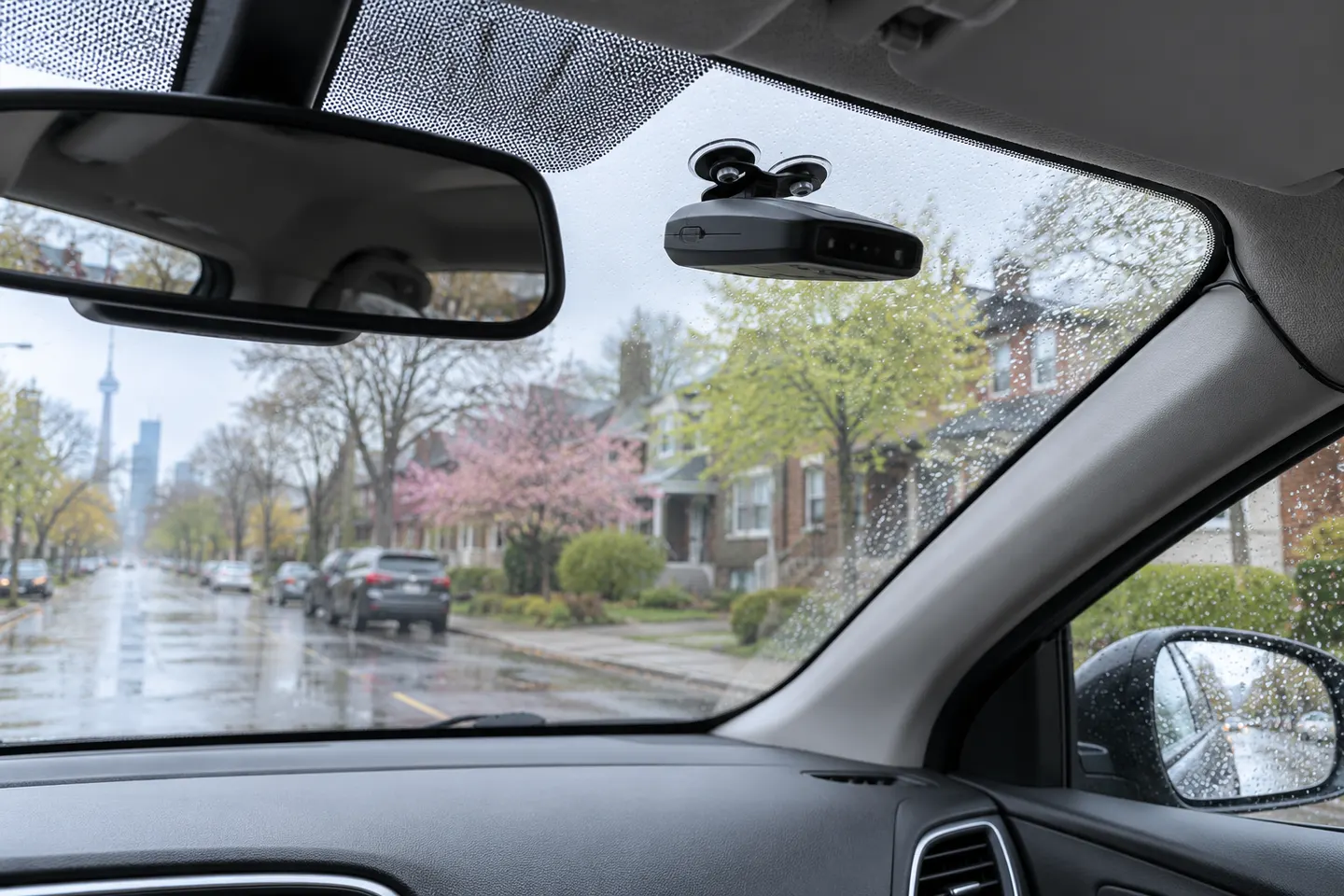
A passive detector's legal status does not settle every installation question. Keep the device from obstructing the driver's view, follow vehicle equipment requirements, and check the rules that apply to a commercial fleet or state-owned vehicle. Laws can change, so consult the current code for a decision about a particular vehicle.
05
What to verify before buying
If you drive a passenger car, compare detector features and mounting options for your vehicle. If the vehicle is commercial, first establish its statutory classification and ask the relevant authority or qualified counsel how section 12-714 applies. Separately verify that any chosen device detects signals rather than transmitting interference.
Common questions
Questions before you buy
Is a radar detector illegal in Illinois for a passenger car?
Illinois section 12-714 addresses radar detectors in commercial motor vehicles, rather than imposing a general prohibition on ordinary passenger cars. Review other applicable rules, including windshield and visibility requirements.
Is it illegal to use a radar detector in a commercial vehicle in Illinois?
Section 12-714 prohibits operating or controlling a defined commercial motor vehicle equipped with a radar-detecting device. The statute states a limited exception for a powered-off device stored in a locked opaque box or outside the passenger compartment.
Are radar jammers legal in Illinois?
Illinois section 12-613 prohibits operating a vehicle equipped with a device designed to interfere with police radar or laser speed monitoring, with a limited exception in the statute. A passive detector is a different type of device.
Does Illinois law ban radar detector apps?
The cited provisions address instruments installed or possessed in vehicles and jamming equipment; they do not specifically answer every question about a phone app. Do not assume an app or connected feature has a particular legal status without checking current law.
A radar detector can alert you to certain active radar signals, but capabilities and local rules vary. Start with the detector type, mounting and features you will actually use.
Escort’s Redline 360c lists a three-antenna design, while the MAX 360c MKII uses a dual-antenna platform. Compare the published features and check the exact generation before buying.
The Uniden R8 pairs dual low-noise amplifiers with front and rear directional awareness. Compare it with the R7 and R4 by the features documented for each model.
For a feature-rich directional unit, compare the Uniden R8 and Escort Redline 360c first. The R7, Cobra RAD 700i and Valentine One V1 Gen2 offer different alert and setup approaches.
Your privacy
We use cookies and similar technologies. Necessary ones keep the site working. With your permission we also use statistics cookies (Google Analytics and Microsoft Clarity) to understand which guides help readers. You can accept all, reject all or choose. You can change your choice at any time from "Cookie settings" at the bottom of every page. Cookie policy