









Dry climate and an open-air path
Gearjury may earn a commission from retailer links. Our guidance is based on cited sources.
Head to head
AIO vs Air Cooler: How to Tell Which Cooling System You Need
An AIO computer cooler and an evaporative air cooler serve different jobs. Check the product category first: one cools computer components, while the other moves room air across water.
If you meant an all-in-one computer liquid cooler, this page clarifies the terminology rather than comparing specific computer models. For room comfort, compare evaporative units with air conditioners by climate, moisture and ventilation.
The verdict
There is no direct winner because AIO computer coolers and room air coolers are built for different equipment and environments. Choose by the thing you need to cool.
Dry climate and an open-air path: All-in-one (AIO) liquid coolers are components for computers. An evaporative air cooler is a room appliance that cools moving air through water evaporation.
The Department of Energy says evaporative coolers work well when air is hot and humidity is low.
Cooling when humidity is high: If you meant an all-in-one computer liquid cooler, this page clarifies the terminology rather than comparing specific computer models. For room comfort, compare evaporative units with air conditioners by climate, moisture and ventilation.
The DOE describes air conditioning as an option for home cooling; evaporative cooling performance depends on dry air.
Lower equipment complexity: All-in-one (AIO) liquid coolers are components for computers. An evaporative air cooler is a room appliance that cools moving air through water evaporation.
A direct evaporative cooler uses water evaporation and airflow rather than the conventional refrigeration cycle.
Compare them side by side
| All-in-one (AIO) liquid coolers are components for computers. An evaporative air cooler is a room appliance that cools moving air through water evaporation. | If you meant an all-in-one computer liquid cooler, this page clarifies the terminology rather than comparing specific computer models. For room comfort, compare evaporative units with air conditioners by climate, moisture and ventilation. | |
|---|---|---|
| Cooling process | Water evaporates into moving air | Refrigeration cycle |
| Indoor humidity | Usually increases with direct systems | Can remove moisture while cooling |
| Climate fit | Best in hot, dry conditions | More suitable where humidity is high |
| Ventilation | Often needs open window or exhaust path | Follow installation and unit instructions |
| Water | Uses a water reservoir or supply | No evaporative water reservoir |
| Exact model data | — | — |
Common questions
Questions before you buy
Is an AIO cooler the same as an air cooler?
“AIO” is ambiguous in cooling searches and is often used for all-in-one computer liquid coolers. Confirm whether the listing refers to computer cooling hardware or a room air cooler before comparing.
Does an evaporative cooler lower room temperature?
It can lower the temperature of air passing through wet media, especially in dry conditions. The effect in a room depends on ventilation, humidity and the unit.
Does an evaporative cooler add humidity?
Direct evaporative coolers add moisture to the airflow. The EPA notes that they increase indoor relative humidity.
Which is better for a humid climate?
A conventional air conditioner is generally the more appropriate choice when moisture removal matters; evaporative cooling relies on evaporation and performs poorly in humid air.
Sources and how we chose
- U.S. Department of Energy, Home Cooling · 2026-10-22
- U.S. EPA, Evaporative Coolers · 2026-10-22
- U.S. EPA, Moisture Control · 2026-10-22
Keep exploring
Related guides
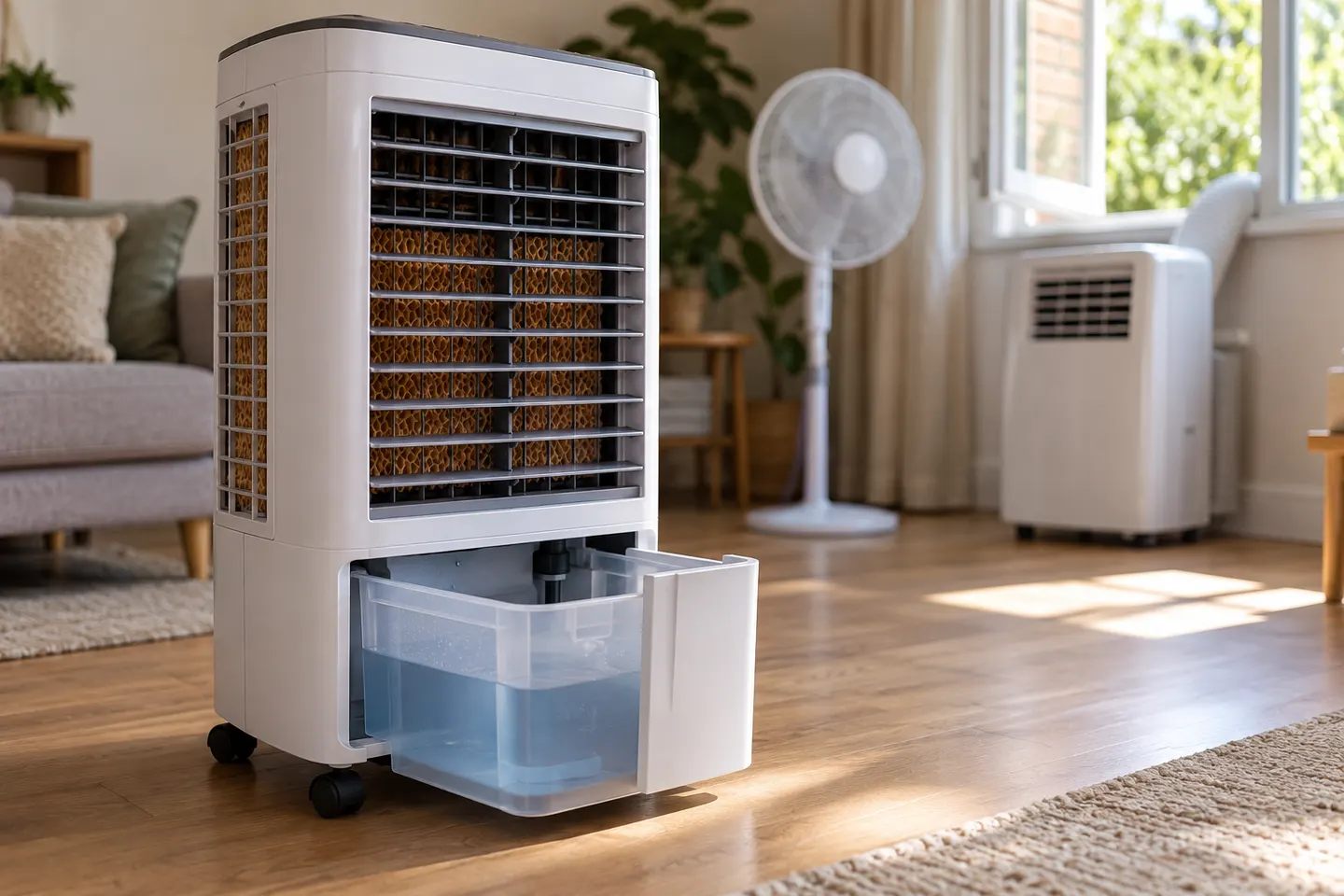
Portable Air Coolers: Compare Evaporative Cooling Options
A portable air cooler can mean a fan-based evaporative unit or a portable air conditioner. Start with your climate: evaporative models add moisture and suit dry conditions, while air conditioners actively remove heat from a room.
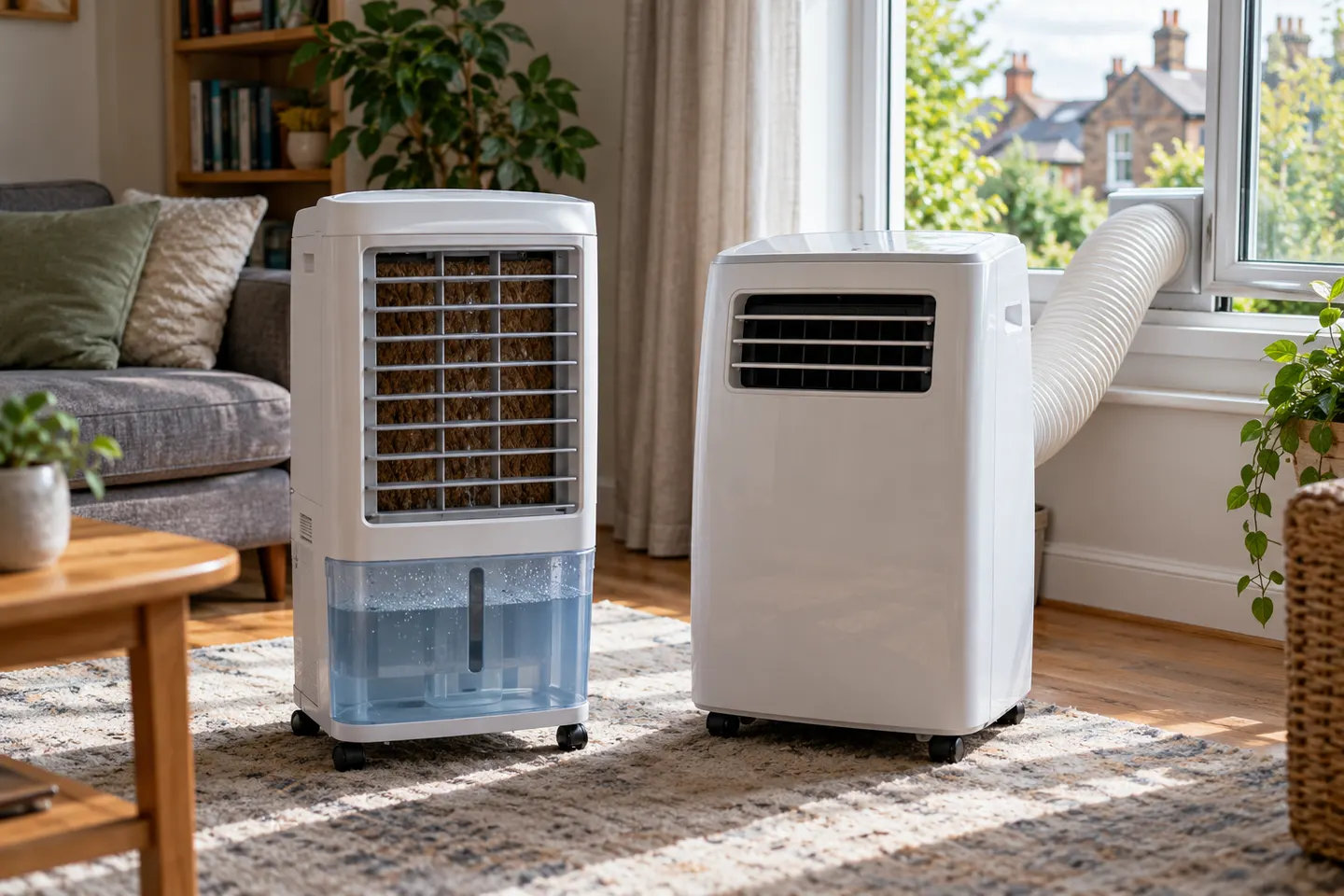
Portable Air Cooler or Air Conditioner: How to Choose
An evaporative cooler can make a nearby breeze feel cooler, but it is not a portable air conditioner. Climate and ventilation determine which option fits.
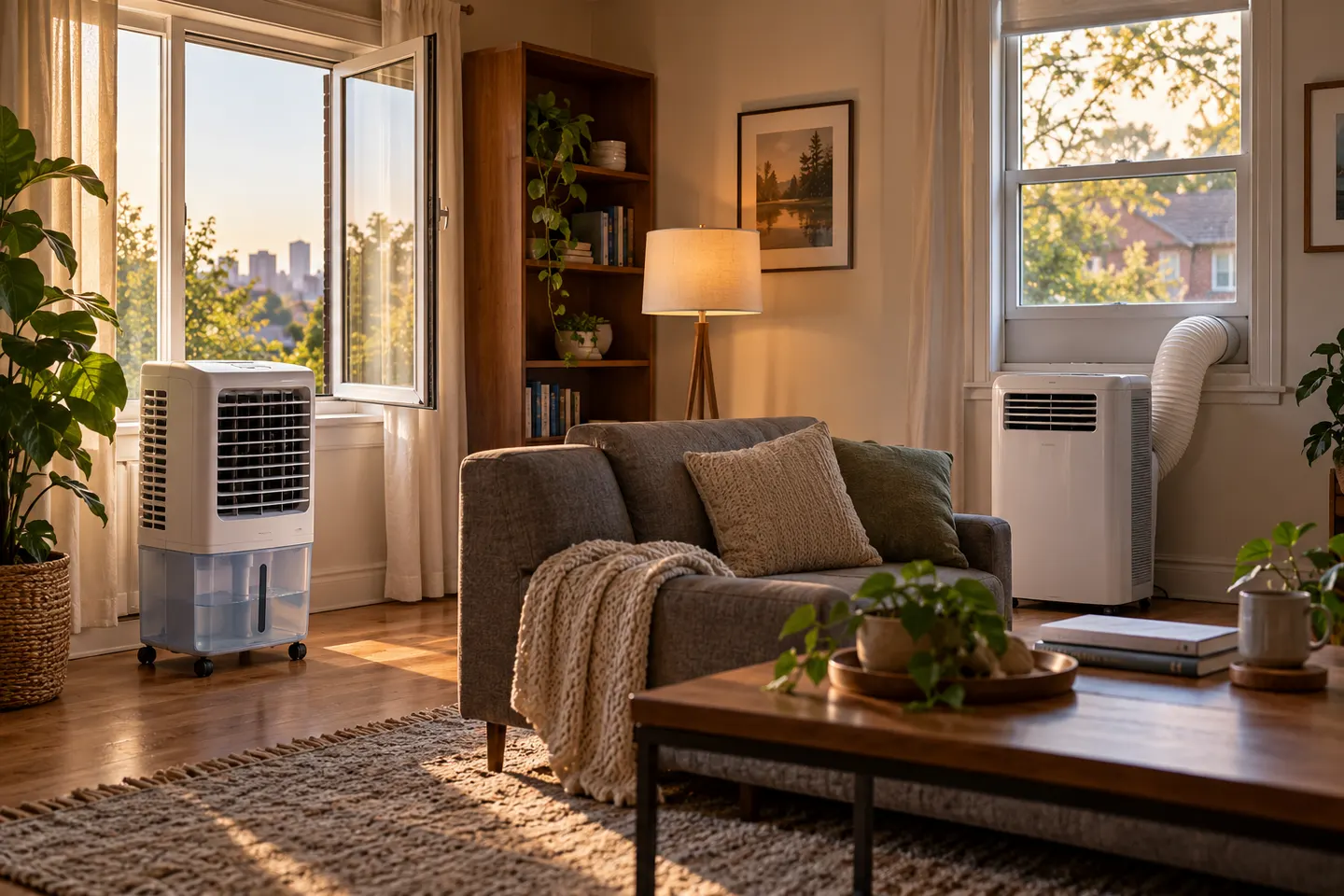
Portable Air Cooler Air Conditioning: Choosing the Right Type
Evaporative coolers circulate air through wet media; portable air conditioners move heat through an exhaust hose. The better choice depends on humidity and room setup.
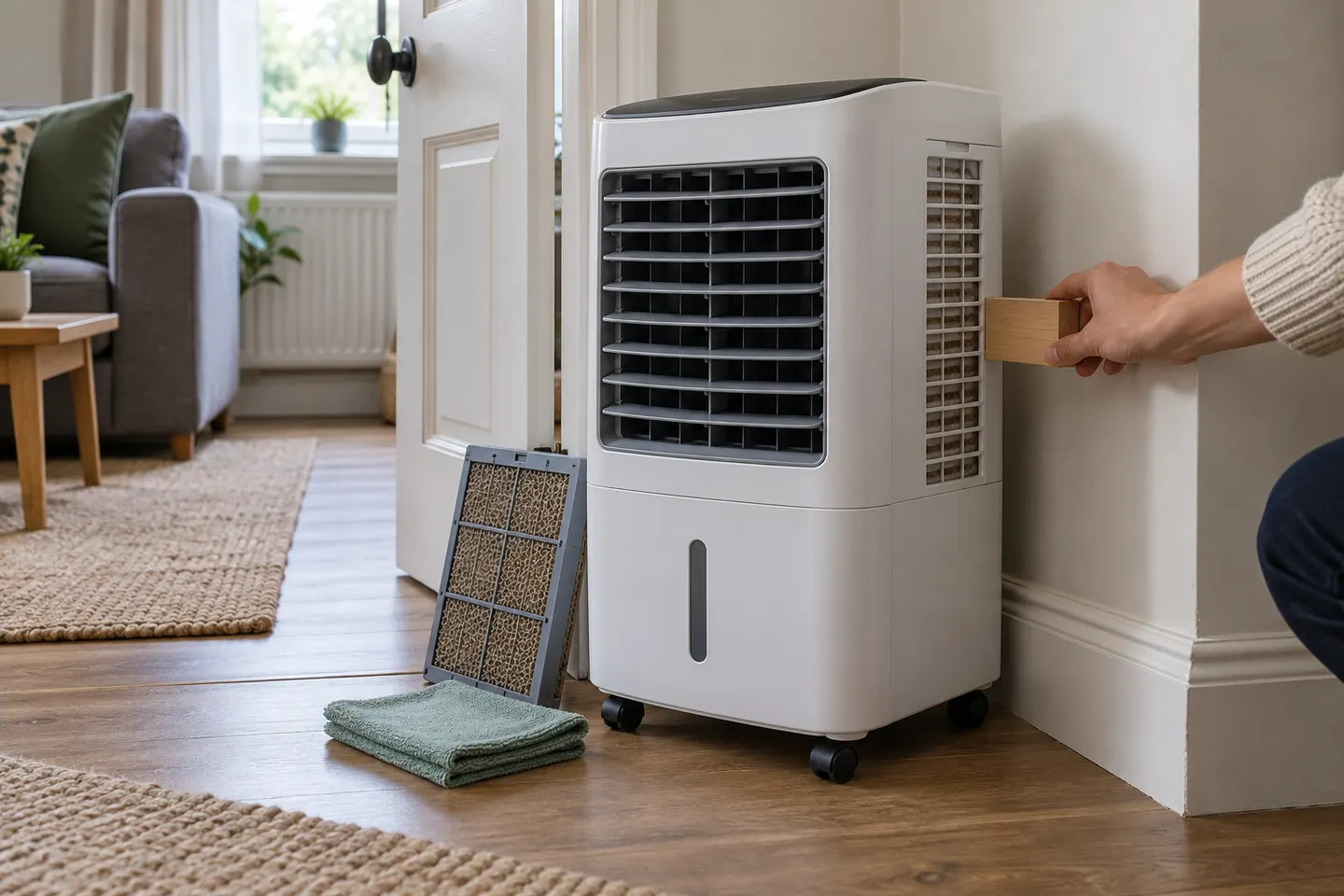
Portable Air Cooler Units for Spot and Room Cooling
Match an evaporative cooler’s airflow and water capacity to the area you occupy. These units move air and add moisture; they do not replace a refrigeration AC.