Gearjury may earn a commission from qualifying purchases made through retailer links.
Guide
How to Use an Air Cooler with Water Safely
Use clean water and the model’s marked fill level; exact steps vary, so follow the unit’s manual.
GGearjury editorial team · Updated October 18, 2026· 4 min
01
How to put water in an evaporative air cooler
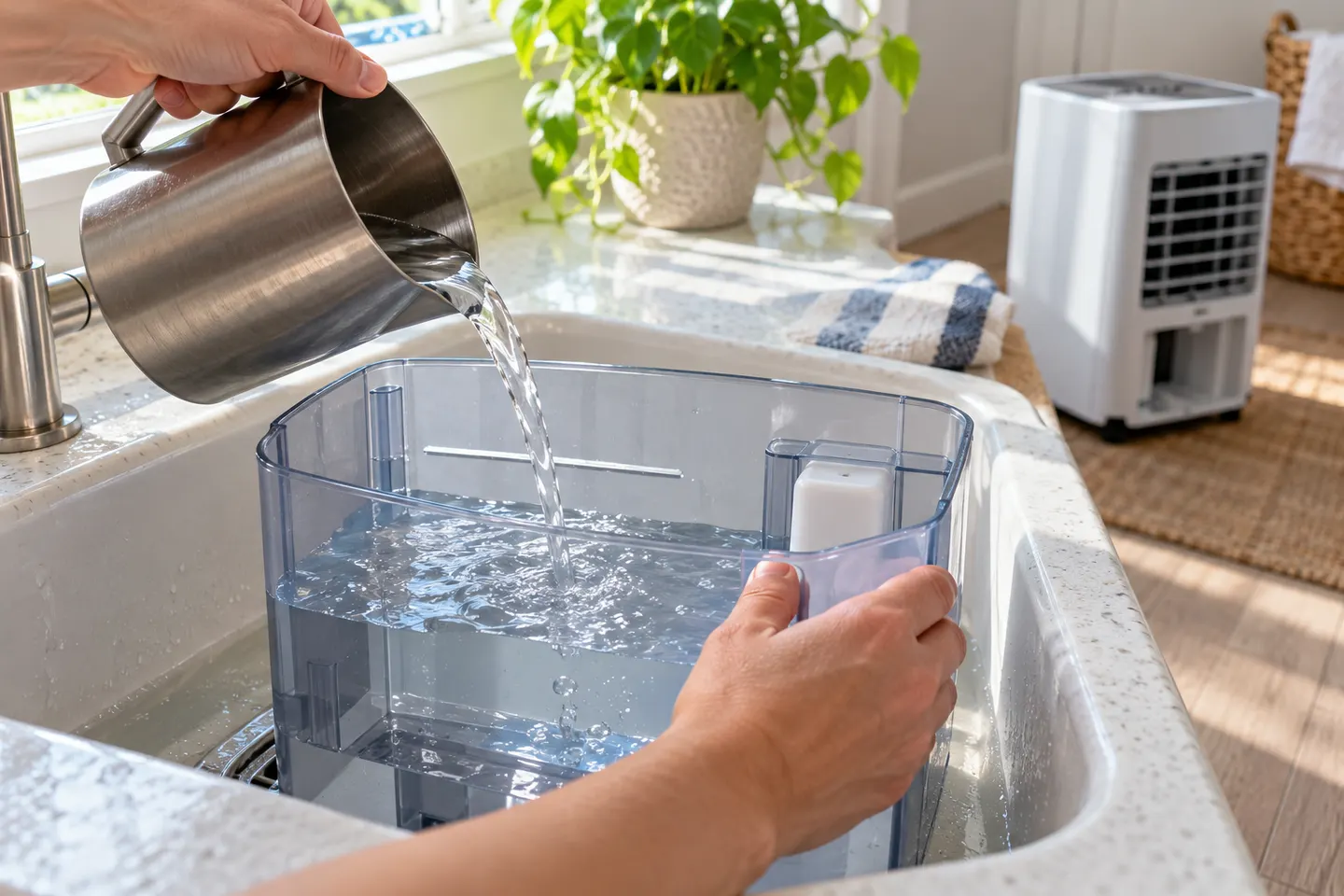
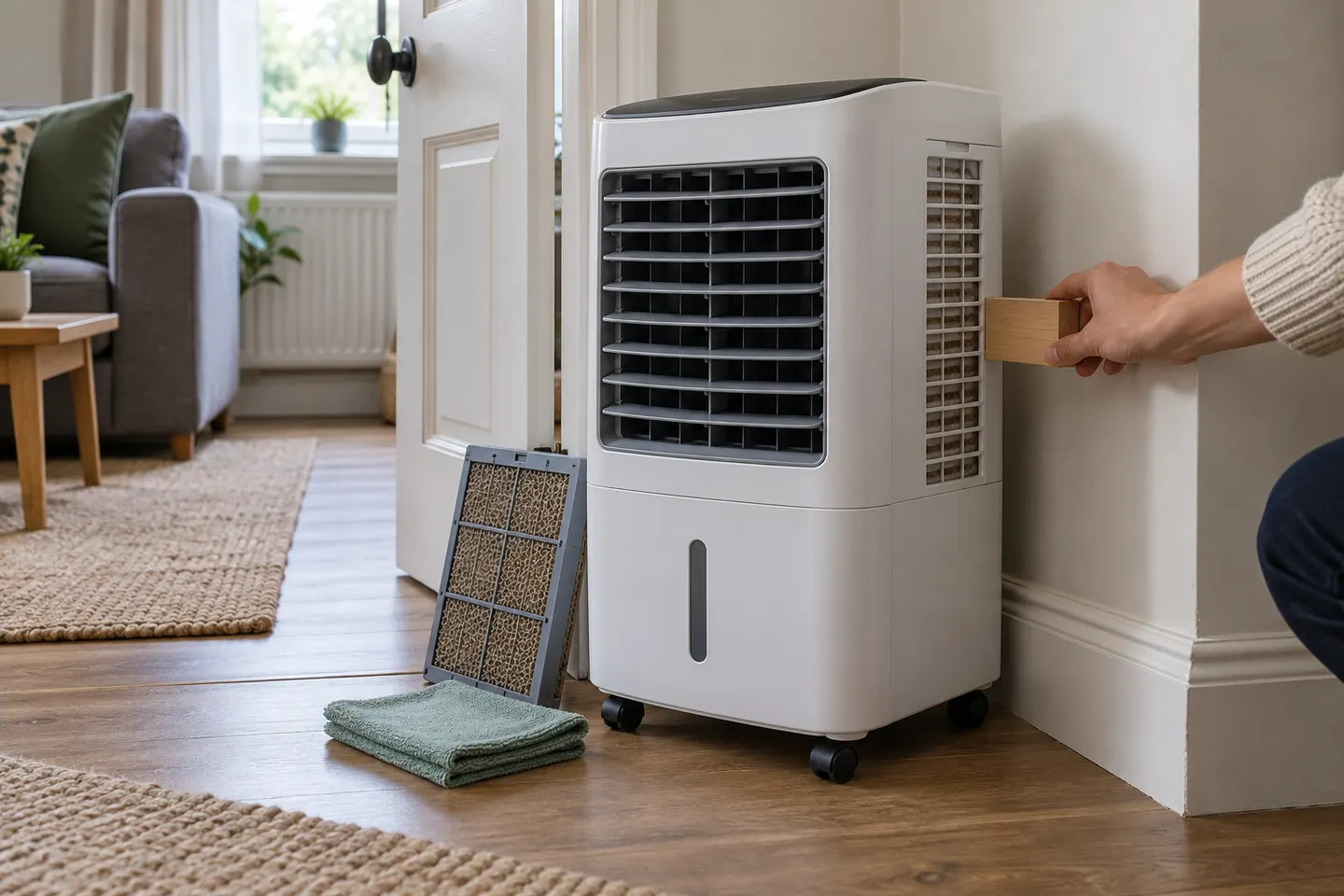
Switch the unit off and unplug it if the manual directs. Open the designated fill point, add clean water up to the marked maximum, and close the cap or tank securely. Never pour water into the fan outlet or electrical controls.
02
Use the right water level
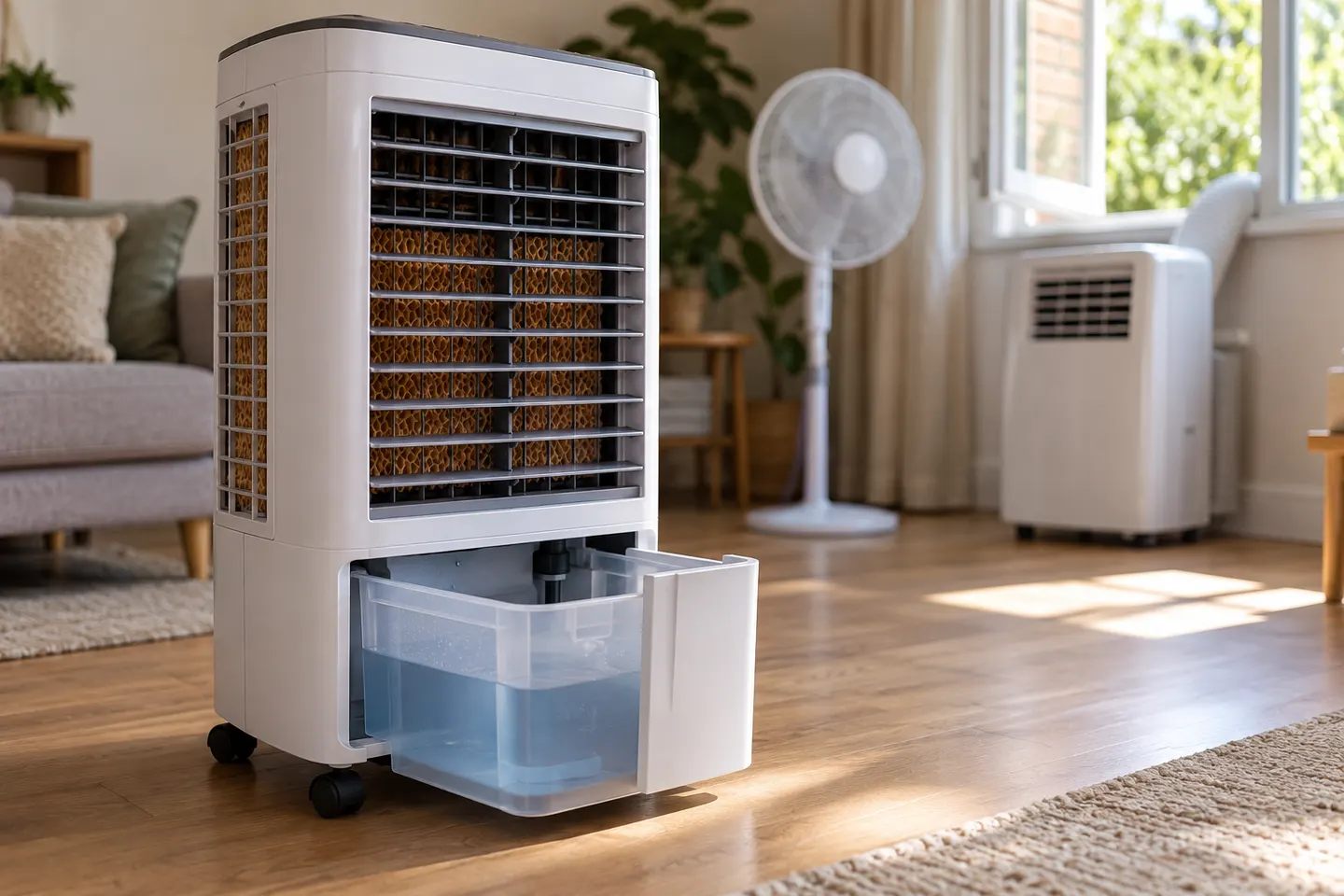
Do not exceed the maximum line or run a pump dry if the manufacturer warns against it. Some models have removable reservoirs; others use a fixed tank or hose connection. Follow model-specific instructions.
03
Start the cooler after filling
With the tank correctly seated, reconnect power and select the operating mode described in the manual. Allow the cooling media to become wet if the model requires it, then check for leaks and clear airflow.
04
Refill and clean regularly
Check the water level during use and drain or clean the tank at the intervals in the manual. Standing water and mineral deposits affect maintenance, so use the maker’s recommended cleaning method and avoid unapproved additives.
05
Ventilate the room
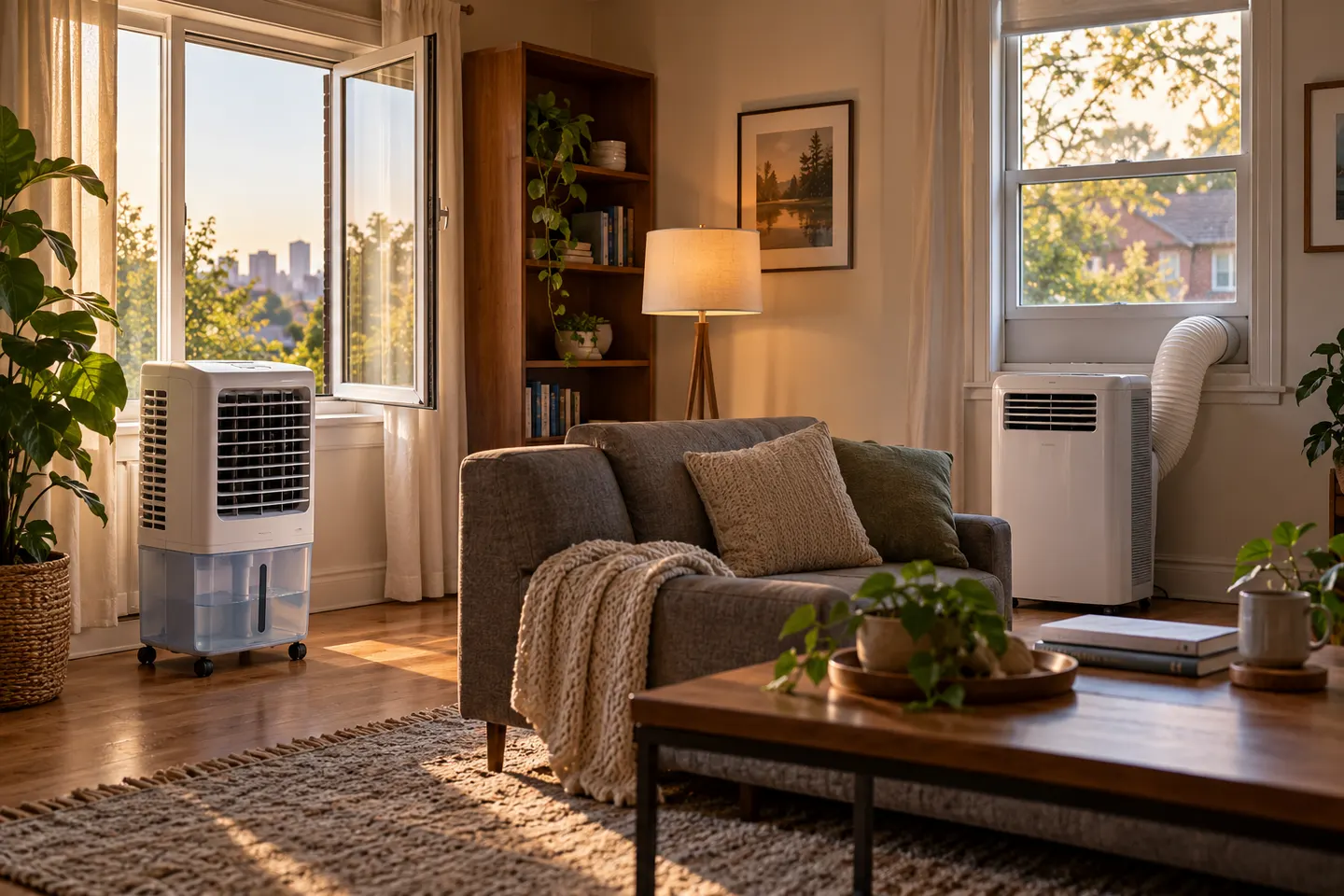
Water-based evaporative cooling adds moisture to indoor air. Provide the ventilation recommended by the manufacturer; if the room becomes damp or the air is already humid, stop adding moisture and reassess the cooling method.
Common questions
Questions before you buy
how to put water in evaporative air cooler
Use the designated fill opening or removable tank, add clean water only to the marked maximum, then secure the cap or tank. Follow your model manual.
Can I use tap water in an air cooler?
Check the manufacturer’s instructions. Water hardness can affect mineral buildup and cleaning frequency.
Should I add ice to the water tank?
Only if the manufacturer permits it. Ice is not required for evaporative operation.
Should water stay in the cooler when it is not in use?
Follow the manual’s draining and storage directions; many makers recommend emptying and drying the tank before extended storage.
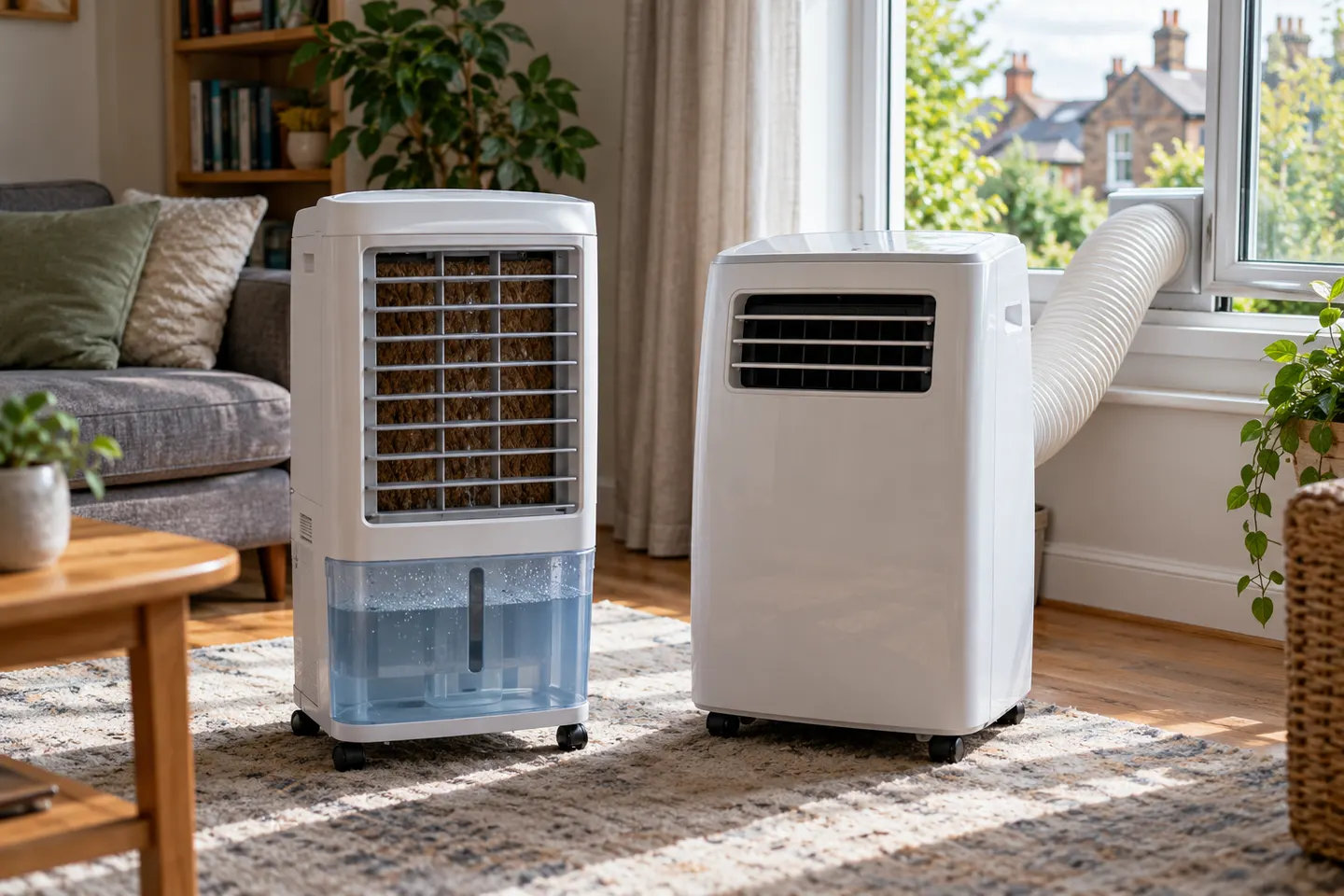
A portable air cooler can mean a fan-based evaporative unit or a portable air conditioner. Start with your climate: evaporative models add moisture and suit dry conditions, while air conditioners actively remove heat from a room.
An evaporative cooler can make a nearby breeze feel cooler, but it is not a portable air conditioner. Climate and ventilation determine which option fits.
Evaporative coolers circulate air through wet media; portable air conditioners move heat through an exhaust hose. The better choice depends on humidity and room setup.
Match an evaporative cooler’s airflow and water capacity to the area you occupy. These units move air and add moisture; they do not replace a refrigeration AC.
Your privacy
We use cookies and similar technologies. Necessary ones keep the site working. With your permission we also use statistics cookies (Google Analytics and Microsoft Clarity) to understand which guides help readers. You can accept all, reject all or choose. You can change your choice at any time from "Cookie settings" at the bottom of every page. Cookie policy