How to put water in an evaporative air cooler
Switch the unit off and unplug it first. Open or remove the tank only as the manual directs, then add clean water to the marked fill range; never exceed the maximum line. Refit the tank fully before use.

 Best picksBest WiFi Extenders in the UK: Compare Five Practical Options
 Best picksThe Best Dashcams in the UK for 2026
 Best picksBest Portable Air Coolers: Five Models to Compare for 2026
 Best picksBest Meat Thermometers in the UK for 2026
 Best picksBest Headlamp Torches in the UK: Five Choices for 2026
 Best picksBest Winter Gloves in the UK: Five Activity-Based Choices for 2026
 Best picksBest Radar Detectors in the UK: Models Compared for 2026
 Best picksBest Value Cordless Strimmers in the UK (2026)
 Best picksBest Air Purifiers in the UK for Different Rooms and Needs
Gearjury may earn a commission from qualifying retailer links. This does not affect our editorial guidance.
Guide
Fill the reservoir to the maker’s marked level, seat it securely and select evaporative cooling. Leave a route for moist air to escape, and follow the model’s own manual.
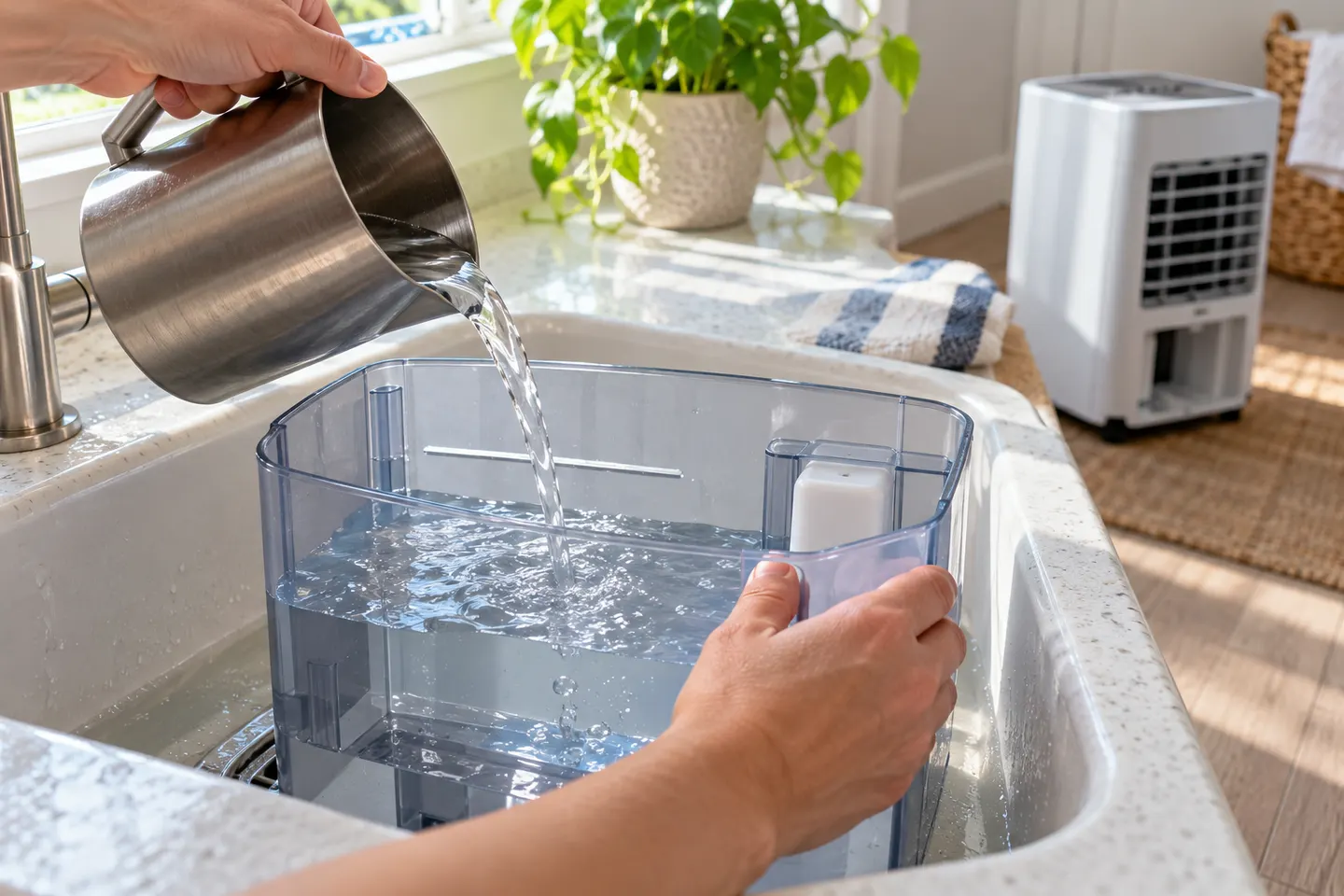
Switch the unit off and unplug it first. Open or remove the tank only as the manual directs, then add clean water to the marked fill range; never exceed the maximum line. Refit the tank fully before use.
Select the cooling or evaporative mode only when the reservoir contains enough water for that model. The fan-only setting moves air without relying on a wet cooling pad. Controls and minimum fill marks vary, so use the instructions supplied with your unit.
Evaporation adds moisture to the air. Keep the room ventilated and avoid treating a portable cooler as a sealed-room air conditioner; a suitable opening can let warm, humid air leave. Damp or already humid conditions can make evaporative cooling less suitable.
Place the cooler on a stable, level surface with its intake and outlet clear. Direct the airflow towards the occupied area without placing the appliance where splashes, curtains or furniture can obstruct it.
Follow the maker’s cleaning schedule and method. Disconnect power before cleaning, drain stale water as directed, and let parts dry before storage. Do not add fragrances, chemicals or ice unless the manual explicitly allows them.
Confirm that the water level is within the marked range, the cooling mode is selected, and the pad and air path are clean and unobstructed. Room humidity, ventilation and the appliance’s design all affect the result; adding more water beyond the fill mark will not solve poor airflow.
Common questions
Turn it off and unplug it, open the reservoir as the manual specifies, and fill with clean water to the marked range. Refit the tank before plugging the unit back in.
Only if the manufacturer’s manual permits it and explains where it goes. Some models provide a separate ice compartment; ice should not be placed in an ordinary tank by assumption.
Evaporative coolers add moisture, so ventilation helps humid air leave the room. Follow the maker’s advice for placement and airflow in your specific space.
Many models can operate in fan-only mode with an empty tank, but evaporative cooling depends on water. Check the manual and select fan mode if the reservoir is empty.
Keep exploring
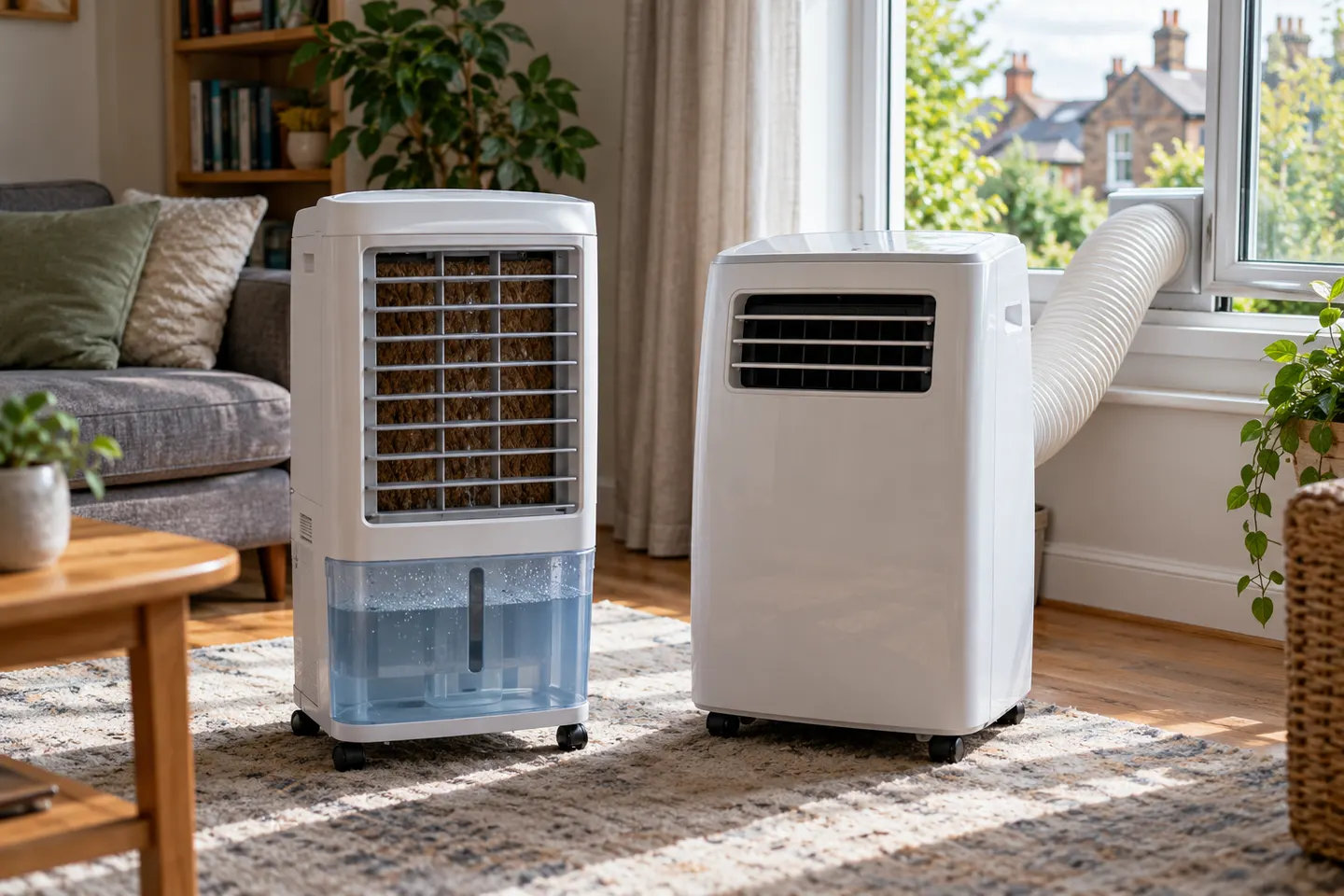
A portable air cooler is not automatically an air conditioner. Check whether the appliance evaporates water, simply moves air or uses a refrigeration system.
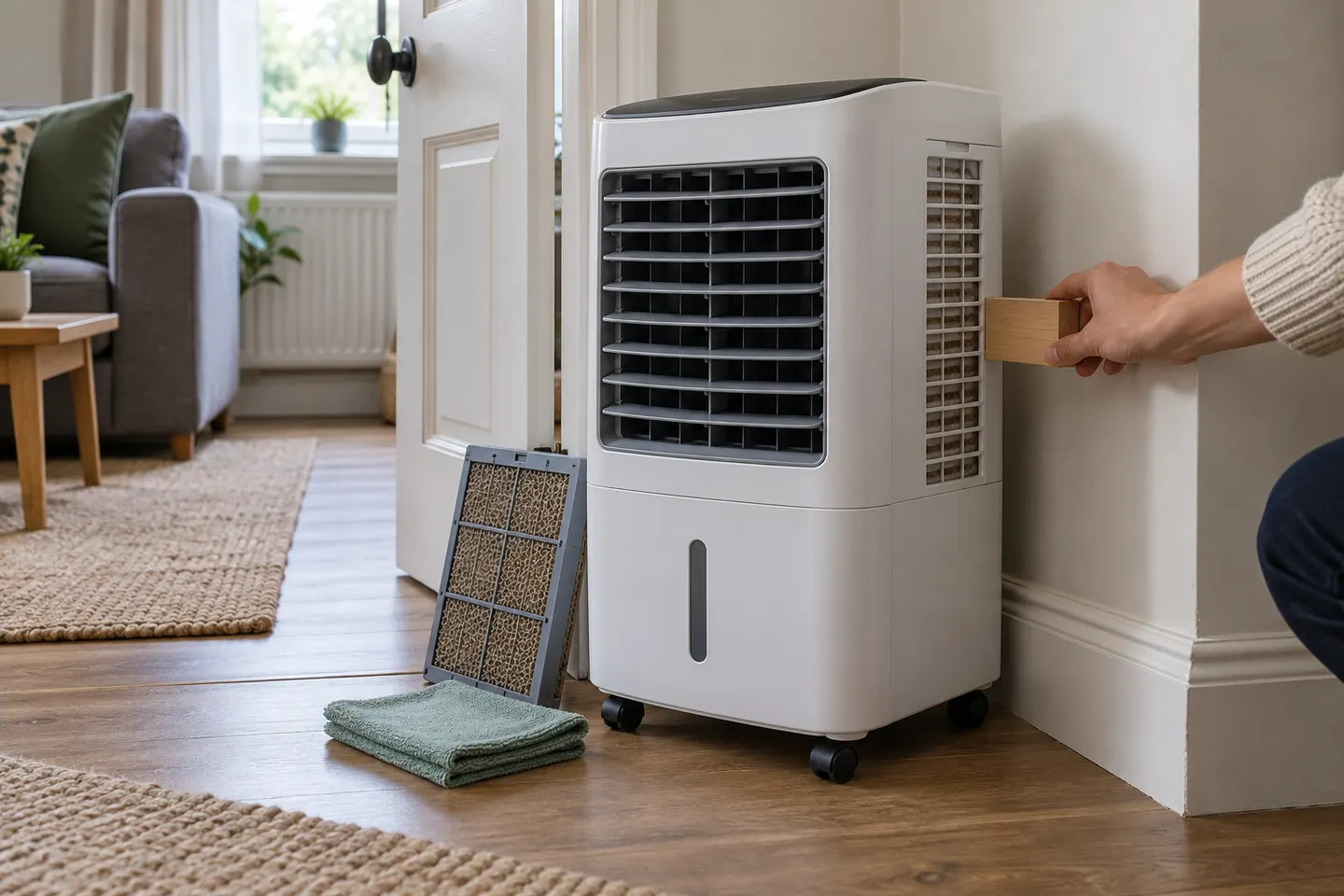
A portable air cooler unit must be practical to live with. Measure its position, plan water access and read the cleaning routine before focusing on extra modes.
The best portable air cooler is one that suits the room's humidity and ventilation. Compare these real evaporative models only after confirming that this cooling method meets your needs.
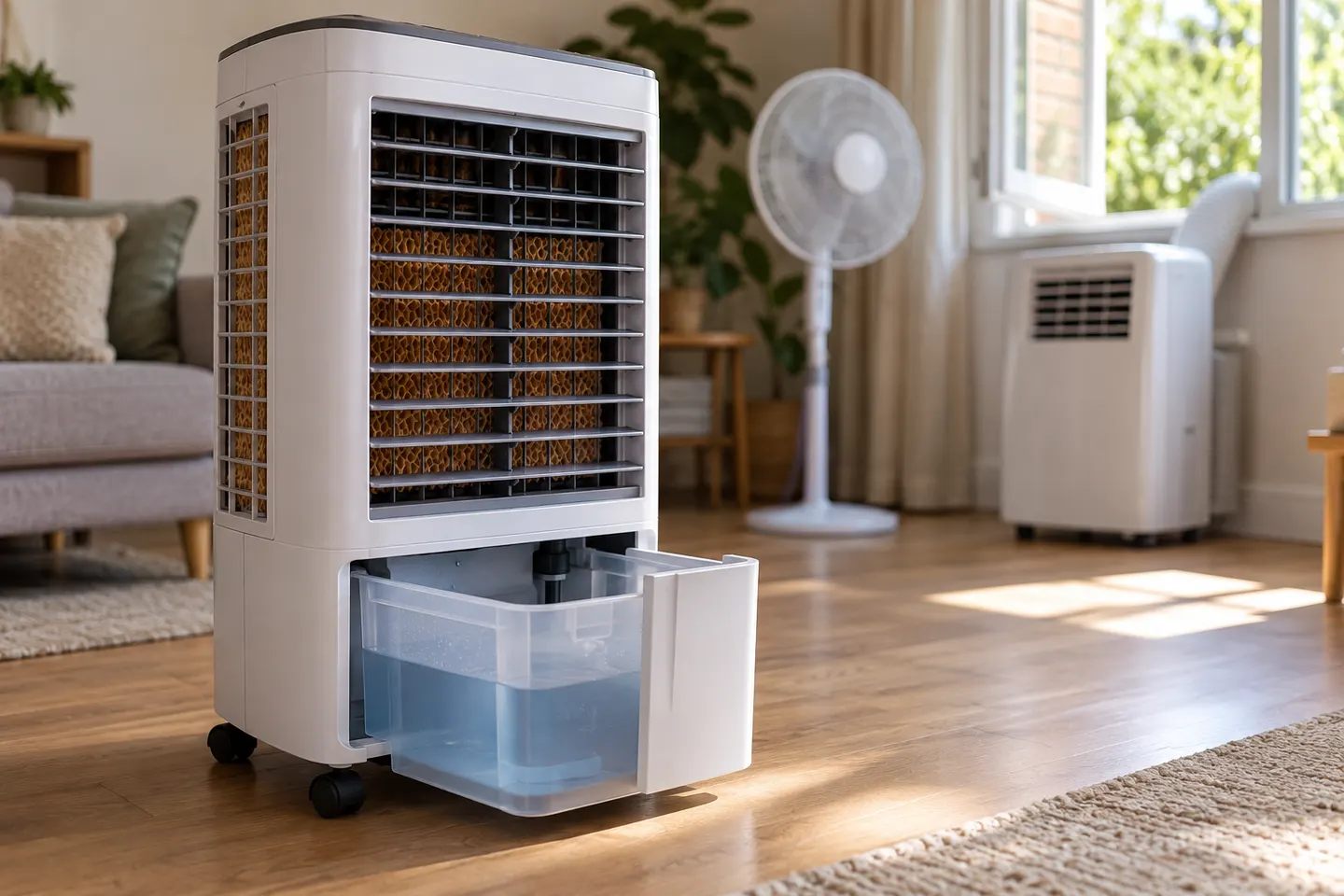
A portable air cooler can mean an evaporative unit, a fan or a portable air conditioner in shopping results. Identify the cooling method before choosing a model.