Gearjury may earn a commission from qualifying purchases made through retailer links.
Guide
What Is a Charge Air Cooler and What Does It Do?
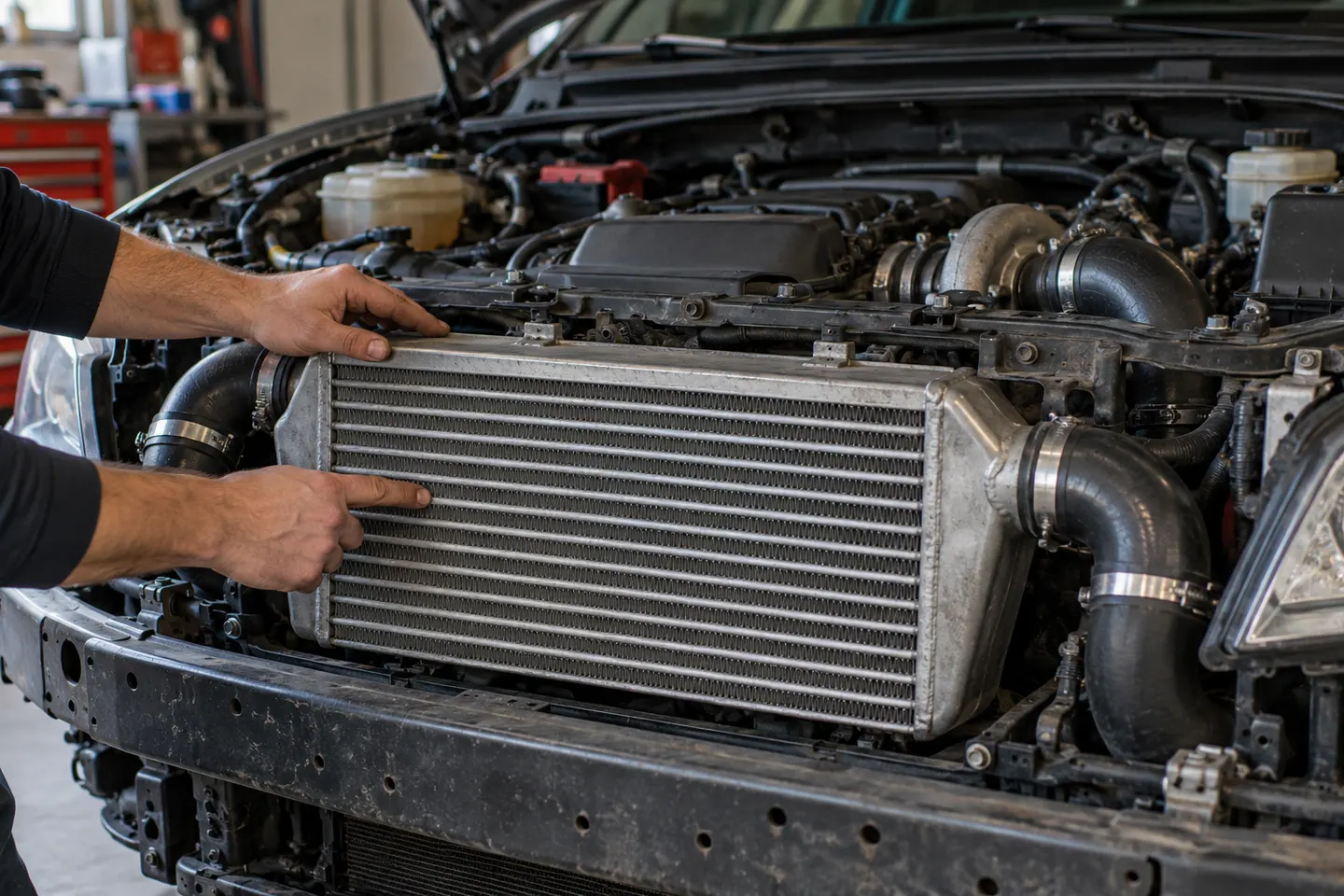
A charge air cooler removes heat from compressed intake air, commonly in a turbocharged engine. It is an automotive heat exchanger, not a room air cooler.
GGearjury editorial team · Updated October 18, 2026· 5 min
01
What is a charge air cooler?
A charge air cooler is a heat exchanger in an engine’s intake path. It cools air heated during compression by a turbocharger or supercharger before that air reaches the engine. Garrett Motion also uses intercooler as a common name for this component.
02
Why cool compressed intake air?
Compression raises air temperature. Cooling the charge makes it denser under comparable conditions, supporting the engine’s intake process. The component is part of a complete system; its effect depends on the engine, airflow and installation.
03
How does an air-to-air cooler work?
In a typical air-to-air design, hot charge air passes through internal tubes while outside air flows across the core and its fins. Heat transfers to the outside stream. Other vehicle designs use liquid as the secondary cooling medium.
04
Where is it fitted?
A front-mounted air-to-air intercooler is often placed where it receives vehicle airflow, but packaging varies. Follow vehicle-specific service information to identify the correct component and routing.
05
What symptoms deserve inspection?
A damaged core, loose connection or leak can affect the intake system. Symptoms such as unusual loss of power or warning lights have many possible causes; diagnosis should use the vehicle’s service procedure rather than assumption.
06
Our methodology
This explanation is based on published technical material from manufacturers and public sources. We have not physically tested components or diagnosed a vehicle.
Common questions
Questions before you buy
Is a charge air cooler the same as an intercooler?
The terms are often used for the heat exchanger that cools compressed intake air. Exact terminology can vary by manufacturer and system design.
Does every turbocharged car have a charge air cooler?
Many turbocharged engines use one, but arrangements differ. Consult the vehicle’s specifications or service documentation for the fitted system.
Is a charge air cooler the same as a radiator?
Both transfer heat, but they serve different circuits and fluids. A charge air cooler handles intake charge air; the engine radiator dissipates heat from engine coolant.
Can a charge air cooler be repaired if it leaks?
Repair options depend on the core, material, vehicle and fault. Use vehicle-specific diagnosis and have a qualified repairer assess whether repair or replacement is appropriate.
A portable air cooler can mean a fan-based evaporative unit or a portable air conditioner. Start with your climate: evaporative models add moisture and suit dry conditions, while air conditioners actively remove heat from a room.
Match an evaporative cooler’s airflow and water capacity to the area you occupy. These units move air and add moisture; they do not replace a refrigeration AC.
In automotive listings, a charging air cooler usually refers to a charge air cooler that cools compressed engine intake air. Confirm vehicle fitment and design before comparing parts.
An evaporative cooler can make a nearby breeze feel cooler, but it is not a portable air conditioner. Climate and ventilation determine which option fits.
Your privacy
We use cookies and similar technologies. Necessary ones keep the site working. With your permission we also use statistics cookies (Google Analytics and Microsoft Clarity) to understand which guides help readers. You can accept all, reject all or choose. You can change your choice at any time from "Cookie settings" at the bottom of every page. Cookie policy