









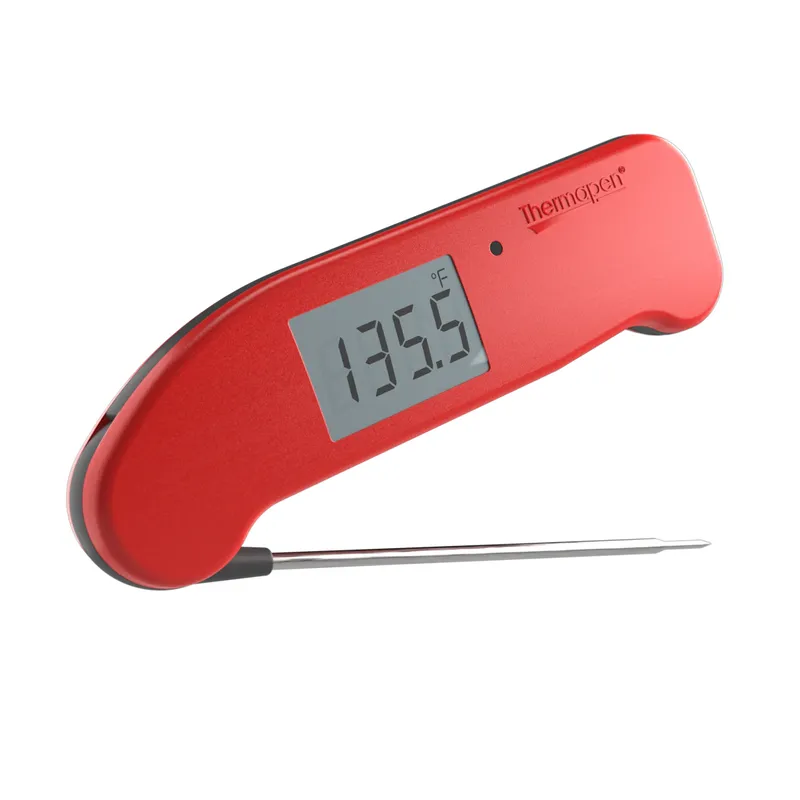
 Official manufacturer image
Our picks
Top picks
Official manufacturer image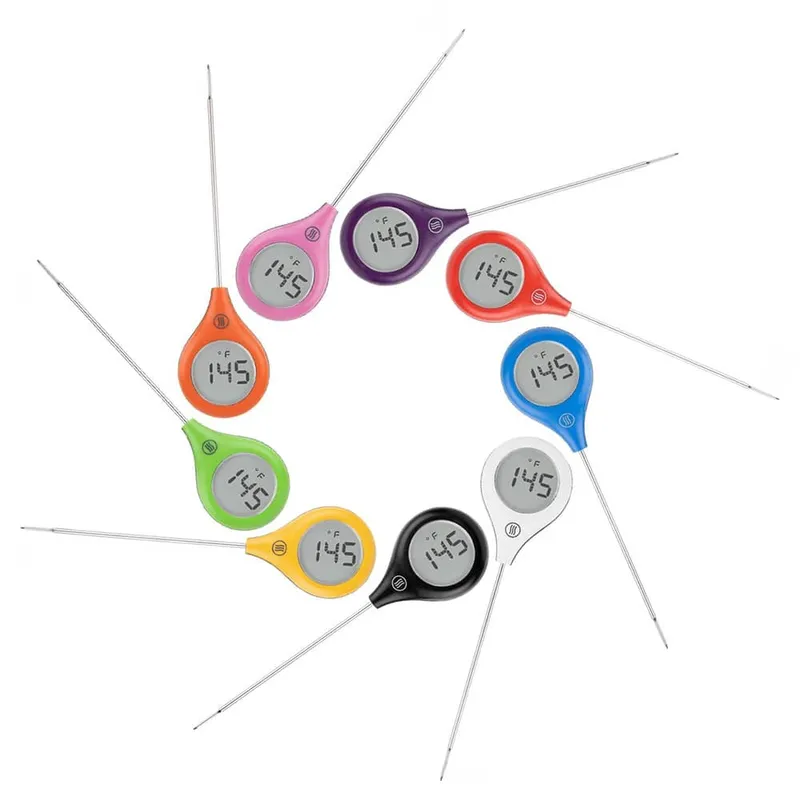 Official manufacturer image
ThermoWorks ThermoPop 2
Check price on Amazon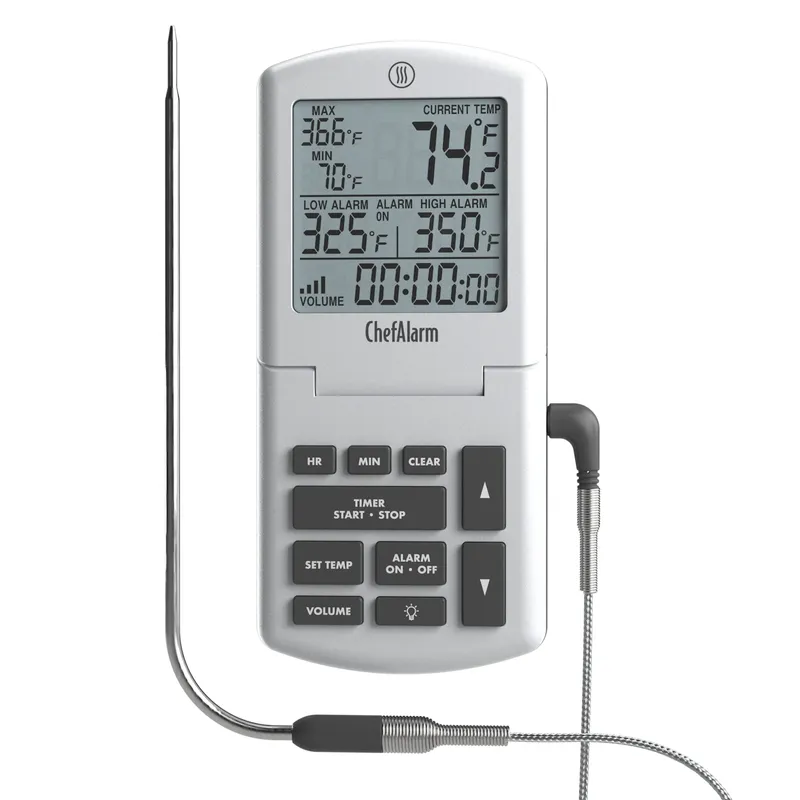 Official manufacturer image
ThermoWorks ChefAlarm
Check price on AmazonCommon questions
Questions before you buy
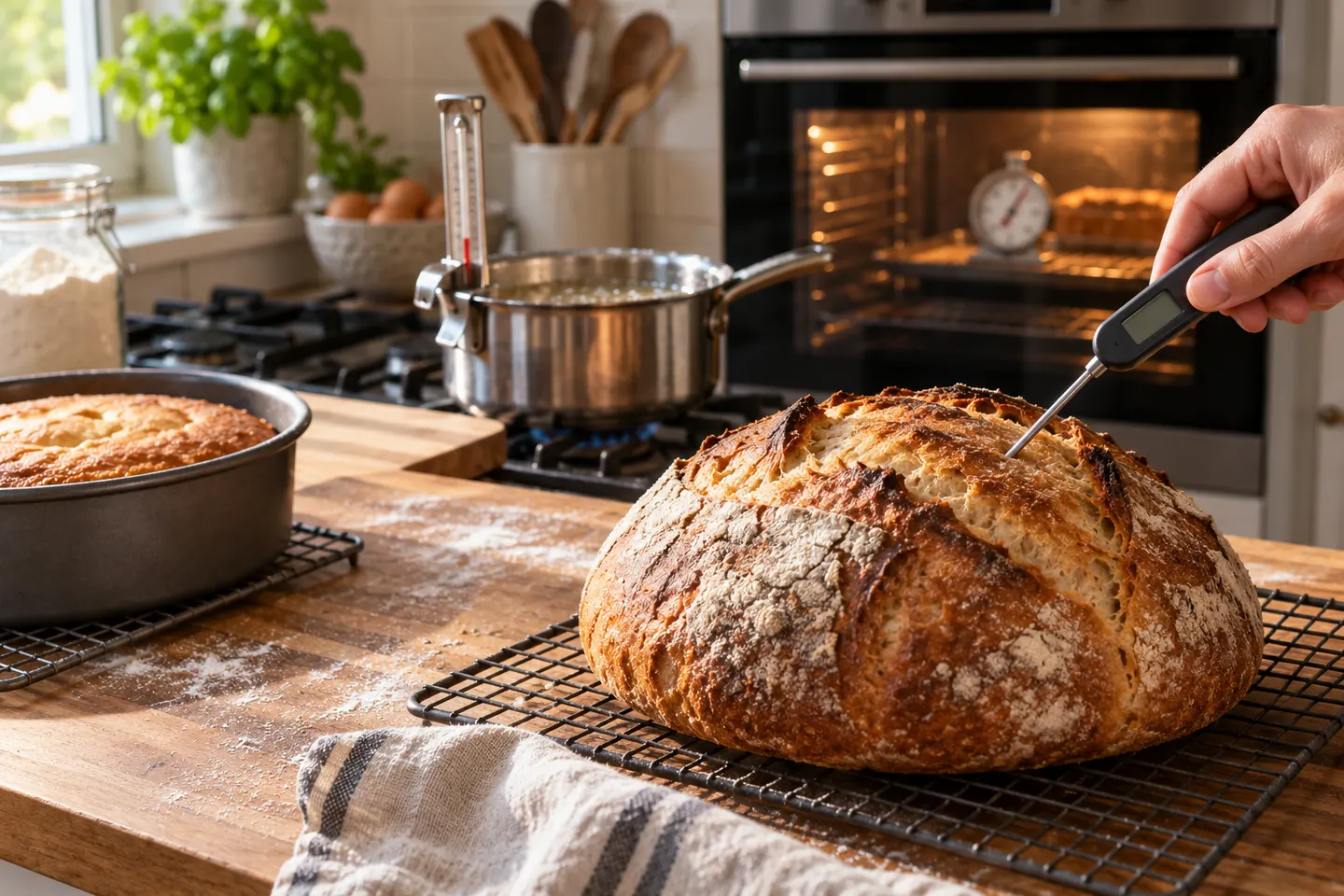
What thermometer is best for baking bread?
A fast instant-read probe is versatile for checking the center near the end of baking. A leave-in probe is useful when the product can hold it securely without affecting shape.
Can a meat thermometer be used for baking?
Yes, when its range and probe geometry suit the recipe. It can check foods internally but does not replace a cavity thermometer for oven-air accuracy.
Which thermometer works for candy and baking?
Choose a model whose published range reaches the candy stage you use and whose probe can be held safely in a pan. A clip-on design is easier for continuous sugar monitoring.
Do I need a separate oven thermometer?
Use one if you need to investigate oven-air temperature. A food probe reports the item it touches, not the entire oven cavity.