









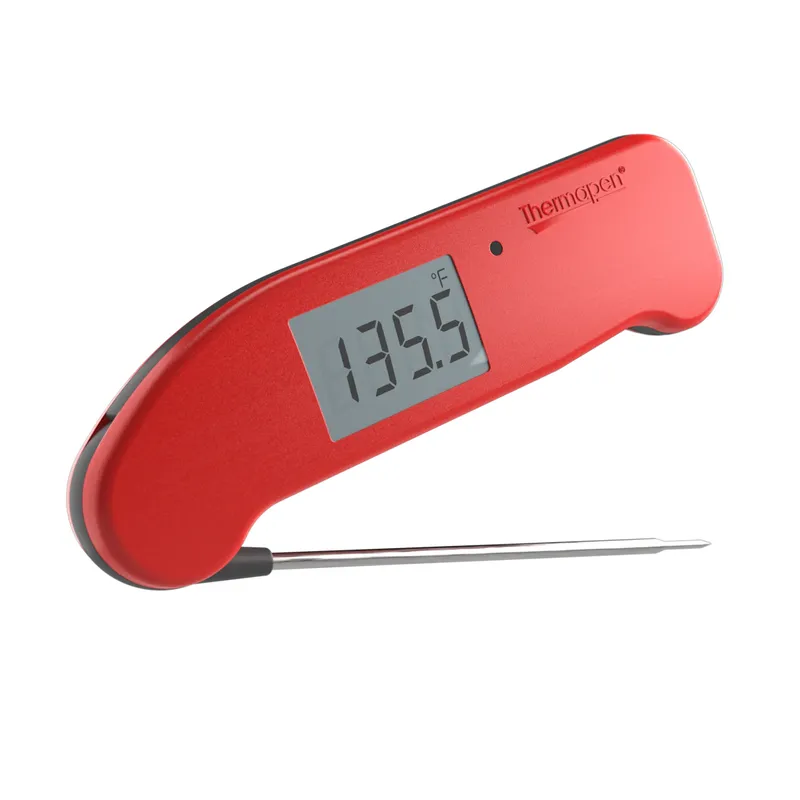
 Official manufacturer image
Our picks
Top picks
Official manufacturer image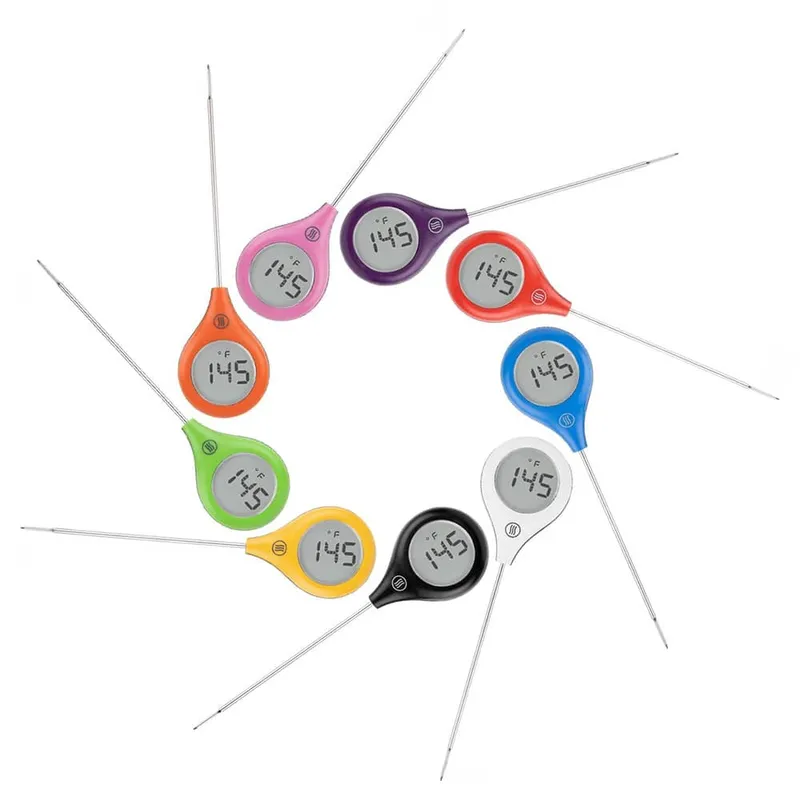 Official manufacturer image
ThermoWorks ThermoPop 2
Check price on Amazon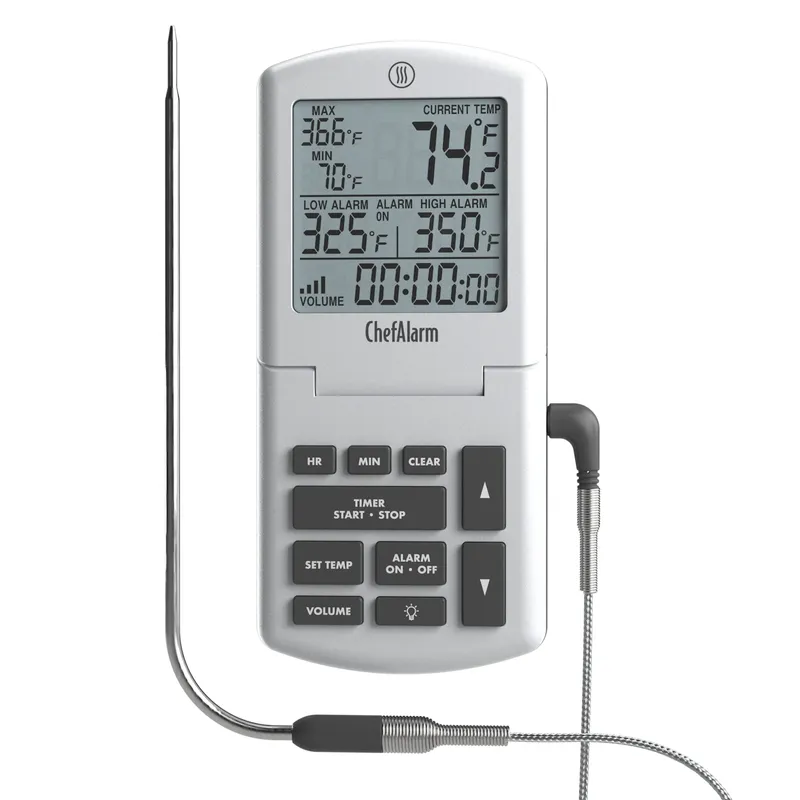 Official manufacturer image
ThermoWorks ChefAlarm
Check price on AmazonCommon questions
Questions before you buy
Can the ThermoWorks DOT go inside the oven?
The official product design keeps the base outside while the compatible probe and approved cable enter the oven. Follow the current ThermoWorks instructions and temperature limits.
Does the DOT thermometer have a remote receiver?
DOT is positioned as a simple local alarm thermometer. If you need alerts in another room, compare a model designed with a remote receiver or network connection.
Can the DOT monitor oven temperature?
It can use a compatible ambient probe sold for that purpose, but it remains a single-channel instrument. You would monitor either that channel or a food probe at one time.
What replacement probe does the DOT use?
Use a ThermoWorks probe that the current DOT product documentation lists as compatible, and observe the probe and cable heat limits.