Choose instant-read or leave-in
An instant-read thermometer checks several locations quickly and then comes out. A leave-in probe tracks one position over time; use only equipment rated for the oven, grill or smoker involved.

 Best picksGood Meat Thermometers for Every Kind of Cook
 Best picksBest Dash Cams for Cars in 2026
 Best picksBest WiFi Extenders: Which Range Extender Should You Buy?
 Best picksBest Radar Detectors for Cars: Models Compared
 Best picksGood Winter Gloves for Cold Weather: Five Useful Picks
 Best picksBest Headlamps: Six Lights Compared for Different Uses
 Best picksBest Portable Air Coolers for Patios, Workshops and Small Spaces (2026)
 Best picksTop 10 Best Battery-Powered Weed Eaters for Different Yards
 Best picksBest Air Purifier for Bedroom in the US: Quiet Models Compared
Gearjury may earn a commission when you buy through a retailer link. Our guidance is based on cited evidence.
Guide
Use instant-read thermometers for fast spot checks and leave-in models for continuous monitoring. Probe placement and a clean instrument matter as much as the display.
An instant-read thermometer checks several locations quickly and then comes out. A leave-in probe tracks one position over time; use only equipment rated for the oven, grill or smoker involved.
Thin foods need a narrow sensing tip and side insertion. Large roasts can accommodate a longer probe, while candy, oil and refrigerator checks may require different ranges and designs.
Aim for the thermal center of the thickest portion, avoiding bone, fat pockets and metal. Scan nearby points or check multiple pieces rather than trusting a single convenient spot.
Wait for the reading to stabilize as the manual describes. Compare it with current safe-temperature guidance for the specific food, not a generic doneness label alone.
Clean and sanitize the food-contact probe between uses, especially after raw meat. Keep non-waterproof displays and connectors out of wash water.
Use an ice-point or boiling-water method when the manufacturer permits it. A large unexplained error, damaged stem or unstable display is a reason to recalibrate or replace the unit.
Common questions
A fast digital instant-read model handles most spot checks. Add a leave-in probe if you regularly roast or smoke food for long periods.
Deep enough for its sensing area to sit at the food's thermal center. The required depth varies by probe design.
Only if its temperature range, response and construction suit both tasks, and it is cleaned correctly between uses.
Check it periodically and after a drop, temperature shock or suspicious reading, following the maker's calibration guidance.
Keep exploring
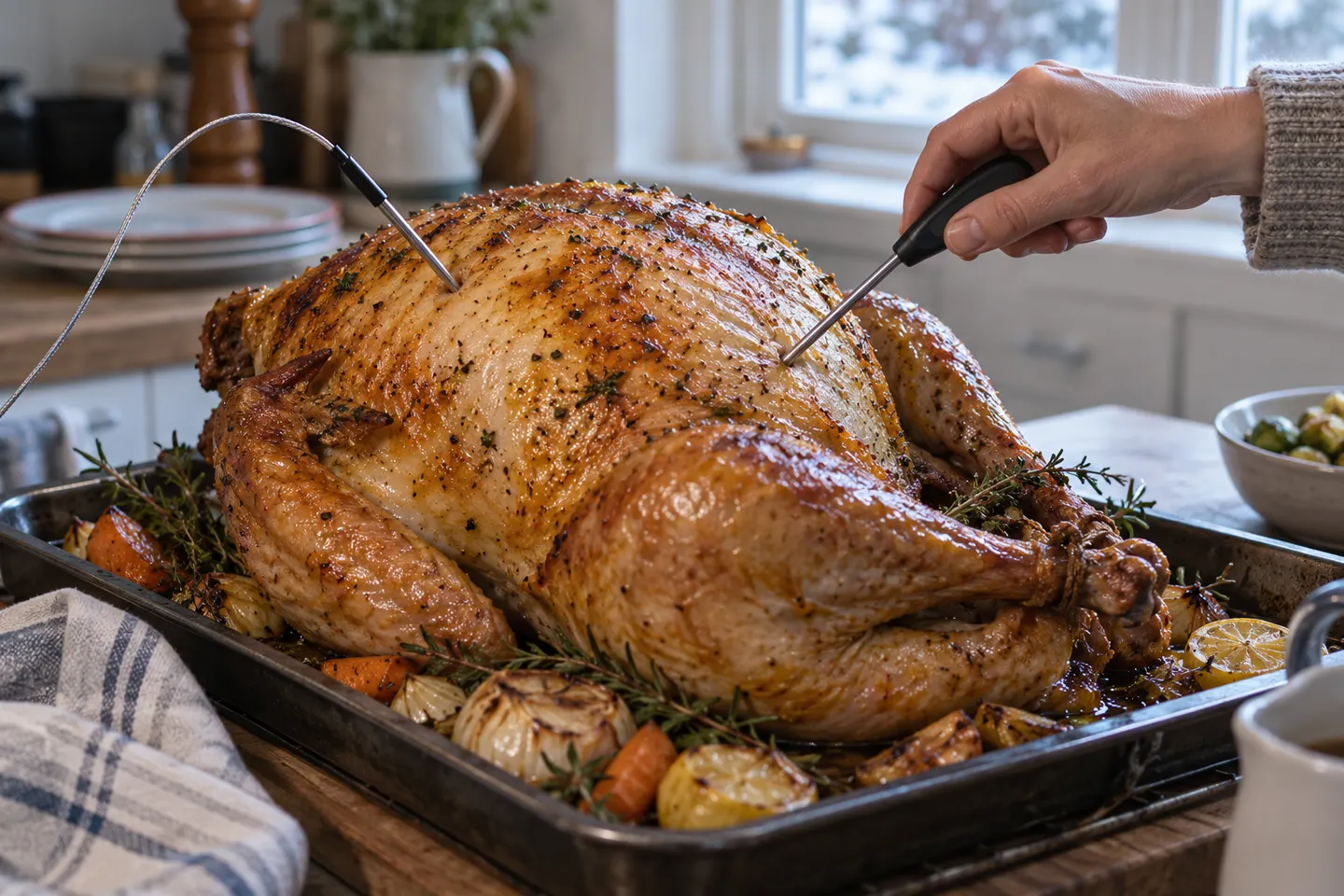
Use a leave-in probe to track the cook and an instant-read model to check more than one spot before serving.
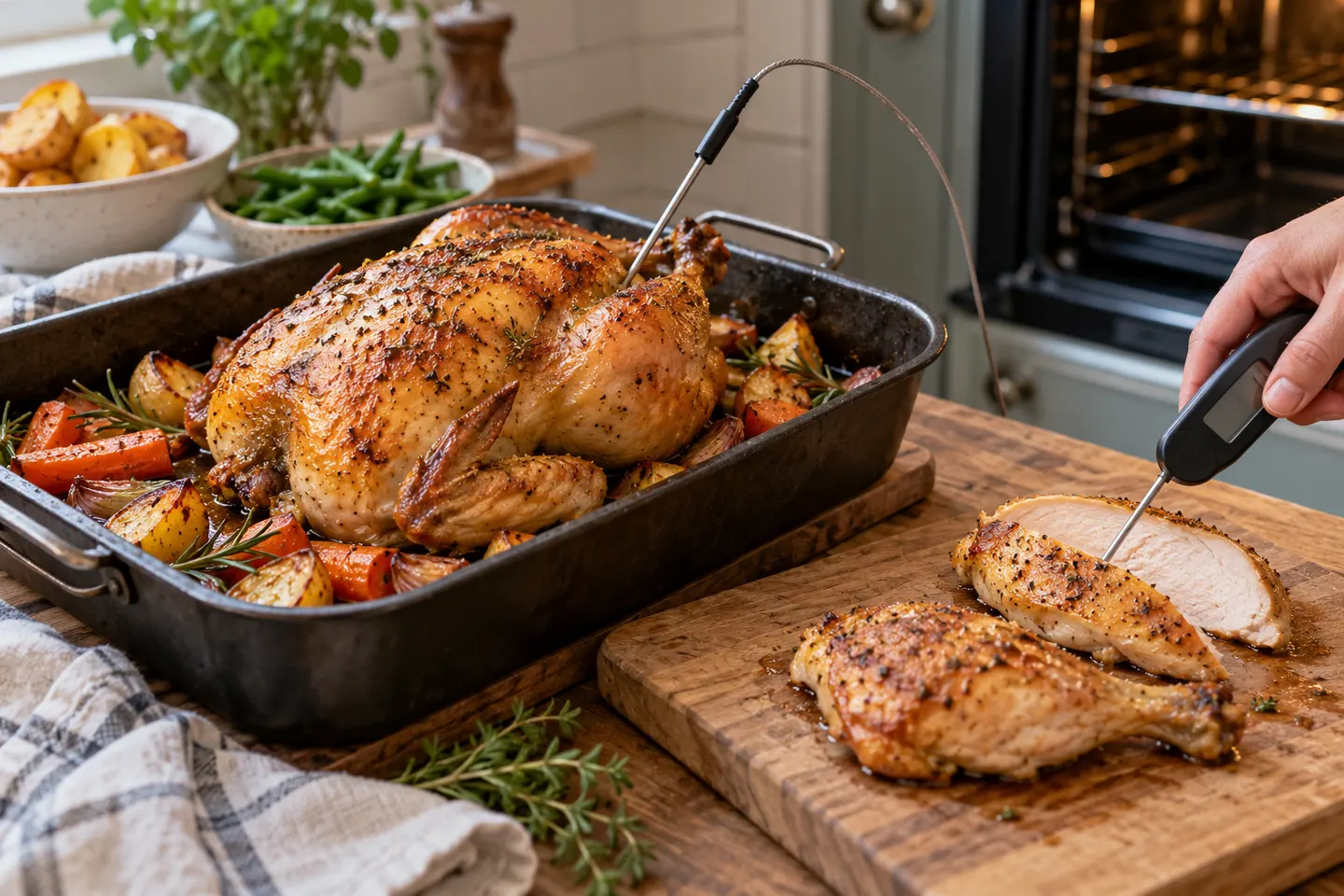
A fast, thin probe works well for portions; a heat-safe leave-in probe makes a whole roast easier to monitor.
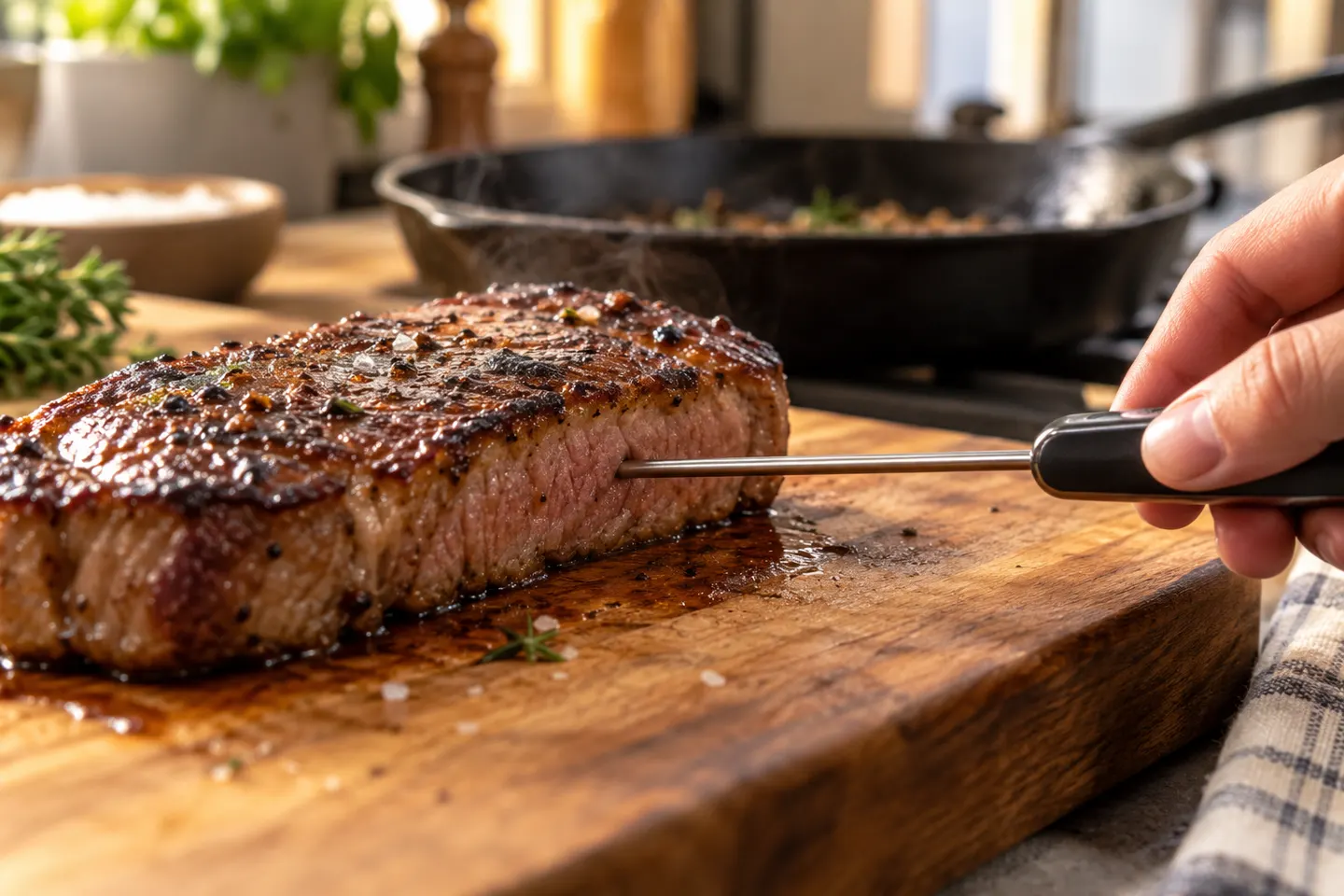
A fast instant-read probe is the most practical choice for steaks; insert it from the side into the center.
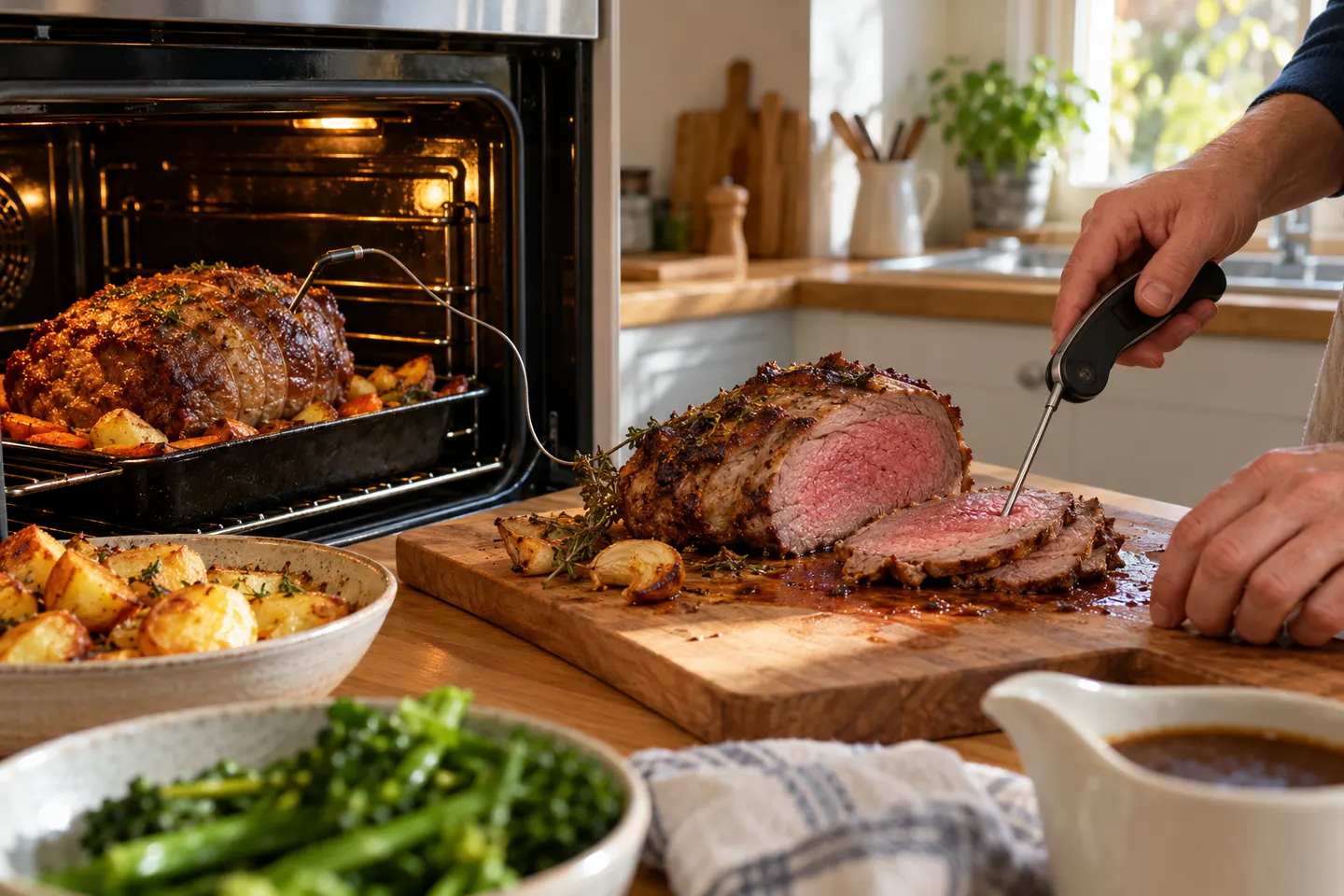
Start with a dependable instant-read thermometer; add a leave-in or wireless probe when you want continuous monitoring.