Gearjury may earn a commission when you buy through a retailer link. This does not affect our editorial guidance.
Guide
How to Check Food Temperature Without Thermometer Access
If you need to know how to check food temperature without thermometer access, visual and texture cues can help judge quality but cannot confirm a safe internal temperature. For meat, poultry, leftovers, and casseroles, use a food thermometer before serving.
GGearjury editorial team · Updated October 15, 2026· 5 min
01
Can you measure food temperature without a thermometer?
You can estimate whether food feels hot, cold, or close to done, but you cannot obtain a dependable internal-temperature measurement by touch, color, cooking time, or clear juices. If safety depends on reaching a minimum temperature, pause and get a suitable food thermometer.
02
How to check food temperature with a thermometer
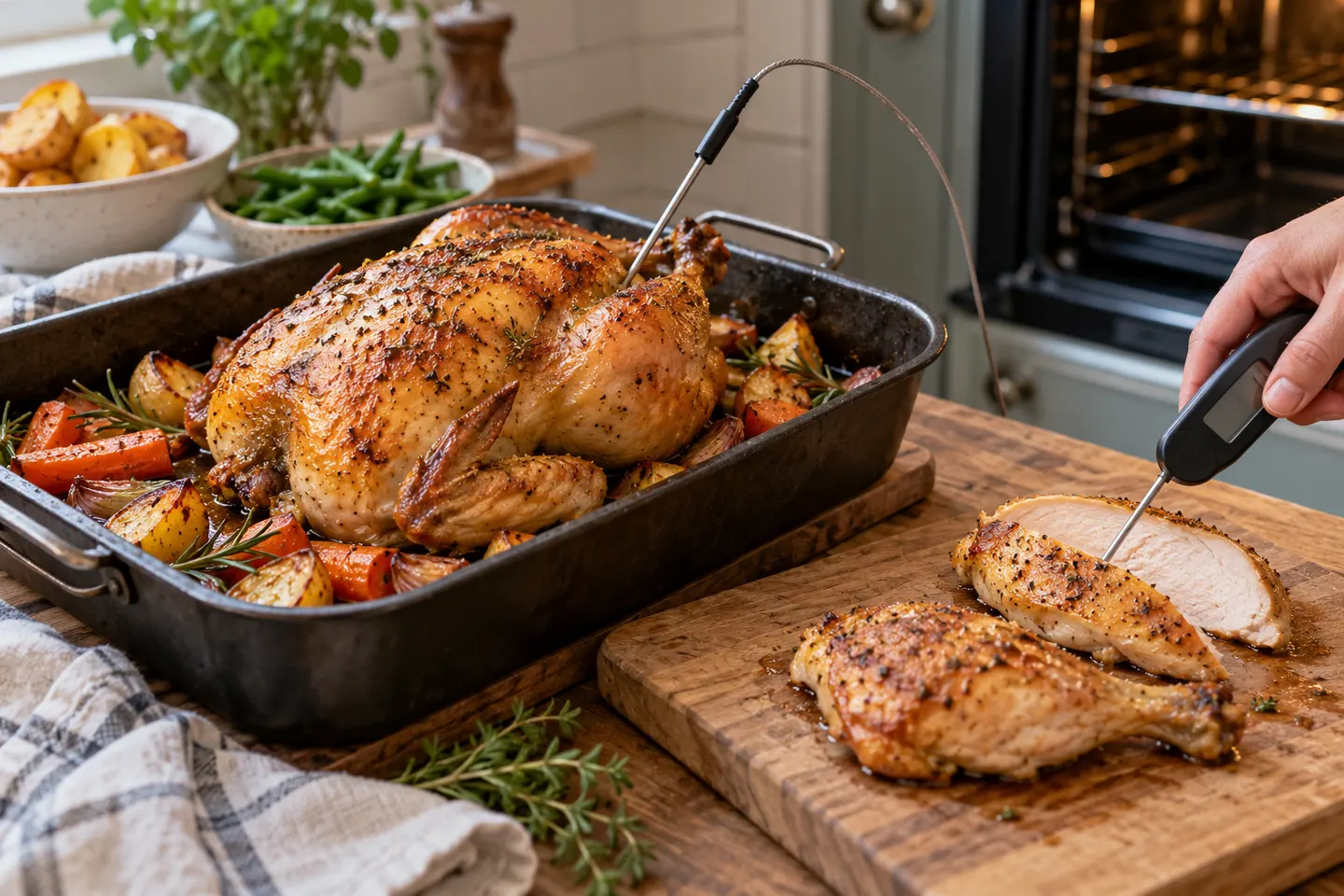
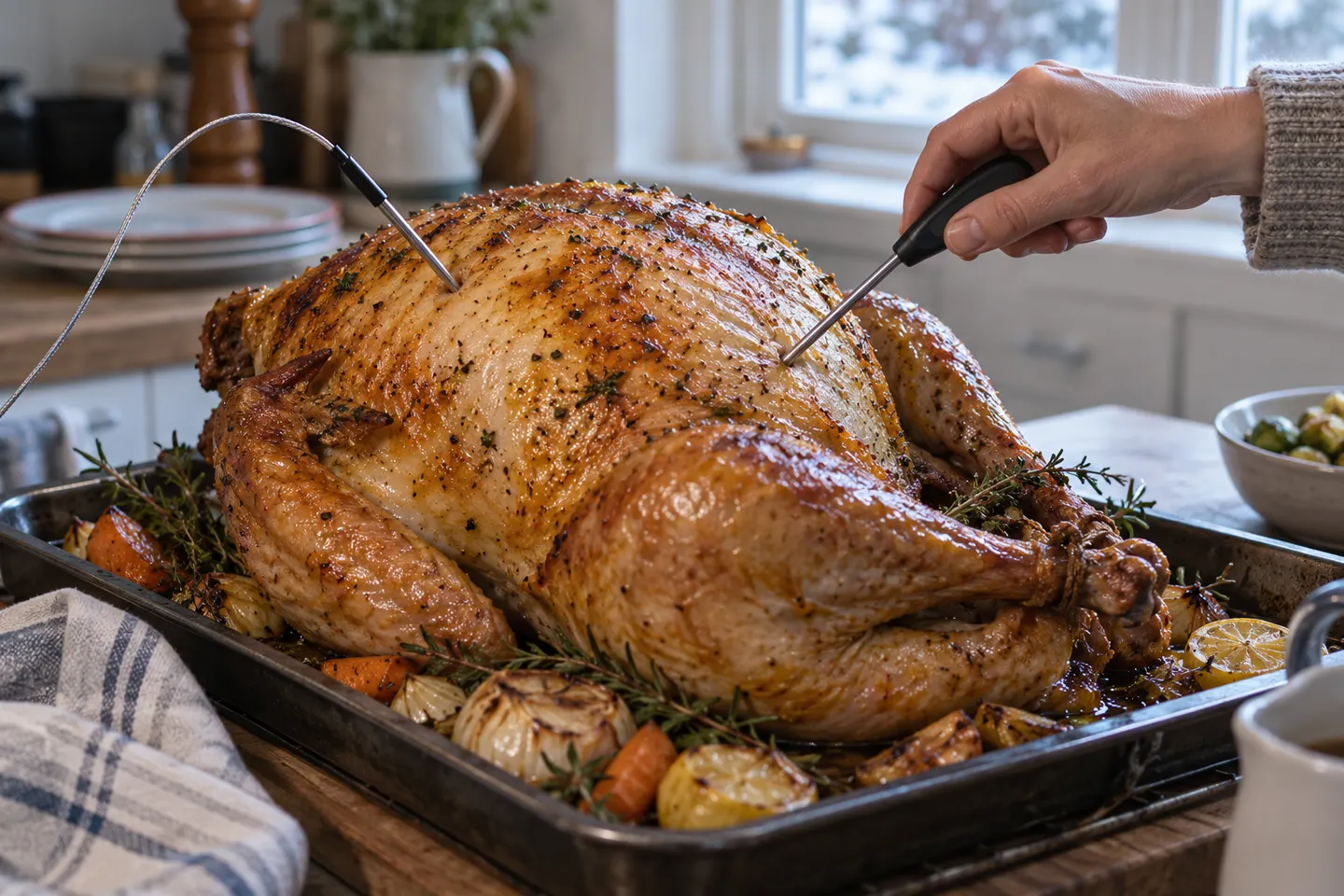
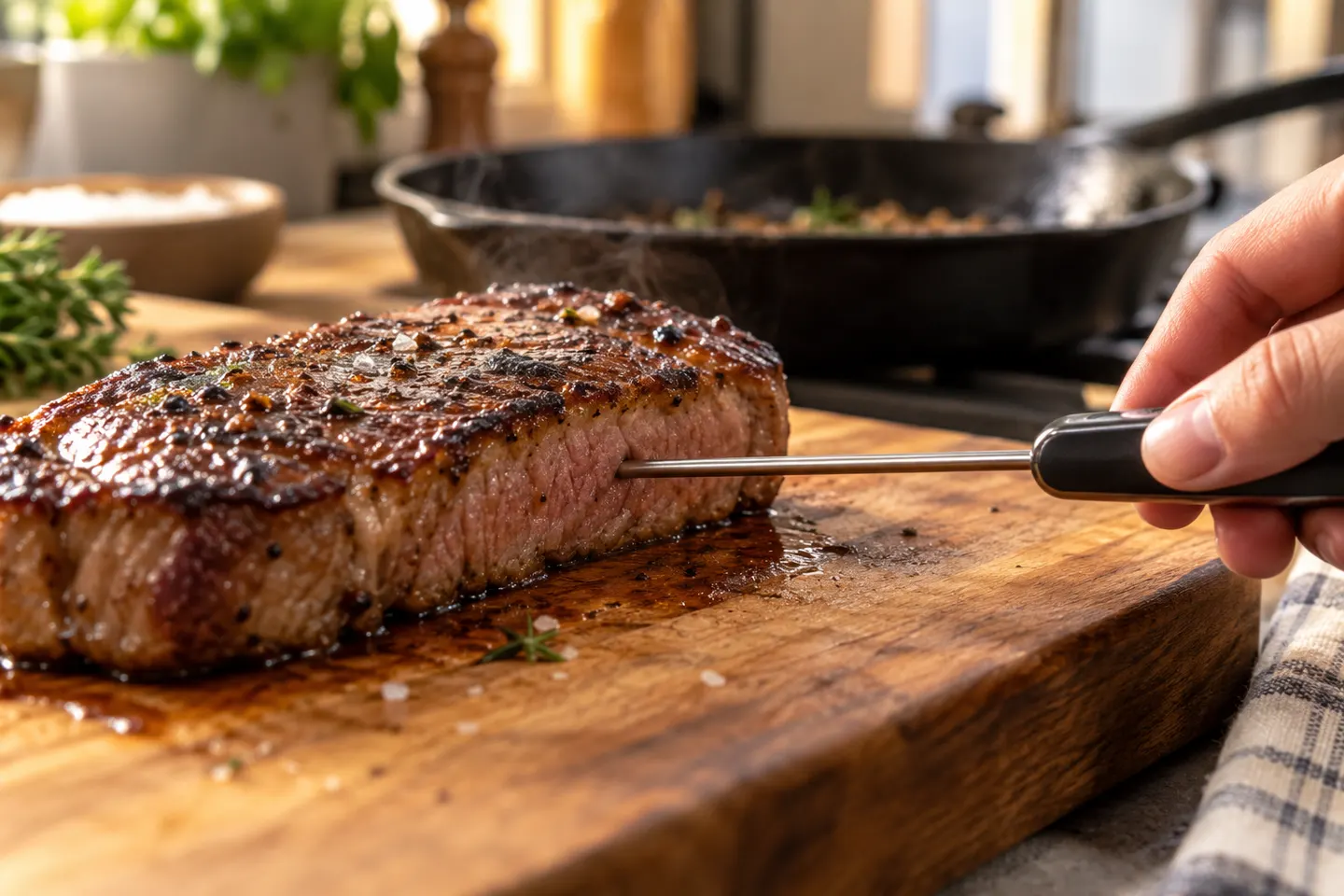
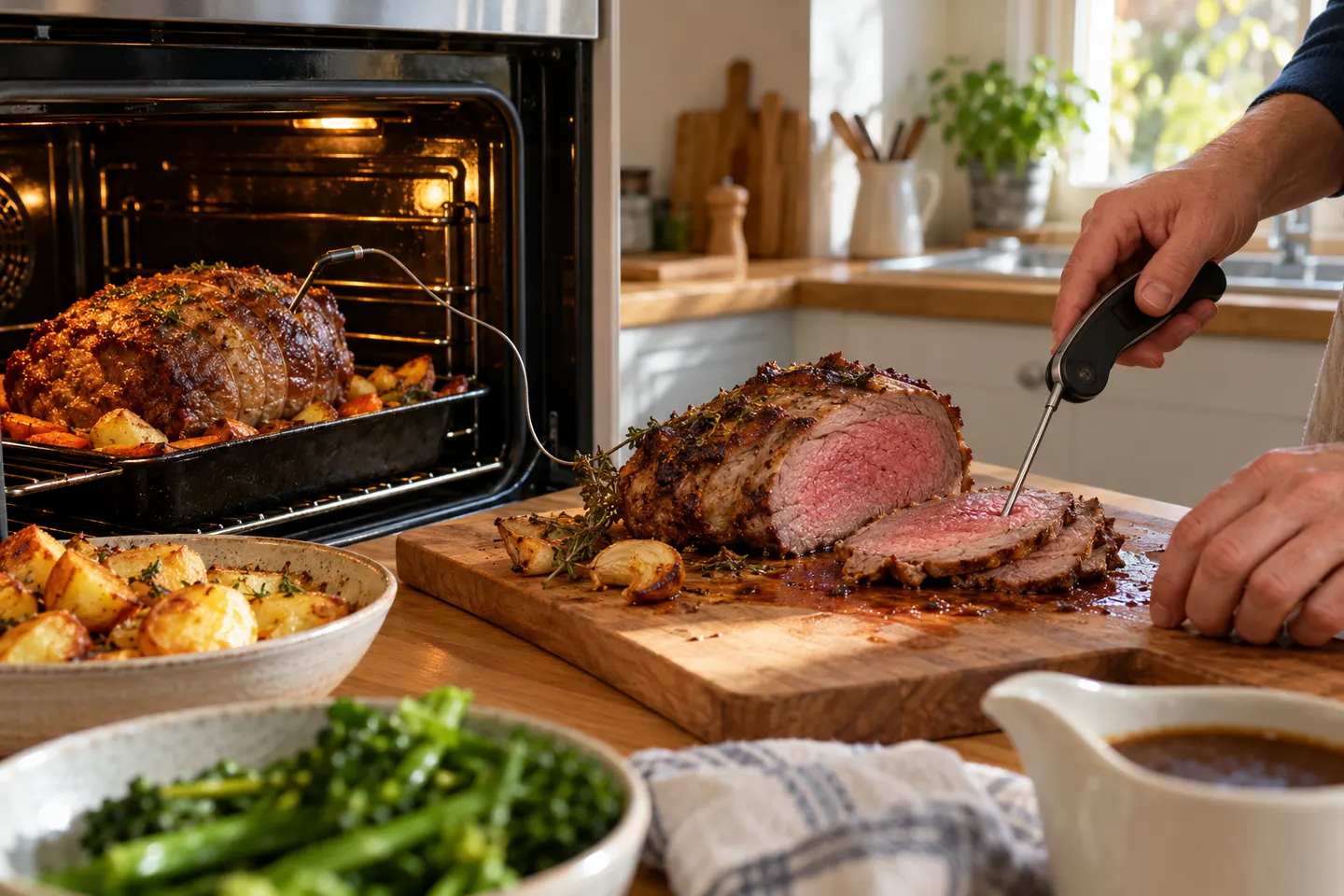
Insert a clean probe into the thickest part, away from bone, fat, and gristle. For thin foods, USDA advises inserting from the side toward the center. Check more than one place in large or irregular food, then compare the reading with current FoodSafety.gov guidance.
03
What appearance can and cannot tell you
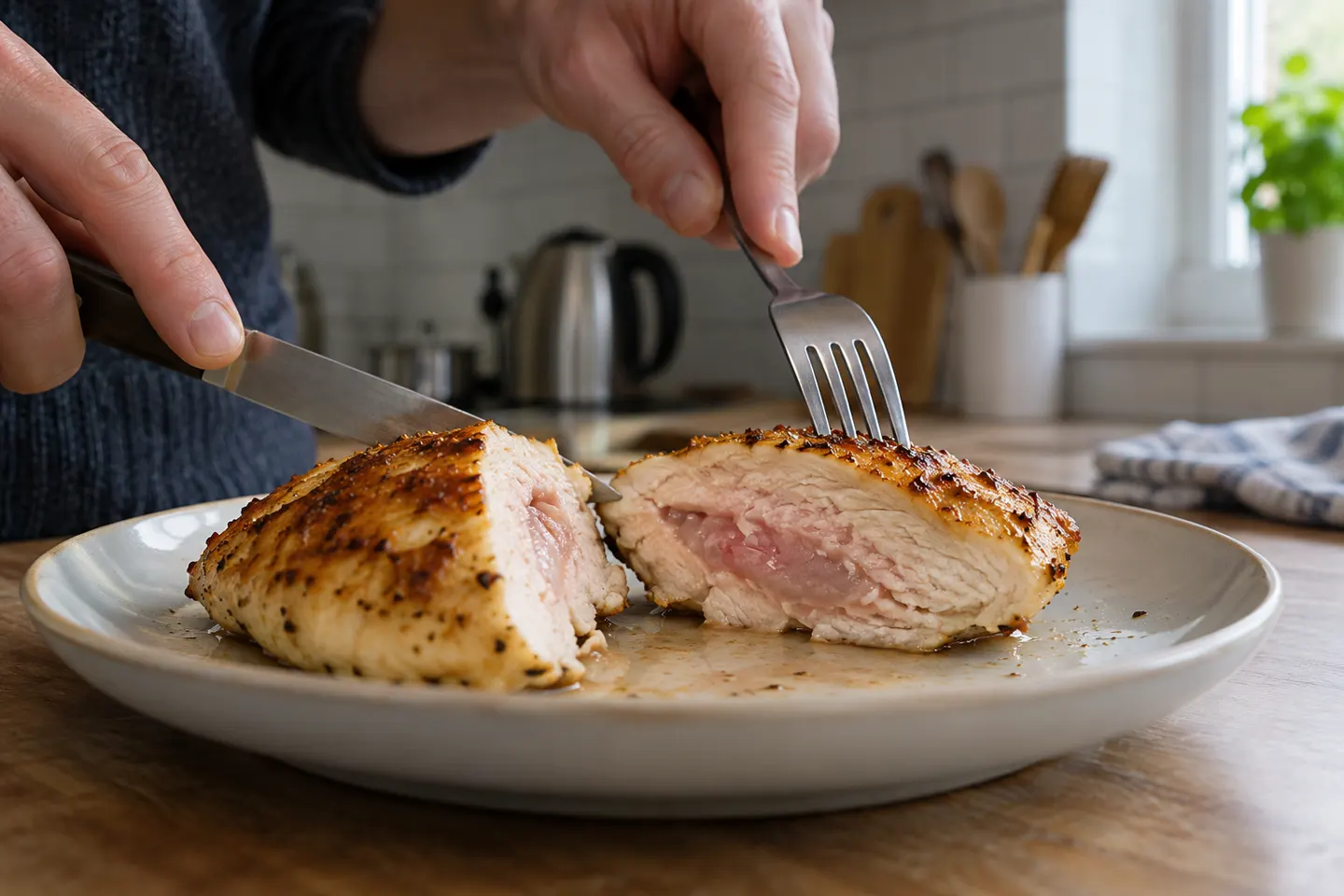
Browning, firmness, clear juices, and flaking can describe doneness or eating quality, but they are not universal safety tests. Ground meat can change color before it is safe, and cooked meat can remain pink after reaching a safe temperature. Use these cues only alongside a measured reading when handling higher-risk foods.
04
How to check the temperature of reheated food
Steam and bubbling show that some areas are hot, not that the center or every cold spot has reached the target. Stir foods when appropriate, allow standing time after microwave heating, and measure several locations. Without a thermometer, continue heating only if the food can tolerate it, then verify before serving.
05
How to check cooking oil temperature without a thermometer
A small test piece of the food can show whether frying has started: little activity suggests the oil is too cool, while violent bubbling or smoke signals excessive heat. These observations do not reveal an exact temperature. Keep water away from hot oil, reduce the heat if it smokes, and never leave the pan unattended.
06
Use time only as a planning guide
Recipe times assume particular equipment, food size, starting temperature, and cooking conditions. Treat them as estimates for when to begin checking, not proof that the center is safe. Ovens, pans, microwaves, and portions heat unevenly.
07
When not to take a chance
Do not rely on an improvised test for poultry, ground meat, stuffed dishes, casseroles, leftovers, or food for someone at greater risk of foodborne illness. Keep the food cooking or chilled as appropriate until you can confirm it with a working food thermometer.
Common questions
Questions before you buy
How to check food temperature with thermometer?
Place the clean probe in the thickest part without touching bone, fat, or gristle. Wait for a stable reading and check additional spots in large or unevenly shaped food.
How to measure food temperature without thermometer?
You cannot obtain a reliable internal-temperature measurement without one. Sensory cues can help assess cooking progress, but they do not confirm that a safe minimum has been reached.
How to check cooking oil temperature without thermometer?
Use a tiny piece of the food to observe frying activity, but treat the result as a rough cooking cue rather than a temperature measurement. If the oil smokes, lower the heat and keep water away from the pan.
Can you tell if chicken is safe by looking at the juices?
No. Juice color and appearance do not reliably confirm safety. Check the thickest parts with a food thermometer and follow the current minimum temperature for poultry.
Can cooking time replace a food thermometer?
No. Cooking time varies with equipment, portion size, shape, and starting temperature. Use the recipe time to decide when to begin measuring, not as proof of safety.
Start with a dependable instant-read thermometer; add a leave-in or wireless probe when you want continuous monitoring.
Your privacy
We use cookies and similar technologies. Necessary ones keep the site working. With your permission we also use statistics cookies (Google Analytics and Microsoft Clarity) to understand which guides help readers. You can accept all, reject all or choose. You can change your choice at any time from "Cookie settings" at the bottom of every page. Cookie policy