Find the probe's sensing area
Read the manual or inspect its diagram before cooking. Some thermometers sense near a small tip, while others need a longer stem section fully inserted to produce a representative reading.

 Best picksGood Meat Thermometers for Every Kind of Cook
 Best picksBest Dash Cams for Cars in 2026
 Best picksBest WiFi Extenders: Which Range Extender Should You Buy?
 Best picksBest Radar Detectors for Cars: Models Compared
 Best picksGood Winter Gloves for Cold Weather: Five Useful Picks
 Best picksBest Headlamps: Six Lights Compared for Different Uses
 Best picksBest Portable Air Coolers for Patios, Workshops and Small Spaces (2026)
 Best picksTop 10 Best Battery-Powered Weed Eaters for Different Yards
 Best picksBest Air Purifier for Bedroom in the US: Quiet Models Compared
Gearjury may earn a commission through retailer links. Technique and safety guidance follows cited authorities.
Guide
Insert the full sensing area into the thickest edible part, away from bone, fat pockets and cookware. For thin foods, enter from the side so the sensor reaches the center.
Read the manual or inspect its diagram before cooking. Some thermometers sense near a small tip, while others need a longer stem section fully inserted to produce a representative reading.
Choose the area most likely to heat slowly. Keep the sensing section out of cavities and away from the pan, grates, skewers, bones and large pockets of fat.
For patties, chops and thin chicken pieces, slide the probe horizontally into the center. This gives the sensor more food around it than a shallow top-down insertion.
Move an instant-read probe through nearby positions and watch for the lowest stable reading. A single hot spot does not establish that the whole item has reached its safe minimum.
Set an oven-safe probe in the target meat while you can see its path. Keep the display outside, route any cable as directed and make sure cooking movement will not pull the tip into bone or a cavity.
Wash and sanitize the food-contact probe according to its instructions, especially after checking raw meat or poultry. Do not immerse electronic parts beyond their stated protection.
Common questions
Deep enough for the entire sensing area to be surrounded by the target food. The required depth depends on the probe, so check its manual.
For a whole chicken, check the innermost thigh and wing area and the thickest breast without touching bone. For pieces, target the thickest center.
For a thin steak, insert from the side toward the center. For a thick steak, check the thermal center and sample more than one point if thickness varies.
No. Contact with hot cookware can give a misleading reading and may expose the probe to temperatures outside its intended use.
Food heats unevenly, and the probe may pass near bone, fat or a surface. Use the lowest stable reading from the correct edible area to guide further cooking.
Keep exploring
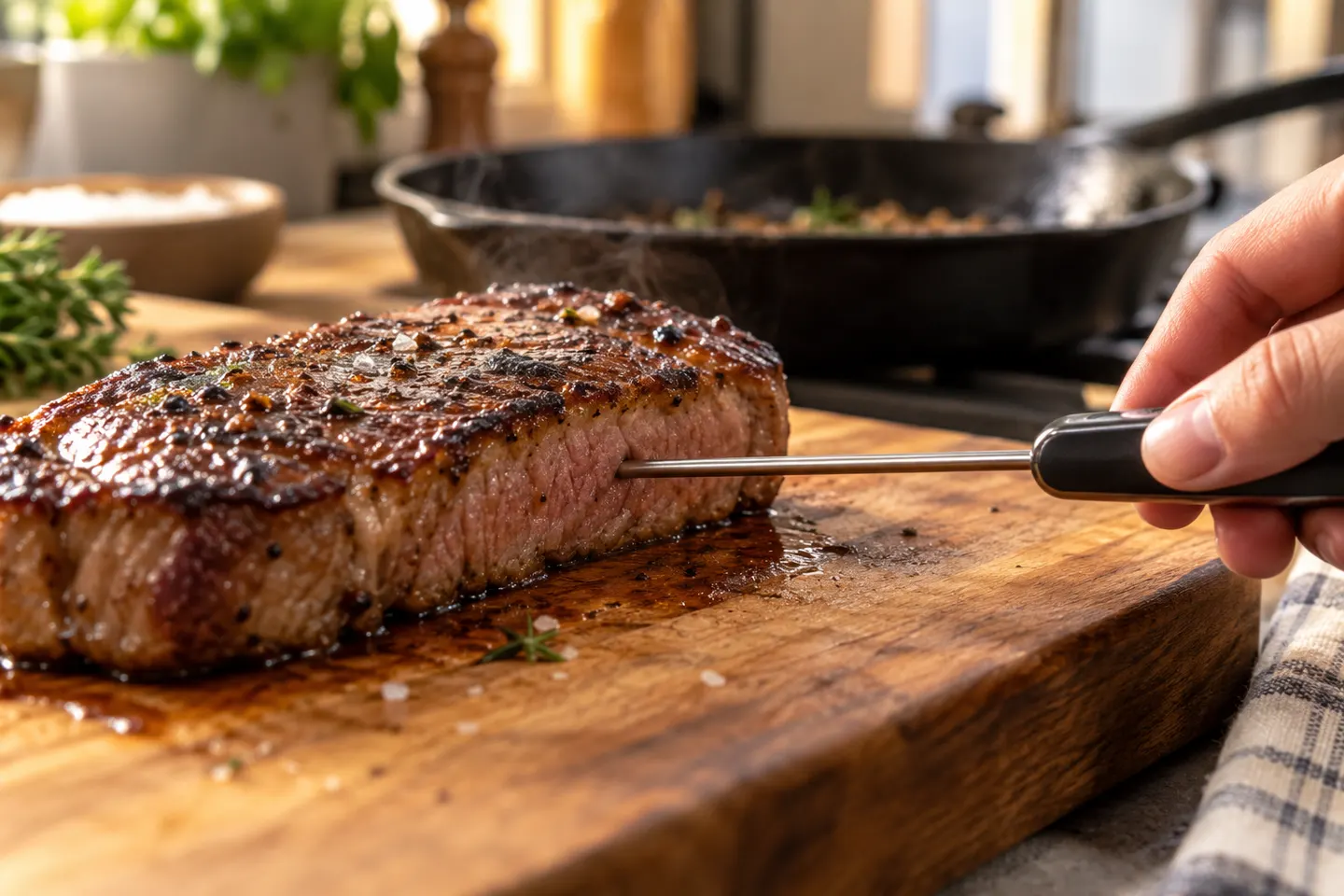
A fast instant-read probe is the most practical choice for steaks; insert it from the side into the center.
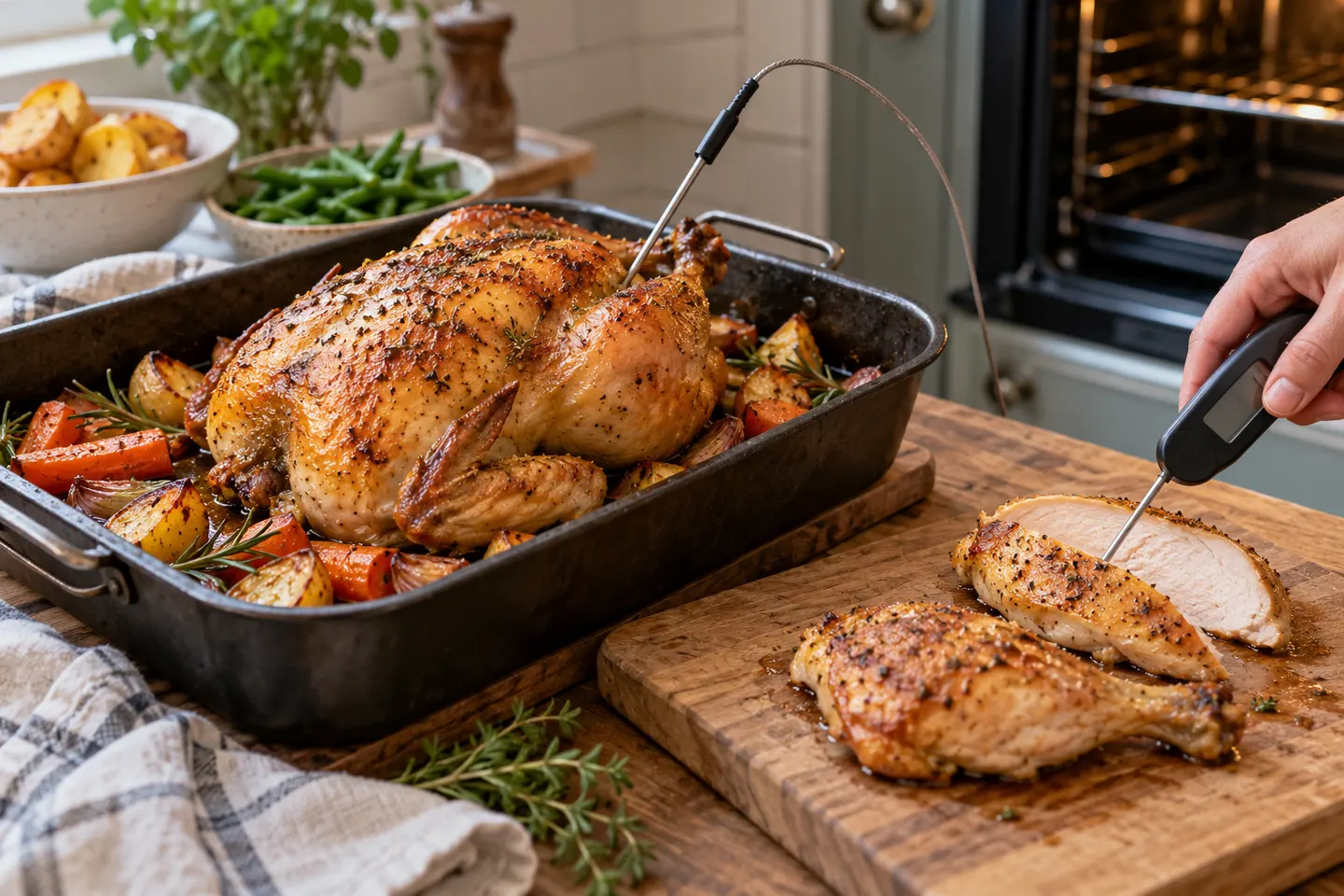
A fast, thin probe works well for portions; a heat-safe leave-in probe makes a whole roast easier to monitor.
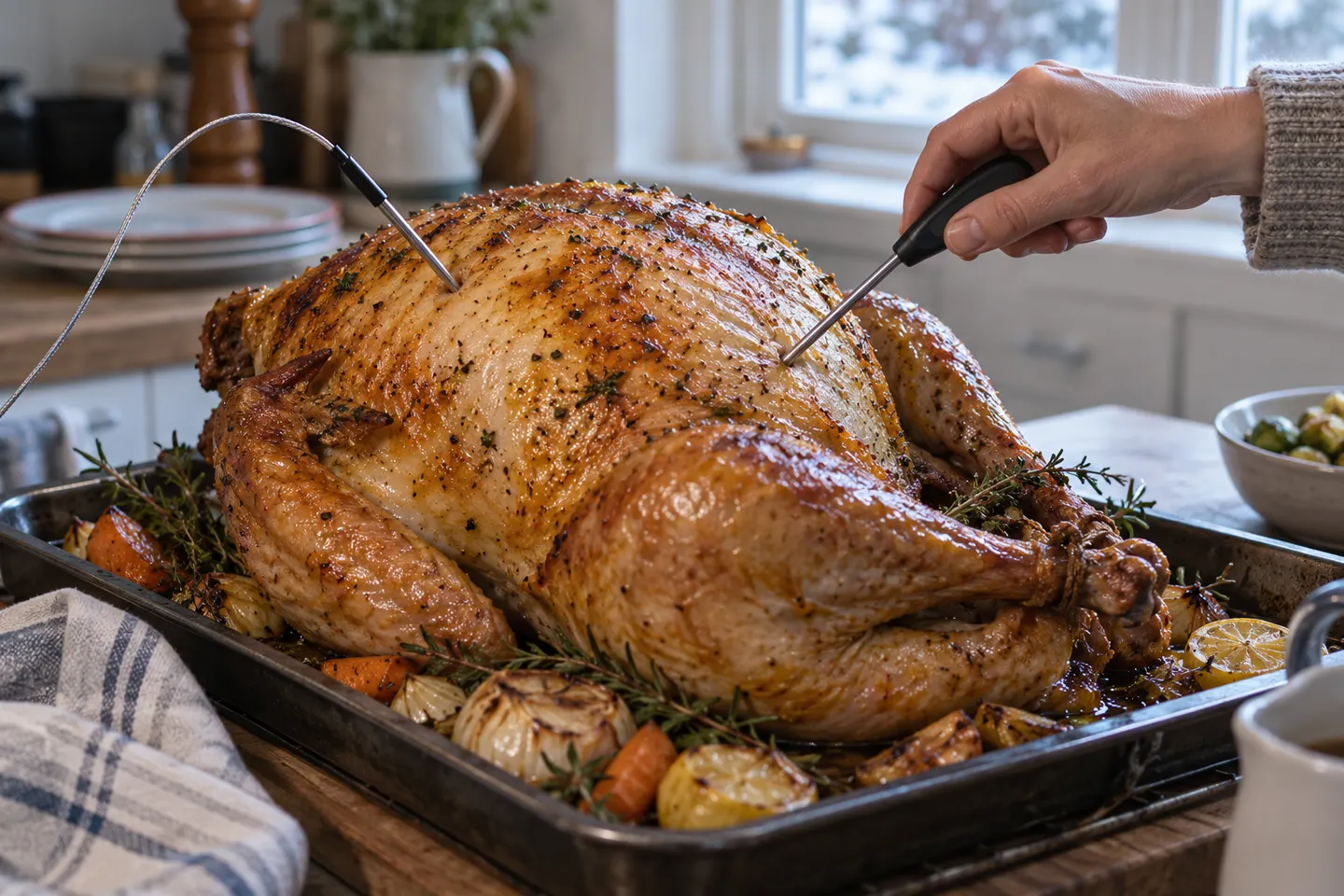
Use a leave-in probe to track the cook and an instant-read model to check more than one spot before serving.
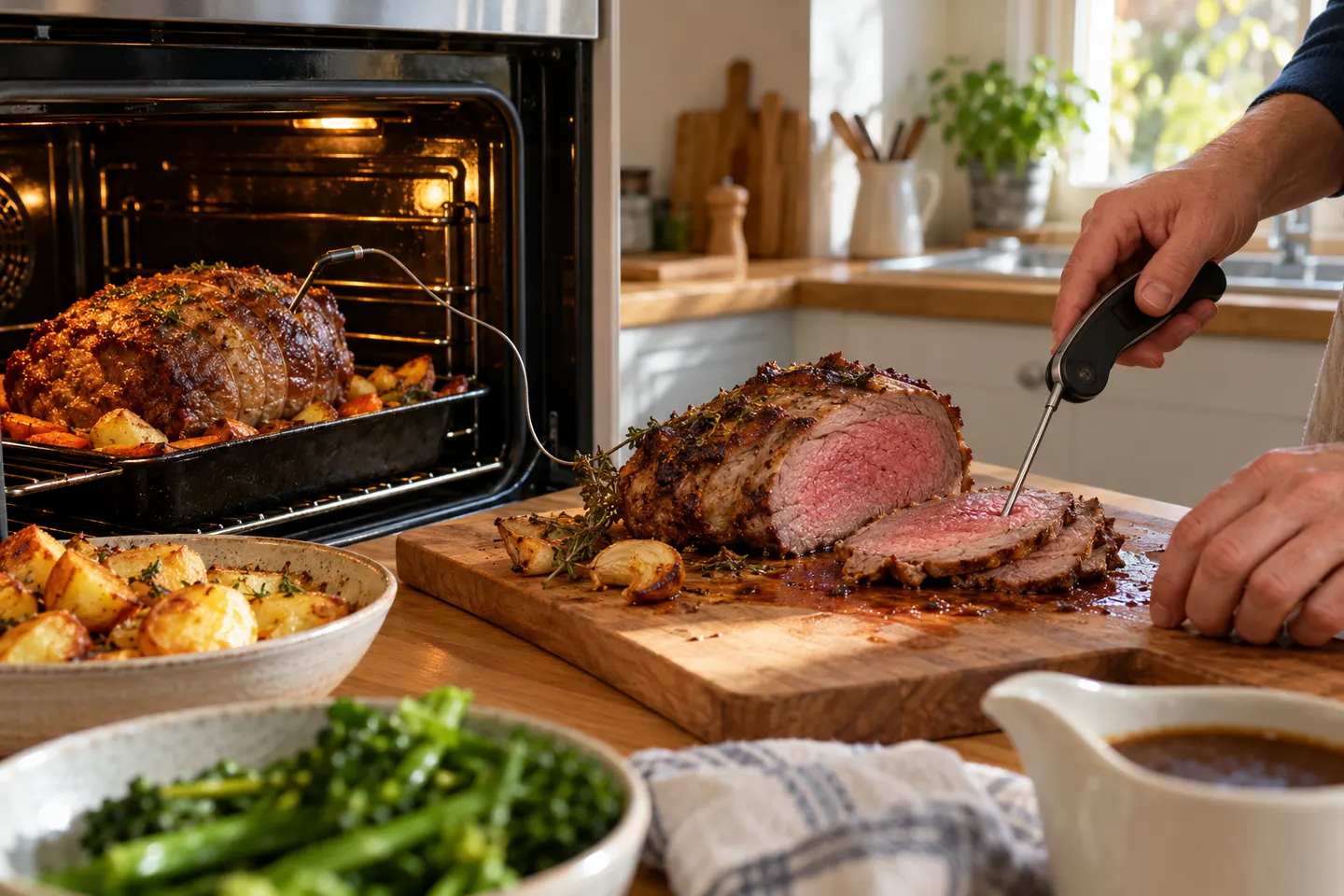
Start with a dependable instant-read thermometer; add a leave-in or wireless probe when you want continuous monitoring.