Gearjury may earn a commission from qualifying retailer links, without changing our editorial conclusions.
Guide
How Often Should a Food Thermometer Be Calibrated?
Check accuracy before first use, at the frequency required by your food-safety plan, and whenever the thermometer is dropped, exposed to a temperature extreme or gives a doubtful reading. Adjust it only as its maker directs.
GGearjury editorial team · Updated October 15, 2026· 6 min
01
Set a calibration-check schedule
How often should a food thermometer be calibrated? There is no single interval for every device and workplace. Follow the manufacturer, your local code and the establishment's food-safety plan; verify before first use and repeat on the documented schedule.
02
Recheck after a drop or temperature shock
A hard impact, an extreme temperature or a reading that conflicts with another trusted instrument is a reason to stop using the thermometer and check its accuracy immediately.
03
How should thermometer accuracy be verified by food employees?
Use a properly prepared ice-point or boiling-point reference and keep the sensing area away from the container. The boiling point varies with elevation and atmospheric conditions, so ice water is often the simpler routine check.
04
How should a food thermometer be calibrated?
Wait for a stable reference reading, compare it with the expected value and use the maker's adjustment procedure. A device without user calibration may need service, a documented correction or replacement.
05
Does a dial food thermometer need to be calibrated?
Many bimetal dial thermometers have an adjustment nut and should be checked regularly. Their sensing zone extends along the stem, so immerse that entire zone during the accuracy check.
06
Clean, sanitize and dry the probe
Wash and sanitize the food-contact stem as your procedure requires, then air-dry it or use an approved single-use towel. Protect the sensing tip before storage.
Common questions
Questions before you buy
How frequently should a food thermometer be calibrated for accuracy?
Before initial use, on the schedule in your food-safety plan and after any event that could affect accuracy, such as a drop or extreme heat exposure.
A thermometer for measuring food temperatures should be accurate to what tolerance?
The FDA Food Code sets accuracy requirements for food temperature devices; the applicable tolerance depends on the scale and use. Follow the current adopted code in your jurisdiction.
How should a food thermometer be dried?
After cleaning and sanitizing, let the probe air-dry or use the drying method allowed by your sanitation procedure. Do not return a wet, contaminated stem to its case.
How should a thermometer be used correctly when cooking meat?
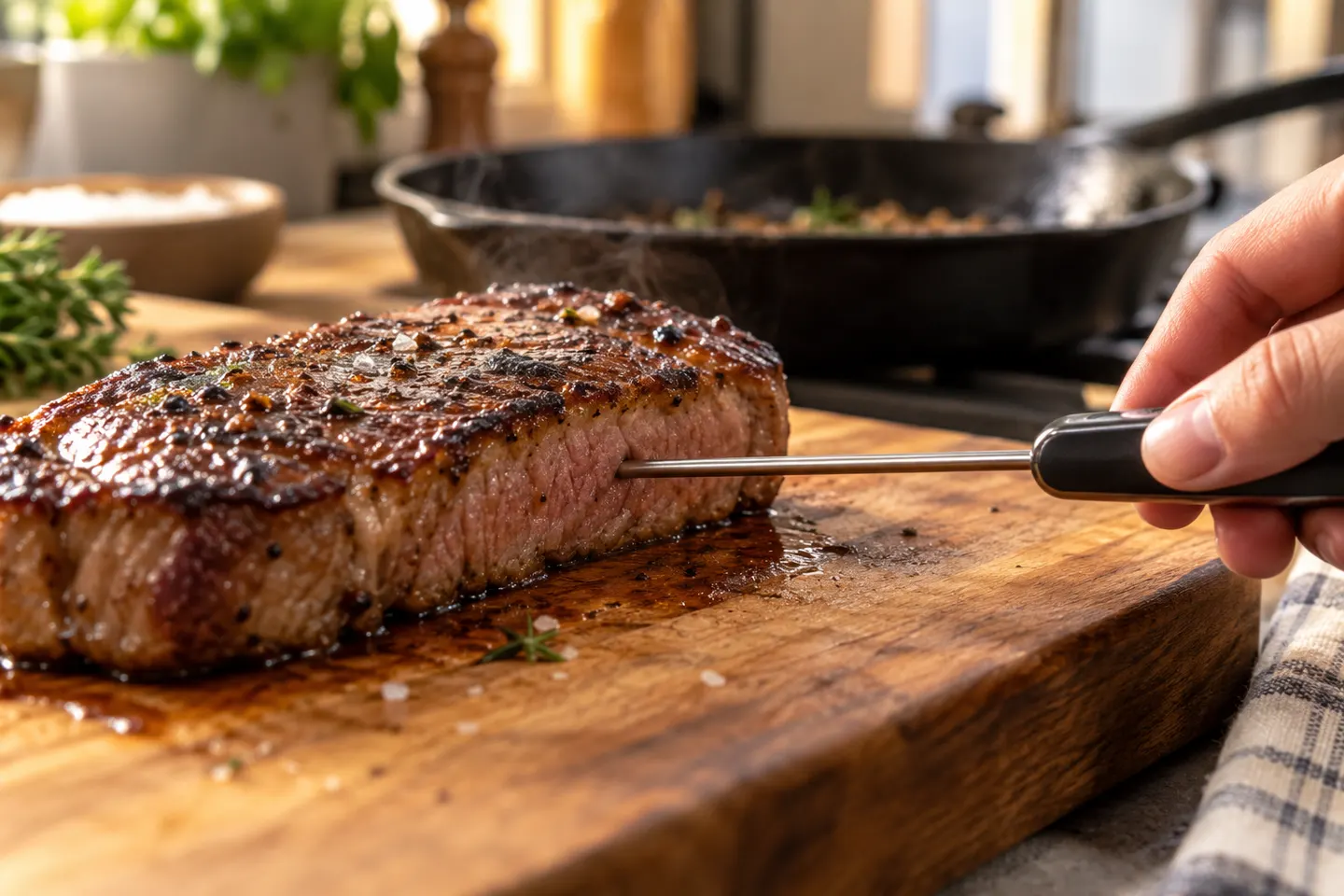
Place the sensor in the thickest part away from bone, fat and gristle. Check more than one location in large or irregular cuts.
A probe food thermometer should be what type for thin food?
Use a small-diameter, tip-sensitive probe that can reach the center from the side without averaging a long section of stem.
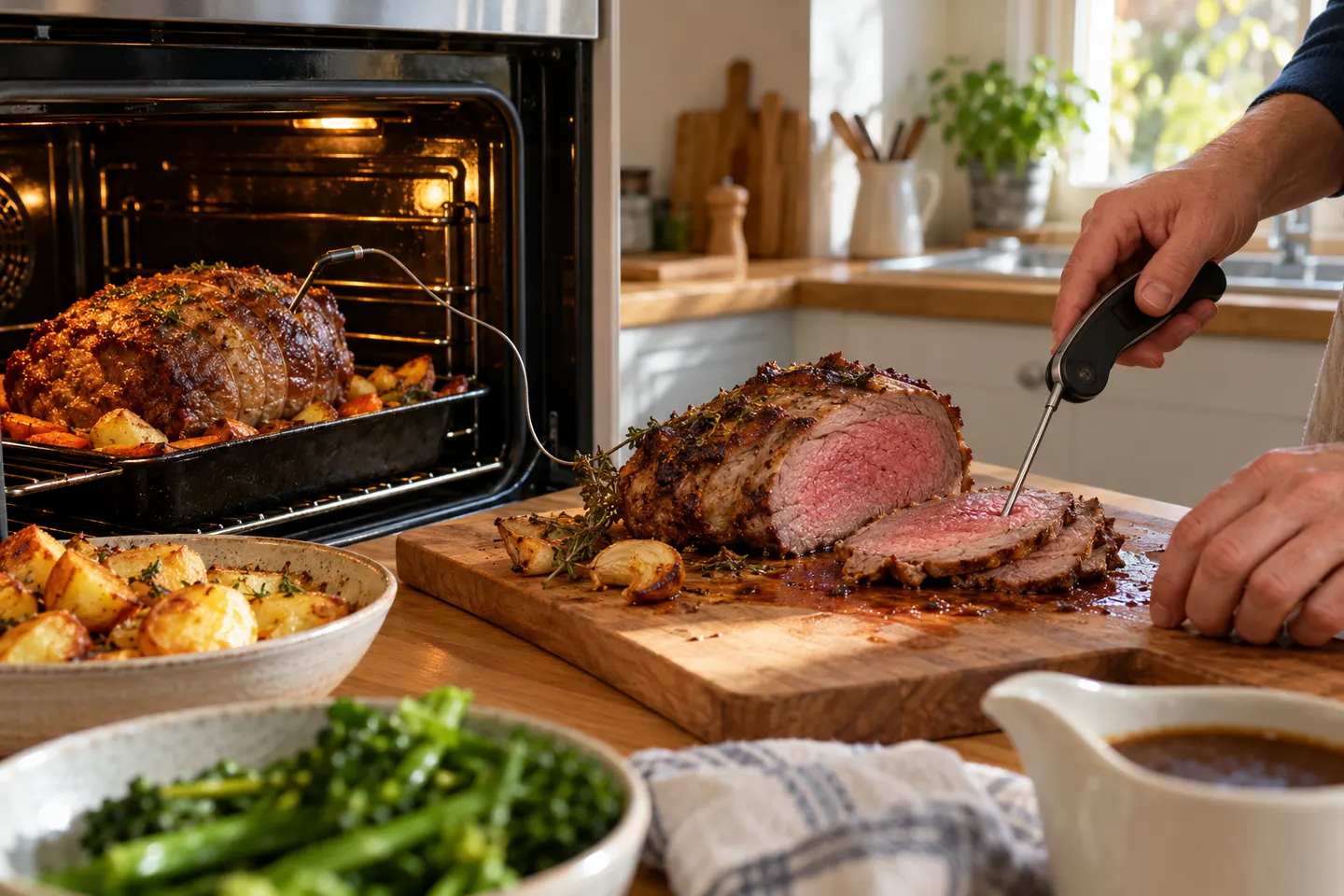
Use a leave-in probe to track the cook and an instant-read model to check more than one spot before serving.
Your privacy
We use cookies and similar technologies. Necessary ones keep the site working. With your permission we also use statistics cookies (Google Analytics and Microsoft Clarity) to understand which guides help readers. You can accept all, reject all or choose. You can change your choice at any time from "Cookie settings" at the bottom of every page. Cookie policy