Where should you insert a meat thermometer?
Aim for the thickest part of the food and keep the sensing section away from bone, fat and gristle. On a thin burger, chop or fish fillet, insert from the side so the tip reaches the center.

 Best picksGood Meat Thermometers for Every Kind of Cook
 Best picksBest Dash Cams for Cars in 2026
 Best picksBest WiFi Extenders: Which Range Extender Should You Buy?
 Best picksBest Radar Detectors for Cars: Models Compared
 Best picksGood Winter Gloves for Cold Weather: Five Useful Picks
 Best picksBest Headlamps: Six Lights Compared for Different Uses
 Best picksBest Portable Air Coolers for Patios, Workshops and Small Spaces (2026)
 Best picksTop 10 Best Battery-Powered Weed Eaters for Different Yards
 Best picksBest Air Purifier for Bedroom in the US: Quiet Models Compared
Gearjury may earn a commission from retailer links. Temperature guidance is drawn from cited public authorities.
Guide
Reading a meat thermometer correctly means finding the thermal center, keeping the sensing area away from bone and waiting until the display stabilizes. Check several locations in large or irregular food.
Aim for the thickest part of the food and keep the sensing section away from bone, fat and gristle. On a thin burger, chop or fish fillet, insert from the side so the tip reaches the center.
Monitor it until the display stabilizes rather than recording the first changing number. The exact response time depends on the instrument, probe placement and temperature difference.
Identify where the sensor sits. Some digital probes sense near the tip, while a dial bimetal thermometer may need two to three inches of stem insertion; follow the manufacturer's marking and instructions.
Roasts and whole birds heat unevenly. Move a sanitized instant-read probe through several thick areas and use the lowest valid internal reading to decide whether more cooking is needed.
Match the result to the food category, not a universal target. USDA lists 165°F for poultry, 160°F for ground meats, and 145°F plus a three-minute rest for whole cuts of beef, pork, veal and lamb.
Reposition the probe if a value changes sharply, seems inconsistent with nearby spots or may come from contact with bone or cookware. Check calibration according to the maker after a drop or suspect result.
Common questions
Until the reading stabilizes. Recording a changing display can understate or overstate the food's actual internal temperature.
For an instant-read model, leave it only until stable, then remove it. A leave-in probe may remain during cooking only when designed for that use.
Avoid bone because it can produce a temperature that does not represent the surrounding meat.
First rule out bad placement. For a large food, the lowest valid reading in the required check areas indicates whether cooking must continue.
Yes. Follow the manufacturer's cleaning directions, especially when moving between raw and cooked food.
Keep exploring
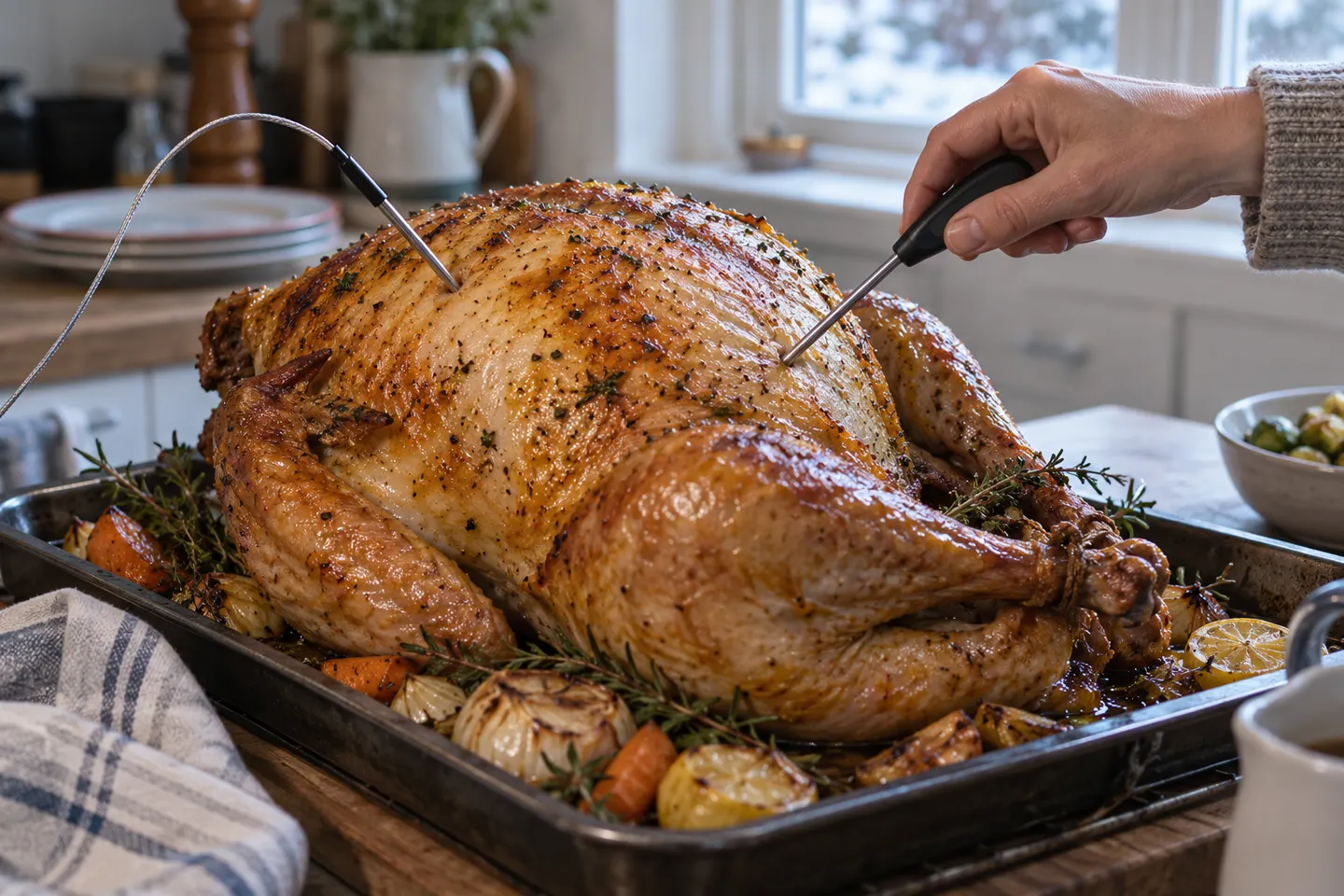
Use a leave-in probe to track the cook and an instant-read model to check more than one spot before serving.
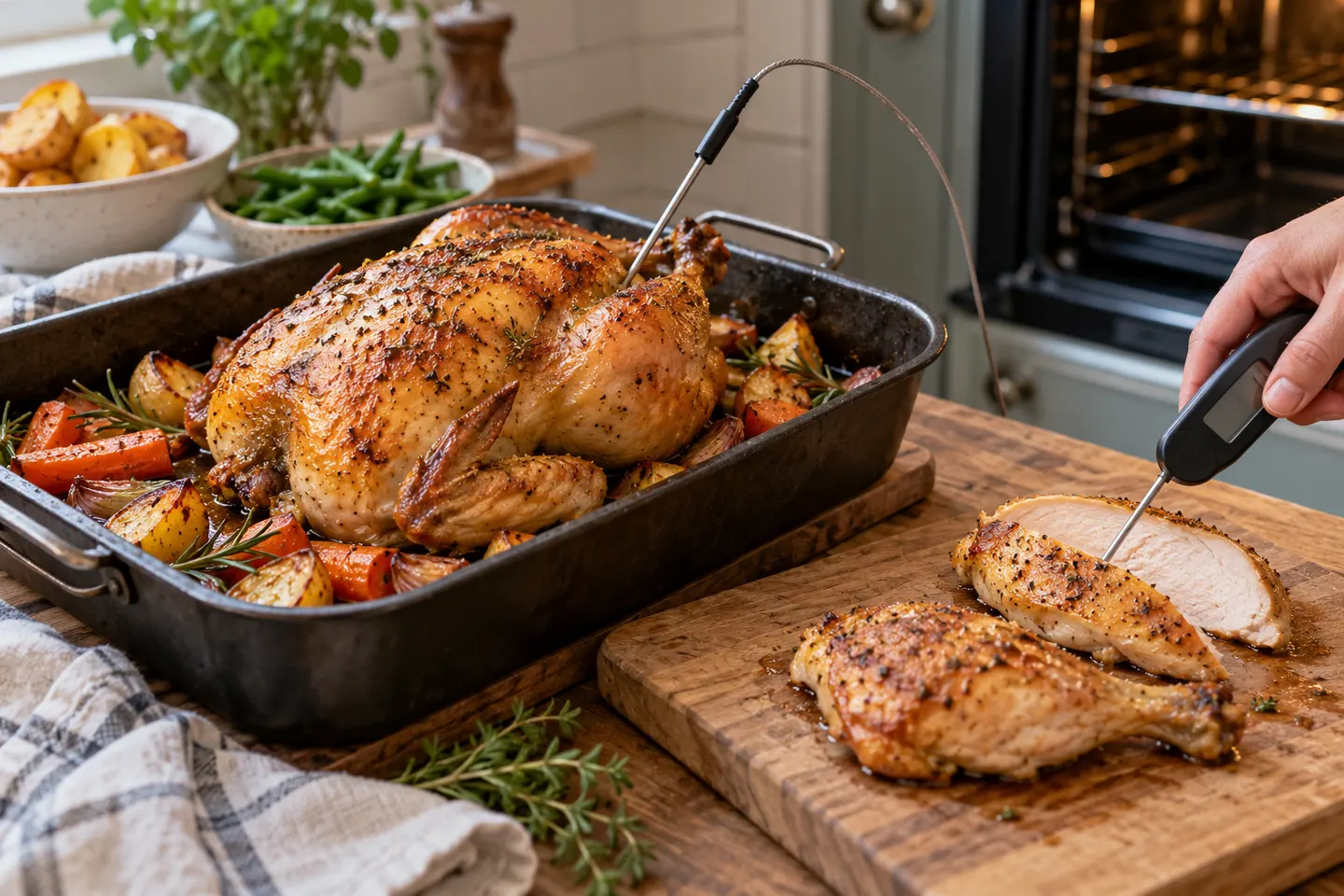
A fast, thin probe works well for portions; a heat-safe leave-in probe makes a whole roast easier to monitor.
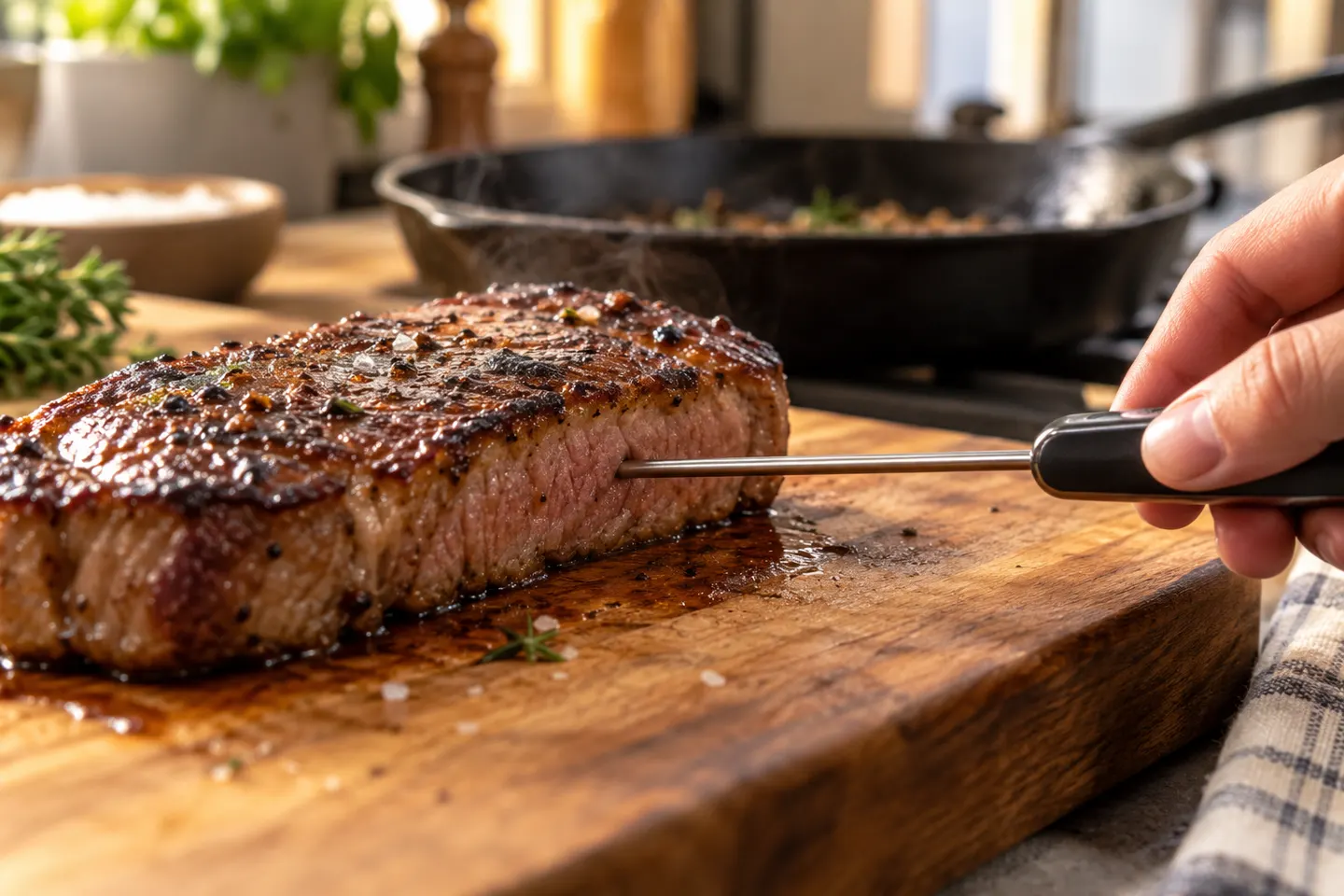
A fast instant-read probe is the most practical choice for steaks; insert it from the side into the center.
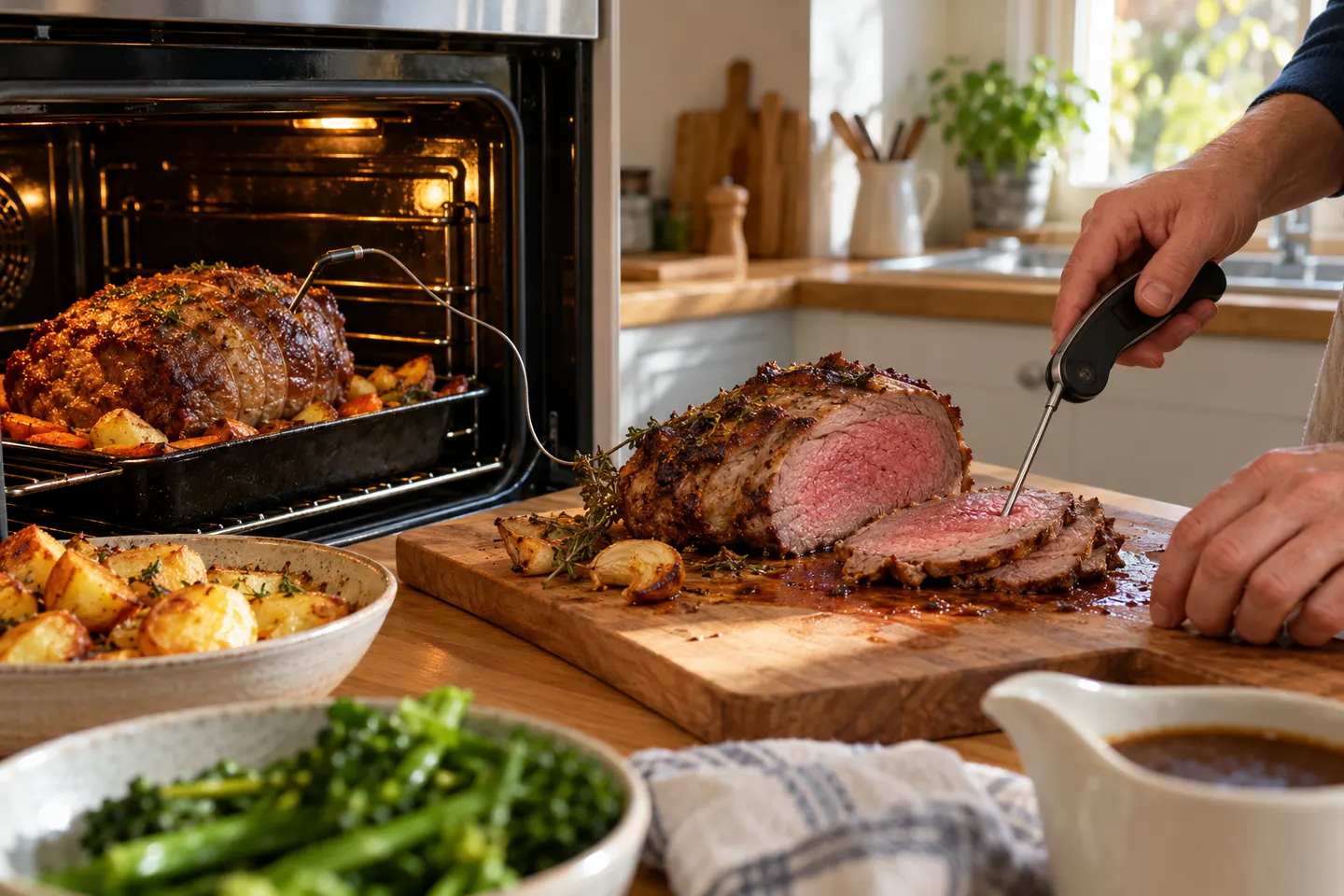
Start with a dependable instant-read thermometer; add a leave-in or wireless probe when you want continuous monitoring.