Choose the right food-handler thermometer
Match the instrument to the food. A thin probe suits thin foods, while a probe with a larger sensing area needs deeper insertion. Confirm that its range covers the process being measured.

 Best picksGood Meat Thermometers for Every Kind of Cook
 Best picksBest Dash Cams for Cars in 2026
 Best picksBest WiFi Extenders: Which Range Extender Should You Buy?
 Best picksBest Radar Detectors for Cars: Models Compared
 Best picksGood Winter Gloves for Cold Weather: Five Useful Picks
 Best picksBest Headlamps: Six Lights Compared for Different Uses
 Best picksBest Portable Air Coolers for Patios, Workshops and Small Spaces (2026)
 Best picksTop 10 Best Battery-Powered Weed Eaters for Different Yards
 Best picksBest Air Purifier for Bedroom in the US: Quiet Models Compared
Gearjury may earn a commission when you buy through a retailer link. Editorial conclusions are based on cited evidence.
Guide
A food handler should use a suitable, accurate thermometer, insert it correctly, clean and sanitize it between uses, and record results when the food-safety plan requires it.
Match the instrument to the food. A thin probe suits thin foods, while a probe with a larger sensing area needs deeper insertion. Confirm that its range covers the process being measured.
The FDA Food Code says food temperature measuring devices scaled only in Fahrenheit should be accurate to within plus or minus two degrees Fahrenheit in their intended range. Local rules and the establishment's plan still govern.
Follow the manufacturer's calibration method or accuracy check. Remove a damaged, drifting, or unreadable instrument from service until it is corrected or replaced.
Place the sensing area in the thickest part, away from bone, gristle, pan surfaces, and pockets of fat. Check more than one location when food is irregularly shaped.
Clean the stem or probe and sanitize it using the approved procedure before and after measuring food, especially when moving from raw items to ready-to-eat food.
Allow the reading to stabilize. Take corrective action and record the check when required by the operation's HACCP plan, policy, or regulator.
Common questions
Under the FDA Food Code, a Fahrenheit-only food temperature measuring device should be accurate within plus or minus two degrees Fahrenheit in its intended range.
Clean and sanitize it before and after use and between foods where contamination could transfer, following the establishment's approved procedure.
Place the sensing area in the thickest portion, away from bone, fat pockets, and cooking surfaces, and check additional spots when needed.
Follow the maker's calibration procedure if the unit is adjustable. Otherwise remove it from service and replace or professionally service it.
Keep exploring
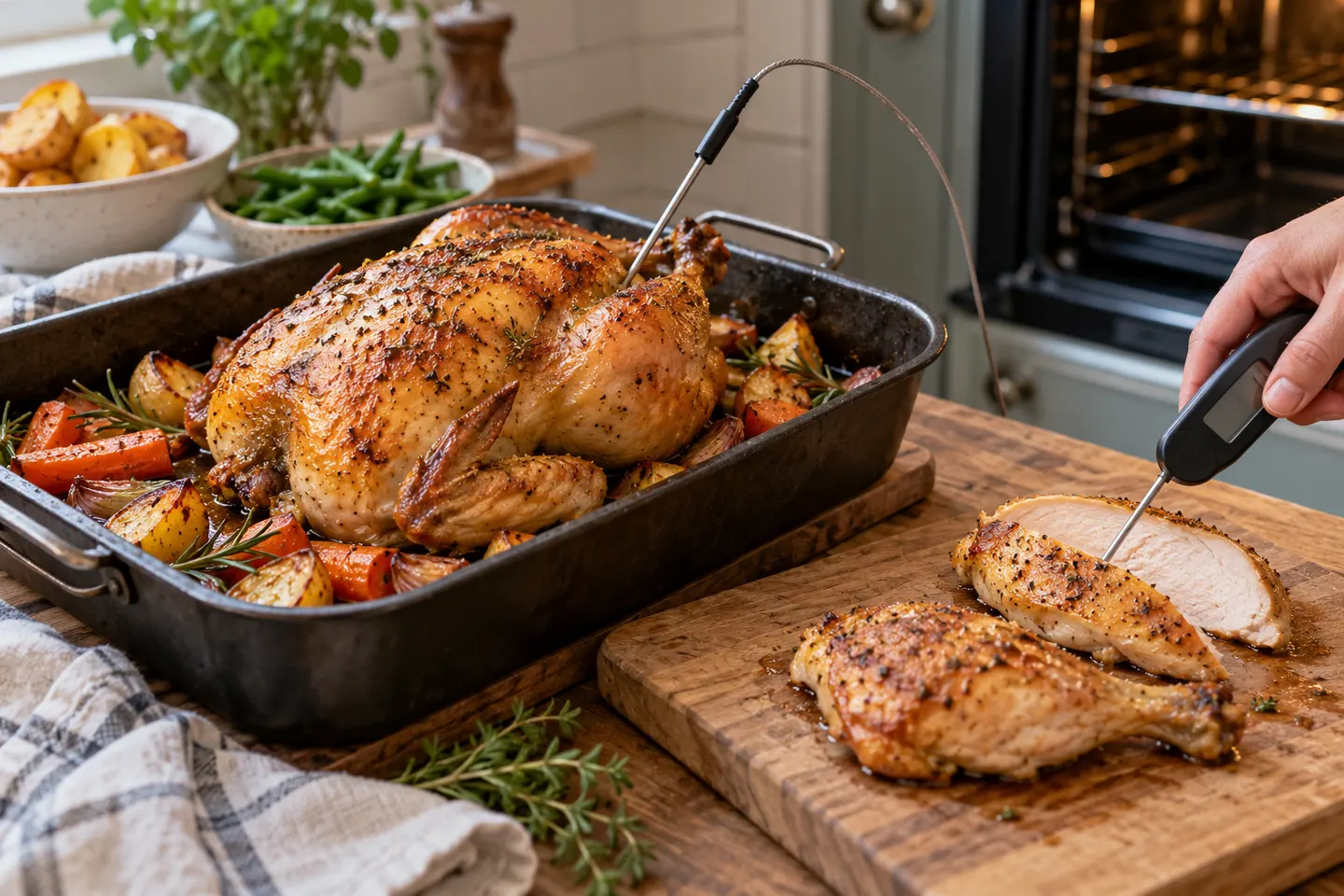
A fast, thin probe works well for portions; a heat-safe leave-in probe makes a whole roast easier to monitor.
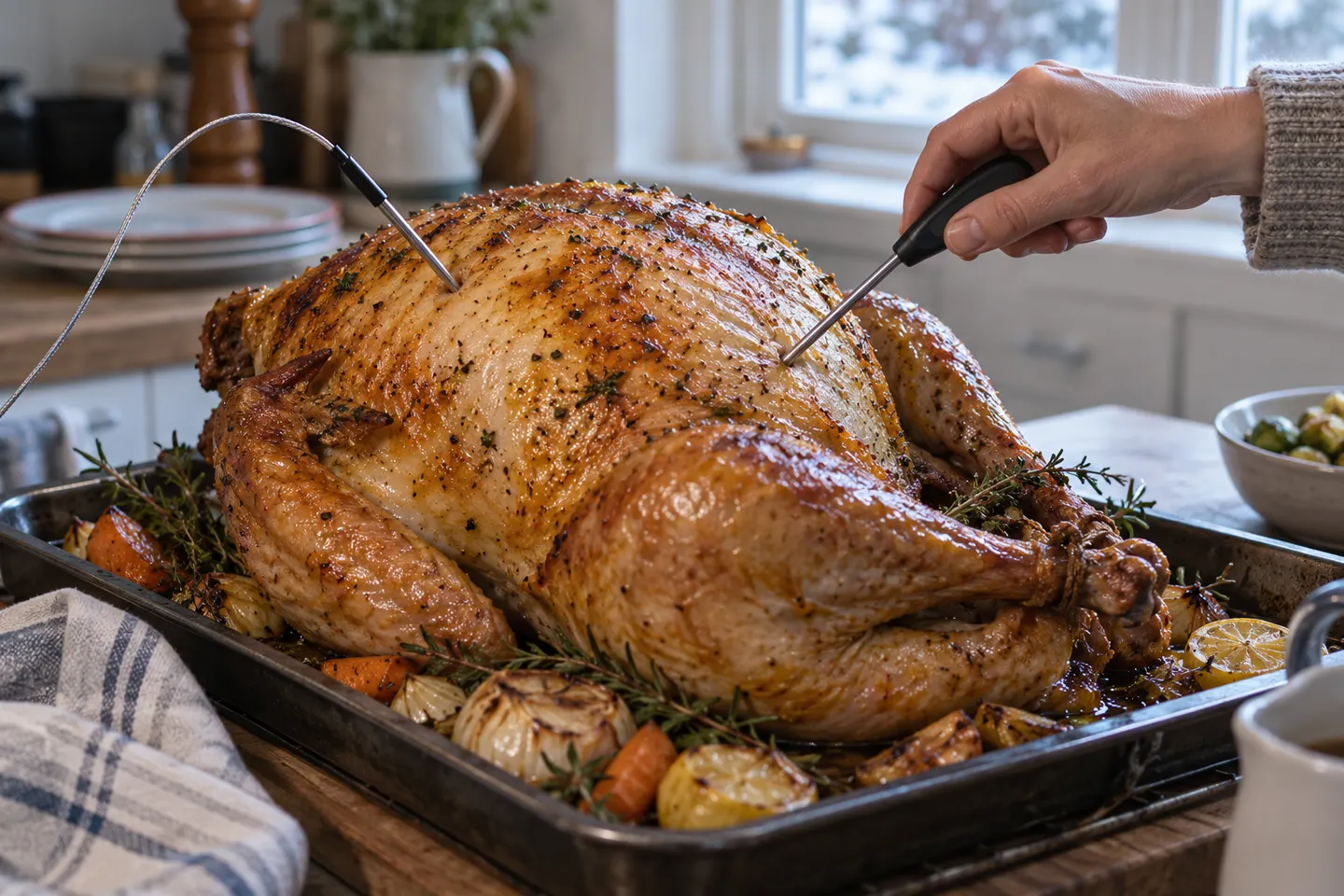
Use a leave-in probe to track the cook and an instant-read model to check more than one spot before serving.
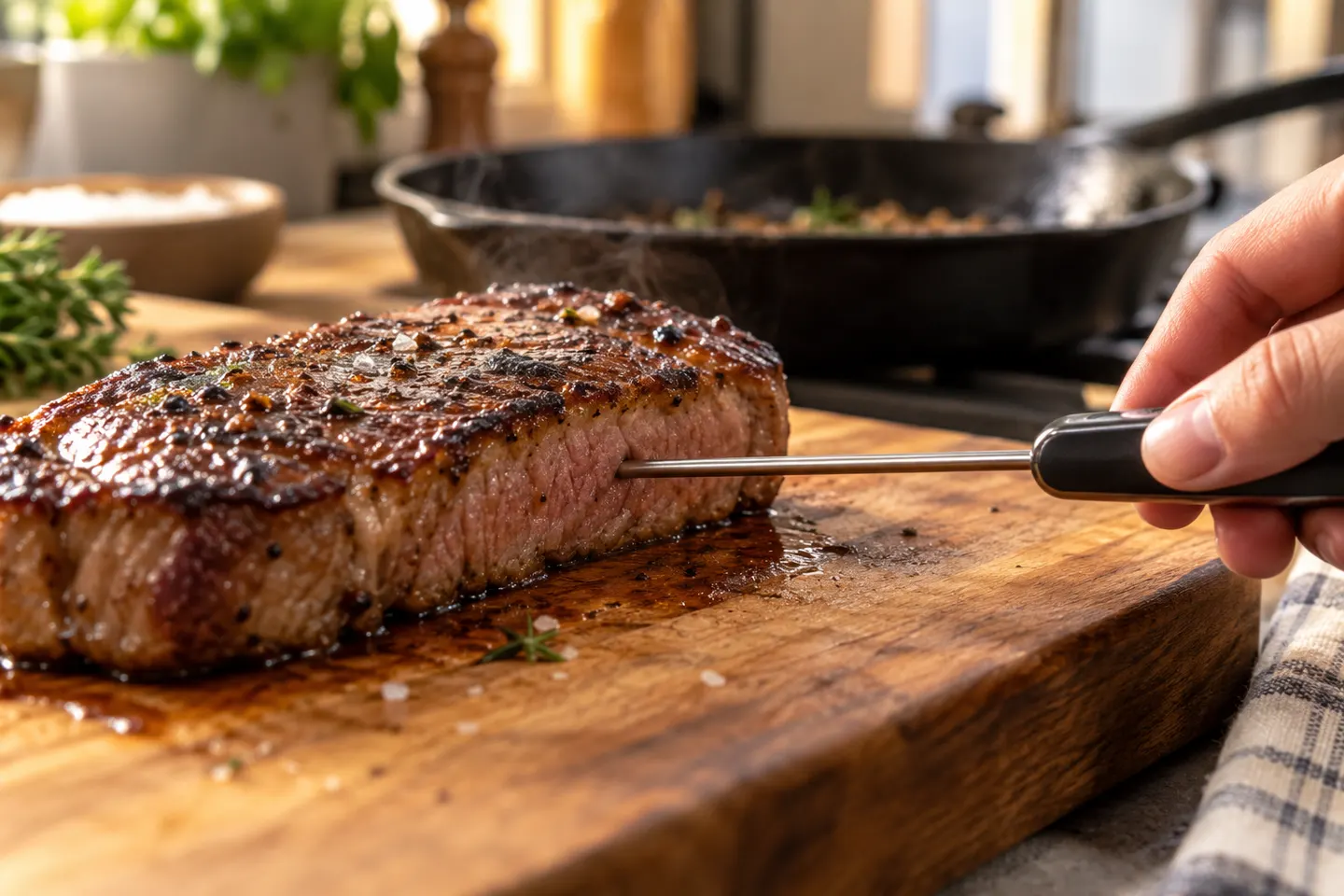
A fast instant-read probe is the most practical choice for steaks; insert it from the side into the center.
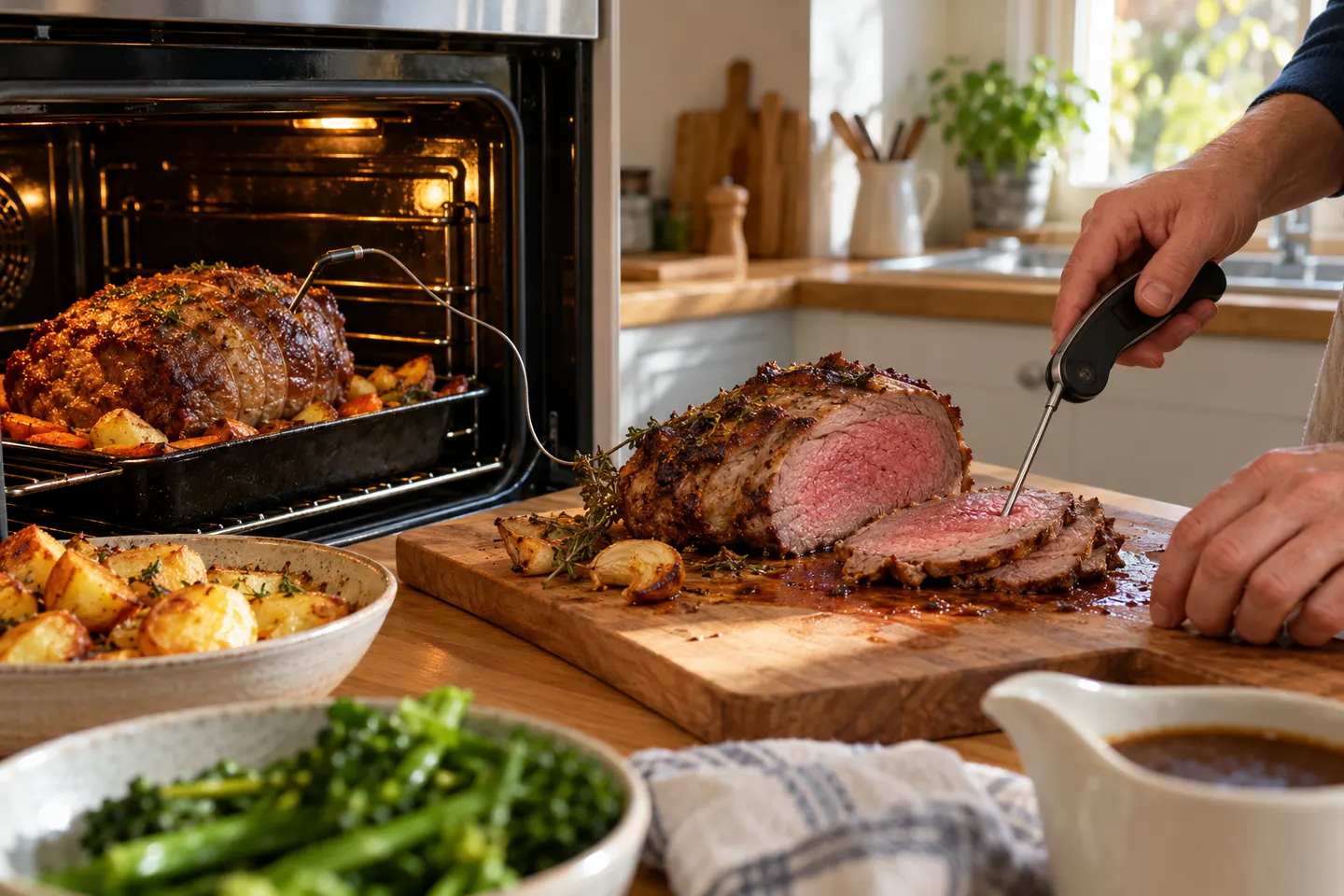
Start with a dependable instant-read thermometer; add a leave-in or wireless probe when you want continuous monitoring.