









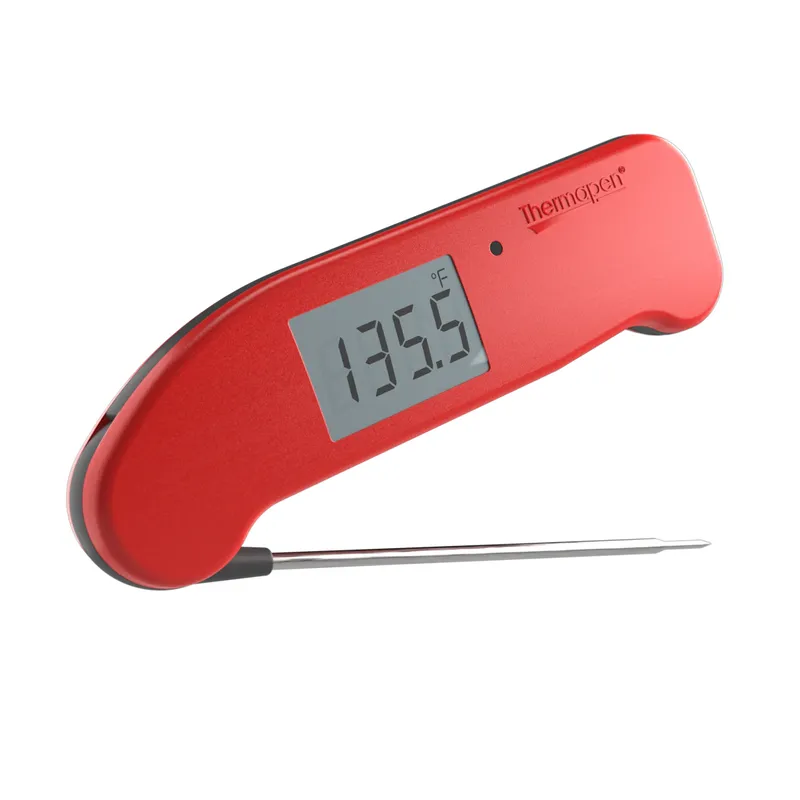
 Official manufacturer image
Our picks
Top picks
Official manufacturer image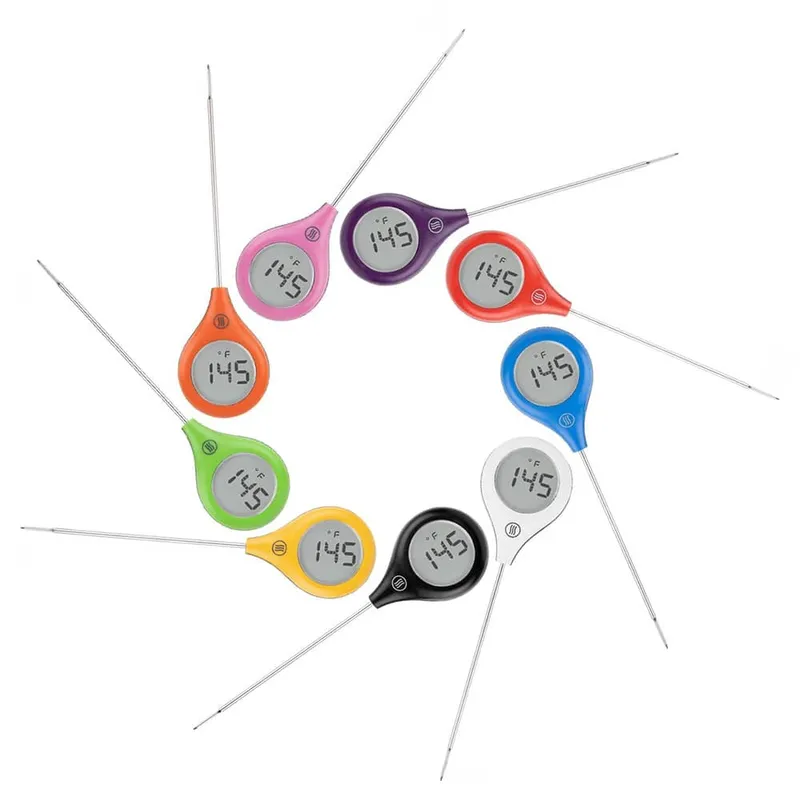 Official manufacturer image
ThermoWorks ThermoPop 2
Check price on Amazon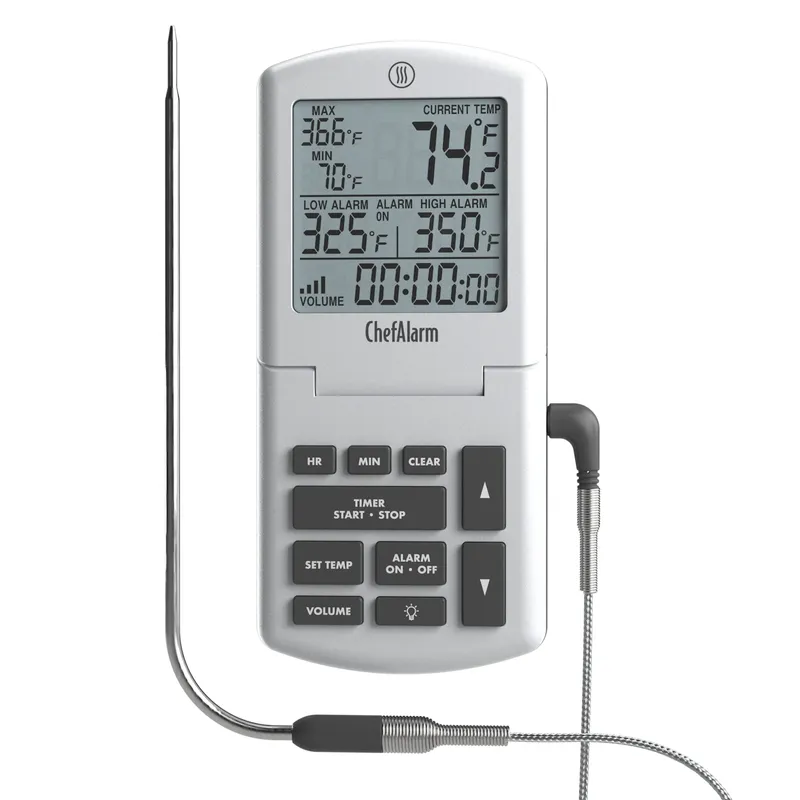 Official manufacturer image
ThermoWorks ChefAlarm
Check price on AmazonCommon questions
Questions before you buy
What thermometers does a food service kitchen need?
Needs vary by menu and process, but common roles include internal food checks, refrigeration monitoring and receiving checks. Each device should suit its assigned range and local code.
Can an infrared thermometer replace a probe in food service?
No. Infrared tools measure surfaces; internal temperatures require an appropriate sanitized probe.
How often should a food service thermometer be calibrated?
Follow the manufacturer, the operation's food-safety plan and local requirements. Recheck after impact, extreme temperature exposure or a suspicious reading.
What should staff record with a thermometer reading?
A control plan may require the food or unit, time, measured temperature, corrective action and staff identity. Follow the operation's approved procedure.