









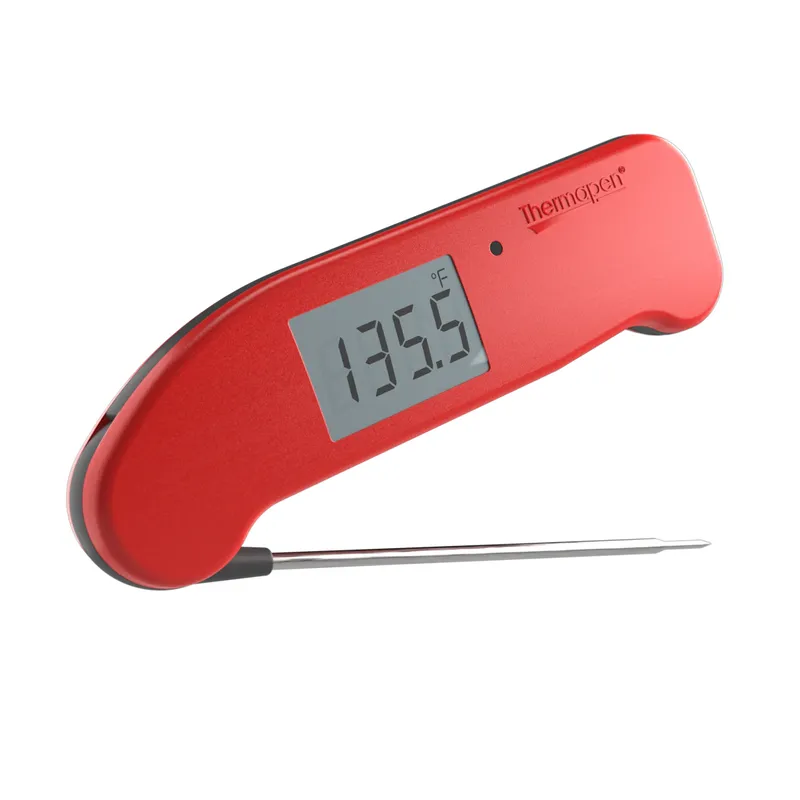
 Official manufacturer image
Our picks
Top picks
Official manufacturer image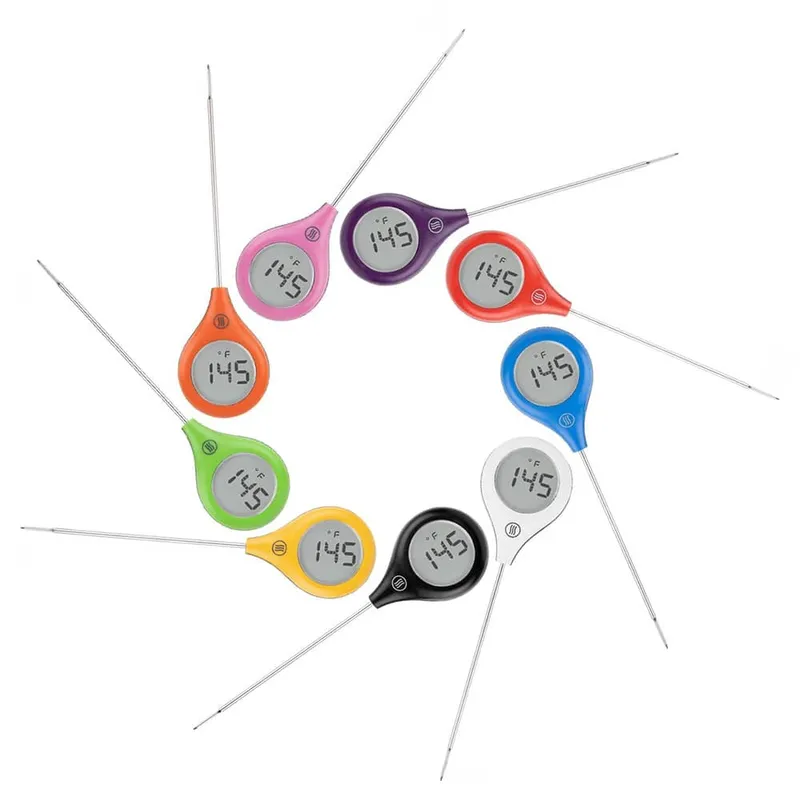 Official manufacturer image
ThermoWorks ThermoPop 2
Check price on Amazon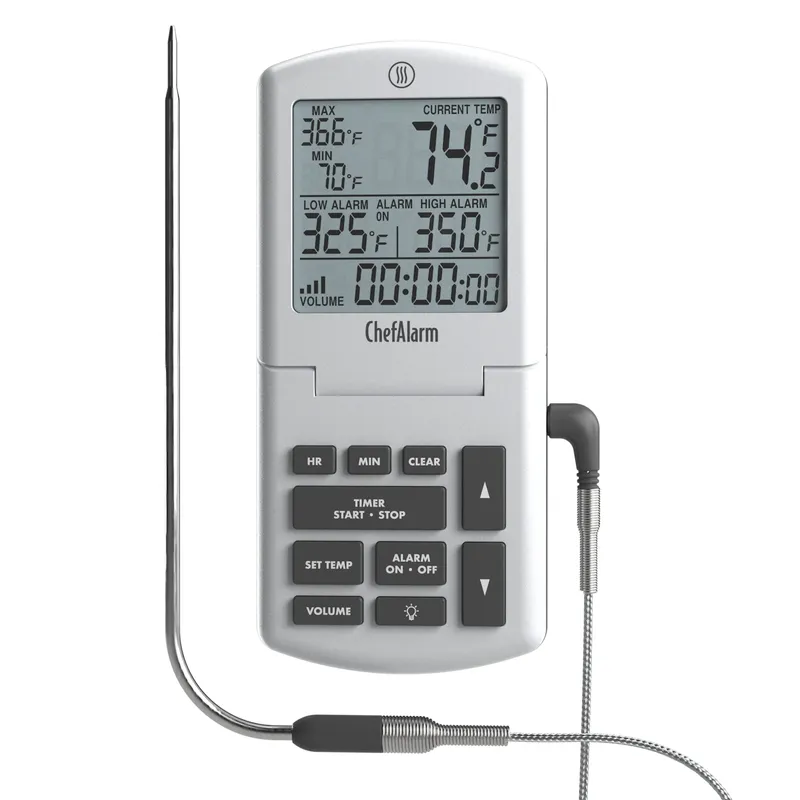 Official manufacturer image
ThermoWorks ChefAlarm
Check price on AmazonCommon questions
Questions before you buy
Why are some food thermometers yellow?
The color improves visibility and may support an organization's identification system; it does not indicate a universal thermometer type.
Does a yellow thermometer prevent cross-contamination?
No. Color coding can reinforce a process, but cleaning, sanitizing and correct handling prevent cross-contamination.
Can an infrared yellow thermometer check meat doneness?
Infrared instruments measure surface temperature, not the center of meat. Use a suitable penetration probe for internal doneness.
What specifications matter more than color?
Look at stated accuracy, response time, range, probe geometry, ingress protection, calibration options and intended use.